Showing posts with label Civil War. Show all posts

Friday, October 29, 2010

"The Blackest Crime in Texas Warfare"


Our usual route from Austin to Madroño Ranch takes us through Johnson City to Fredericksburg via Highway 290, and then down Highway 16 through Kerrville to the turnoff opposite the Medina Children’s Home. Every time I pass the sign for Turtle Creek, an unremarkable little stream just past the turnoff for FM 1273, about five miles south of Kerrville, I am reminded of one of the bloodiest and most controversial episodes in the extraordinarily bloody and controversial history of the state: the battle of the Nueces, labeled “The Blackest Crime in Texas Warfare” by the Dallas Morning News almost seventy years later.

Central Texas is dotted with German settlements dating from the mid-nineteenth century: Fredericksburg, Boerne, New Braunfels, Comfort, Sisterdale, and many more. The German settlers—more than 7,000 of them came between 1844 and 1847 alone—were a diverse group, according to the late Terry Jordan, arguably the leading scholar of European immigration to Texas: “They included peasant farmers and intellectuals; Protestants, Catholics, Jews, and atheists; Prussians, Saxons, Hessians, and Alsatians; abolitionists and slaveowners; farmers and townsfolk; frugal, honest folk and ax murderers.”

Perhaps. But while some German Texans, including prominent journalists such as Ferdinand Lindheimer, defended slavery, and others, like August Buchel, served in the Confederate army, the popular image was, and is, of a relatively liberal, well-educated, and homogeneous group who opposed slavery and secession and remained stubbornly pro-Union. In 1854, at the annual Staats-Sängerfest (state singing festival) in San Antonio, the delegates adopted a resolution condemning the “peculiar institution,” and in 1857, as I noted in an earlier post, Frederick Law Olmsted applauded the abolitionist sentiments he found among the denizens of the Hill Country. It should come as no surprise, then, that many who supported secession and the Confederacy were suspicious of the insular, “radical” immigrants of central Texas.

To make matters worse, some of the more outspoken German Texans organized the Union Loyal League in June 1861, and by March 1862 they were openly celebrating Union victories and had organized a battalion of three well-armed militia companies, with Fritz Tegener, a Prussian emigré who owned a sawmill near Hunt and served as Kerr County treasurer, as major and commander. The militia was supposedly meant to protect the Hill Country from Indians and outlaws in the absence of Federal troops, but its presence, understandably, made the Confederate authorities nervous. Confederate general Hamilton P. Bee, commander of the Western Sub-district of Texas, sent Capt. James Duff, a former San Antonio freighter and founder of an irregular force called Duff’s Partisan Rangers, to take control of the area.

Duff, who declared martial law in July 1862, was later nicknamed “the Butcher of Fredericksburg” for his harsh actions as provost marshal; one historian, writing a century after the fact, noted that “his arrests and depredations on the citizens of these counties seem unjustifiable,” though others say that accounts of his cruelty were a “myth.”

At any rate, an atmosphere of fear, distrust, and confusion had settled over the Hill Country by August 1, when a group of about eighty men, most of them German Texans, met on Turtle Creek, just a few miles north of Madroño Ranch. Sixty-one of them, with Tegener in charge, decided that their best bet was to flee Texas until the hostilities died down—in retrospect, a tragic miscalculation. They determined to try to reach Mexico by riding west to the mouth of the Devils River on the Rio Grande (the site of present-day Amistad Reservoir) and then crossing into Mexico, but Duff learned of their plans and sent Lt. Colin D. McRae, with ninety-four mounted troopers, in pursuit.

The unsuspecting Germans made little effort to cover their tracks, and McRae and his men easily traced them across the Medina and Frio rivers before catching up to them on the afternoon of August 9 on the West Fork of the Nueces River in northeastern Kinney County. A few of Tegener’s men had reported seeing unidentified riders behind them, but the commander dismissed their reports and told the group to make camp in a grassy clearing on the west bank of the river.

The precise details of what happened next are lost to time, but the following seems to be the most commonly accepted version. McRae and his men attacked before dawn of the following day. Around twenty-five of the Unionists abandoned the fight almost immediately and managed to slip through the Confederate lines in the darkness and confusion. McRae’s troops killed nineteen of the remaining Unionists and captured nine others who had been wounded; Tegener himself was wounded, but managed to escape. Shockingly, the Confederates executed the nine wounded prisoners a few hours after the skirmish, shooting them in the head as they lay face-down and defenseless on the ground. As a final indignity, McRae’s men left the bodies of their victims unburied, “prey to the buzzards and coyotes.” The Confederate casualties included two killed and eighteen wounded, McRae among them.

And what of the surviving Unionists, you ask? Eight were killed on October 18, when another Confederate force attacked them as they attempted to cross into Mexico; nine others died in other battles. One man, August Hoffmann, reportedly made his way back to Gillespie County, where he remained in hiding, living on “pear fruit and bear grass,” until the spring of 1863. Tegener himself survived, though legend has it that during his long absence from Texas his wife, assuming he had been killed in the attack, married another man. Haha—awkward! Apparently it all worked out, though, as Tegener himself eventually remarried and went on to become a state legislator and justice of the peace in Travis County.

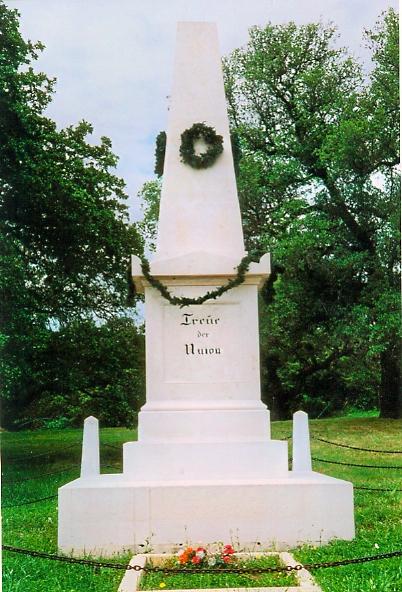
The encounter on the Nueces almost immediately became what historian Stanley S. McGowen called “one of the state’s most controversial and contentious historiographical events.” The Handbook of Texas notes that “Confederates regard[ed] it as a military action against insurrectionists while many German Hill Country residents viewed the event as a massacre.” Regardless of which side you’re on, it was a terrible thing. In 1865, the families of the men killed on the Nueces gathered their bones and finally interred them at Comfort, where a monument was dedicated on the battle’s fourth anniversary, in 1866. The Treue der Union (Loyal to the Union) monument, pictured above, still stands in Comfort, and historians still debate how best to describe what happened to that group of fearful men who met on humble Turtle Creek on an August day almost 150 years ago.
—Martin


What we’re reading
Heather:
Philipp Meyer, American Rust
Martin: C. J. Chivers, The Gun

Friday, February 26, 2010

Stonewall: permission to dig


There must be a story behind the sign at the front gate of the Stonewall Community Cemetery—I mean, who digs a new grave in a cemetery without permission?—but I don’t know it. Even though I wrote the entry on Stonewall for the New Handbook of Texas almost twenty years ago, I never saw the sign until last fall, because I’d never taken the time to go out there and poke around the town. (Even then, I only did so at the urging of our friend Dennis Fagan, a terrific photographer who’s been documenting the town’s annual Peach JAMboree for thirty years now.)

Stonewall, a town of some 470 people on the Pedernales River in Gillespie County and the self-proclaimed “Peach Capital of Texas,” marks the halfway point of the two-and-a-half-hour drive between Austin and Madroño Ranch. It’s one of the places we usually speed through without stopping on our way to or from the ranch, a wide spot in the road between Johnson City and Fredericksburg.

I suspect that is most people’s experience of Stonewall. Some may stop for gas, or to buy peaches at one of the numerous roadside stands, but the average driver who whizzes past on Highway 290 is too intent on reaching Austin or Fredericksburg to think much about Stonewall. If the town registers on his or her consciousness at all, it is as an annoyance, because the speed limit drops from 70 to 55 miles per hour there.

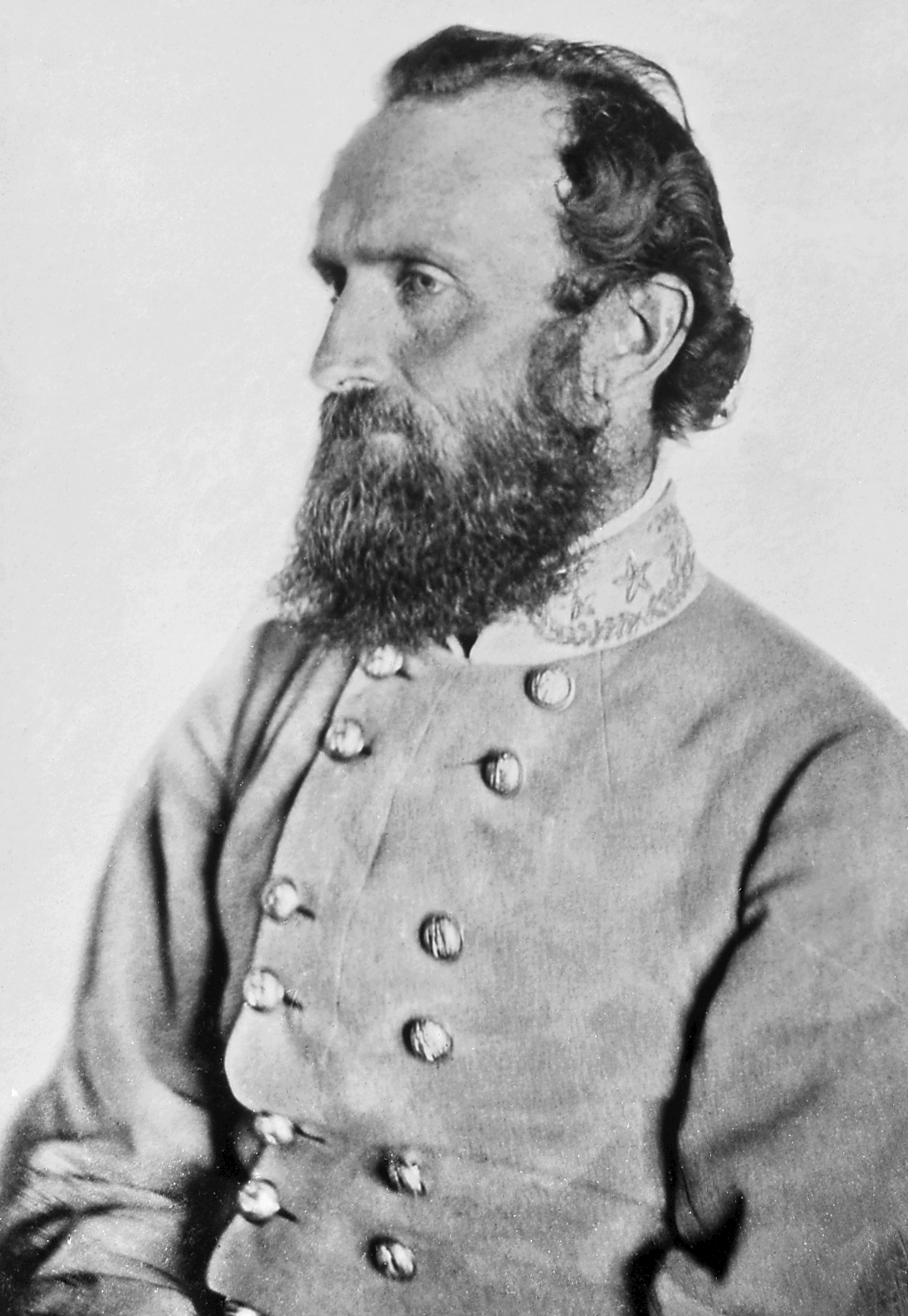
The chamber of commerce, having somewhat arbitrarily selected 1860 as the date of the town’s founding, will celebrate Stonewall’s sesquicentennial this year, but many accounts date the town’s birth to some time around 1870. That’s when Israel Nunez, a Jewish transplant from the state of Georgia, established a stagecoach stop a couple of miles south of the current town. Initially Major Nunez, as he was known, collected mail for the scattered local settlers from passengers traveling between San Marcos, Blanco, and points west, but by 1875 the local population had increased to the point that an actual post office was established there, and Nunez insisted it be called Stonewall, after Thomas J. “Stonewall” Jackson, under whom he’d served during the War of Northern Aggression.

Or so the story went. The reality, it appears, was slightly different. Israel Moses Nunez, born in Florida in 1838, was the third child and oldest surviving son of Raphael J. Moses, Confederate general James Longstreet’s chief supply officer and a pioneer of the commercial peach industry in Georgia—an interesting historical note, that, given the future importance of peaches to Stonewall.

Raphael changed his son’s surname to Nunez to perpetuate the family’s Sephardic heritage; “Major” turns out to have been Israel’s childhood nickname, rather than his military rank. In 1906, his younger brother recalled, “When we moved to Columbus [Georgia] in 1849, Israel had on his first pair of boots and he was so proud of them and strutted so up and down the deck showing them off that all the passengers nicknamed him the ‘Major,’ a name which has curiously held on to him the balance of his life.” (Perhaps coincidentally, major was also the rank his father held in the Confederate army.)

Moreover, Israel never actually served under Jackson. He didn’t enlist as a private in William W. Parker’s Virginia artillery battalion until December 1863—a full seven months after Stonewall was cut down by “friendly fire” at Chancellorsville. Israel did serve in the trenches during the siege of Petersburg, but he was back home in Georgia when the war ended. Sometime thereafter he and his wife Anna Marie, who bore him eleven children between 1860 and 1883, moved from Columbus to what was then considered western Texas.

Of course, whether or not he actually served under Jackson, there’s no reason he shouldn’t have named his new home after the Confederate hero. As for the persistence of the nickname “Major,” well, perhaps he didn’t go out of his way to correct those who assumed he’d attained that rank in the Confederate army, but then the post-Civil War years saw a fair amount of romantic historical revisionism. He and his family moved to Austin in 1890, and he died fifteen years later. Israel and Anna Marie Nunez are buried in one of the Jewish sections of Austin’s Oakwood Cemetery.


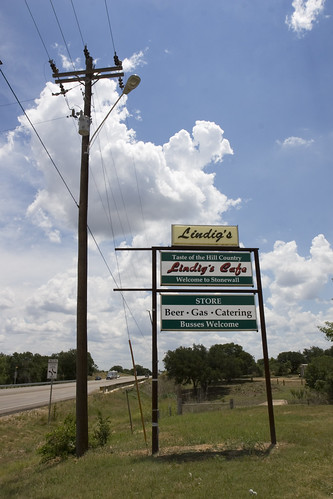
In 1924, when Highway 290 was completed between Austin and Fredericksburg, Stonewall hosted the official celebration. Thirty-three years later, the highway was moved four hundred yards to the south, and several businesses followed it. Most people who know Stonewall from the establishments along Highway 290—peach stands like Burg’s Corner, Gold Orchards, Vogel Orchards; restaurants like Lindig’s Café and the One Stop diner; vineyards like Becker, Grape Creek, and Woodrose—might not even realize that the town also boasts a number of establishments aimed primarily at the town’s inhabitants rather than tourists: the Trinity Lutheran, St. Francis Xavier Catholic, and Stonewall Baptist churches; Nielsen Automotive, Stonewall Body Shop, and Eckert and Son Used Auto Parts; the Stonewall Smokehouse; Weinheimer and Son general merchandise; Stonewall Mutual Farm Insurance; the Stonewall Volunteer Fire Department; Stonewall Head Start; Gordon’s Welding; J. Bolton and Associates wholesale furniture; Vogel Tractors.

Similarly, my Handbook of Texas entry on Stonewall, while more or less accurate as far as it goes, doesn’t come close to giving the flavor of the place. Nowhere in it do you learn that the locals are trying desperately to keep the peach industry going in the face of terrible and persistent drought; that they’re facing pressure to quit growing peaches in favor of grapes, that pernicious totem of yuppie agritourism; that as the memory of local boy LBJ fades further into the past, the number of visitors to the nearby Lyndon B. Johnson National Historical Park keeps dwindling. What’s missing from that entry, in other words, is the real human drama you can find in Stonewall right now, every day, if you just know where and how to dig.
—Martin

What we’re reading

Friday, February 12, 2010

The Great Texas Camel Experiment


Susan Orlean’s wonderful story on mules in the military in this week’s issue of The New Yorker mentions one of my favorite, and most unlikely, episodes of Hill Country history: the U.S. Army’s Great Texas Camel Experiment of the 1850s.

Ultimately, the experiment was a failure; in Orlean’s words, “The camels were superior in terms of strength, but they were vicious, tended to cough up foul-smelling chunks of food, and made horrible groans and roars that terrified the horses.” Still, enough of the beasts went AWOL that for several decades unwary sojourners in the American Southwest occasionally found themselves face to face with a living, spitting embodiment of Oriental exoticism.

Before the Civil War, much of Texas was considered to be part of the “Great American Desert,” a vast area of the Southwest that was still largely uninhabited and considered unsuitable for agriculture. American expansionism was about to prove that characterization wrong, at least in the short term, though Timothy Egan’s terrific book The Worst Hard Time: The Untold Story of Those Who Survived the Great American Dust Bowl vividly describes the horrific long-term result. But in the mid-nineteenth century, the War Department had to figure out a way to protect settlers and supply lines in this fearsome territory, and decided that using camels, instead of horses or mules, to carry troops and freight might be one way to do so.

The story of the Texas camel experiment actually begins in Florida, where Col. George H. Crosman apparently first thought about using camels for military purposes as far back as 1836. Crosman eventually asked Maj. Henry C. Wayne to look into the idea, and Wayne eventually reported to Secretary of War Jefferson Davis that the experiment would cost a mere $30,000. Congress duly authorized the expenditure in March 1855, and a little over a year later, on April 29, 1856, the naval storeship Supply arrived in Indianola, Texas, carrying thirty-three of the beasts (both one-hump Arabians and two-hump Bactrians), including one calf that had been born at sea, and three Arabs and two Turks whose job it would be to tend the creatures. The crossing had not been easy; the crew had to tie the camels to the deck during storms so they wouldn’t slide overboard, and the animals proved to be susceptible to seasickness.

On June 4, Wayne finally started his exotic caravan westward toward Camp Verde, south of Kerrville, pausing in Victoria to have the camels clipped. The industrious Mrs. Mary A. Shirkey of that town spun and knit a pair of camel hair socks as a gift for President Franklin Pierce, but Pierce reportedly found them so foul-smelling that he refused to wear them.

Wayne put the camels to work ferrying supplies between Camp Verde (a little over ten miles east of the future site of Madroño Ranch, as the crow flies) and San Antonio, with encouraging results. A second boatload of camels arrived in 1857, and some made the long trek to new quarters in California. An officer who led a caravan to the Big Bend country noted in his journal that the camels “performed most admirably,” adding that “No such march as this could be made with any security without them.”

Unfortunately, however, reports soon surfaced that the camels’ wide, soft feet, perfectly adapted for crossing desert sands in North Africa and the Near East, were not well suited to the rocky terrain of the the American Southwest. In addition, the soldiers were not fond of the camels, and vice versa; the officer who led the expedition to California noted that the beasts smelled bad and tended to bite or spit at the troops, and the horses and mules were unable to keep up with them.

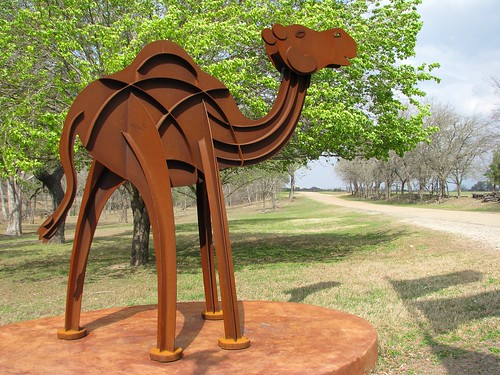
Eventually, thanks in part to the complications brought on by the Civil War, the army decided to get out of the camel business. Some of the animals were sold to zoos, circuses, and mine operators. Others were simply turned loose to wander the Southwest; in 1885, the five-year-old Douglas MacArthur was terrified when he unexpectedly encountered one of the unlikely beasts near an army fort in New Mexico. Ten years later, the San Francisco Chronicle noted that Many a passenger on the Southern Pacific railroad trains has had a sight of some gaunt, bony and decrepit old camel away off in the distance.” Today, the last of the original camels has long since disappeared, though a metal statue in front of the Camp Verde General Store commemorates their presence, and the Texas Camel Corps, a dedicated group of enthusiasts, keeps a number of the animals for pack trips, commercials, Christmas pageants, and the like.


Medina’s Early Days, one of the late Dorothy Hatfield Ferguson’s books of local history, includes the reminiscences of James Washington “Okra” Walker, who worked with the camels at Camp Verde. Walker was born in 1847, and in 1862, with the Civil War underway, decided to join the army and have a share in the fighting. Instead, much to his chagrin, the fifteen-year-old orphan found himself assigned to take care of the camels at Camp Verde. Looking back on the experience years later, Okra grudgingly admitted that the camels did have some advantages over other beasts of burden, principally “the ability to do without water for an incredibly long time,” but he never really warmed up to them, noting that “they weren’t as easy to look at as a good cuttin’ pony.” Moreover, they seemed much given to malingering, held grudges for any perceived mistreatment, and had the habit of spitting on those they didn’t like. “They also frightened the mules and horses and generally looked mighty out of place.”

When the experiment finally ended, Okra Walker, for one, was not sorry to see them go: “I guess I’d fooled with those beasts so long, and was [so] disgusted that I’d had to herd camels instead of fighting in the Civil War, that I never as much [as] asked one question pertaining to those camels or the buyer’s plans for them.... When those camels left Camp Verde, they went out of my life forever. I shouted after them, ‘Thank God you’re gone!’”

We have no plans to acquire camels for Madroño—I’m pretty sure Robert, our manager, would kill us if we did—but I like to imagine them roaming the ranch’s hills like the aoudads and other fugitive exotics we occasionally see today. And who knows? Perhaps the great-grandchild of some Arabian or Bactrian import is still out there, running free and gazing down at us with that inimitable camelicious mixture of disdain and amusement, sneering, “I’ll never be your beast of burden.”
—Martin 


What we’re reading
Heather: Philip Pullman, His Dark Materials trilogy
Martin: Ted Gioia, Delta Blues: The Life and Times of the Mississippi Masters Who Revolutionized American Music