Showing posts with label Lewis Hyde. Show all posts

Friday, July 16, 2010

There and back again: a geobiography


We recently led a seminar on Madroño Ranch as part of the annual Summer Literary Festival at Gemini Ink, a writing center in San Antonio. The theme of this year’s festival was “What Would Nature Do?” and in our seminar we read and discussed works by Wendell Berry, Annie Dillard, Michael Pollan, Ellen Davis, Lewis Hyde, and Mary Oliver. We also asked the participants to write a brief “geobiography” (as “A Native Hill” is described in the collection The Art of the Commonplace: The Agrarian Essays of Wendell Berry), a statement of how they consider themselves rooted in a particular place. Here’s a slightly modified version of what I wrote:

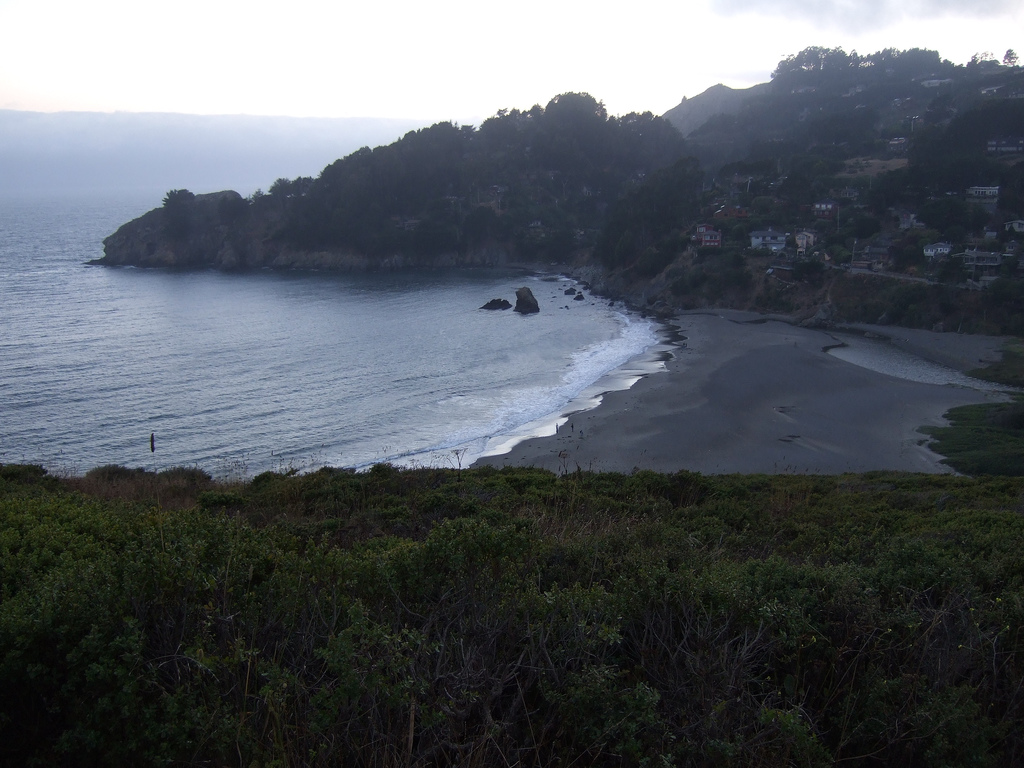
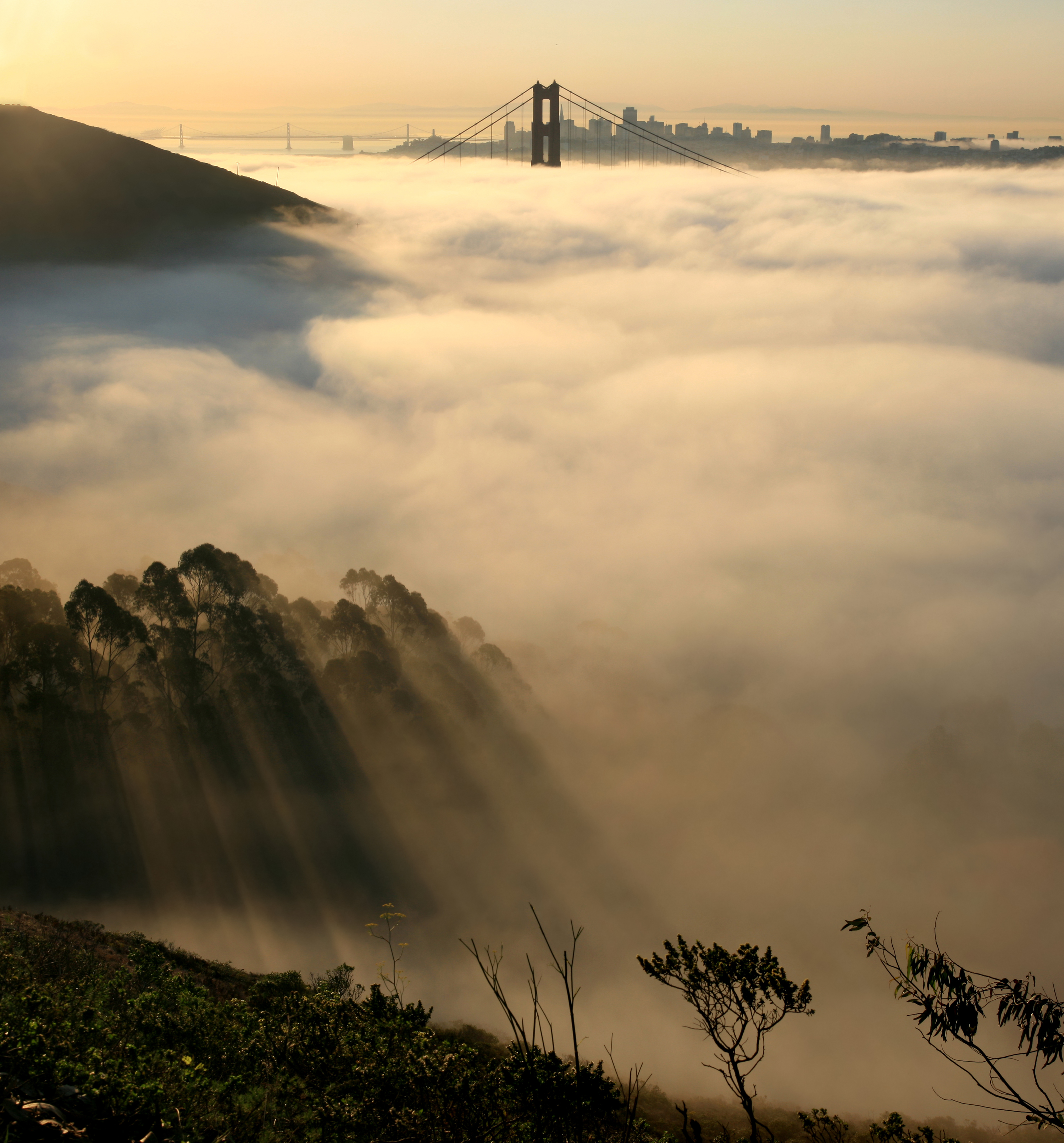
I am a native of the Bay Area, a place that everyone thinks is among the most beautiful in the world. I was born in San Francisco and grew up in Marin County, just to the north of the city across the Golden Gate Bridge; I lived amid the winding hillside lanes and towering redwood and eucalyptus trees of Mill Valley, beneath Mount Tamalpais, until I was eighteen, when I went off to college in Massachusetts. There I met the woman I would marry, a native Texan, as I recounted in an earlier post; she had a job lined up in San Antonio after graduation, I followed her there, and I never lived in California again.

Why did I so thoughtlessly, even eagerly, put California behind me when I left home? In part, I realize in retrospect, I was hoping to escape some not particularly unusual or interesting adolescent angst and family tensions, and to redefine myself as a brighter, happier person in a new setting, among strangers. (I say nothing of the futility of such an effort; I was young and foolish.) Massachusetts, and then Texas, seemed like blessed opportunities, and I clutched at them desperately.

Only… almost despite myself, I continued to count as my closest friends two men I had known almost since birth. Brad and I met in kindergarten; Hans came a few years later. The three of us went all the way through elementary and high school together, and all three of us headed east to college, Brad to Harvard and Hans to Yale. (Both, I hear, pretty good schools.)


After college, I ended up in Texas, while Brad and Hans returned to California, to Los Angeles and San Francisco respectively. Last year we all turned fifty, and Brad decided we should celebrate the milestone together. So, after much back-and-forthing (all three of us are married with children, with all the scheduling complications that implies), we arranged to meet in San Francisco in March and spend a day in Marin hiking along the California Coastal Trail, six miles from Tennessee Valley to Muir Beach and back again.

It was a beautiful day, we had a wonderful time, and we agreed to make this little reunion an annual event. This year, again, we gathered in March and spent the day hiking in Marin, this time at Pierce Point Ranch on the northern end of Point Reyes National Seashore. Next year we may meet in L.A., in deference to Brad; the year after that, perhaps we’ll meet in Texas.

One of the wonderful gifts this time with Brad and Hans has given me is the opportunity to reconsider my relationship to California. My father was something of an outdoorsman, and when I was a child we went camping and hiking in Marin County, in the Sierras, and even up the coast to Oregon and Washington. For various reasons, I never really enjoyed these trips as much as I should have—or so I thought. But hiking to Muir Beach and at Point Reyes with Brad and Hans forced me to confront an unexpected and long-suppressed truth: I loved this land, and felt comfortable in it in a way I still don’t in Texas, even though Texas is now home. I gloried in half-remembered vistas, in the way the glittering ocean and the crepuscular redwood forests and the rolling dairy farms butted up against each other; in the cypress and eucalyptus and madrone and laurel and manzanita, and in the blooming flowers whose names I’d never learned; in the cool, salty air; in the fog banks drifting in over the Pacific.

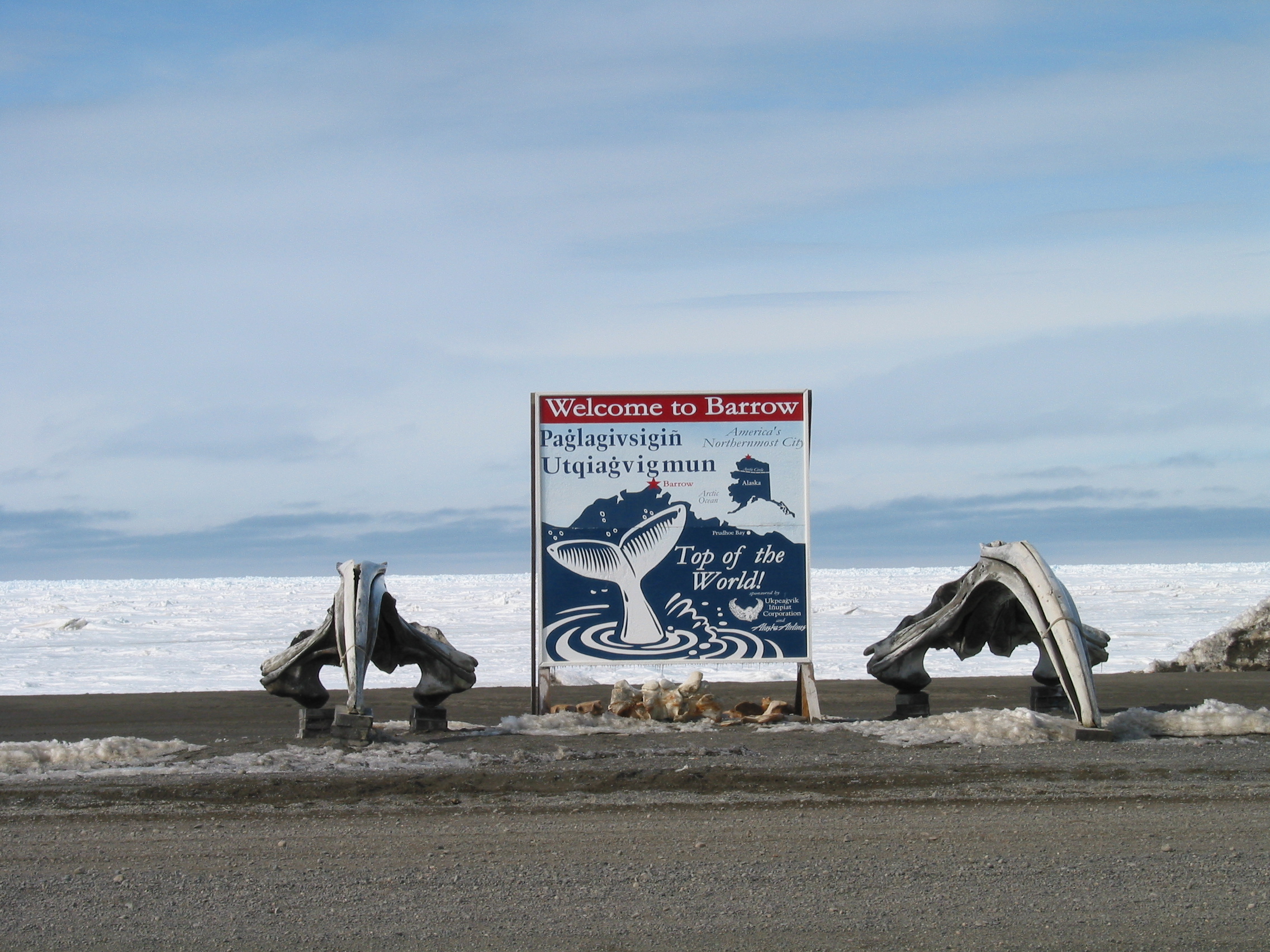
I felt as if a long-shut door in my head had been wrenched open again, and I could look out, for the first time in years, onto the bright green hills of a place I’d forgotten, or almost forgotten—a place I knew at once, with an almost literally breathtaking shock of recognition. I now realize that, having grown up amid such gentle but dramatic beauty (the suggestive, if erroneous, local legend has it that Tamalpais means “Sleeping Lady”), I came to believe that the world is an essentially beneficent place, and that the land is an unfailing source of pleasure and comfort. (I might have reached a different set of conclusions had I grown up in, say, Orla, Texas, or Barrow, Alaska.)

Mostly, however, I realize how much I took for granted, and how unbelievably lucky I was (and am). Over the years I’ve wasted a lot of time and energy in attempting to deny or at least rewrite my past, but now I feel as though I’ve been given a second chance to connect, to learn this land—not as the place I live, perhaps, but as the place I’m from, the place that formed me.
—Martin


What we’re reading
Heather:
Kathryn Stockett, The Help
Martin: Dan O’Brien, Buffalo for the Broken Heart: Restoring Life to a Black Hills Ranch

Friday, July 9, 2010

Made for you and me: thoughts on private property


Last week I went to Woody Creek, Colorado, to visit my father, sister, and brother and their posses. Among the many pleasures I find at the family place are my early morning walks up a trail that runs behind my sister and brother-in-law’s house through Bureau of Land Management land. Known locally as the Buns of Steel Trail, it gallops up a southwest-facing slope dotted with scrub oak and sage. The soil is so red (colorado in Spanish) that if you wear white socks, you may be sure that they’ll never be white again, even after repeated washings. From varying elevations, you can watch the entire Roaring Fork Valley unroll below you and note the stately procession of the valley’s grand guardians, from the hulking Sawatch Range in the east to the ethereal Elk Mountains to the south to the comfortable bulk of Mount Sopris to the southwest and down to the gentler terrain (relatively speaking) toward Glenwood Springs. Because of bears, it’s wise to walk with dogs or other noisemakers, but your heart can be stopped just as effectively by a flushed grouse as by the appearance of a bear. Sometimes you walk through waist-high lupines, which can give a Texan a complex; even in a fabulous spring you can’t walk in bluebonnets, first cousins to mountain lupines, any higher than your shins.

I came to the familiar circle of scrub oaks where I usually look down on my father’s and sister’s houses about a thousand feet below and then, delighted with the world, turn to go back down. Just imagine the oceanic depths of my outrage when I saw a sign that said “For Sale: Cabin Site." For SALE? Whose foul idea of a joke was this? This wasn’t private property: it was communal, open to all who would admire it and dream away the hidden bears.

My sister set me straight: we have been trespassing all these years, the fence marking the boundary of BLM land having fallen into disrepair several dozen yards before the turn-around spot. The dirt road next to the turn-around spot wanders for miles through the back country and is accessible to the public, but the relatively new owners of the land around the road (including the cabin site) regularly patrol it to be sure that what few walkers there are don't step off the public way onto their private property.

Still incensed the next evening as the dogs and I took our postprandial constitutional, I encountered a young man on a four-wheeler driving onto our property, which is at the end of Little Woody Creek Road. “Can I help you?” I asked. “Oh, no, ma’am,” he said politely. “I’m just going to check my water. I do it twice a day.” My eyebrows at my hairline, I said, perhaps not quite as politely, “YOUR water?" “Yes, ma’am,” he said complacently.

I almost slugged him. In the politest, most Christian way, of course.

My sister explained (do you detect a pattern here?): Colorado’s water laws are so Byzantine and obtuse that they make those in Texas, shockingly, look almost reasonable. (In Colorado, whichever property has the oldest claim to the water controls it, regardless of how many times that property has changed hands.) But water laws aren’t really germane here. What I was struck by—and almost struck out in defense of—is my sense of what constitutes private property, especially when it comes to land that I love. I was furious to find that A) land I thought was communal was, in fact, privately owned (and NOT by my family); and B) land I thought was privately owned (by my family) was, in some respects, communal.

Having recently moved Lewis Hyde’s The Gift: Creativity and the Artist in the Modern World to the top of my nonfiction top-ten list, I can’t ignore the profound complications of ownership, especially of something like land, which clearly comes to humanity as gift. We did not make it, and yet somehow we (some very few of us) have come to claim it as our own—initially, at least, through arrogance and (often violent) appropriation. This makes me sad and uneasy, because I love the land that my family and I “own.” And I hate those quotation marks, but I think they’re a useful discipline for any landowner.

When I got back to hot, scruffy, sweaty Texas from cool, elegant Colorado, I found a book waiting for me: Ellen Davis’s Scripture, Culture, and Agriculture: An Agrarian Reading of the Bible. (Insert punch line here.) In the book’s first line, Davis writes: “Agrarianism is a way of thinking and ordering life in community that is based on the health of the land and living creatures.” Those may not sound like fighting words, but they are. Davis claims that the Bible is grounded in agrarian thought and practice, in which possession of the land—Israel—is dependent “upon proper use and care of land in community.” The great irony is that America, steeped in the parallels between its own westward expansion and the Hebrews’ crossing the Jordan to the Promised Land, has completely missed the point by ignoring the holiness of the land given (and received by its first residents) as unmitigated gift. Buying and selling land for rapacious personal profit, poisoning it, cutting down ancient trees in order to build highways, polluting waters, killing for sport, abusing the animals given for nourishment, leaving the land for dead – these behaviors were and still should be open to emphatic prophetic censure as clear violations of the spirit in which the Earth’s tenants were given such gifts, and clear invitations for divine retribution that included (and still includes) such weapons as whirlwinds, drought, flood, and famine.
In his introduction to Davis’s book, Wendell Berry writes, “We have been given the earth to live, not on, but with and from, and only on the condition that we care properly for it. We did not make it, and we know little about it. In fact, we don’t, and will never, know enough about it to make our survival sure or our lives carefree. Our relation to our land will always remain, to a certain extent, mysterious. Therefore, our use of it must be determined more by reverence and humility, by local memory and affection, than by the knowledge we now call ‘objective’ or ‘scientific.’ Above all, we must not damage it permanently or compromise its natural means of sustaining itself.”

As seriously as I take Wendell Berry, Ellen Davis, and the Bible, though, I can’t ignore that very noisy part of me that wanted to deck that polite young man on “our” property checking on “his” water. The part of me that understands ownership as power isn’t going to disappear in a puff of high-mindedness. Nor am I sure it should; I don’t know of any compellingly desirable alternative to private land ownership as it currently exists. The government? Don’t think so. The Church, whatever that is? Ditto. Communal ownership? Only if I have my own bathroom. And while well-thought-out policies are a necessary component of land stewardship, they can’t force the conversion experience that moves our relationship with the land from that of owner and chattel to that of respectful, fruitful, loving partnership. How do we become married to the land?

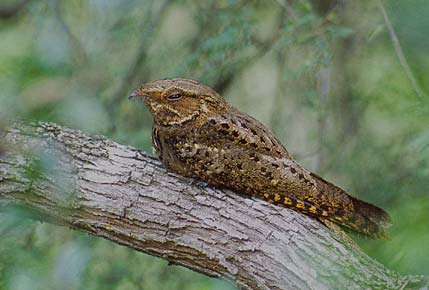
By this point in most of my blog posts, I’ve managed to tie myself into emotional knots: dear God, there’s no way out of whichever mess I’ve decided needs fixing this week. So this is the time I usually go outside and stew about it. And I’ll start pulling weeds and notice a volunteer melon plant spilling its way out of the pile of compost I forgot to spread. And I’ll see one of the crowd of long-armed sunflowers fluttering and waving under a dozen investigative goldfinches so bright they look like flowers themselves. And I’ll watch the power plays at the hummingbird feeders, and listen to the mockingbirds make fun of the wrens. I’ll find that damn grasshopper that’s been eating my basil. (We shall say no more of him.) I’ll find a really cool-looking bug I haven’t seen before, or maybe shriek a little shriek when I come upon one of those terrifying large and harmless (oh, sure) yellow garden spiders. I’ll hear a chuck-will’s-widow emphatically tuning up in the draw behind our house. And I’ll tell someone how much I love “my” garden, how lucky I am, how lucky we are to live on this earth. Isn’t that how converts are made?
—Heather


What we’re reading
Heather:
Ellen Davis, Scripture, Culture, and Agriculture: An Agrarian Reading of the Bible
Martin: Tom Killion and Gary Snyder, Tamalpais Walking: Poetry, History, and Prints