Showing posts with label Wendell Berry. Show all posts

Friday, March 25, 2011

Tragic waste: some thoughts on the s-word


Watching the bats from the kitchen stoop at Madroño Ranch the other morning was a little like watching my own thoughts. They swooped in and out of my line of vision, limited by the dawn darkness, more audible than visible.

Actually, my comparison is disrespectful of the bats; their flight is only apparently erratic, driven by the ever-changing location of the insects they were chasing. My thoughts are actually erratic. As the promise of light bloomed into dawn, the bats settled into the bat house, a feat of precision flying and landing almost like none I’ve seen, and I noticed the pile of guano under the house and thought that soon it would be time to collect it and put it into the compost pile.

And so began my musings on shit and the difference between good shit and bad shit. My apologies to the bats become ever more profound.

One of our current projects at the ranch is figuring out how to use the abundant quantities of manure the residents of the Chicken Palace produce. Currently, it’s just collected and dumped onto the compost pile, but we’re working on a plan to get the chickens more fresh greenery to eat, in part self-fertilized (by the chickens, that is). We’re planning to cordon their pasture off into sections and seed the sections with cover crops, alfalfa, rye—whatever the season will grow. We’ll soon have a rainwater collection system in place and will be able to irrigate with it (assuming it ever rains again). Using a portable fence, we’ll be able to rotate the chickens from section to section. We have no idea if this will work, but it seems like a good idea and a fine, closed-loop use of all that poop. We’re also looking to collect buffalo leavings (summer “interns”: consider yourselves warned!) and use them as well.

Perhaps you’ve noticed that I used all sorts of synonyms for shit in the previous paragraph; one of the few I didn’t use is “waste,” because in natural systems, or systems that mimic natural systems, shit isn’t waste, it’s integral and beneficial. Paraphrasing Our Hero Wendell Berry, Michael Pollan notes in The Omnivore’s Dilemma: A Natural History of Four Mealsthat industrial agriculture has taken an elegant solution—crops feed animals, whose manure in turn fertilizes crops—and “divide[d] it into two new problems: a fertility problem on the farm... and a pollution problem on the feedlot.” Concentrated Animal Feeding Operations (CAFOs), the current source of most of America’s meat, produce mountains of manure that becomes toxic to the animals and to the communities around them, and the monoculture farming that produces most of America’s grains and vegetables doesn’t use animals to fertilize the soil, requiring farmers to use chemicals instead. That’s the difference between good and bad shit: when something that could be beneficial becomes useless, even toxic, waste.

In fact, I’m beginning to wonder if a community’s or even a culture’s capacity to endure might not be assessed by how effectively it mimics nature in dealing with its own discharge. I’ve just been rereading T. C. Boyle’s darkly comic Drop City, which begins at a northern California commune of the same name in 1970. The commune’s stated raison d’etre is to provide its residents with a place to escape the confines of bourgeois America and get back to the land and basic values by expanding their consciousness with meditation and drugs.

Of course the place is utter chaos, overflowing with the metaphoric excrescences of abusive sexual practices, racism, child neglect, and rampant narcissism, along with literal shit. The septic system is overloaded and the two characters who concern themselves with the problem get no help at all from the community. Eventually, the county government threaten to raze the buildings because the commune constitutes a health hazard. Because they can’t deal with their own shit on any level, the residents of Drop City abandon what was once beautiful land and move their chaos to the bush country of Alaska just as summer is waning. When they get there, most of them realize that they need to leave or get their shit together so they don’t die.

The problem is that getting your shit together necessitates acknowledging that you are, in fact, going to die. (It’s still Lent, after all. You knew we’d get to this.) Ernest Becker, in his Pulitzer Prize-winning The Denial of Death, identifies the human dilemma in scatological terms: we are the “god[s] who shit.”
Look at man [sic], the impossible creature! Here nature... [has] created an animal who has no defense against full perception of the external world, an animal completely open to experience.... He not only lives in this moment, but expands his inner self to yesterday, his curiosity to centuries ago, his fears to five billion years from now when the sun will cool, his hopes to eternity from now. He lives not only on a tiny territory, not even on an entire planet, but in a galaxy, in a universe, and in dimensions beyond visible universes. It is appalling, the burden man bears, the experiential burden.... Each thing is a problem and man can shut out nothing. As Maslow has well said, “It is precisely the god-like in ourselves that we are ambivalent about, fascinated by and fearful of, motivated to and defensive against. This is one aspect of the basic human predicament, that we are simultaneously worms and gods.” There it is again: gods with anuses.
Human civilization, says Becker, is built on this unease, which encourages us to throw our energies into an “immortality project” by which we deny our smelly mortality; those who confront it with none of the filters an immortality project provides wither into mental illness. Becker doesn’t attempt to solve this conundrum but rather to set some boundaries within which we can wrestle with it with “the courage to be.” He writes in his conclusion: “We need the boldest creative myths, not only to urge men on but also and perhaps especially to help men see the reality of their condition. We have to be as hard-headed as possible about reality and possibility.”

So it was with interest that I watched the video produced by a Japanese media artist to explain to Japanese children why everyone was so worried about the Fukushima nuclear reactor after it was damaged by the tsunami and earthquake on March 3. The video compares the damaged nuclear reactor to a boy with an upset stomach who needs to poop. So far the boy has just farted—smelly enough for everyone around him—but the video assures us that a team of selfless doctors are doing all they can to prevent Nuclear Boy from pushing out his stinky poop.

The video says that the Fukushima reactor is more like Three Mile Island Boy—who just farted—than like Chernobyl Boy, who not only pooped but had diarrhea that went everywhere, likening nuclear waste to a dirty diaper. My first thought after watching it was that Japanese doctors would be overwhelmed by waves of constipated children, convinced that evacuating their bowels might bring their struggling nation to even deeper depths. My next thought moved me to images in last Sunday’s New York Times of the city of Chernobyl in its abandoned state and the interview with one of the guardians of “the sarcophagus,” the concrete structure built to contain Reactor No. 4, and that can’t come in contact with water without risking the escape of highly radioactive fumes. Scientists estimate that an area around the reactor the size of Switzerland will remain affected for up to 300 years. The aftermath of a nuclear meltdown “is a problem that does not exist on a human time frame.” The guardian figures that the work he does will be available to his children and grandchildren.

Using my heavily truncated recapitulation of Becker’s thought, it seems that proponents of nuclear power (which I have sometimes been) are refusing to be “as hard headed as possible about reality and possibility,” are as unwilling to get our shit together as the drug-addled utopians of Drop City. We are as schizophrenic as the video artist who proposes that we just not poop. A few pages away from the article about Chernobyl was a piece by a Japanese astrophysicist who wrote in reference to the Fukushima reactor crisis:
Until a few years ago, power usage in Japan was such that during the summer Obon holidays, when people typically return to their ancestral homes, it would have been possible to meet demand even if all nuclear power plants were turned off. Now, nuclear energy has come to be indispensable for both industry and for our daily lives. Our excessive consumption of energy has somehow become part of our very character; it is something we no longer think twice about.
Now that I’m trying to tie together all these thematic threads, I have to swoop back to my bat-intensive stoop, to the manure-heavy compost pile in the pasture outside the Chicken Palace. May we humans be as useful as Madroño’s bats and chickens as we consider our energy future; may we refuse to resort to the narcissistic chaos of Drop City’s residents, who left their spiritual and literal bad shit for someone else to deal with.
—Heather


What we’re reading
Heather:
Karen Armstrong, Twelve Steps to a Compassionate Life
Martin: Nicholson Baker, The Anthologist

Friday, March 11, 2011

Lenten reflections: dead trees, bafflement, and submission


Fittingly, this Ash Wednesday began with a vigorous north wind, the kind that knocks dead branches out of trees and can make you a little leery about walking outdoors. It blew me back to the moment that I first got a glimpse into the meaning of Lent.

I had vaguely thought of “giving something up for Lent” as an opportunity to practice self-discipline and to display a sense of commitment to a “good” life, a sort of spiritual calisthenics that made you feel better, especially when you stopped. The events I recalled weren’t, on the surface, particularly interesting or dramatic, but they allowed me to see myself from a previously undiscovered vantage point; for the first time, I could see I was like a tree filled with dead branches that needed some serious pruning in order to keep growing. Observing Lent wasn’t a way to prove how strong I was; it was a space offered in which I might look at all my dead branches and wonder how I, with the north wind’s help, might clear some of them out, while trusting that I wouldn’t get knocked out by falling timber.

A time for submission—no wonder Lent gets a bad rap. Who wants to submit, especially after a look at the roots of the word: “sub-” is from the Latin for “under,” and “-mit” is from “mittere,” to send or throw or hurl. To submit to something is to hurl yourself under it—“it” presumably being a force much greater than your itty-bitty self, a force like, say, a speeding F350 pick-up. In fact, it might even take some courage to submit to the scouring blast of Lent.

In last week’s post, Martin considered some of the complexities of being from a particular place, ending with a beautifully expressed desire to be here, rooted in this rocky Hill Country soil. Imagine his exasperation when I said last night that I felt like I needed a vacation. My desire to run away (presumably temporary) probably has several sources, but one of them may be an awareness that the idea of Madroño Ranch is taking on heft and weight, leaving behind the dreamy elasticity of fantasy.

I’m reminded of my reaction to our daughter Elizabeth’s first vision test. It had been suggested by her third grade teacher, who had never had a student make so many arithmetic mistakes, especially in copying problems from the chalkboard onto paper. The test results were normal; Elizabeth wasn’t nearsighted, just math-impaired. First I mourned that she would never be an astronaut or an engineer or a mathematician, but then I realized that we now knew more about who she really was; she was beginning to take on her own form, independent of my fantasies for her.

In a lovely essay entitled “Poetry and Marriage: The Use of Old Forms,” Wendell Berry (of course) unearths the kinship between marriage and formal poetry: both begin in “the giving of words,” and live out their time standing by those words:
In marriage as in poetry, the given word implies the acceptance of a form that is never entirely of one’s own making. When understood seriously enough, a form is a way of accepting and living within the limits of creaturely life. We live only one life and die only one death. A marriage cannot include everybody, because the reach of responsibility is short. A poem cannot be about everything, for the reach of attention and insight is short.
Choosing a form implies the setting of limits, limits that appear arbitrary from the outside or at the outset, but that can open into generosity and possibility as they are practiced. Even as they limit, these old forms point their practitioners to a way through self-delusion toward truth, through loneliness toward community. Individual failures are certainly possible, but they aren’t necessarily arguments against the forms themselves. In fact,
“[i]t may be... that form serves us best when it works as an obstruction to baffle us and deflect our intended course. It may be that when we no longer know what to do we have come to our real work and that we no longer know which way to go we have begun our real journey. The mind that is not baffled is not employed. The impeded stream is the one that sings.”
This past weekend we hosted “Hog School” at the ranch, the second in an ongoing series of sustainable hunting/butchering/cooking/eating extravaganzas put on by Jesse Griffith of Austin’s Dai Due supper club. I spent much of the weekend baffled (and not in a good way) by rifle-toting guests scattered across the property hunting feral hogs, by the seemingly effortless magic with which chef Morgan Angelone produced gorgeous and delicious treats from the kitchen (my kitchen, mind you, my philandering kitchen purring in someone else’s hands), by my own mental contortions.

I finally decided to go for a walk where I was unlikely to be mistaken for a hog. Marching through the field by the lake and muttering imprecations against the wind (no birds to watch), the lack of rain (no grass coming up), and the hunters (no long walks available), I decided to climb to the base of the cliffs above me and head back to the house by a new route.

Though they can be steep, the Hill Country hills aren’t exactly the Alps; climbing to the base of the cliffs only takes a few minutes and a lot of grabs at branches to keep from sliding back down in the loose mulch and rocks that just barely hold the hills up. Once I got into the still-leafless trees, I began lurching across the perpetually shifting terrain and found that it was impossible to walk and look at the same time; if I wanted to walk, I had to watch my feet carefully, and if I wanted to look, I had to stop and make sure I was balanced before I shifted my gaze. It made for slow going because, unexpectedly, there was a lot to see that I hadn’t noticed from below.

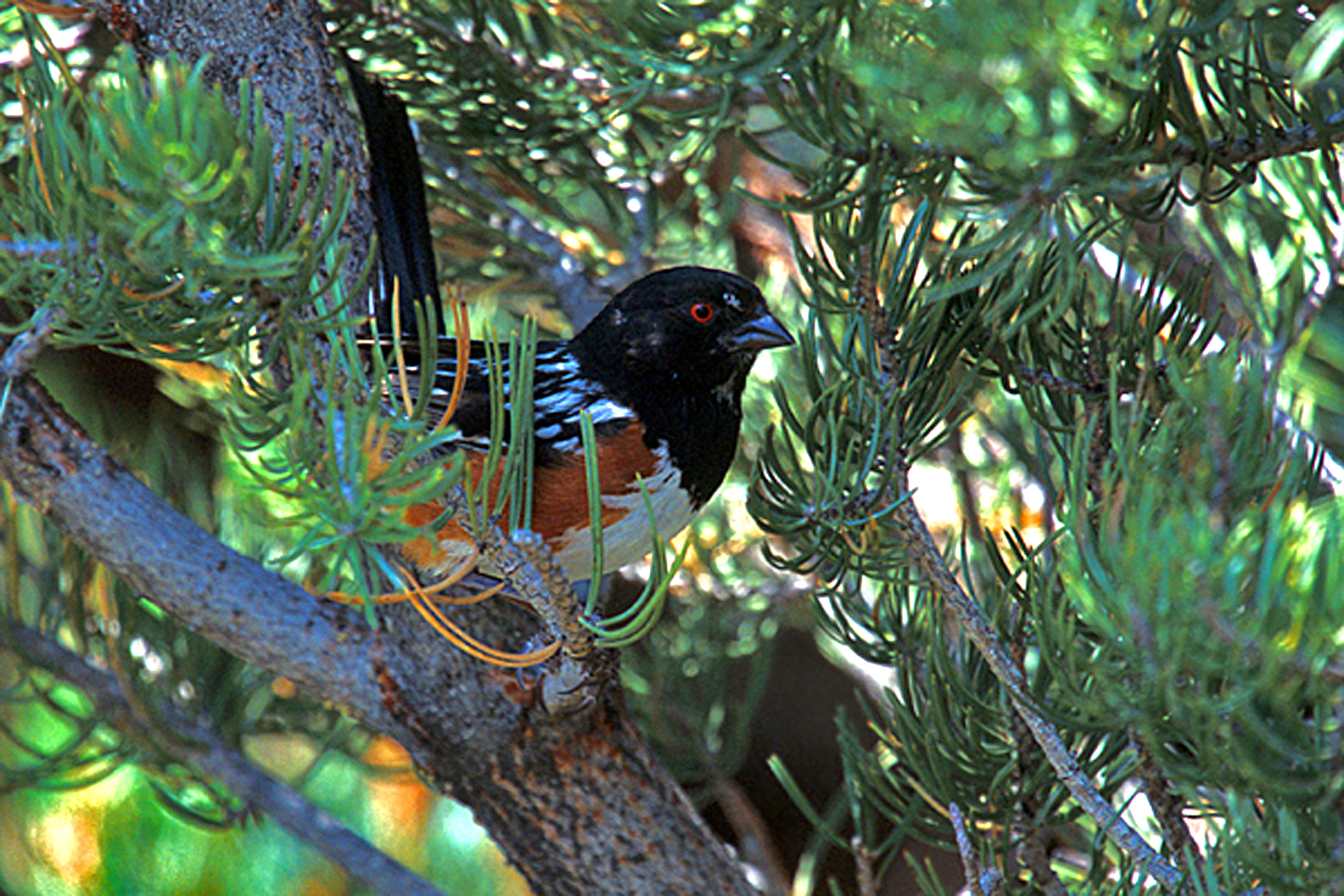
I found a fine moss-covered boulder that allowed me a new vantage point from which to look down and into the trees and brush I normally looked up at, a posture that causes the painful condition among birders known as “warbler neck.” I quickly misidentified several sparrows, and with an un-aching neck, was able to track down some raucous spotted towhees making rude observations from a clump of yaupons and to lecture them briefly. Staring at my feet as I staggered across the hillside, I found that grasses, indeed, were beginning to sprout, despite the drought. Skidding onto my derriere—it always happens off-roading on these hills—I was able to observe the first blush of blooming redbud tree, closely guarded by the great daggered yucca beside it. And then, as the wind picked up again, the rich thick smell of honey clogged the air. The source? Tiny yellow blossoms nestled under agarita spines—tiny and extravagantly generous and impossible to pick without getting pricked. The wind blew my hat off, and, setting off multiple rockslides, I chased it gracelessly down the hill.

Limits: from dust you were made and to dust you shall return. Bafflement: unexpected forms arising, unforeseen paths opening. Submission: throwing the deadwood of the ego into the flames of the Unnamable One. That’s a lot to wrestle with for the mere forty days of Lent.
—Heather


What we’re reading
Heather:
Adam Gopnick, Angels and Ages: A Short Book About Darwin, Lincoln, and Modern Life
Martin: Donovan Hohn, Moby-Duck: The True Story of 28,800 Bath Toys Lost at Sea and of the Beachcombers, Oceanographers, Environmentalists, and Fools, Including the Author, Who Went in Search of Them

Friday, February 25, 2011

"If you got a field that don't yield": writer's block and the language of community


One of the many notable gatherings Martin and I participated in this past weekend was the opening of my sister Isa Catto Shaw’s show at the Harvey/Meadows Gallery in Aspen, Colorado. In a series of watercolors and collages, she took the dark, mute burden of grief over the death of our mother and worked it into beautifully articulate packages, in some ways (perhaps) making that grief more easily borne because it is shared with a community of unknown mourners who see the paintings, with the community of artists from whom she has drawn inspiration, and from the community in which she and her family live. As far as I could tell, the opening was a wonderful success, the gallery full to overflowing as Isa and the ceramicist Doug Casebeer, with whom she shared the show, each spoke movingly about the impetus behind their individual efforts.

Knowing that she had been working like a madman for several months, I was glad (and deeply moved) to see the results of her labors. And aggravated. We’ve been talking since our mother died about a collaboration of my poetry and Isa’s art to be entitled “Blessings of a Mother.” Isa’s done her part, and it’s intimidatingly beautiful.

I, on the other hand, have done squat. This doesn’t mean I haven’t thought obsessively about the project or that I haven’t written multiple lists of topics and scraps of lines and stillborn poems. It does mean that I’ve been willing to be endlessly distracted and grumpy about it. I’ve developed all sorts of hypotheses about why I’m not writing and what I might do about it, most of them ultimately involving running away from home. My favorite defense against the terrorism of the blank page is to read, figuring that in doing so I’m in the company of someone else who has faced, at least temporarily, the tyranny of That Which Demands Expression And Remains Unexpressed. Plus, if I’m reading, I can’t write.
So here’s what I’m currently reading to fend off—and perhaps eventually to outsmart—the intimidation tactics of the blank page: Standing by Words, a collection of essays by Wendell Berry, in particular the title essay and its assertion that the primary obligation of language is to connect the idiom of the internal self with the multivalent tongues the self encounters in community, both human and otherwise. When language loses that capacity—a loss currently encouraged by the forces of industrial technology—both the self and its community languish in their isolation, succumbing eventually to a fatal disconnection from the web of love and life.

As always, Berry is defiantly unfashionable, insisting on the possibility of “fidelity between words and speakers or words and things or words and acts.” He believes that genuine communication is possible, even if its processes are ultimately mysterious and unavailable for dissection by specialists. The life of language is rooted in community and by the precision that life in community necessitates: “It sounds like this: ‘How about letting me borrow your tall jack?’ Or: ‘The old hollow beech blew down last night.’ Or, beginning a story, ‘Do you remember that time...?’ I would call this community speech. Its words have the power of pointing to things visible either to eyesight or to memory.” Community speech doesn’t imagine abstract futures; rather, it deals with what IS. It creates a walkway between internal, personal systems and external, public systems. Community speech registers the need to include both objective and subjective experience; it deflects the argot of specialists; it recognizes spheres of being beyond its domain. Says Berry:
If one wishes to promote the life of language, one must promote the life of the community—a discipline many times more trying, difficult, and long than that of linguistics, but having at least the virtue of hopefulness. It escapes the despair always implicit in specializations: the cultivation of discrete parts without respect or responsibility for the whole.... [Community speech] is limited by responsibility on the on the one hand and by humility on the other, or in Milton’s terms, by magnanimity and devotion.
Although I would argue with Berry’s assertion that all specialists are without awareness of their place in the “whole household in which life is lived” and thereby exclude themselves from the liveliness of community speech, I hearken to the limits he sets on speech, limits that protect the tender shoots of hopefulness, a crop that can be distressingly rare in an often grief-stricken world.

Forgive me. For an essay that aims, in part, to wrestle with ways to express the specificity and universality of grief, my language is so far distressingly abstract, a symptom, I suspect, of my current stuckness. I just received a note from an acquaintance who recently lost her husband to pancreatic cancer; she wrote that although she and her daughter have prepared for his death for a year, “it is like the bad dream where you show up for an exam without having read the book, in your PJs, totally unprepared.” I was struck by the generosity of the image, by her assumption that, though I have not experienced her particular and devastating sorrow, I could somehow imaginatively engage with it, and that we both belonged to the same community, despite the fact that we’ve only met twice before.

Writing is usually perceived to be a solitary pursuit, and in a very literal way it is. I’m trying to remember, however, that when I stare at the blank page or screen I’m seldom alone. (I’m not referring to the cats who often take naps behind me on my chair.) Trying to remember: trying to listen for the cloud of witnesses, the dead and the unborn, that root us in the past and impel us toward the future. I found Rainer Maria Rilke’s Duino Elegies compelling after my mother’s death, in part because their language is so rich and their meaning so elusive, like a whispered conversation from another plane of being. In the translation by J. B. Leishman and Stephen Spender, they begin with this lament:

Who, if I cried, would hear me among the angelic
orders? And if one of them suddenly
pressed me against his heart, I should fade in the strength of his
stronger existence. For Beauty’s nothing
but beginning of Terror we’re still just able to bear,
and why we adore it so is because it serenely disdains
to destroy us. Every angel is terrible.
And so I repress myself, and swallow the call-note
Of depth-dark sobbing.

Although Rilke refuses to call on the angels, they soar in and out of the poems, weaving them together, helping create a complex whole from parts threatening to hurtle toward meaninglessness and isolation.

I’m usually suspicious of angel-talk, but Wendell Berry and my widowed acquaintance and my sister all remind me that I am—we are all— surrounded by angels, by community, even when we don’t sense its presence. When we are deaf to its song, we are deaf to our own.

Now if they’d only settle down and write those poems for me. Or at least recommend some nice writer’s residency where I could get them started.
—Heather


What we’re reading
Heather:
Wendell Berry, Standing by Words: Essays
Martin: Rebecca Solnit, Infinite City: A San Francisco Atlas

Friday, December 17, 2010

Singing in the dark


The relentless sunshine of the current weather here in Austin might make those in the Midwest or on the East Coast sigh with envy. A photo on the front page of Tuesday’s New York Times shows an Ohio man ineffectually fending off the great whorls of snow around him with an umbrella. His head is bent, his shoulders hunched, his attention presumably forced inward. Strangely, as I bask in the sunshine, I’m the one who’s a little envious.

Not of the cold, certainly—I start getting chilly when the temperature drops below eighty degrees. But what I see in the picture is someone forced by the world to withdraw his attention from it, to shift his focus inward, even if it’s just to check in and notice that he’s cold. He won’t be able to stay out for long; he must retreat inside.

In one of her typically wonderful blogs, our friend Joy recently wrote an homage to darkness, to the gestational, inward gaze of the season of Advent. The punch line is, of course, that great discipline is required to move inside at this time of year, when a blizzard of parties, shopping, and end-of-year scrambling—or of loneliness and loss—assaults us. Frequently, we just sit out there in the cold, not realizing that we can go inside. Another friend of mine, prone to good works, told me that when she was pregnant and people called asking her to do something, she would look at her waxing belly and say, “Sorry, I’m busy,” and then go back to sitting quietly. Even as we attend to the frenetic tempo of this singular season, something beckons us, at least occasionally, to go inside and sit, maybe in the dark.

And what awaits us inside, in the dark? Well, any child can you tell that: scary stuff! Chupacabras (that’s one in the picture at the top of this page, by the way)! Things with too many legs and too many teeth and not enough eyes! With too much hair or not enough, with horns and scales and long dirty nails! The list of monsters gets less imaginative but no less scary as we get older: past humiliations and failures, anxieties about money, relationships, reputation, health, death. All those things wait for us in the dark. (Of course, sometimes they wait for us in broad daylight as well.)

But that’s not all that waits there. Wendell Berry, my favorite grumpy sage, has advice on how to get by the monsters:

I go among the trees and sit still.
All my stirring becomes quiet
around me like circles on water.
My tasks lie asleep in their places
where I left them, like cattle.

Then what is afraid of me comes
and lives in my sight.
What it fears in me leaves me,
and the fear of me leaves it.
It sings, and I hear its song.

Then what I am afraid of comes.
I live for a while in its sight.
What I fear in it leaves it,
and the fear of it leaves me.
It sings, and I hear its song.

Those things we fear, according to Berry, have their own songs if we sit still and listen for them. In this particular collection of poems, A Timbered Choir: The Sabbath Poems 1979–1997, the forest is his place of Sunday worship, where he brings his deepest questions and listens to the forest’s exhalations, to the words made of branch rustle and river rush and birdsong, iterations of the original Word spoken by God in the beginning. Berry is not alone when what he is afraid of approaches him; he’s in the midst of a community he knows intimately.

This kind of trope can dissolve into rank sentimentality and cruelty when those in the midst of the light and bustle use it to admonish those sitting in the sight of what they fear to buck up. But Berry’s language in this collection is rooted in an ancient warrant for the practice of sitting in the company of chaos and darkness: when, as God began creating, God shared space with the tohuvabohu, the formless void, with the darkness, and with the deep. Through them came the words: Let there be. And what came to be was good. It sang.

The fears don’t have the last word in the poem: Here’s the final verse:

After days of labor,
Mute in my consternations,
I hear my song at last,
and I sing it. As we sing,
the day turns, the tree moves.

Only after he labors and rests from his labors, after he sits quietly and listens to the songs of what fears him and what he himself fears, does Berry hear his own song. Only then is he able to join the singing already in progress, a singing that harmonizes with a wider reality (the turning of the day) and the immediate reality (the moving of the trees).

Whether or not you’re observing Advent, the deepening shadows of the season encourage most of us to move inside and prepare ourselves for this inexorable guest, darkness. Some of us will cook, some of us will shop, some of us will wrestle with monsters and despair, some will not pause from our labors or notice anything at all. If possible, go sit quietly among the bare trees. Or sit hospitably at home with whatever invisible reality is leavening within you and tell everyone you’re busy. Then go find your community and sing.
—Heather


What we’re reading
Heather:
C. S. Lewis, The Screwtape Letters
Martin: John le Carré, Our Kind of Traitor

Friday, October 22, 2010

Barbers, bison meat, and the invisible hand


I was back in my shiny new persona as salesperson last week, driving out to all the dude ranches around Bandera in hopes of scaring up a market for the hundreds and hundreds of pounds of bison meat we will soon have for sale. Reaction was generally favorable, despite the fact that I didn’t have some basic information at hand, like the prices we’ll be charging.

Aside from feeling like a dummy, a phony, and a bat-brained loony, I had fun. First, there’s very little that I enjoy more than looking at other people’s property. Second, I got to drive down some Hill Country roads I hadn’t been on before and go through the Hill Country State Natural Area, a secluded 5,000-plus-acre park dappled with beautiful blooming grasses and gayflowers, stands of hardwoods, and shining creeks. The third fun thing was getting out and meeting people—not a pleasure my usually introverted self would have anticipated. Our pattern when we go to Madroño has been to get there and dig in, not coming out unless we need something really important, like the newspaper or beer or ice cream or antihistamines. Now, for the first time, we’re starting to meet our neighbors. We’re starting—just barely—to find our way into the community.

I’ve also been rereading Wendell Berry’s Jayber Crow: The Life Story of Jayber Crow, Barber, of the Port William Membership, as Written by Himself, in which community is a central concern. (The book has easily reaffirmed its place on my top-ten favorite novels list.) So this week “community” seems to be the theme that wants to beat me over the head until I wake up and pay attention.

As you might guess from the subtitle, Jayber Crow concerns a small-town Kentucky barber whose life spans most of the twentieth century. Orphaned at an early age, Jayber is raised by a loving great-aunt and -uncle, who die when he is ten. He is sent to an orphanage and finally, a dozen years later, makes his way back to Port William to become its barber, grave-digger, and church janitor. A philosophical-minded bachelor, Jayber watches the community (that’s a map of the whole fictitious area above) over the course of several wars and the encroachment of highways and agricultural technology. Although he witnesses and endures great suffering, at the end he can say truthfully that his book is about Heaven because of the profound love the community bears for itself and for its place, both temporal and spatial.

In part, this love manifests itself in Port William’s economic life. When Jayber returns to Port William, he finds that the town’s previous barber has left, not being able to support his family on his shop’s limited income. Jayber is immediately taken by an old friend to see the town banker, who in introducing himself says, “I’m glad to know you. I knew your mother’s people.” He offers to loan Jayber the money to buy the old barbershop; Jayber describes the terms of the loan as “fair enough, but very strict in what he would expect of me.”

Jayber adds, “You will appreciate the tenderness of my situation if I remind you that I had managed to live for years without being known to anybody. And that day two men who knew who and where I had come from had looked at me face-on, as I had not been looked at since I was a child.... I felt revealed, as if to buy the shop I had to take off all my clothes.” Going into business requires him to become a part of the community, to care about its constituent parts in order to make his own way in the world.

I had imagined that this community might make Adam Smith, the patron saint of free-market economics, sneer: it lives within the limits of the land’s fertility, repairs what is broken, patches what is torn, and remains deeply suspicious of debt. Its citizens are generous to those in need, recognizing that they cannot prosper individually without prospering corporately. The antihero of the novel, Troy Chattam, is an ambitious young farmer who contemptuously rejects the old-fashioned ways of his father-in-law; Troy’s mantra is “modernize, mechanize, specialize, grow.” He goes into debt to buy new machinery and listens to agribusiness experts who tell him to use every bit of soil on the place: “never let a quarter’s worth of equity stand idle.” He seems to be a firm believer in the “invisible hand,” famously posited by Smith in his magnum opus The Wealth of Nations, which supposedly guides markets to produce the highest quality goods for the lowest price to the benefit of both producers and buyers; this is what we used to call the American way. Like that of the city for which he was named, however, Troy’s is not a story with a happy ending.

But wait—why in heaven’s name is Adam Smith suddenly part of this conversation? Because I, despite my shocking ignorance of economics, just read Adam Gopnik’s fascinating article on Smith in the October 18 issue of The New Yorker. In it Gopnik argues that Smith’s real question “was not the economist’s question, How do we get richer or poorer?, or even the philospher’s question, How should one live? It was the modern question, Darwin’s question: How do you find and make order in a world without God?”

Gopnik is ostensibly reviewing Adam Smith: An Enlightened Life, by Nicholas Phillipson, but he is really using Phillipson’s book as a jumping-off point for his own meditations on economics and community. Readers of The Wealth of Nations tend to ignore Smith’s earlier The Theory of Moral Sentiments, but by doing so, according to Gopnik, we “lobotomize our own understanding of modern life, making economics into a stand-alone, statistical quasi-science rather than, as Smith intended, a branch of the humanities.” In order for humanity to live in community, Smith posits the necessity of “an impartial observer who lives within us, and whom we invent to judge our actions.” Without this imaginative capacity, a market economy can’t exist; unless we can put ourselves in the place of our fellows, we can’t imagine what they might need. “For Smith, the plain-seeing Scot,” writes Gopnik, “the market may not have been the most elegant instance of human sympathy, but it’s the most insistent: everybody has skin in this game. It can proceed peaceably only because of those moral sentiments, those imaginary internal judges.”

Unfortunately, those imaginary internal judges recede into the background when producers band together in order to eliminate competition and control prices; according to Phillipson (via Gopnik), Smith believed that “the market moves toward monopoly; it is the job of the philosopher to define, and of the sovereign state to restore, free play.” The market works toward the benefit of all only when it is broadly just—defined (by me) as being in the long-term interests of both producer and consumer. When the scenario Berry imagines in Jayber Crow comes to pass—when economic and business practices fray the fabric of community rather than protect it—then we live in epically tragic times, like those of Troy. When we find communities in economic disarray, then, according to the father of free-market economics, imaginations incapable of sympathy are at the root of the problem.

Of course, this is a pretty self-serving position, since we at Madroño are about to go head-to-head with such giants as H-E-B, who can charge much less for bison meat than we can. But I honestly believe that the long-term health of H-E-B depends on a diverse economic ecosystem in which the building of community—which requires a mutually sympathetic imagination—will rest on the flexible backs of small, dynamic businesses. Which maybe, with the help of our local community, we will become.
—Heather


What we’re reading
Heather:
Wendell Berry, Jayber Crow: The Life Story of Jayber Crow, Barber, of the Port William Membership, as Written by Himself
Martin: Bill Minutaglio, In Search of the Blues: A Journey to the Soul of Black Texas

Friday, August 20, 2010

“A cup of tea, a warm bath, and a brisk walk”


A path is little more than a habit that comes with knowledge of a place.
—Wendell Berry

If you are ready to leave father and mother, and brother and sister, and wife and child and friends, and never see them again; if you have paid your debts, and made your will, and settled all your affairs, and are a free man; then you are ready for a walk.
—Henry David Thoreau

I’m an enthusiastic walker and believe firmly in walking’s spiritual, psychic, and medicinal benefits. Whenever our kids were feeling puny, they were usually told that a cup of tea, a warm bath, and a brisk walk would put them in order—one of the reasons my family nickname is “Deathmarch.” “We’re DYING,” they’d moan. “You’ll feel better after a walk,” I’d respond. After tugging a drooping daughter on one particularly frustrating foot-dragging outing, we discovered she had mono. But I’m sure the walk did her good.

Both nature and nurture have gone into creating this momster that is me: my mother used to frog-march my three siblings and me up the mountains around the Roaring Fork Valley in Colorado, hoping to create the conditions for quiet evenings in the little cabin we stayed in every summer. “It didn’t work,” she admitted. “The four of you never got worn out, but I sure did.” (That’s a somewhat older me walking in Colorado in the photo above.)

So whether it’s genetics or training, I walk, and Madroño has been—and surely will continue to be—a treasure trove of most excellent walks.

When we first started going to Madroño, when our youngest was a wee babe and the other two not much older, sneaking out for walks made me feel both guilty and liberated: for a brief time, at least, I was free to look at, listen to, think about, or not think about whatever I wanted, without interruption. Now that our youngest is leaving for college, I still feel that solitary walks are a guilty pleasure, albeit one about which I’m increasingly less apologetic, but I still feel the sense of release that comes when I head out the door with at least one ecstatic dog who’s noticed I’ve put on my boots and my hat and picked up my binoculars. (Walking with unbelievably brave and stupid dogs will be undoubtedly be my next blog topic.)

For a long time, I went for what my dear friend Ellen calls the yodelaiEEoo pace of walking: trying to cover as much ground as quickly as possible, preferably headed up or down steep inclines. This is a really dumb way to walk in the Texas Hill Country, especially if you’re not on a road and even if you are. First of all, if you’re off-roading and going uphill, there’s not a lot of purchase, given the rocks, leaves, and cedar detritus that cover the heavily wooded hills. There’s even less purchase when you’re coming downhill, which can look a lot like skiing, especially if you’re a really spastic skier. But off-road descents can be easier than on-road ones: once, when our youngest was about five or six, I bullied her into walking down the steepest road on the ranch with me, after we had driven up. She was so little that her relatively slight weight couldn't overcome the force of incline + scree; the final equation was an extremely sore little heinie from having her feet shoot out from under her every three steps or so.

Aside from the falling down problem, when you’re moving at the yodelaiEEoo pace, it’s very easy to miss all the Interesting Stuff to be found—or to run straight into it when you’d really rather not. I was walking on one of the roads on top one morning in June many years ago at a yodelaiEEoo pace only to find myself entangled in an enormous—no, I mean ENORMOUS—spider web. After shrieking, dancing, frantically patting my head, pulling my clothes off, etc., I slowed down enough to notice these spiders. I still don’t know what kind they were—maybe golden orbs? As I walked along, twitching and squinting with every step I took, I saw their webs everywhere. Some of them spanned fifteen- to twenty-foot gaps. How had they done that? Parachuted? Hailed taxis to drive them across? Not only were the webs huge, but they were invisible until you were two inches away from them. They taught me to slow down AND to limbo.

Once the kids got big enough, we went for what we called scrambles, which involved walking up and/or down one of the many mysterious draws that pepper the ranch. Walking with children, of course, cannot occur at a yodelaiEEoo pace, at least not until they’re bigger and stronger than you and you start calling plaintively: “Guys? Guys? Hey, wait for me!” But while I was still bigger and stronger than they were, we loved to go poke around in the draws, especially with some of our family’s emergency back-up children. (We haven’t actually outgrown this.) The kids were the ones who found all the Interesting Stuff: the rocks that looked like Swiss cheese or hearts, the iron bedsteads alongside a cast-iron Dutch oven, the fossils, the arrowheads and stone tools, the tiny flowers and ferns hiding in the shade, the little caves, the really weird bugs, the secret springs. And the snakes.

I must say a word about walking and snakes. I’ve climbed up, fallen down, and poked through a lot (though not nearly all) of the property, and I’ve concluded that snakes don’t want to see me any more than I want to see them. I try to be sure I can see where I’m putting my hands and feet, and dogs (at least the smart ones, if any such exist) are often helpful, hopping sideways to let you know that you shouldn’t step on that spot. Robert, the intrepid ranch manager, sees them all the time, but he does things like drain and dig around in the bottom of ponds. I’ve been lucky so far, with one notable exception.

One warm November day my then-fifteen-year-old son and I went walking to the back of the property. For some reason, he had brought a shotgun, and as we were walking through a patch of tall grass, he stopped and said calmly but urgently, “Mom. Snake.” And one step ahead of me was the fattest, longest, ugliest water moccasin I had ever seen. As it slithered off, he shot it, securing his place in my heart (and my ankles, where I probably would have been bitten had he not been there) as a hero.

As I've become more interested in birds, my yodelaiEEoo pace has become a thing of the past, for a couple of reasons. One is the difficulty of trying to track the little boogers through thick live-oak canopies or heavy underbrush. Another is having to stop and listen to them over the clatter I make. Our beloved old black Lab Phoebe is too blind and creaky to walk with me now, but back in the day she hated these stop-and-listen moments; if I paused for more than a minute or two she commenced with a low and pitiful moaning that wouldn’t let up until we started again. Phoebe liked the yodelaiEEoo pace. But even she was stilled into silence that February day when we turned into a usually still canyon only to hear the voices of what turned out to be literally thousands of robins and cedar waxwings, feasting—and maybe drunk—on cedar berries. The noise level was on par with I don’t know what: maybe a middle school hallway after the last class of the year, but considerably less smelly.

In fact, much to my family’s astonishment, I’ve learned to walk places and then just sit, at least sometimes. Chula the Goggle-Eyed Ricochet Hound walks with me now that Phoebe can’t, and Chula is fine with just sitting. (She has other issues that will be revealed in my walking-with-dogs post.) Did you know that certain grasses snap and crackle when the sun first hits them on cold mornings? I must have spent twenty minutes on my hands and knees one morning trying to figure out what was making that noise. Bugs? The little creatures in my head? Nope, it was just the grass talking. We had a lovely conversation, while Chula looked on, quietly concerned.

Perhaps, finally, it’s time for a new family nickname.
—Heather


What we’re reading
Heather:
Rebecca Solnit, A Paradise Built in Hell: The Extraordinary Communities That Arise in Disaster
Martin: Ellen Lupton, Thinking with Type: A Critical Guide for Designers, Writers, Editors, & Students (still)

Friday, July 23, 2010

Double vision: prophets, tribalism, eugenics, and the environment


As I dog-paddle through the sea of books threatening to drown not just me but the overwhelmed shores of my bedside table, I found these sentences: “For those who draw near and offer themselves before God, satisfaction of hunger is neither an end in itself nor a wholly ‘secular’ event.... [E]ating is a worshipful event, even revelatory; it engenders a healthful knowledge of God.” When I read this, I thought, “Ah, I am a member of the tribe that believes this.”

I briefly met Ellen F. Davis, author of Scripture, Culture, and Agriculture: An Agrarian Reading of the Bible and professor of Bible and practical theology at Duke Divinity School, when she spoke at our church about ten years ago, and I immediately developed a helpless intellectual crush on her. The crush is not diminished by the fact that Our Hero Wendell Berry wrote the foreword to the book and is quoted at the beginning of each chapter.

Davis’s basic claim is that the fertility and habitability of the Earth—and particularly of Israel—are the best indices of the health of the covenant relationship between God and his people. She writes beautifully about that stickiest of words in Genesis 1, when mankind is given “dominion” over the earth. Made in God’s image, we are meant to exercise dominion as God does, and in Genesis 1, the way God exercises dominion is to exclaim in delight over the goodness of his work, and then to declare a day of rest for his delightful creation. Reckless topsoil depletion, toxic pesticides, and Confined Animal Factory Operations, among many other current agricultural practices, would probably not pass the Delight Test.

I read all this with a double vision: on the one hand, I underline passages, write notes, and spray exclamation points in the margins. On the other hand, I think about my neighbors in the Hill Country, many of whom are very conservative Christians, and I wonder how they would react to Davis’s scathing comparison of pharaonic agricultural and economic policies (the ones that made God really, really mad) with the practices of American agribusiness. I’m not sure the book will get a lot of traction here. (Well, or anywhere; the book’s title is so unsexy it might as well be wearing a suit of armor.) And yet it seems to me so clear that Davis’s analysis is Right and needs to be broadcast.

So how do you convince someone you’re right? Well, here’s how not to do it: the way the American conservation movement sounded its earliest notes, at least politically. The current issue of Orion magazine carries a feature story entitled “Conservation and Eugenics: The Environmental Movement’s Dirty Secret.” Charles Wolforth, the author, links Teddy Roosevelt’s New Nationalism, with its emphasis on patriotism and conservation, to the propagation of “higher races,” as opposed to Native Americans, Eskimos, and other "lower races."

Wolforth writes, “These ideas had been developed at Ivy League and other universities, at museums of natural history and anthropology in New York and Washington, in learned societies and in scientific literature. When... world’s fairs focused on the West, the link between natural resources, morality, and racism was drawn ever more explicitly.” Pointedly, Wolforth quotes from Roosevelt’s New Nationalism speech, arguably the launching of the modern conservation movement:

“Of all the questions which can come before this nation, short of the actual preservation of its existence in a great war, there is none which compares in importance with the great central task of leaving this land even a better land for our descendants than it is for us, and training them into a better race to inhabit the land and pass it on. Conservation is a great moral issue, for it involves the patriotic duty of insuring the safety and continuance of the nation.” It also, apparently, involved practicing eugenics.

Awash in my sea of books, I am a descendent of this tribe. No wonder it’s hard to convince many people I'm right.

When I walk through my beloved Austin neighborhood, I’m often beset with the same double vision I have when reading the prophetic environmental writing I’m prone to read. I walk through my neighborhood pleased—delighted—with my wonderful neighbors and their well-tended homes and gardens. As I have mentioned before, walking a couple of blocks can take forty-five minutes or more, depending on who else is out and about and what news needs to be exchanged, which dogs need to be admired, whose children are doing fabulously or exasperatingly nutty things. How can this be a bad thing? And yet I can’t help but be aware of the multitudes of cars, the endless whir of air conditioners, the trucks bearing pesticides that fertilize lawns, the lights that are on all night, the sprinklers running even as it rains. (We, too, are guilty of some of these.) How do you convince people without double vision that the goodness they’re seeing in their way of life is resting on something destructive?

In the fruit of the American environmental movement there is a noxious worm: a sense of righteousness that often gnaws its way into self-righteous tribalism. The ways in which we eat and live are often markers of who we are; when told (or bullyragged) to change these ways, it can seem as if something essential in us has been condemned, most particularly when judgment comes from outside the tribe. Like triumphalist Christians who refuse to acknowledge the ugliness and violence that comes bundled with the hope and beauty of Christian history, triumphalist environmentalism will foment ill-will from people whose health and livelihoods could be enhanced or saved by its message.

Every movement must have its prophets. Traditionally, prophets haven’t been the sort of people you want to invite home for dinner; they eat locusts, dress in skins or nothing at all, sit in cisterns, moan a lot—that sort of thing. The true prophets get listened to not because they're scare-mongering but because they always have an accurate sense of their tribe’s history, an acute awareness of when it has fallen away from its original goodness. They include themselves in their judgments. Despite their very visible eccentricities, there is an essential humility to them. When I pull up behind a pickup truck with a bumper sticker that says “Drill Here Drill Now Pay Less” (along with a Rick Perry sticker) and my first impulse is to jump out of my car and bash in the windshield, I know I’m no prophet. We’re both driving, after all, and I need that gas as much as the other driver does. I’m not passing that humility test.

So where does that leave my tribe, the irritable non-prophets of the environmental persuasion? As an oldest child, I always like to have the right answer to pass on—and enforce, whenever possible. My tribe is frequently stymied. But here’s one thing: invite someone over for dinner, someone not of the tribe. Feed them something that’s beautiful, that’s grown in accordance with the revelatory economy of food kindly produced. And think about this passage from one of Wendell Berry’s Sabbath poems:

Leave your windows and go out, people of the world,
go into the streets, go into the fields, go into the woods
and along the streams. Go together, go alone.
Say no to the Lords of War which is money
which is Fire. Say no by saying yes
to the air, to the earth, to the trees,
yes to the grasses, to the rivers, to the birds
and the animals and every living thing, yes
to the small houses, yes to the children. Yes.
—Heather


What we’re reading
Heather:
Thomas Perry, Strip
Martin: Russell Shorto, The Island at the Center of the World: The Epic Story of Dutch Manhattan and the Forgotten Colony That Shaped America

Friday, July 16, 2010

There and back again: a geobiography


We recently led a seminar on Madroño Ranch as part of the annual Summer Literary Festival at Gemini Ink, a writing center in San Antonio. The theme of this year’s festival was “What Would Nature Do?” and in our seminar we read and discussed works by Wendell Berry, Annie Dillard, Michael Pollan, Ellen Davis, Lewis Hyde, and Mary Oliver. We also asked the participants to write a brief “geobiography” (as “A Native Hill” is described in the collection The Art of the Commonplace: The Agrarian Essays of Wendell Berry), a statement of how they consider themselves rooted in a particular place. Here’s a slightly modified version of what I wrote:

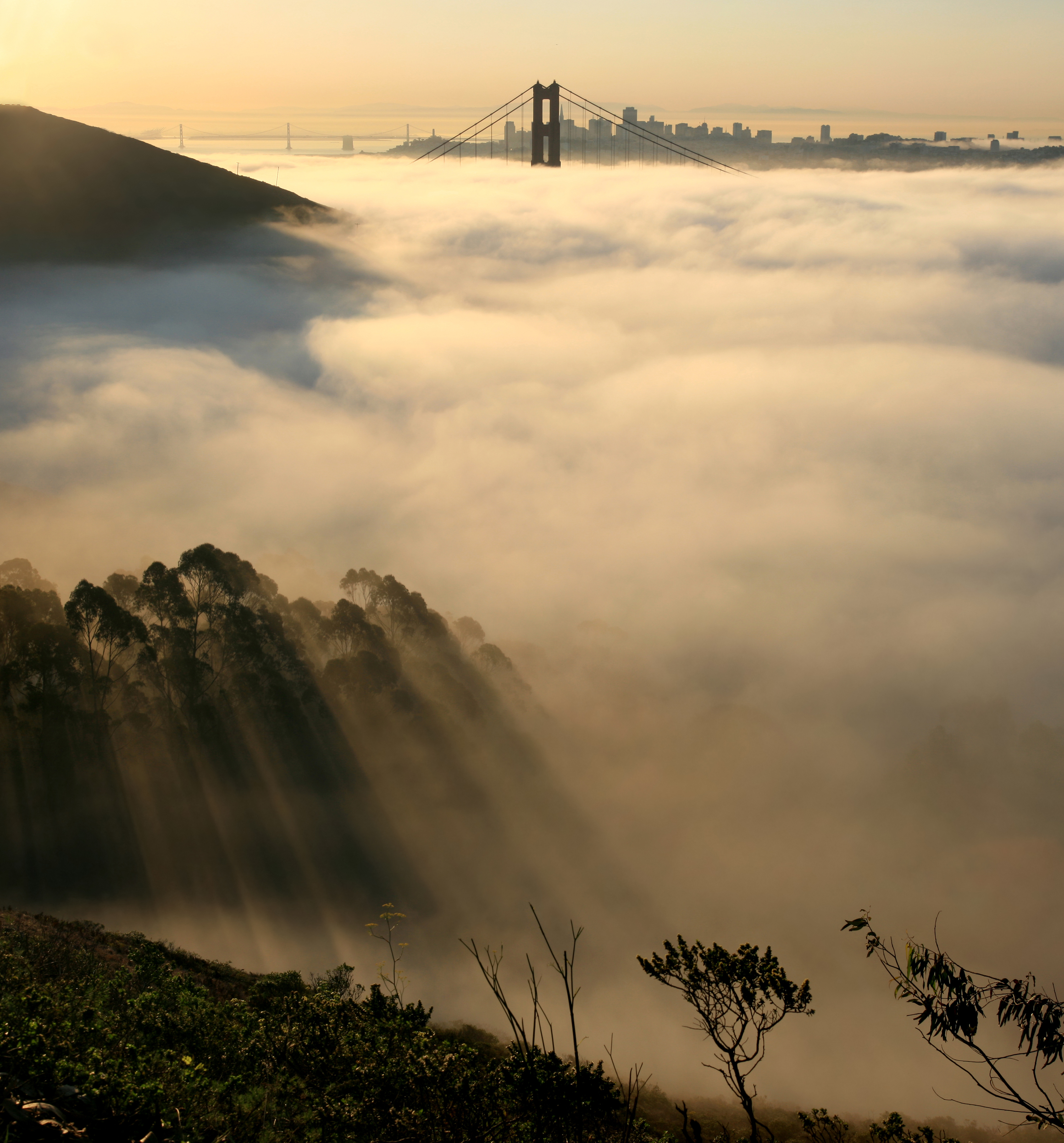
I am a native of the Bay Area, a place that everyone thinks is among the most beautiful in the world. I was born in San Francisco and grew up in Marin County, just to the north of the city across the Golden Gate Bridge; I lived amid the winding hillside lanes and towering redwood and eucalyptus trees of Mill Valley, beneath Mount Tamalpais, until I was eighteen, when I went off to college in Massachusetts. There I met the woman I would marry, a native Texan, as I recounted in an earlier post; she had a job lined up in San Antonio after graduation, I followed her there, and I never lived in California again.

Why did I so thoughtlessly, even eagerly, put California behind me when I left home? In part, I realize in retrospect, I was hoping to escape some not particularly unusual or interesting adolescent angst and family tensions, and to redefine myself as a brighter, happier person in a new setting, among strangers. (I say nothing of the futility of such an effort; I was young and foolish.) Massachusetts, and then Texas, seemed like blessed opportunities, and I clutched at them desperately.

Only… almost despite myself, I continued to count as my closest friends two men I had known almost since birth. Brad and I met in kindergarten; Hans came a few years later. The three of us went all the way through elementary and high school together, and all three of us headed east to college, Brad to Harvard and Hans to Yale. (Both, I hear, pretty good schools.)


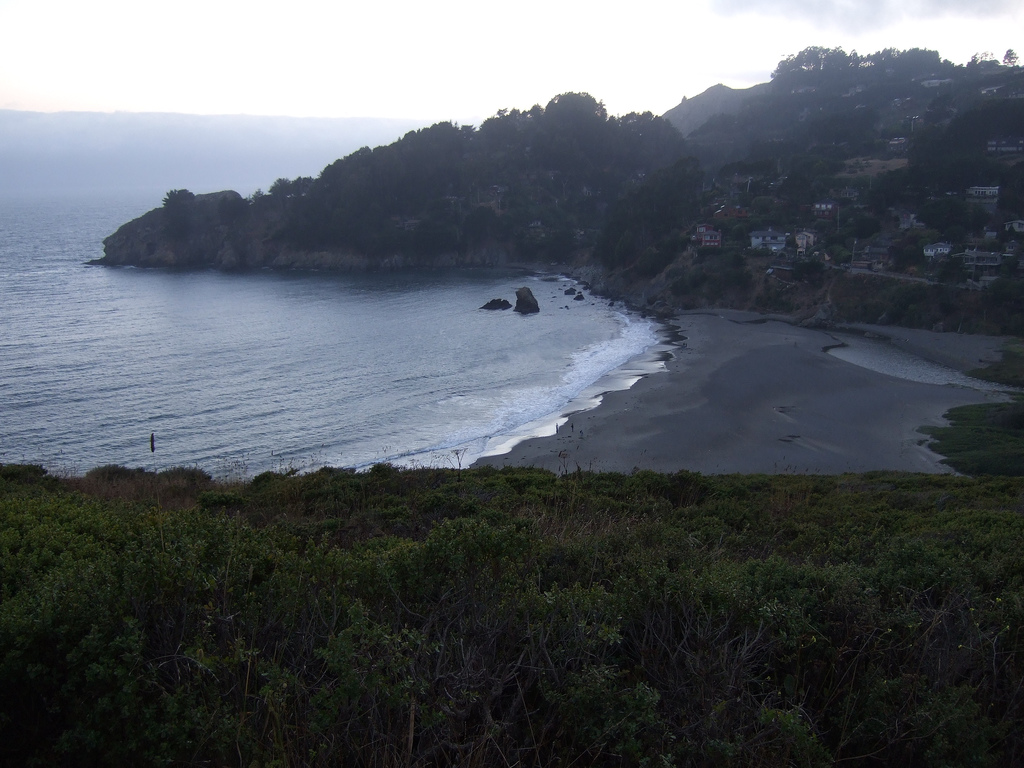
After college, I ended up in Texas, while Brad and Hans returned to California, to Los Angeles and San Francisco respectively. Last year we all turned fifty, and Brad decided we should celebrate the milestone together. So, after much back-and-forthing (all three of us are married with children, with all the scheduling complications that implies), we arranged to meet in San Francisco in March and spend a day in Marin hiking along the California Coastal Trail, six miles from Tennessee Valley to Muir Beach and back again.

It was a beautiful day, we had a wonderful time, and we agreed to make this little reunion an annual event. This year, again, we gathered in March and spent the day hiking in Marin, this time at Pierce Point Ranch on the northern end of Point Reyes National Seashore. Next year we may meet in L.A., in deference to Brad; the year after that, perhaps we’ll meet in Texas.

One of the wonderful gifts this time with Brad and Hans has given me is the opportunity to reconsider my relationship to California. My father was something of an outdoorsman, and when I was a child we went camping and hiking in Marin County, in the Sierras, and even up the coast to Oregon and Washington. For various reasons, I never really enjoyed these trips as much as I should have—or so I thought. But hiking to Muir Beach and at Point Reyes with Brad and Hans forced me to confront an unexpected and long-suppressed truth: I loved this land, and felt comfortable in it in a way I still don’t in Texas, even though Texas is now home. I gloried in half-remembered vistas, in the way the glittering ocean and the crepuscular redwood forests and the rolling dairy farms butted up against each other; in the cypress and eucalyptus and madrone and laurel and manzanita, and in the blooming flowers whose names I’d never learned; in the cool, salty air; in the fog banks drifting in over the Pacific.

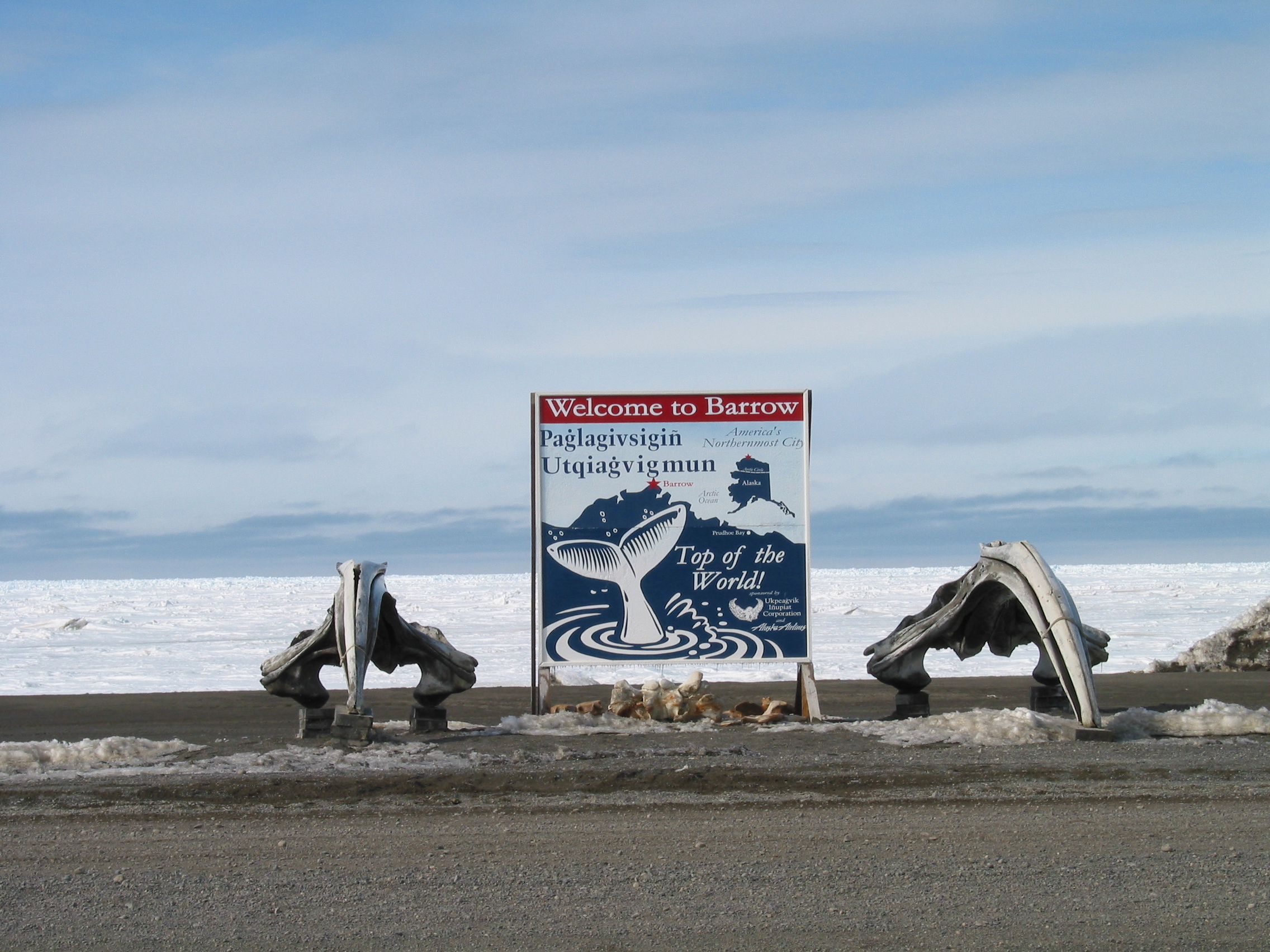
I felt as if a long-shut door in my head had been wrenched open again, and I could look out, for the first time in years, onto the bright green hills of a place I’d forgotten, or almost forgotten—a place I knew at once, with an almost literally breathtaking shock of recognition. I now realize that, having grown up amid such gentle but dramatic beauty (the suggestive, if erroneous, local legend has it that Tamalpais means “Sleeping Lady”), I came to believe that the world is an essentially beneficent place, and that the land is an unfailing source of pleasure and comfort. (I might have reached a different set of conclusions had I grown up in, say, Orla, Texas, or Barrow, Alaska.)

Mostly, however, I realize how much I took for granted, and how unbelievably lucky I was (and am). Over the years I’ve wasted a lot of time and energy in attempting to deny or at least rewrite my past, but now I feel as though I’ve been given a second chance to connect, to learn this land—not as the place I live, perhaps, but as the place I’m from, the place that formed me.
—Martin


What we’re reading
Heather:
Kathryn Stockett, The Help
Martin: Dan O’Brien, Buffalo for the Broken Heart: Restoring Life to a Black Hills Ranch

Friday, July 9, 2010

Made for you and me: thoughts on private property


Last week I went to Woody Creek, Colorado, to visit my father, sister, and brother and their posses. Among the many pleasures I find at the family place are my early morning walks up a trail that runs behind my sister and brother-in-law’s house through Bureau of Land Management land. Known locally as the Buns of Steel Trail, it gallops up a southwest-facing slope dotted with scrub oak and sage. The soil is so red (colorado in Spanish) that if you wear white socks, you may be sure that they’ll never be white again, even after repeated washings. From varying elevations, you can watch the entire Roaring Fork Valley unroll below you and note the stately procession of the valley’s grand guardians, from the hulking Sawatch Range in the east to the ethereal Elk Mountains to the south to the comfortable bulk of Mount Sopris to the southwest and down to the gentler terrain (relatively speaking) toward Glenwood Springs. Because of bears, it’s wise to walk with dogs or other noisemakers, but your heart can be stopped just as effectively by a flushed grouse as by the appearance of a bear. Sometimes you walk through waist-high lupines, which can give a Texan a complex; even in a fabulous spring you can’t walk in bluebonnets, first cousins to mountain lupines, any higher than your shins.

I came to the familiar circle of scrub oaks where I usually look down on my father’s and sister’s houses about a thousand feet below and then, delighted with the world, turn to go back down. Just imagine the oceanic depths of my outrage when I saw a sign that said “For Sale: Cabin Site." For SALE? Whose foul idea of a joke was this? This wasn’t private property: it was communal, open to all who would admire it and dream away the hidden bears.

My sister set me straight: we have been trespassing all these years, the fence marking the boundary of BLM land having fallen into disrepair several dozen yards before the turn-around spot. The dirt road next to the turn-around spot wanders for miles through the back country and is accessible to the public, but the relatively new owners of the land around the road (including the cabin site) regularly patrol it to be sure that what few walkers there are don't step off the public way onto their private property.

Still incensed the next evening as the dogs and I took our postprandial constitutional, I encountered a young man on a four-wheeler driving onto our property, which is at the end of Little Woody Creek Road. “Can I help you?” I asked. “Oh, no, ma’am,” he said politely. “I’m just going to check my water. I do it twice a day.” My eyebrows at my hairline, I said, perhaps not quite as politely, “YOUR water?" “Yes, ma’am,” he said complacently.

I almost slugged him. In the politest, most Christian way, of course.

My sister explained (do you detect a pattern here?): Colorado’s water laws are so Byzantine and obtuse that they make those in Texas, shockingly, look almost reasonable. (In Colorado, whichever property has the oldest claim to the water controls it, regardless of how many times that property has changed hands.) But water laws aren’t really germane here. What I was struck by—and almost struck out in defense of—is my sense of what constitutes private property, especially when it comes to land that I love. I was furious to find that A) land I thought was communal was, in fact, privately owned (and NOT by my family); and B) land I thought was privately owned (by my family) was, in some respects, communal.

Having recently moved Lewis Hyde’s The Gift: Creativity and the Artist in the Modern World to the top of my nonfiction top-ten list, I can’t ignore the profound complications of ownership, especially of something like land, which clearly comes to humanity as gift. We did not make it, and yet somehow we (some very few of us) have come to claim it as our own—initially, at least, through arrogance and (often violent) appropriation. This makes me sad and uneasy, because I love the land that my family and I “own.” And I hate those quotation marks, but I think they’re a useful discipline for any landowner.

When I got back to hot, scruffy, sweaty Texas from cool, elegant Colorado, I found a book waiting for me: Ellen Davis’s Scripture, Culture, and Agriculture: An Agrarian Reading of the Bible. (Insert punch line here.) In the book’s first line, Davis writes: “Agrarianism is a way of thinking and ordering life in community that is based on the health of the land and living creatures.” Those may not sound like fighting words, but they are. Davis claims that the Bible is grounded in agrarian thought and practice, in which possession of the land—Israel—is dependent “upon proper use and care of land in community.” The great irony is that America, steeped in the parallels between its own westward expansion and the Hebrews’ crossing the Jordan to the Promised Land, has completely missed the point by ignoring the holiness of the land given (and received by its first residents) as unmitigated gift. Buying and selling land for rapacious personal profit, poisoning it, cutting down ancient trees in order to build highways, polluting waters, killing for sport, abusing the animals given for nourishment, leaving the land for dead – these behaviors were and still should be open to emphatic prophetic censure as clear violations of the spirit in which the Earth’s tenants were given such gifts, and clear invitations for divine retribution that included (and still includes) such weapons as whirlwinds, drought, flood, and famine.

In his introduction to Davis’s book, Wendell Berry writes, “We have been given the earth to live, not on, but with and from, and only on the condition that we care properly for it. We did not make it, and we know little about it. In fact, we don’t, and will never, know enough about it to make our survival sure or our lives carefree. Our relation to our land will always remain, to a certain extent, mysterious. Therefore, our use of it must be determined more by reverence and humility, by local memory and affection, than by the knowledge we now call ‘objective’ or ‘scientific.’ Above all, we must not damage it permanently or compromise its natural means of sustaining itself.”

As seriously as I take Wendell Berry, Ellen Davis, and the Bible, though, I can’t ignore that very noisy part of me that wanted to deck that polite young man on “our” property checking on “his” water. The part of me that understands ownership as power isn’t going to disappear in a puff of high-mindedness. Nor am I sure it should; I don’t know of any compellingly desirable alternative to private land ownership as it currently exists. The government? Don’t think so. The Church, whatever that is? Ditto. Communal ownership? Only if I have my own bathroom. And while well-thought-out policies are a necessary component of land stewardship, they can’t force the conversion experience that moves our relationship with the land from that of owner and chattel to that of respectful, fruitful, loving partnership. How do we become married to the land?

By this point in most of my blog posts, I’ve managed to tie myself into emotional knots: dear God, there’s no way out of whichever mess I’ve decided needs fixing this week. So this is the time I usually go outside and stew about it. And I’ll start pulling weeds and notice a volunteer melon plant spilling its way out of the pile of compost I forgot to spread. And I’ll see one of the crowd of long-armed sunflowers fluttering and waving under a dozen investigative goldfinches so bright they look like flowers themselves. And I’ll watch the power plays at the hummingbird feeders, and listen to the mockingbirds make fun of the wrens. I’ll find that damn grasshopper that’s been eating my basil. (We shall say no more of him.) I’ll find a really cool-looking bug I haven’t seen before, or maybe shriek a little shriek when I come upon one of those terrifying large and harmless (oh, sure) yellow garden spiders. I’ll hear a chuck-will’s-widow emphatically tuning up in the draw behind our house. And I’ll tell someone how much I love “my” garden, how lucky I am, how lucky we are to live on this earth. Isn’t that how converts are made?
—Heather


What we’re reading
Heather:
Ellen Davis, Scripture, Culture, and Agriculture: An Agrarian Reading of the Bible
Martin: Tom Killion and Gary Snyder, Tamalpais Walking: Poetry, History, and Prints

Friday, July 2, 2010

The literary environment (with apologies to the Williams Alumni Review)


Confession: I consider myself a loyal son of alma mater, but I usually just skim the quarterly Williams Alumni Review before tossing it into the recycling pile. A story in the June issue, however, caught my eye. “The Literary Environment,” by Denise DiFulco, is about the director of the college’s Center for Environmental Studies (CES), a Spanish professor named, confusingly, Jennifer French.

The article notes that a lot of people have asked French how a Spanish professor came to be named the director of the CES. The answer involves her first book, Nature, Neo-Colonialism, and the Spanish American Regional Writers (2005), which examined early twentieth century Latin American literary responses to European economic hegemony in the region. Or something like that. Explains French, “Often those writers, including Horacio Quiroga and José Eustasio Rivera, made central to their narratives the deleterious effects of agriculture and other industries.”

Sadly, I know next to nothing about Latin American literature, and I’d never heard of Quiroga or Rivera, but another quotation from the article really struck me: “At their best, environmental history, philosophy, religion, literary studies, and the like engage the underlying assumptions of environmental policy and environmental science.”

Exactly! I thought. This is a view that resonates profoundly with Heather and me—we are, after all, both English majors—and when we eventually begin accepting environmental writers for residencies at Madroño Ranch, we hope to cast as wide a net as possible.

Say the words "environmental writer" and I suspect that most people think of folks like Bill McKibben or William Cronon or Michael Pollan or David Quammen (all of whom happen to be heroes of ours): essayists or historians with a biological or agricultural bent. They, and many others like them, are among the most important writers we have, and we would be thrilled—thrilled—to have them, or their peers, as residents at Madroño. But we also hope to attract novelists and poets and philosophers and theologians and playwrights and screenwriters and memoirists and perhaps even (what the heck) bloggers—pretty much anyone who’s thinking and writing in creative ways about the land and those who have their being on it, and how they affect each other.

Think of the fiction of Wendell Berry, who (much as William Faulkner did in Mississippi) has created a complex and compelling imaginary landscape in Kentucky. (Apparently the American South is particularly suited to this sort of exercise.) Think of the novels of Willa Cather—Death Comes for the Archbishop is still my favorite—and Wallace Stegner, which depict the varied experiences of humans confronted with the vast spaces of the American West. Think of the poetry of Mary Oliver, in which the animal and vegetal and geological is a constant, almost sentient presence, and W. S. Merwin, described in the New York Times as “a fierce critic of the ecological damage humans have wrought.” Think of the economic writings of Paul Hawken and Woody Tasch, critiques of modern industrial capitalism’s obsession with short-term, bottom-line profit at the expense of just about everything else. Heck, think of David Winner’s odd little book Brilliant Orange: The Neurotic Genius of Dutch Football—one of my personal favorites—in which he examines how landscape has affected the style of soccer played in the Netherlands.

Closer to home, think of the gracious and elegant memoirs of John Graves and Roy Bedichek, two of the foundational texts of the environmental movement in Texas; or the beginning of The Path to Power, the first volume of Robert Caro’s epic three-volume biography of Lyndon Johnson, which is still the best short history of the Texas Hill Country I’ve ever read; or even Witold Rybczynski’s magisterial biography of Frederick Law Olmsted—not a Texan, but an astute observer of the state—which is a wonderful narrative summary of nineteenth-century American thought about nature in urban and suburban settings. Each of these works, I believe, has something original and important to say about community in America, community in this case defined as (to crib shamelessly from Pollan’s website) “the places where nature and culture intersect.”

We’d be pretty surprised to receive applications from Faulkner, Cather, Stegner, or Bedichek, since they're, well, dead. But would the rest of them want to come to Madroño Ranch? Well, why not? We hope that the offer of beautiful and rugged surroundings, free from distraction, in which to ponder and dream and focus and unfocus (and eat well, of course; let’s not forget eating well) and bounce ideas off peers, will prove irresistible. Are we aiming high? Of course; but if you don’t aim high, you’ll just keep hitting the ground, right? Who knows—maybe Jennifer French herself will want to come. According to the article, she’s already working on her next book, a study of how memories of the War of the Triple Alliance (fought between Paraguay and the combined forces of Argentina, Brazil, and Uruguay from 1864 to 1870) have influenced attitudes toward land use in Paraguay. Wouldn’t that be cool?
—Martin


What we’re reading
Heather:
Laurie King, Touchstone
Martin: Paul Hawken, The Ecology of Commerce: A Declaration of Sustainability (still)

Friday, December 11, 2009

Carnivorocity, take two


Meat-eating has been the topic of much discussion recently, at least in what I’ve been reading. Jonathan Safran Foer’s new book, Eating Animals, has generated a significant buzz; if you Google “foer eating animals,” you get 961,000 results. Foer spent three years investigating meat production in the United States, factory farming in particular. Although he himself is a vegan, he says that he has no interest in converting anyone to veganocity; he just wants people to think about where their food—specifically, their meat—comes from.

Although I haven’t come to his vegan, or even vegetarian, conclusions, I think Foer is right. (Ahem. I haven’t read the book.) In my previous post on carnivorocity (a word my spell-check still doesn’t like), I wrote very convincingly about the ethical precondition necessary for meat eating, to wit: awareness of and gratitude for the sacrifice required to satisfy the appetite of the meat-eater, awareness that demands, for those who are to be sacrificed, a life of comfort in the world to which they are adapted. In fact, I think this awareness needs to be extended to vegetables as well; after all, even vegans require sacrifice—it’s just not as messy. By the very act of eating, all creatures—including, most emphatically, humans—participate in the circle of sacrifice, and a circle it most assuredly is; in nature, there is no such thing as a free lunch.

What sacrifice, then, is demanded of us? This year’s edition of The Best American Essays, edited by Mary Oliver, includes an essay by Wendell Berry entitled “Faustian Economics,” originally published in Harper’s Magazine. In it, Berry rails against the American propensity to confuse personal freedom with unlimited consumption, a fantasy that perhaps arose due to the intersection of the Industrial Revolution with the discovery of vast natural resources in the American West. As a nation, we’re confronting the end of this fantasy and “entering a time of inescapable limits”—an opportunity, according to Berry, to become reacquainted with traditional definitions of humanness. By their very nature, humans are, well, natural, and therefore limited. What distinguishes us from other animals (although I think this topic is being hotly debated) is our capacity for self-limitation, self-restraint, particularly as it is “implied in neighborliness, stewardship, thrift, temperance, generosity, care, kindness, friendship, loyalty, and love.”

As long as we base our identity on limitlessness, we deny an essential—and liberating—element of our humanity. As long as we base that fundamentally human activity, commerce, on fantasies of limitlessness, it will be inhuman and inhumane, what Berry calls an “economy of community destruction.” Instead, he would have us cultivate a mindfulness of human limits—agricultural, economic, medical, technological, scientific—in order to reclaim “the knowledge that some things, though limited, are inexhaustible.” He cites intact ecosystems like working forests and farms that give inexhaustibly, given the practice of human self-restraint. He compares this practice to the willing submission of artists to the constraints of their art forms—the poet to the sonnet, the painter to the canvas. The work that arises from this sort of discipline has the capacity to feed us inexhaustibly, a capacity we’ve all experienced when revisiting favorite novels or symphonies or buildings.

The title of Berry’s essay comes from Christopher Marlowe’s Tragical History of Doctor Faustus, first published in 1604, in which Faustus (that’s him in the picture above) sells his soul to Lucifer in exchange for knowledge and power. What Faustus learns—or, more accurately, refuses to learn—is that the human mind and soul are and ought to be subject to limits. When creatures refuse to acknowledge limits, hell is born.

So how do we practice the self-restraint necessary to maintain our humanity? Some, like Foer, argue that abstaining from eating meat is a logical and reasonable sacrifice. I don’t disagree with him, but I don’t think there’s a single way to humane self-restraint. Many indigenous cultures have focused on—even worshipped—the animals that fed them, Native Americans and bisons being a case in point.

I’m not sure any of this will mean much to those people and businesses that value scale and efficiency over humanness. Nor will it mean much to most Americans accustomed to the availability of cheap meat at every meal. But, with Berry, I believe that our humanity is at stake in the choices we make when we eat. When we choose to abet the suffering of animals and ecosystems to feed ourselves, we whittle away at our own humanness. When we choose to limit our choices, we paradoxically open ourselves to the possibility of inexhaustible plenty.

Sounds like a deal to me.
—Heather

What we’re reading
Heather: Sylvia A. Earle, The World Is Blue: How Our Fate and the Ocean’s Are One
Martin: Colum McCann, Let the Great World Spin