Showing posts with label agribusiness. Show all posts

Friday, March 25, 2011

Tragic waste: some thoughts on the s-word


Watching the bats from the kitchen stoop at Madroño Ranch the other morning was a little like watching my own thoughts. They swooped in and out of my line of vision, limited by the dawn darkness, more audible than visible.

Actually, my comparison is disrespectful of the bats; their flight is only apparently erratic, driven by the ever-changing location of the insects they were chasing. My thoughts are actually erratic. As the promise of light bloomed into dawn, the bats settled into the bat house, a feat of precision flying and landing almost like none I’ve seen, and I noticed the pile of guano under the house and thought that soon it would be time to collect it and put it into the compost pile.

And so began my musings on shit and the difference between good shit and bad shit. My apologies to the bats become ever more profound.

One of our current projects at the ranch is figuring out how to use the abundant quantities of manure the residents of the Chicken Palace produce. Currently, it’s just collected and dumped onto the compost pile, but we’re working on a plan to get the chickens more fresh greenery to eat, in part self-fertilized (by the chickens, that is). We’re planning to cordon their pasture off into sections and seed the sections with cover crops, alfalfa, rye—whatever the season will grow. We’ll soon have a rainwater collection system in place and will be able to irrigate with it (assuming it ever rains again). Using a portable fence, we’ll be able to rotate the chickens from section to section. We have no idea if this will work, but it seems like a good idea and a fine, closed-loop use of all that poop. We’re also looking to collect buffalo leavings (summer “interns”: consider yourselves warned!) and use them as well.

Perhaps you’ve noticed that I used all sorts of synonyms for shit in the previous paragraph; one of the few I didn’t use is “waste,” because in natural systems, or systems that mimic natural systems, shit isn’t waste, it’s integral and beneficial. Paraphrasing Our Hero Wendell Berry, Michael Pollan notes in The Omnivore’s Dilemma: A Natural History of Four Mealsthat industrial agriculture has taken an elegant solution—crops feed animals, whose manure in turn fertilizes crops—and “divide[d] it into two new problems: a fertility problem on the farm... and a pollution problem on the feedlot.” Concentrated Animal Feeding Operations (CAFOs), the current source of most of America’s meat, produce mountains of manure that becomes toxic to the animals and to the communities around them, and the monoculture farming that produces most of America’s grains and vegetables doesn’t use animals to fertilize the soil, requiring farmers to use chemicals instead. That’s the difference between good and bad shit: when something that could be beneficial becomes useless, even toxic, waste.

In fact, I’m beginning to wonder if a community’s or even a culture’s capacity to endure might not be assessed by how effectively it mimics nature in dealing with its own discharge. I’ve just been rereading T. C. Boyle’s darkly comic Drop City, which begins at a northern California commune of the same name in 1970. The commune’s stated raison d’etre is to provide its residents with a place to escape the confines of bourgeois America and get back to the land and basic values by expanding their consciousness with meditation and drugs.

Of course the place is utter chaos, overflowing with the metaphoric excrescences of abusive sexual practices, racism, child neglect, and rampant narcissism, along with literal shit. The septic system is overloaded and the two characters who concern themselves with the problem get no help at all from the community. Eventually, the county government threaten to raze the buildings because the commune constitutes a health hazard. Because they can’t deal with their own shit on any level, the residents of Drop City abandon what was once beautiful land and move their chaos to the bush country of Alaska just as summer is waning. When they get there, most of them realize that they need to leave or get their shit together so they don’t die.

The problem is that getting your shit together necessitates acknowledging that you are, in fact, going to die. (It’s still Lent, after all. You knew we’d get to this.) Ernest Becker, in his Pulitzer Prize-winning The Denial of Death, identifies the human dilemma in scatological terms: we are the “god[s] who shit.”
Look at man [sic], the impossible creature! Here nature... [has] created an animal who has no defense against full perception of the external world, an animal completely open to experience.... He not only lives in this moment, but expands his inner self to yesterday, his curiosity to centuries ago, his fears to five billion years from now when the sun will cool, his hopes to eternity from now. He lives not only on a tiny territory, not even on an entire planet, but in a galaxy, in a universe, and in dimensions beyond visible universes. It is appalling, the burden man bears, the experiential burden.... Each thing is a problem and man can shut out nothing. As Maslow has well said, “It is precisely the god-like in ourselves that we are ambivalent about, fascinated by and fearful of, motivated to and defensive against. This is one aspect of the basic human predicament, that we are simultaneously worms and gods.” There it is again: gods with anuses.
Human civilization, says Becker, is built on this unease, which encourages us to throw our energies into an “immortality project” by which we deny our smelly mortality; those who confront it with none of the filters an immortality project provides wither into mental illness. Becker doesn’t attempt to solve this conundrum but rather to set some boundaries within which we can wrestle with it with “the courage to be.” He writes in his conclusion: “We need the boldest creative myths, not only to urge men on but also and perhaps especially to help men see the reality of their condition. We have to be as hard-headed as possible about reality and possibility.”

So it was with interest that I watched the video produced by a Japanese media artist to explain to Japanese children why everyone was so worried about the Fukushima nuclear reactor after it was damaged by the tsunami and earthquake on March 3. The video compares the damaged nuclear reactor to a boy with an upset stomach who needs to poop. So far the boy has just farted—smelly enough for everyone around him—but the video assures us that a team of selfless doctors are doing all they can to prevent Nuclear Boy from pushing out his stinky poop.

The video says that the Fukushima reactor is more like Three Mile Island Boy—who just farted—than like Chernobyl Boy, who not only pooped but had diarrhea that went everywhere, likening nuclear waste to a dirty diaper. My first thought after watching it was that Japanese doctors would be overwhelmed by waves of constipated children, convinced that evacuating their bowels might bring their struggling nation to even deeper depths. My next thought moved me to images in last Sunday’s New York Times of the city of Chernobyl in its abandoned state and the interview with one of the guardians of “the sarcophagus,” the concrete structure built to contain Reactor No. 4, and that can’t come in contact with water without risking the escape of highly radioactive fumes. Scientists estimate that an area around the reactor the size of Switzerland will remain affected for up to 300 years. The aftermath of a nuclear meltdown “is a problem that does not exist on a human time frame.” The guardian figures that the work he does will be available to his children and grandchildren.

Using my heavily truncated recapitulation of Becker’s thought, it seems that proponents of nuclear power (which I have sometimes been) are refusing to be “as hard headed as possible about reality and possibility,” are as unwilling to get our shit together as the drug-addled utopians of Drop City. We are as schizophrenic as the video artist who proposes that we just not poop. A few pages away from the article about Chernobyl was a piece by a Japanese astrophysicist who wrote in reference to the Fukushima reactor crisis:
Until a few years ago, power usage in Japan was such that during the summer Obon holidays, when people typically return to their ancestral homes, it would have been possible to meet demand even if all nuclear power plants were turned off. Now, nuclear energy has come to be indispensable for both industry and for our daily lives. Our excessive consumption of energy has somehow become part of our very character; it is something we no longer think twice about.
Now that I’m trying to tie together all these thematic threads, I have to swoop back to my bat-intensive stoop, to the manure-heavy compost pile in the pasture outside the Chicken Palace. May we humans be as useful as Madroño’s bats and chickens as we consider our energy future; may we refuse to resort to the narcissistic chaos of Drop City’s residents, who left their spiritual and literal bad shit for someone else to deal with.
—Heather


What we’re reading
Heather:
Karen Armstrong, Twelve Steps to a Compassionate Life
Martin: Nicholson Baker, The Anthologist

Friday, September 3, 2010

Stubbing the giant’s toe: thoughts on Midwestern agribusiness


Corn. Soybeans. Corn. Soybeans. Corn. Soybeans. Corn. Soybeans. Corn. Soybeans. Corn. Soybeans. Corn. Soybeans. Corn. Soybeans.

And did I mention corn?

We drove last week from Austin to Gambier, Ohio, to deliver our youngest to college, and then back to Austin. (Empty nest. Delight. Depression.) That this trip was my maiden voyage into the American Midwest was just one of many notable firsts. At about the time we crossed the line from Kentucky to Ohio, it began: fields of corn and soybeans on either side of the road stretching to the horizon, interrupted only occasionally by copses of oaks or by farm houses and barns or by grain storage units. We started to joke about it by the time we got to Gambier, smack in the middle of Ohio. After installing our daughter in her new dorm room, we turned our noses west and drove from Gambier to Clarksville, Missouri, on the banks of the Mississippi River, in one endless, relentless, repetitive, mind- and butt-numbing 600-mile day. The joking stopped at about mile 100.

The landscape wasn’t unpleasant by any means: the apparently unlimited fecundity of the earth was impressive, as was the system that ordered such abundance. The scope of it! And we didn’t even make it into Iowa or Nebraska! No wonder the people behind this astonishing productivity are proud of it.

But there’s another way to see that landscape, and those afflicted with the double vision I wrote about in an earlier post might see the abundance as a tumor, or at least a spreading rash. The economic, cultural, and environmental damage imposed by the efficiencies of agribusiness have been well documented, most popularly by Michael Pollan in The Omnivore’s Dilemma: A Natural History of Four Meals and Eric Schlosser’s Fast Food Nation: The Dark Side of the All-American Meal, along with films like Food, Inc. and Fresh. The idea that inexpensive food can be grown only through the use of annuals and monocultures, efficiencies of scale, and heavy pesticide use has been seriously challenged by farmers like Joel Salatin and Will Allen. Along with the steady depletion of topsoil, the off-farm effects of conventional agriculture are also well documented, from depletion of local biodiversity to the rapidly growing “dead zone” in the Gulf of Mexico.

After spending the night in Clarksville, we drove through another scene of apparent abundance en route to Eureka Springs, Arkansas. Arkansas, of course, is the home of Tyson Foods, which began as a chicken wholesaler in 1935. In the interests of full disclosure, I have to admit that I love chickens for reasons that aren’t entirely rational. Last year, we moved our chickens at Madroño from the nasty old chicken coop to the Chicken Palace and added substantially to their numbers. The Chicken Palace, built by Robert Selement, the ranch’s redoubtable manager, could probably withstand a nuclear attack and has already foiled a whole lot of skunks, raccoons, coyotes, bobcats, hawks, and owls.


One of the great pleasures of a Madroño morning is to let the ladies (one of whom is named Fred, for reasons not entirely clear to us) out of the Palace and into the adjoining pasture and then to throw them the previous night’s vegetable scraps. From the moment they see me coming down the hill, they begin an almost-intelligible running commentary that steadily increases in volume and intensity. (“Can you believe she wears boots with her nightgown?” “God, I hope there’s no fennel in that scrap bowl.” “Hasn’t she ever opened a gate before? What’s taking her so long?”) Anticipation is so focused that by the time I open the door to the yard, and then the gate from the yard to the pasture, there’s a charge in the air that surely rivals the first seconds of the running of the bulls in Pamplona. No, really. Those chickens are moving. And I’m laughing. And very happy to gather (and sell) their marigold-yolked eggs. (For the reflections of a true chickenista, be sure to check out the highly readable blog posts of Carol Ann Sayle, who owns and operates Austin’s wonderful Boggy Creek Farm along with her husband Larry Butler. Carol Ann’s chicken blogs are worthy of a BBC comedy of manners with period costumes.)

Given my tender feelings toward our chickens, seeing a Tyson truck rolling down an Arkansas highway carrying its cargo of tightly packed chicken cages made me tense. When we got to Eureka Springs, with its funky old boutiques and gingerbread houses, we found a restaurant that served local produce and whose waitress told us that she was a “universal soul.” I relaxed a little, enough to start chatting with the friendly couple sitting next to us. As it turned out, the husband was a Tyson chicken farmer. The 16-year-old boy he had hired for the summer was worthless, he said, but the 14-year-old was great. He didn’t have an attitude yet, and never complained about the hours he had to spend each day picking up dead chickens.

I got tense again.

How can something that seems so clearly wrong to one person seem perfectly acceptable to another? How can I have arrived at my advanced age and still be surprised that this is so? Even though we all technically speak the same language—the Midwestern corn and soybean farmers, the Arkansas chicken farmer, and I—there seems to be an unbridgeable perceptual gulf between us.

When I’m feeling this kind of tension, I become almost ridiculously grateful for things like the National Geographic website, which describes the work of young scientists with big ideas that “show a potential for future breakthroughs.” Among the chosen for 2010—and they are a fascinating group—is an agroecologist named Jerry Glover who works for The Land Institute in Salina, Kansas. His field of study, so to speak, is perennial grains, wheat in particular. Unlike annual crops, which need to be replanted every year, drain nutrients from the soil, and allow erosion when they die, perennial crops can be “harvested year after year and maintain excellent soil quality.” Glover doesn’t preach (at least not on the National Geographic website), and he doesn’t point fingers at conventional farmers and say: Bad, bad, bad. He points to the evidence in the soils he works with, which speaks for itself—and in the same dialect as the farmers whose practices I find so confounding.
Seeing the scope of those Midwestern cornfields is sobering. Thinking about the money, time, and corporate muscle they represent is daunting. Reading about the salmonella outbreak in factory farm-produced eggs is appalling. When you buy from your local farmers and humane producers, you’re allying yourself with an entity so tiny it barely stubs the giant’s toe when it gets kicked aside. But that tiny stumbling block gathers a little more heft with each kick. To mix my images, watching this process is like watching a big pot of water boil: just when you think your stove is busted or your water’s dead, you start seeing those tiny bubbles appear and get perceptibly more emphatic—especially when then are young scientists like Jerry Glover working next to the giant and turning up the heat. And if those of us who eat keep asking for it, the giant will eventually be able to put sweet organic (or at least less devastating) corn into the pot and feed the less-eroded world with it. Sounds like a fairy tale, I know, but maybe it’s more of a parable—a story with an unexpected and revelatory twist at the end. Whatever it is, just think of the possible chicken commentary on giants in the kitchen. I’ll bet their footwear choices are even more entertaining than mine.
—Heather


What we’re reading
Heather:
Elizabeth Kostova, The Historian
Martin: Eboo Patel, Acts of Faith: The Story of an American Muslim, the Struggle for the Soul of a Generation

Friday, July 23, 2010

Double vision: prophets, tribalism, eugenics, and the environment


As I dog-paddle through the sea of books threatening to drown not just me but the overwhelmed shores of my bedside table, I found these sentences: “For those who draw near and offer themselves before God, satisfaction of hunger is neither an end in itself nor a wholly ‘secular’ event.... [E]ating is a worshipful event, even revelatory; it engenders a healthful knowledge of God.” When I read this, I thought, “Ah, I am a member of the tribe that believes this.”

I briefly met Ellen F. Davis, author of Scripture, Culture, and Agriculture: An Agrarian Reading of the Bible and professor of Bible and practical theology at Duke Divinity School, when she spoke at our church about ten years ago, and I immediately developed a helpless intellectual crush on her. The crush is not diminished by the fact that Our Hero Wendell Berry wrote the foreword to the book and is quoted at the beginning of each chapter.

Davis’s basic claim is that the fertility and habitability of the Earth—and particularly of Israel—are the best indices of the health of the covenant relationship between God and his people. She writes beautifully about that stickiest of words in Genesis 1, when mankind is given “dominion” over the earth. Made in God’s image, we are meant to exercise dominion as God does, and in Genesis 1, the way God exercises dominion is to exclaim in delight over the goodness of his work, and then to declare a day of rest for his delightful creation. Reckless topsoil depletion, toxic pesticides, and Confined Animal Factory Operations, among many other current agricultural practices, would probably not pass the Delight Test.

I read all this with a double vision: on the one hand, I underline passages, write notes, and spray exclamation points in the margins. On the other hand, I think about my neighbors in the Hill Country, many of whom are very conservative Christians, and I wonder how they would react to Davis’s scathing comparison of pharaonic agricultural and economic policies (the ones that made God really, really mad) with the practices of American agribusiness. I’m not sure the book will get a lot of traction here. (Well, or anywhere; the book’s title is so unsexy it might as well be wearing a suit of armor.) And yet it seems to me so clear that Davis’s analysis is Right and needs to be broadcast.

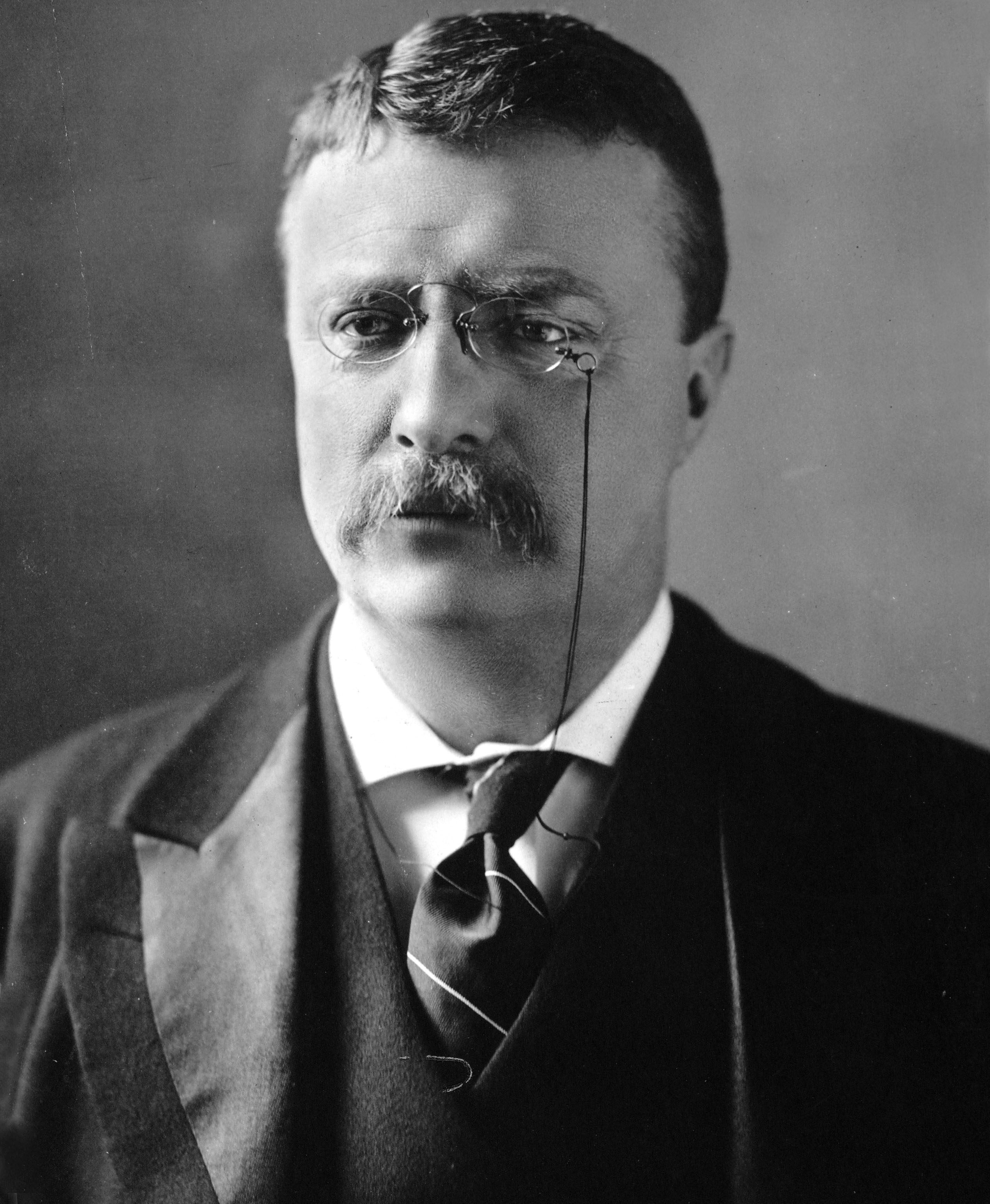
So how do you convince someone you’re right? Well, here’s how not to do it: the way the American conservation movement sounded its earliest notes, at least politically. The current issue of Orion magazine carries a feature story entitled “Conservation and Eugenics: The Environmental Movement’s Dirty Secret.” Charles Wolforth, the author, links Teddy Roosevelt’s New Nationalism, with its emphasis on patriotism and conservation, to the propagation of “higher races,” as opposed to Native Americans, Eskimos, and other "lower races."

Wolforth writes, “These ideas had been developed at Ivy League and other universities, at museums of natural history and anthropology in New York and Washington, in learned societies and in scientific literature. When... world’s fairs focused on the West, the link between natural resources, morality, and racism was drawn ever more explicitly.” Pointedly, Wolforth quotes from Roosevelt’s New Nationalism speech, arguably the launching of the modern conservation movement:

“Of all the questions which can come before this nation, short of the actual preservation of its existence in a great war, there is none which compares in importance with the great central task of leaving this land even a better land for our descendants than it is for us, and training them into a better race to inhabit the land and pass it on. Conservation is a great moral issue, for it involves the patriotic duty of insuring the safety and continuance of the nation.” It also, apparently, involved practicing eugenics.

Awash in my sea of books, I am a descendent of this tribe. No wonder it’s hard to convince many people I'm right.

When I walk through my beloved Austin neighborhood, I’m often beset with the same double vision I have when reading the prophetic environmental writing I’m prone to read. I walk through my neighborhood pleased—delighted—with my wonderful neighbors and their well-tended homes and gardens. As I have mentioned before, walking a couple of blocks can take forty-five minutes or more, depending on who else is out and about and what news needs to be exchanged, which dogs need to be admired, whose children are doing fabulously or exasperatingly nutty things. How can this be a bad thing? And yet I can’t help but be aware of the multitudes of cars, the endless whir of air conditioners, the trucks bearing pesticides that fertilize lawns, the lights that are on all night, the sprinklers running even as it rains. (We, too, are guilty of some of these.) How do you convince people without double vision that the goodness they’re seeing in their way of life is resting on something destructive?

In the fruit of the American environmental movement there is a noxious worm: a sense of righteousness that often gnaws its way into self-righteous tribalism. The ways in which we eat and live are often markers of who we are; when told (or bullyragged) to change these ways, it can seem as if something essential in us has been condemned, most particularly when judgment comes from outside the tribe. Like triumphalist Christians who refuse to acknowledge the ugliness and violence that comes bundled with the hope and beauty of Christian history, triumphalist environmentalism will foment ill-will from people whose health and livelihoods could be enhanced or saved by its message.

Every movement must have its prophets. Traditionally, prophets haven’t been the sort of people you want to invite home for dinner; they eat locusts, dress in skins or nothing at all, sit in cisterns, moan a lot—that sort of thing. The true prophets get listened to not because they're scare-mongering but because they always have an accurate sense of their tribe’s history, an acute awareness of when it has fallen away from its original goodness. They include themselves in their judgments. Despite their very visible eccentricities, there is an essential humility to them. When I pull up behind a pickup truck with a bumper sticker that says “Drill Here Drill Now Pay Less” (along with a Rick Perry sticker) and my first impulse is to jump out of my car and bash in the windshield, I know I’m no prophet. We’re both driving, after all, and I need that gas as much as the other driver does. I’m not passing that humility test.

So where does that leave my tribe, the irritable non-prophets of the environmental persuasion? As an oldest child, I always like to have the right answer to pass on—and enforce, whenever possible. My tribe is frequently stymied. But here’s one thing: invite someone over for dinner, someone not of the tribe. Feed them something that’s beautiful, that’s grown in accordance with the revelatory economy of food kindly produced. And think about this passage from one of Wendell Berry’s Sabbath poems:

Leave your windows and go out, people of the world,
go into the streets, go into the fields, go into the woods
and along the streams. Go together, go alone.
Say no to the Lords of War which is money
which is Fire. Say no by saying yes
to the air, to the earth, to the trees,
yes to the grasses, to the rivers, to the birds
and the animals and every living thing, yes
to the small houses, yes to the children. Yes.
—Heather


What we’re reading
Heather:
Thomas Perry, Strip
Martin: Russell Shorto, The Island at the Center of the World: The Epic Story of Dutch Manhattan and the Forgotten Colony That Shaped America

Friday, June 18, 2010

Adventures in Business-Land


This week, during a solo trip to Madroño, Heather spent much of her time knocking on doors in Kerrville, Bandera, Medina, Tarpley, and vicinity, hoping to convince chefs and restaurateurs to buy locally raised, grass-fed bison meat from the ranch. Our initial herd of fifteen animals has grown to thirty-six, including a couple of young males who have already, by their obstreperous behavior, nominated themselves as the first to be harvested this fall.

I’m not particularly objective, of course, but I think she could make a pretty compelling case to those potential customers. To wit:
  • Bison meat generally has more protein, iron, and nutrients than beef or chicken;
  • Bison meat is lower in fat and calories than beef or chicken;
  • Our bison spend their lives ranging freely on Madroño’s 1,500 acres, and never set foot on feedlots;
  • Our bison are never injected with or fed growth hormones, steroids, or any other supplements;
  • To ensure the quality of the meat and reduce stress on the animals, our bison will be field-harvested on site under the supervision of a licensed inspector from the Texas Department of State Health Services.
Another point we hope to emphasize is that, since we’re a small-scale, local operation, our customers will also be our neighbors, which means we’ll be accountable and responsive to them in a way that Big Agriculture isn’t. It also means that every penny our customers spend on our meat will stay right here in Central Texas.

Our hope is that the sale of bison meat, eggs, and produce from Madroño will (eventually) provide significant financial support for the residential center for environmental writers we hope to open at the ranch. We know there’s a growing market in Austin for fresh, local, sustainably raised food, but we’re not planning to sell in Austin—too complicated and expensive logistically, plus we wouldn’t want to compete with our friend and mentor Hugh Fitzsimons of Thunder Heart Bison—so we’re hoping to find a comparable demand in the area right around Madroño. (And based on Heather’s schmoozing this week, the early returns are encouraging.)

Make no mistake, though: going into business—especially the business of turning a creature into a commodity—presents all kinds of challenges for a couple of recovering English majors. Virtually all of my adult work experience has been in the nonprofit sector; shifting to something that is explicitly designed to make money, no matter how noble we believe the cause to be, is a bit of a shock. (A couple of years ago we were told that the mother of one of our daughter’s schoolmates referred to us as “just a couple of old hippies.” She did not intend it as a compliment.) As entrepreneurs, we are babes in the woods.

I imagine our first bison harvest will be quite an adventure, as will the processing and distribution that will follow. We’re already moving out of our comfort zone—I’m pretty sure Heather never imagined herself as a salesperson—and confronting a couple thousand pounds of dead buffalo will move us even farther into unknown territory. I mean, business plans? Financial projections? Balance sheets? Puh-lease!


Of course, it’s probably good for us complacent old hippies to be forced out of our comfort zones occasionally; we just have to hope that we don’t make a total cock-up of it.

On the other hand, maybe we don’t want to get too caught up in this whole mercantile thing. I’ve been reading Ian L. McHarg’s influential book Design with Nature, originally published in 1969. McHarg, an expatriate Scot who pioneered the field of environmental planning in the United States, writes witheringly of the prevailing view in his adopted homeland: “Neither love nor compassion, health nor beauty, dignity nor freedom, grace nor delight are important unless they can be priced. If they are non-price benefits or costs they are relegated to inconsequence. The economic model proceeds inexorably towards its self-fulfillment of more and more despoliation, uglification and inhibition to life, all in the name of progress – yet, paradoxically, the components which the model excludes are the most important human ambitions and accomplishments and the requirements for survival.”

Of course, McHarg is hardly the first thinker to decry a fixation on financial gain. In the sixth century BCE, Lao-Tzu put the same sentiment somewhat more pithily: “Chase after money and security and your heart will never unclench.” In a similar vein, I Timothy tells us that “the love of money is the root of all evil.” (I Timothy is also the source of the phrase “filthy lucre,” by the way.) Jesus himself reminds us, in Matthew’s gospel, that “You cannot serve both God and Mammon.”

And yet, and yet... we live in a fallen world, and money is an intrinsic part of it. The love of money may be the root of all evil, but money itself is not necessarily evil. (Or, as Peter J. Gomes writes in The Good Book: Reading the Bible with Mind and Heart, “Wealth is not a sin, but it is a problem.”) The trick, obviously, is to learn money; to use it; to see it as a means to an end, not an end in itself. I mean, why can’t Madroño become an example of enlightened capitalism, a model of a countercultural way of thinking about commerce—a way that emphasizes the small-scale, local, sustainable long term, instead of the bigger-is-better, metastatic, smash-and-grab short term? I think we’ve all seen enough of the latter way of thinking, and its consequences, to last us a good while.

Of course, it’s easy for me to preach self-righteously about the corrupting dangers of the profit motive; we’re unlikely to make enough money selling bison to threaten the state of our souls. Indeed, just breaking even seems like an ambitious goal right now. I'm sure we’ll be writing more about Heather and Martin’s Adventures in Business-Land in the weeks and months to come. In the meantime, pray for us – and our bank account.
—Martin


What we’re reading
Heather: Richard Powers, The Echo Maker
Martin:
Ian L. McHarg, Design with Nature (still)

Friday, March 26, 2010

Sorry, Dad: wilderness and government regulation


Harmonic convergences have ordained that I’m not done pondering wilderness yet.

For my recent post on “Mapping the geography of hope: our place in the wilderness,” I once again used a quotation without having read its source. My latest hit-and-run involved Wallace Stegner’s oft-repeated phrase “the geography of hope.” (That’s Stegner in the photo above.) I didn’t think I’d left the phrase gasping for the air of its original context, but this week I backtracked and read Stegner’s famous 1960 “Wilderness Letter,” which argued powerfully that the federal government should set aside sweeping tracts of wilderness to remain largely untouched by human hands. Since my post had expressed the modest hope that private landowners, especially responsible ranchers, could be full participants in, rather than obstacles to, wilderness preservation, I thought, “Oh, help and bother!”

Then my sister forwarded me a lovely email from her friend Karin Teague, who noted that “we as a species are SO far from understanding and practicing living harmoniously with the land, with all our technological toys and need for speed and basic greed, THANK GOODNESS we had visionary thinkers like John Muir and Aldo Leopold who advocated for wilderness protection, otherwise we would have lost forever so many extraordinary landscapes.” Help and BOTHER.

Finally came the news of Stewart Udall’s death. As Secretary of the Interior, Udall presided over the passage of the Wilderness Act of 1964, the act that Stegner’s letter helped bring into existence, the act by which the government protected millions of acres from our “need for speed and basic greed”—a piece of legislation that not only kept foundational landscapes untouched, but advanced the idea that such landscapes have been necessary to the formation of the American character. Alright already!

To move ahead, I need to move back first. I am the product of a politically mixed marriage (Democratic mother, Republican father), though I have generally landed on my mother’s side, or somewhat to her left, most of the time. But learning about the hoops that our friends who are small farmers, ranchers, and chefs must jump through in order to keep up with rules designed primarily for agribusiness, I’ve begun foaming at the mouth over government regulation, which pleases my father. Our Madroño adventure has taught me about the daunting bureaucratic gauntlet through which community-minded entrepreneurs must run, and it gets my dander, hackles, and dyspepsia up.

These producers often see their customers every day and consequently feel a profound personal connection and responsibility to them. But they’re forced to run the same maze of regulations as do the agribusiness giants who don’t know me from Adam. Agribusiness’s faceless relationships with its customers are driven by the bottom line, a much more tangible measure of success than the idealistic-sounding yardsticks of community or environmental well-being. But my farming and ranching friends, whom I see every week at market, know that we are intricately bound together at many levels, not merely at the bottom line. Our health—economic, environmental, familial, personal—is a package deal. None of us prospers unless we all do.

So, yes, I’ve learned to be skeptical of government regulation. And yet, and yet... government shapes not just the reality of America, but the idea of America as well. As much as I hate stupid regulations, I hate even more the possibility that, without some external restraints, our apparently insatiable appetites might destroy the very source of our richest symbols and concrete sense of liberty. 

In his Wilderness Letter, Stegner wrote, “Something will go out of us as a people if we ever let the remaining wilderness be destroyed; if we permit the last virgin forests to be turned into comic books and plastic cigarette cases; if we drive the few remaining members of the wild species into zoos or to extinction; if we pollute the last clean air and dirty the last clean streams and push our paved roads through the last of the silence, so that never again will Americans be free in their own country from the noise, the exhausts, the stinks of human and automotive waste. And so that never again can we have the chance to see ourselves... [as] part of the environment of trees and rocks and soil, brother to the other animals, part of the natural world and competent to belong in it. Without any remaining wilderness we are committed wholly, without chance for even momentary reflection and rest, to the headlong drive into our technological termite-life, the Brave New World of a completely man-controlled environment. We need wilderness preserved—as much of it as is still left, and as many kinds—because it was the challenge against which our character as a people was formed.”


Flying over West Texas not long ago, I noticed that parts of the Permian Basin have been carved up into thousands of—well, I’m not sure what. I saw a network of dirt roads leading to what looked like empty squares of bare earth, which I presume are somehow connected to the oil and gas industry.

I know, I know: it’s not as if the Permian Basin were the Garden of Eden before. So what have we lost by carving up this cussedly dry and famously inhospitable landscape? Back to Stegner: “Let me say something on the subject of the kind of wilderness worth preserving. Most of those areas contemplated are in the national forests and in high mountain country.… But for spiritual renewal, the recognition of identity, the birth of awe, other kinds will serve every bit as well. Perhaps because they are less friendly to life, more abstractly nonhuman, they will serve even better.”


Texans have traditionally prided themselves on their ability to subdue and conquer even the most unpromising land—to make it pay, whether through cotton or cattle or petroleum. One of the unfortunate effects of this pride has been to minimize the value of the land as it exists before being “improved.” We treat it like, well, dirt, and not like our patrimony. In such cases, it seems that government, as Udall and his allies saw, is the only answer to our apparently endless “need for speed and basic greed.” Until we demonstrate that we (both Texans and Americans) are able as a people to restrain ourselves from devouring what sustains us, I continue to support (wise) government intervention to save us from our grotesque appetites. There’s astonishingly little legislation that encourages us to feed our neighbors and the land that sustains us as we would have ourselves fed: with mutual respect and self-restraint. But I’ll support it when I see it and push for it when I don’t. (Sorry, Dad.)

Stegner quotes Sherwood Anderson as saying that the wild nature of the prairie has the capacity to “take the shrillness out of” us. Maybe I need to go spend the night under the vast West Texas sky to lose some of my own shrillness. But I’ve quoted Sherwood Anderson without ever having read anything by him, so at least I know what my next blog topic will probably be.
—Heather

What we’re reading
Heather: Catherine Keller, Face of the Deep: A Theology of Becoming
Martin: George Perkins Marsh, Man and Nature; or, Physical Geography as Modified by Human Action