Showing posts with label Austin. Show all posts

Friday, August 13, 2010

Listapalooza: top ten Austin restaurants


Yep, another one of those crazy lists. This one, of my ten favorite restaurants in Austin, was a real toughie. The one clear choice was Texas French Bread (pictured above), our absolute number-one favorite dinner spot. After that, however, things got a little murky.

A few disclaimers: Austin is a pretty good eaters’ town, but I tried to restrict myself (for the most part) to restaurants that feature local and seasonal ingredients, which narrowed the field somewhat. Virtually all of the places I’ve listed are in central or north Austin, because that’s where we live and spend most of our time. Heather’s list might look somewhat different than mine, though I trust there’d be a healthy amount of overlap. I’ve included only one barbecue place, which may strike some Austinites as sacrilegious. And there are a number of other places I’ve tried and enjoyed immensely, but haven’t managed to return to often enough for them to make my top ten just yet.

But enough stalling; here’s a first attempt at a top ten, in alphabetical order.

Café Pacha, 4618 Burnet Road: a great spot to feel that inimitable Austin groove, with fair trade coffee, smoothies, empanadas, sandwiches, omelets, etc., most of which are organic, and a vaguely South American vibe.

Changos Taqueria, 3023 Guadalupe: wonderful tacos (and enormous burritos), made to order with fresh ingredients. We’re partial to the aguas frescas, too, especially the horchata.

Eastside Café, 2113 Manor Road: a longtime Austin favorite, with a beautiful organic garden perfect for strolling before or after dinner.

Fino Restaurant Patio and Bar, 2905 San Gabriel: a pan-Mediterranean place with a great bar, and the sister of Emmett Fox’s Asti Trattoria in Hyde Park. We really go for the small plates and tapas.

Julio’s Café, 4230 Duval: a funky little Hyde Park neighborhood favorite serving wonderful Mexican food. The chicken enchilada plate with green tomatillo sauce is one of my very favorite dishes in Austin.

Ruby’s BBQ, 512 West 29th Street: genuine pit-smoked barbecue (the all-natural brisket is my favorite), terrific sides, excellent tacos and Cajun dishes, and signed memorabilia from a variety of blues, R&B, and rock and roll legends who played at the now-relocated Antone’s when it used to be next door.

Salvation Pizza, 624 West 34th Street: great thin-crust pizza. The #5 (white pie with chicken, prosciutto, dried sage, and fresh garlic) is our family’s favorite.

Somnio’s Café, 1807 South First Street: the dining room feels like your grandma’s house, with mismatched furniture and an informal feel, but grandma never cooked like this: fresh, locally sourced, organic, even some vegan options. BYOB.

Texas French Bread, 2900 Rio Grande: fresh, locally sourced bistro food; reasonable prices; casual ambience; BYOB – what’s not to like? If you live in or near Austin and haven't had dinner there yet, you need to do so as soon as possible.

Vino Vino, 4119 Guadalupe: this wine bar-cum-restaurant is not the place to come for a quiet, intimate dinner, but we love everything about it – the food, the incredible wine selection, the wonderful and helpful staff – except the decibel level.

So there you have it. Now we’d love to hear about some of your local favorites, in Austin or elsewhere!
—Martin


What we’re reading
Heather: Robert McAfee Brown (ed.), The Essential Reinhold Niebuhr: Selected Essays and Addresses
Martin: Ellen Lupton, Thinking with Type: A Critical Guide for Designers, Writers, Editors, & Students

Friday, July 23, 2010

Double vision: prophets, tribalism, eugenics, and the environment


As I dog-paddle through the sea of books threatening to drown not just me but the overwhelmed shores of my bedside table, I found these sentences: “For those who draw near and offer themselves before God, satisfaction of hunger is neither an end in itself nor a wholly ‘secular’ event.... [E]ating is a worshipful event, even revelatory; it engenders a healthful knowledge of God.” When I read this, I thought, “Ah, I am a member of the tribe that believes this.”

I briefly met Ellen F. Davis, author of Scripture, Culture, and Agriculture: An Agrarian Reading of the Bible and professor of Bible and practical theology at Duke Divinity School, when she spoke at our church about ten years ago, and I immediately developed a helpless intellectual crush on her. The crush is not diminished by the fact that Our Hero Wendell Berry wrote the foreword to the book and is quoted at the beginning of each chapter.

Davis’s basic claim is that the fertility and habitability of the Earth—and particularly of Israel—are the best indices of the health of the covenant relationship between God and his people. She writes beautifully about that stickiest of words in Genesis 1, when mankind is given “dominion” over the earth. Made in God’s image, we are meant to exercise dominion as God does, and in Genesis 1, the way God exercises dominion is to exclaim in delight over the goodness of his work, and then to declare a day of rest for his delightful creation. Reckless topsoil depletion, toxic pesticides, and Confined Animal Factory Operations, among many other current agricultural practices, would probably not pass the Delight Test.

I read all this with a double vision: on the one hand, I underline passages, write notes, and spray exclamation points in the margins. On the other hand, I think about my neighbors in the Hill Country, many of whom are very conservative Christians, and I wonder how they would react to Davis’s scathing comparison of pharaonic agricultural and economic policies (the ones that made God really, really mad) with the practices of American agribusiness. I’m not sure the book will get a lot of traction here. (Well, or anywhere; the book’s title is so unsexy it might as well be wearing a suit of armor.) And yet it seems to me so clear that Davis’s analysis is Right and needs to be broadcast.

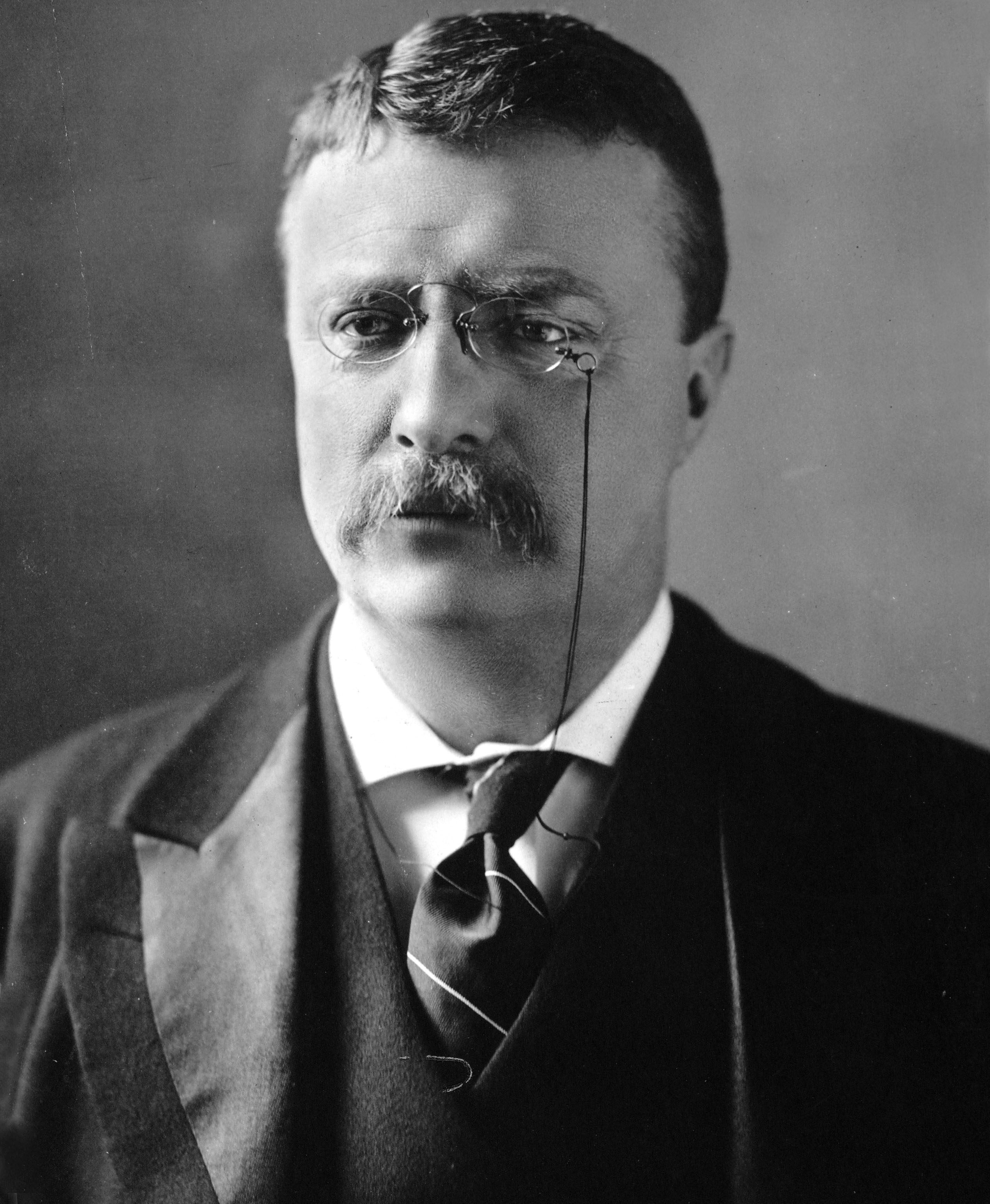
So how do you convince someone you’re right? Well, here’s how not to do it: the way the American conservation movement sounded its earliest notes, at least politically. The current issue of Orion magazine carries a feature story entitled “Conservation and Eugenics: The Environmental Movement’s Dirty Secret.” Charles Wolforth, the author, links Teddy Roosevelt’s New Nationalism, with its emphasis on patriotism and conservation, to the propagation of “higher races,” as opposed to Native Americans, Eskimos, and other "lower races."

Wolforth writes, “These ideas had been developed at Ivy League and other universities, at museums of natural history and anthropology in New York and Washington, in learned societies and in scientific literature. When... world’s fairs focused on the West, the link between natural resources, morality, and racism was drawn ever more explicitly.” Pointedly, Wolforth quotes from Roosevelt’s New Nationalism speech, arguably the launching of the modern conservation movement:

“Of all the questions which can come before this nation, short of the actual preservation of its existence in a great war, there is none which compares in importance with the great central task of leaving this land even a better land for our descendants than it is for us, and training them into a better race to inhabit the land and pass it on. Conservation is a great moral issue, for it involves the patriotic duty of insuring the safety and continuance of the nation.” It also, apparently, involved practicing eugenics.

Awash in my sea of books, I am a descendent of this tribe. No wonder it’s hard to convince many people I'm right.

When I walk through my beloved Austin neighborhood, I’m often beset with the same double vision I have when reading the prophetic environmental writing I’m prone to read. I walk through my neighborhood pleased—delighted—with my wonderful neighbors and their well-tended homes and gardens. As I have mentioned before, walking a couple of blocks can take forty-five minutes or more, depending on who else is out and about and what news needs to be exchanged, which dogs need to be admired, whose children are doing fabulously or exasperatingly nutty things. How can this be a bad thing? And yet I can’t help but be aware of the multitudes of cars, the endless whir of air conditioners, the trucks bearing pesticides that fertilize lawns, the lights that are on all night, the sprinklers running even as it rains. (We, too, are guilty of some of these.) How do you convince people without double vision that the goodness they’re seeing in their way of life is resting on something destructive?

In the fruit of the American environmental movement there is a noxious worm: a sense of righteousness that often gnaws its way into self-righteous tribalism. The ways in which we eat and live are often markers of who we are; when told (or bullyragged) to change these ways, it can seem as if something essential in us has been condemned, most particularly when judgment comes from outside the tribe. Like triumphalist Christians who refuse to acknowledge the ugliness and violence that comes bundled with the hope and beauty of Christian history, triumphalist environmentalism will foment ill-will from people whose health and livelihoods could be enhanced or saved by its message.

Every movement must have its prophets. Traditionally, prophets haven’t been the sort of people you want to invite home for dinner; they eat locusts, dress in skins or nothing at all, sit in cisterns, moan a lot—that sort of thing. The true prophets get listened to not because they're scare-mongering but because they always have an accurate sense of their tribe’s history, an acute awareness of when it has fallen away from its original goodness. They include themselves in their judgments. Despite their very visible eccentricities, there is an essential humility to them. When I pull up behind a pickup truck with a bumper sticker that says “Drill Here Drill Now Pay Less” (along with a Rick Perry sticker) and my first impulse is to jump out of my car and bash in the windshield, I know I’m no prophet. We’re both driving, after all, and I need that gas as much as the other driver does. I’m not passing that humility test.

So where does that leave my tribe, the irritable non-prophets of the environmental persuasion? As an oldest child, I always like to have the right answer to pass on—and enforce, whenever possible. My tribe is frequently stymied. But here’s one thing: invite someone over for dinner, someone not of the tribe. Feed them something that’s beautiful, that’s grown in accordance with the revelatory economy of food kindly produced. And think about this passage from one of Wendell Berry’s Sabbath poems:

Leave your windows and go out, people of the world,
go into the streets, go into the fields, go into the woods
and along the streams. Go together, go alone.
Say no to the Lords of War which is money
which is Fire. Say no by saying yes
to the air, to the earth, to the trees,
yes to the grasses, to the rivers, to the birds
and the animals and every living thing, yes
to the small houses, yes to the children. Yes.
—Heather


What we’re reading
Heather:
Thomas Perry, Strip
Martin: Russell Shorto, The Island at the Center of the World: The Epic Story of Dutch Manhattan and the Forgotten Colony That Shaped America

Friday, June 18, 2010

Adventures in Business-Land


This week, during a solo trip to Madroño, Heather spent much of her time knocking on doors in Kerrville, Bandera, Medina, Tarpley, and vicinity, hoping to convince chefs and restaurateurs to buy locally raised, grass-fed bison meat from the ranch. Our initial herd of fifteen animals has grown to thirty-six, including a couple of young males who have already, by their obstreperous behavior, nominated themselves as the first to be harvested this fall.

I’m not particularly objective, of course, but I think she could make a pretty compelling case to those potential customers. To wit:
  • Bison meat generally has more protein, iron, and nutrients than beef or chicken;
  • Bison meat is lower in fat and calories than beef or chicken;
  • Our bison spend their lives ranging freely on Madroño’s 1,500 acres, and never set foot on feedlots;
  • Our bison are never injected with or fed growth hormones, steroids, or any other supplements;
  • To ensure the quality of the meat and reduce stress on the animals, our bison will be field-harvested on site under the supervision of a licensed inspector from the Texas Department of State Health Services.
Another point we hope to emphasize is that, since we’re a small-scale, local operation, our customers will also be our neighbors, which means we’ll be accountable and responsive to them in a way that Big Agriculture isn’t. It also means that every penny our customers spend on our meat will stay right here in Central Texas.

Our hope is that the sale of bison meat, eggs, and produce from Madroño will (eventually) provide significant financial support for the residential center for environmental writers we hope to open at the ranch. We know there’s a growing market in Austin for fresh, local, sustainably raised food, but we’re not planning to sell in Austin—too complicated and expensive logistically, plus we wouldn’t want to compete with our friend and mentor Hugh Fitzsimons of Thunder Heart Bison—so we’re hoping to find a comparable demand in the area right around Madroño. (And based on Heather’s schmoozing this week, the early returns are encouraging.)

Make no mistake, though: going into business—especially the business of turning a creature into a commodity—presents all kinds of challenges for a couple of recovering English majors. Virtually all of my adult work experience has been in the nonprofit sector; shifting to something that is explicitly designed to make money, no matter how noble we believe the cause to be, is a bit of a shock. (A couple of years ago we were told that the mother of one of our daughter’s schoolmates referred to us as “just a couple of old hippies.” She did not intend it as a compliment.) As entrepreneurs, we are babes in the woods.

I imagine our first bison harvest will be quite an adventure, as will the processing and distribution that will follow. We’re already moving out of our comfort zone—I’m pretty sure Heather never imagined herself as a salesperson—and confronting a couple thousand pounds of dead buffalo will move us even farther into unknown territory. I mean, business plans? Financial projections? Balance sheets? Puh-lease!


Of course, it’s probably good for us complacent old hippies to be forced out of our comfort zones occasionally; we just have to hope that we don’t make a total cock-up of it.

On the other hand, maybe we don’t want to get too caught up in this whole mercantile thing. I’ve been reading Ian L. McHarg’s influential book Design with Nature, originally published in 1969. McHarg, an expatriate Scot who pioneered the field of environmental planning in the United States, writes witheringly of the prevailing view in his adopted homeland: “Neither love nor compassion, health nor beauty, dignity nor freedom, grace nor delight are important unless they can be priced. If they are non-price benefits or costs they are relegated to inconsequence. The economic model proceeds inexorably towards its self-fulfillment of more and more despoliation, uglification and inhibition to life, all in the name of progress – yet, paradoxically, the components which the model excludes are the most important human ambitions and accomplishments and the requirements for survival.”

Of course, McHarg is hardly the first thinker to decry a fixation on financial gain. In the sixth century BCE, Lao-Tzu put the same sentiment somewhat more pithily: “Chase after money and security and your heart will never unclench.” In a similar vein, I Timothy tells us that “the love of money is the root of all evil.” (I Timothy is also the source of the phrase “filthy lucre,” by the way.) Jesus himself reminds us, in Matthew’s gospel, that “You cannot serve both God and Mammon.”

And yet, and yet... we live in a fallen world, and money is an intrinsic part of it. The love of money may be the root of all evil, but money itself is not necessarily evil. (Or, as Peter J. Gomes writes in The Good Book: Reading the Bible with Mind and Heart, “Wealth is not a sin, but it is a problem.”) The trick, obviously, is to learn money; to use it; to see it as a means to an end, not an end in itself. I mean, why can’t Madroño become an example of enlightened capitalism, a model of a countercultural way of thinking about commerce—a way that emphasizes the small-scale, local, sustainable long term, instead of the bigger-is-better, metastatic, smash-and-grab short term? I think we’ve all seen enough of the latter way of thinking, and its consequences, to last us a good while.

Of course, it’s easy for me to preach self-righteously about the corrupting dangers of the profit motive; we’re unlikely to make enough money selling bison to threaten the state of our souls. Indeed, just breaking even seems like an ambitious goal right now. I'm sure we’ll be writing more about Heather and Martin’s Adventures in Business-Land in the weeks and months to come. In the meantime, pray for us – and our bank account.
—Martin


What we’re reading
Heather: Richard Powers, The Echo Maker
Martin:
Ian L. McHarg, Design with Nature (still)

Friday, May 21, 2010

More on violence: a death in West Austin


Last Thursday got off to a grisly start in our West Austin neighborhood, bringing a stark reminder of the violence inherent in the way we humans live on the land. We usually attempt, more or less successfully, to keep this violence implicit—behind the walls of slaughterhouses, say, or with the cleanup crews who scrape the roadkill off our highways—but every once in a while it bursts forth in explicit, unimaginable horror, demanding to be acknowledged, as in the aftermath of oil spills. Or, on a much smaller scale, on our street last Thursday.

It was about 6:45 a.m. and Chula the Goggle-Eyed Ricochet Hound and I had just set out on our usual two-mile morning perambulation. As we turned the corner to climb the first big hill I saw S. and A., two of our neighbors, standing in A.’s front yard. The light was still tenebrous, and my eyes were still filled with morning blear, so I asked them, stupidly, if everything was okay.

In response, A. gestured at the spiked black steel fence that encloses his back yard and said, “Deer caught on the fence.” I looked again, and sure enough there was a young buck hanging from the top of the fence by one back leg, kicking occasionally in an attempt to get free. Since Chula was getting increasingly agitated, I pulled her away and continued up the hill.

When we returned, some time later, A., S., and the buck were gone. I allowed myself to hope that all had turned out well, but then I heard the unmistakable pop of a gunshot—an unusual sound in our part of Austin—and then another a few seconds later. When we got to the bottom of the hill, I saw a small group of men gathered around something by the curb.

I put Chula back inside and went to investigate. The object by the curb was the buck, his mangled hindquarters covered by a tarp, his eyes rolling around in his head, which thrashed and clattered against the pavement in his death agony. An astonishing amount of blood rolled down the gutter toward the storm drain.

A. filled me in on what had happened in my absence: while S. had gone to fetch a pistol to dispatch the creature, the buck had worked his way loose from the fence, but not before hopelessly mangling both his back legs in his frantic efforts to free himself. He somehow dragged himself across one street and two front yards (including ours) before they caught up with him again. S. fired once and missed, then fired again from point-blank range; unfortunately, as they discovered later, the second shot merely went through the buck’s cheeks, causing him to get up and haul himself across the street, where he finally collapsed in the gutter.

Unwilling to fire any more shots, S. and A. asked C., the neighbor in front of whose house the buck had collapsed, if he had a hunting knife. C. went back inside and got what A. later described as “the world’s dullest hunting knife.” S. hacked at the buck with the knife until he finally slit his throat, but, as A. said, “waiting for the buck to bleed to death became too much, so S. was able to sever its windpipe, which quickly—and thankfully—brought the deer’s life to an end.”

It was at this point that I wandered up. I’d been standing there only a few moments, trying to take in what I was witnessing, when A. looked over my shoulder and said, “Heather doesn’t need to see this.” I turned around and saw her walking toward our little group, and headed back to intercept her. As we walked back up our driveway, I noticed several spots of bright red blood, signs of the buck’s last agonizing procession toward its death. There were more bloodstains on our front walkway, and indeed all across our front yard.

Later, as I hosed some of those stains off, I thought about the other deer which had gotten hung up on A.’s fence last year, another beautiful young buck who managed to gut himself on one of the spikes and hung there, head down, slowly dying. It had been difficult not to think of Jesus hanging on the cross while looking at the helpless creature.

A. and his family had been out of town on vacation, and no one knows how long that buck had been hanging there before someone found him. None of the neighbors who were there that day had a gun—we keep all our family firearms out at Madroño—and eventually we called our local veterinarian, who finally came and administered a lethal injection. We carefully lifted the dead buck off the fence, and a man from the city parks department took the body away.

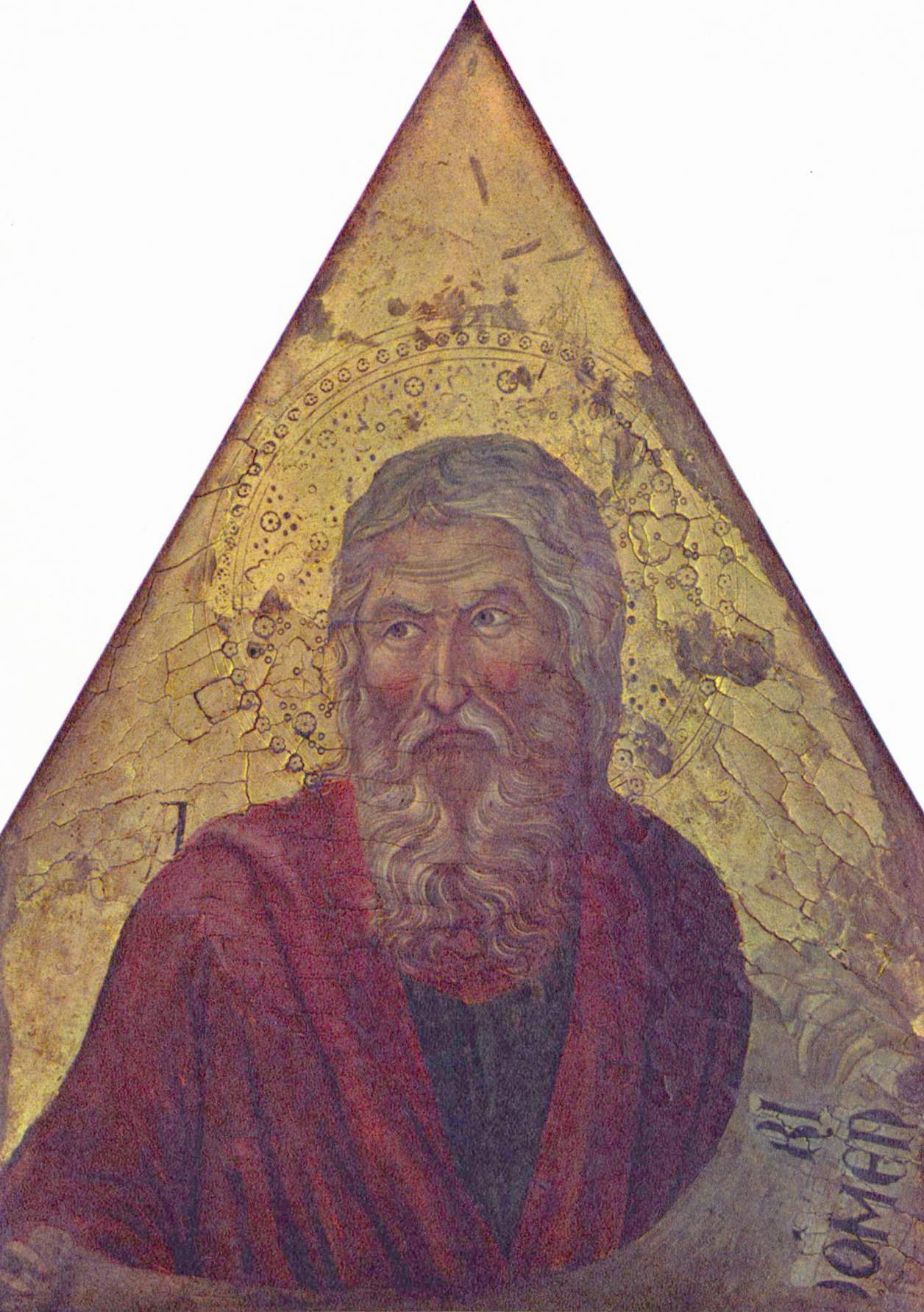
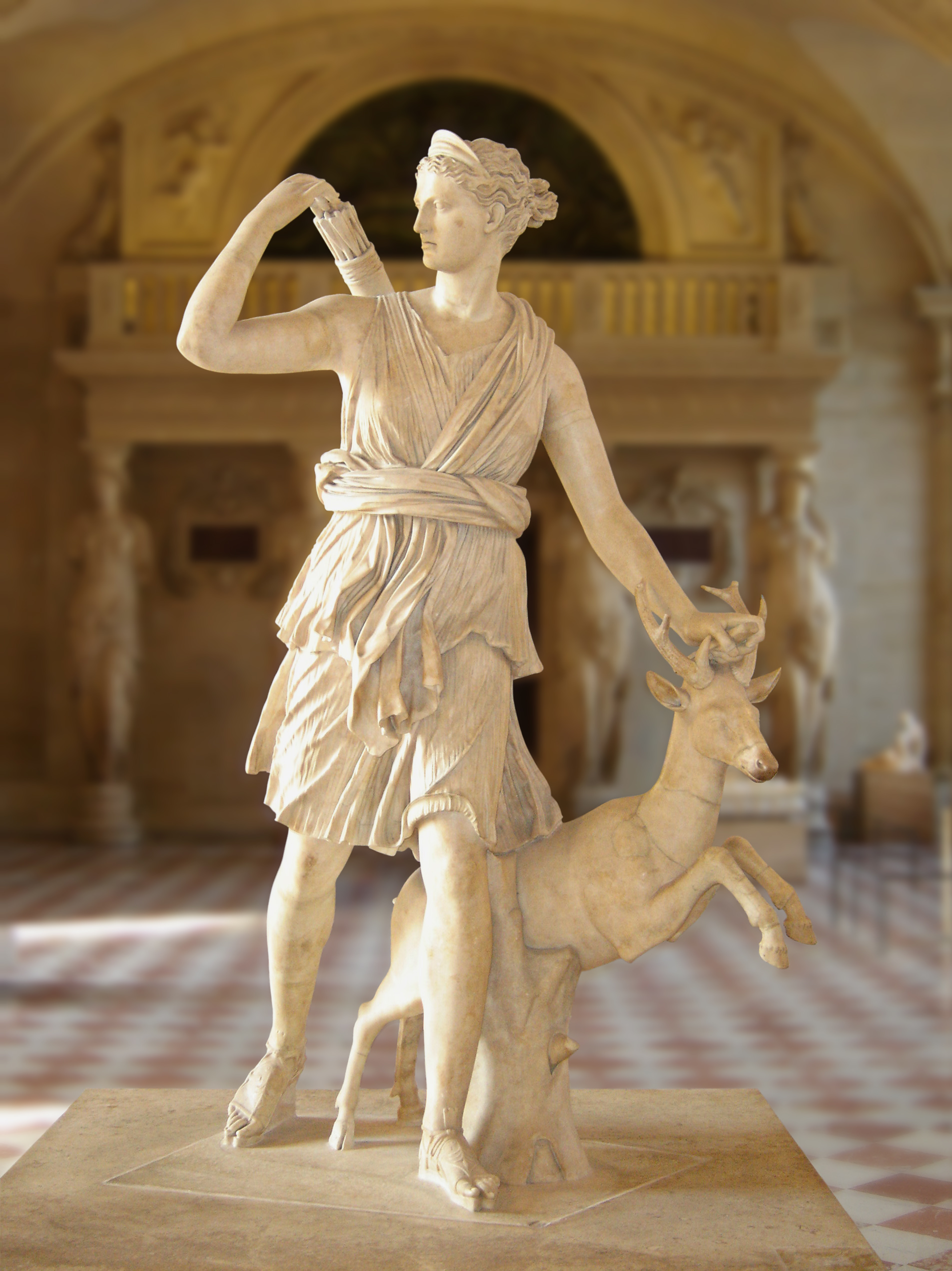
Deer have been living in close proximity to us—and sustaining us—for centuries. They are associated with Artemis/Diana in Greek and Roman mythology, and four stags feed on the world tree in Norse mythology. St. Hubertus, the patron saint of hunters, supposedly saw a crucifix on the head of a stag he’d been pursuing, and St. Giles (depicted above), the Greek hermit, lived with a doe as his only companion. The indigenous Huichol people of Mexico make offerings to the Deer of the Maize and the Deer of the Peyote, and in Shinto, deer are considered messengers to the gods. In Austin, many of us are accustomed to virtually tame deer foraging in our gardens. But the deer that died on A.’s fence, like the countless dead squirrels, raccoons, possums, and deer we see on our roads, remind us of the violence inherent when urban, automotive humanity impinges on wild (or even semi-wild) nature, or vice versa.

It’s silly to think that without us these animals’ lives would be free from suffering, pain, and terror; they all have numerous natural predators and parasites, after all, and those predators and parasites don’t go out of their way to kill humanely. (Sometimes I think it ironic that humane derives from the Middle English word for human, but the fact is we do have a choice in how we kill the animals we use.) And Madroño Ranch is, after all, in the business of selling bison meat, one of the requirements of which is first killing the bison, and we do derive income from hunting leases during deer season. But there’s something about the useless and prolonged horror of the way these deer died that hits me very hard. They weren’t shot for their meat; instead, mutilated by a symbol of human territoriality, they died slow, agonizing, gruesome deaths—victims, in effect, of our notions of private property. Where’s the redemption in that?
—Martin


What we’re reading
Heather: Michael E. McCullough, Beyond Revenge: The Evolution of the Forgiveness Instinct
Martin: Glen David Gold, Sunnyside

Friday, April 30, 2010

“You may ask yourself, well, how did I get here?”


Funny how things turn out sometimes.

I was born and raised in the San Francisco Bay Area, went to college in Massachusetts, and grew up (to the extent that I grew up at all) with fairly liberal political views. I am neither a hunter nor a serious fisherman. I have owned a series of foreign cars, but never a pickup. I have never owned a cowboy hat, either, and the first pair of cowboy boots I ever bought was from a hip boutique on the King’s Road in London. And I really, really hate the Dallas Cowboys. I am, in other words, a Yankee.

And then I fell in love with a girl from Texas, and everything changed. I have lived most of the last three decades—virtually my whole adult life—in the Lone Star State, a fact which still astonishes me and no doubt puzzles many of my childhood and college friends, to whom Texas is a vast desert filled with cacti, rattlesnakes, and gun-totin’, snuff-dippin’, rip-snortin’ Republican rednecks. Dangerous, in other words. But, almost thirty years later, here I am.

Heather and I were classmates and fellow English majors at that Massachusetts college, and we fell in love and/or lust during the spring of our senior year. Not only was she gorgeous, smart, and funny, but, being a native Texan, she was exotic, too. Her family lived in San Antonio until she was ten, when her father got a job with the gummint and they moved to the Washington DC area, but her father’s father still lived in the Alamo City, and she had a job lined up after graduation as a reporter for the late and not-terribly-lamented San Antonio Light.

I, on the other hand, had no job prospects whatsoever—planning ahead has never been my strong suit—and figured I might as well follow her to Texas. (I actually wrote to the San Antonio Spurs offering my services as a short, untalented point guard who couldn’t shoot, pass, jump, or go to my right, and received a surprisingly gracious rejection letter from Bob Bass, who was then the team’s general manager.)

After graduation, we embarked on an epic cross-country journey, driving in Heather’s un-air conditioned Toyota Tercel from Williamstown to San Francisco, by way of Washington DC, New Orleans, Houston, San Antonio, and Aspen, to visit my (divorced) parents, and then back to San Antonio to begin what we naively thought of as our adult lives.

The trip was full of incident, but the high points were our stays in Houston, where we visited Heather’s formidable maternal grandmother, and San Antonio, where we spent a week with her even more formidable paternal grandfather.

Boppa took one look at me, with my bushy beard, long hair, and earring, and decided, not unreasonably, that I was Bad News. The famous family story is that when we left San Antonio to push on to the West Coast, he called Heather’s father and asked, “Now where are those two going again?”

Heather’s father replied that we were heading to San Francisco to see my parents before eventually returning to San Antonio. There was a thoughtful pause, and then Boppa observed, “Lotta motels between here and San Francisco.”

When we finally made it back to San Antonio, we took him out to dinner twice a week, on the nights when “the help” was off; on Thursday nights we went to the Argyle, and on Sunday nights to the San Antonio Country Club. I drove the car, opened the doors, fetched him the one weak Chivas and water he was allowed per night, and generally did my best to ingratiate myself, but for the rest of his life (he died about six months later), he never called me anything but “Whiskers,” as in “Whiskers, get me a drink,” or “Whiskers, go git the car.” I’d tug on my forelock or fetlock or whatever that thing is and say, “Yes, sir,” and go off wondering what the hell I’d gotten myself into.

That was a tough year, in a lot of ways. I found work as the editor of a little weekly newspaper, the San Antonio Citizen-News, that served the southwestern part of the city around Lackland Air Force Base; since we were living in north-central San Antonio, I neither knew nor cared anything about that part of the city, so my job was not terribly fulfilling. I bought a used Fiat 128, which consumed several quarts of oil a week and was (in the way of all Fiats) almost comically unreliable, so twice a day I’d set off to drive across the city never knowing if I’d actually arrive at my destination, which didn’t exactly help my frame of mind. One hot afternoon the Fiat conked out in the middle of Broadway, and Heather and I had to push it several blocks to my apartment.

My most memorable co-worker at the Citizen-News was Oscar, the sports editor. He was a bald, stocky retired Air Force sergeant, and he cussed constantly and with amazing creativity. He also had a notorious temper; I was told that he carried a baseball bat in the trunk of his car, and if another driver cut him off or otherwise offended him he would pull it out and go to work on their fenders and taillights. Oscar was also apparently a creature of habit; the story was that once, when he came home to discover that his wife had rearranged the living room furniture, he wordlessly got out his toolbox, moved the furniture back to its previous positions, and nailed it to the floor. In fact, he was always perfectly nice to me, but I definitely tried to stay on his good side.

Perhaps unsurprisingly, Heather and I broke up after a year or so in San Antonio. She moved up to Austin to begin graduate school, and I, once again flying blind, decided to move to Washington DC, where I landed a job on the staff of Sen. Bill Bradley. I enjoyed my time in Our Nation’s Capital, at times perhaps a little more than was good for me; I’m not sure my liver has ever forgiven me. But I got my feet under me a little bit, found out I could more or less survive on my own in the world, and eventually, a year or so later, Heather and I patched things up. I moved back to Texas, this time to Austin, where I too began grad school, in American studies. We got married a couple of years later, and the rest, as they say, is history.

And now here we are, in the second decade of the twenty-first century, and I find myself the would-be co-proprietor of an enterprise that seeks to celebrate and emphasize the unique character of Texas, or at least the beautiful part of it known as the Hill Country. Our kids have grown up in Austin, and while all three have elected to leave the state for college (the youngest, a high school senior, is bound for Ohio next year), the older two have already come back. They’ve come back home.
—Martin


What we’re reading
Martin: Katherine Howe, The Physick Book of Deliverance Dane