Showing posts with label deer. Show all posts

Friday, January 7, 2011

A new year at Madroño Ranch: bison harvests, chicken tractors, hog schools, and more


Happy new year! The beginning of the year is always a good time to take stock, so we thought it might be appropriate to look back at what we accomplished—and, erm, failed to accomplish—during the last twelve months. Much remains to be done before our hopes for Madroño Ranch are completely realized, though we took what felt like some significant strides in 2010. With apologies for any perceived self-indulgence, here are some of them.

First, thanks to the wonderful and talented Shawn and Susanne Harrington of Austin’s Asterisk Group, Madroño Ranch now has a vibrant, striking, beautiful visual identity—logo (above), wordmark, etc.—which we hope eventually to splash all over actual and virtual reality. (Madroño Ranch T-shirts! Madroño Ranch gimme caps! Madroño Ranch bumper stickers and koozies and belt buckles and....)

Second, we’ve begun to rethink our initial determination to offer residencies only for environmental writers, however broadly defined (poets, philosophers, essayists, whatever). We had initially thought we would restrict our offerings to writers because, well, as a couple of recovering English majors, we felt like we knew writing better than we knew art, and (perhaps more important) we didn’t want to spend a lot of money on infrastructure (kilns, darkroom facilities, printing presses, whatever). Most writers, after all, are highly mobile these days, requiring little in the way of equipment beyond a laptop computer. But it has become increasingly obvious, even to us, that virtually the same is true of many visual artists as well—digital photographers and collagists, to name just a couple. Painters can travel with paints, portable easels, and suchlike. And then there are environmental artists, like Andy Goldsworthy, who use materials found on-site—rocks, leaves, branches, etc. Why should we exclude such creative thinkers from our pool of potential residents?

Third, while we are still a long way from officially opening our residential program for environmental writers (and artists)—we have yet to construct the small casitas we envision as individual workspaces, and we have yet to hire the necessary personnel to cook and care for our residents—we have managed to find a couple of brave souls willing to serve as “guinea pigs.” Melissa Gaskill and E. Dan Klepper will each spend several days at Madroño Ranch in the next couple of months, working, resting, and experiencing some if not all of what our actual residents will experience once we’re fully up and running. We look forward to hearing their feedback, suggestions, etc.

Fourth, our friend Jesse Griffiths of Dai Due came up with a new and exciting way to open the ranch to a wider public through a variety of sustainable hunting, fishing, and cooking “schools” throughout the year. The first, Deer School, brought six guests to the ranch in November, and was a thoroughgoing success; now we’re looking forward to Hog School in early March and Freshwater Flyfishing School in mid-May, both of which have already sold out. If they go well, we’re hoping to make these (and perhaps other such schools) an annual tradition at Madroño Ranch.

Fifth, we finally gained state approval of the label that will appear on the packages of bison meat we sell, which means we can finally go ahead with our first “harvest” (as it’s euphemistically called) this month. (We had hoped, naively, to harvest our first bison in October, but the approval process turned out to be considerably longer and more complicated than we had imagined.)

Sixth, Heather made significant progress in her quest to become a true chickenista, following the example of local legend Carol Ann Sayle of Austin’s Boggy Creek Farm. Our original flock of fifty or so laying hens took up residence in their bombproof (and, we trust, owl- and hawkproof) new coop, which we call the Chicken Palace (pictured below). A few months later Robert’s brilliant creation the Chicken Tractor (actually a mobile coop on wheels) became the home of a new flock of about twenty younger hens. (As of last week, the two groups were just beginning to commingle.)


Seventh, while we still don’t have an actual Madroño Ranch website (though we’re working on it!), we do have an official Madroño Ranch Facebook page. We invite those of you on that ubiquitous social network to check it out, and click the “Like” button if you’re so inclined; until our website is up and running, that will be the easiest way to keep track of what’s happening at the ranch in what we hope will be an exciting twelve months to come.

Perhaps none of these accomplishments sounds terribly important in and of itself, but each brought us just a little closer to our goal. Our hope for 2011 is that we—and you too, Gentle Reader—keep striding throughout the new year, whether the steps be large ones or small.
—Martin


What we’re reading
Heather:
Marilynne Robinson, Absence of Mind: The Dispelling of Inwardness from the Modern Myth of the Self (still—it’s hard!)
Martin: Michael Lewis, The Big Short: Inside the Doomsday Machine

Friday, December 10, 2010

Meat and unmediated experience: Deer School at Madroño Ranch


At lunch the other day, a friend opined that too much of what we all think and see and hear—and, yes, eat—passes through various filters (the media, agribusiness) before it reaches us; even our air is conditioned, he added, though I have to say I’m okay with that, at least in the summer. But his larger point is one that’s been in the back of my mind (and take it from me, there’s lots of room in there) for some time.

Unmediated experiences seem increasingly hard to find. We have lost an awareness of the connection between our actions and their consequences, especially when it comes to food, especially when it comes to meat; it’s easy to avoid the stark truth that some creature was slaughtered, blood was shed, so that we might buy shrink-wrapped chunks of meat in the supermarket. The thoughtful (and splendidly named) English chef Hugh Fearnley-Whittingstall writes in his River Cottage Meat Book that “the human act of killing animals for food, once familiar to most of society, has now become so shameful that those who condone it—by eating meat every day—are entirely protected from thinking about it. Food animals are killed and their meat is cut up and packaged far from human eyes. By the time meat reaches the consumer, the animal origins have been all but obliterated.”

Conveniently, this last weekend presented us with an opportunity to escape the shrink-wrap bubble in the form of “Deer School,” a hunting/butchering/cooking extravaganza at Madroño Ranch. Watching the skinned, eviscerated, and decapitated carcass of a 120-pound buck being carved up on your kitchen counter definitely qualifies as an unmediated experience.

The man doing the carving was Austin’s incomparable Maestro of Meat, Jesse Griffiths of Dai Due, and his audience, in addition to Heather and me, included six hunters—four experienced, two newbies, united in their love of food and dedication to the principles of ethical hunting—who had paid to spend a long weekend at the ranch. Four of them live in or around Austin, but we also had a couple who drove all the way from Michigan (!), sleeping in their Little Guy trailer all the way.

In return for their money, the guests were taken on three guided hunts (the guides were Jesse, his omnicompetent buddy Tink Pinkard, and, after poor Robert, our ranch manager, was felled by a kidney stone on Saturday morning, our son Tito) and then instructed in how to make efficient use of whatever animals they shot. They also ate a series of truly spectacular meals prepared by the indefatigable chef Morgan Dishman-Angelone, who works with Jesse.

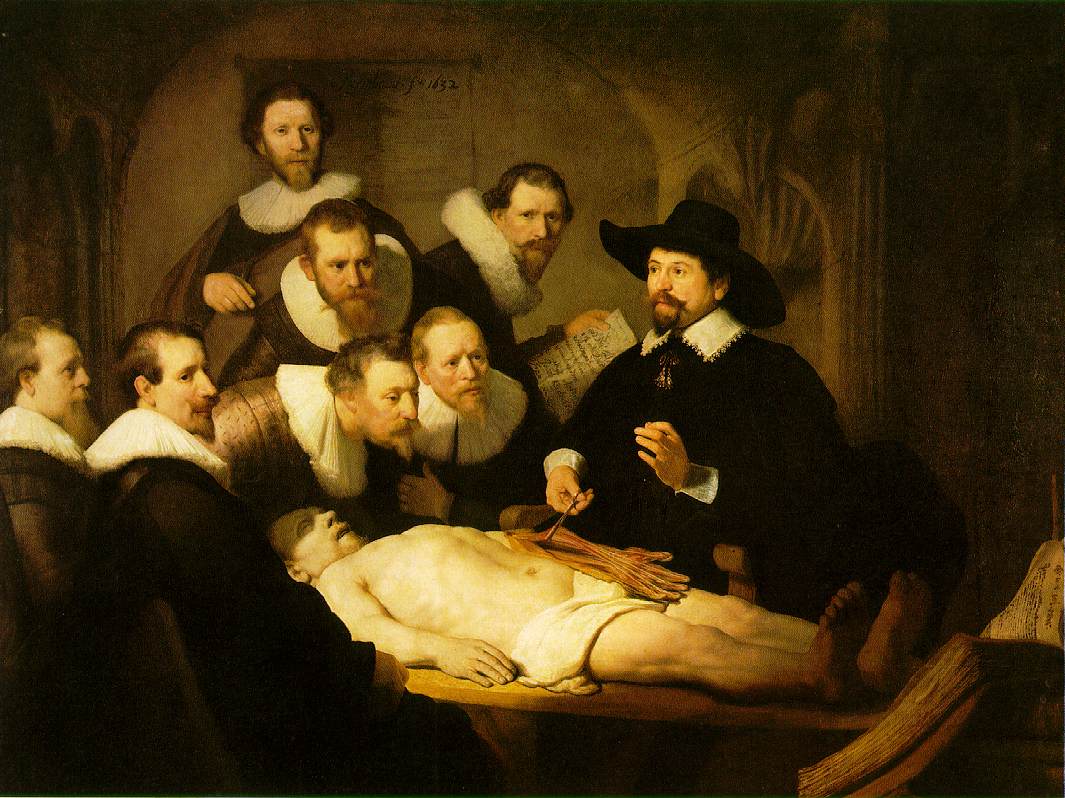
Their collective haul included five deer and several hogs, though Robert shot the buck Jesse used for his demonstration the day before the guests arrived. As we all gathered in the kitchen to watch Jesse at work on the carcass, I was reminded of Rembrandt’s famous painting “The Anatomy Lesson of Dr. Nicolaes Tulp.” A grisly spectacle, but also fascinating, and Jesse’s obvious care and skill were mesmerizing.

True confession: I am not a hunter, though I am an enthusiastic carnivore and have done a good bit of fishing in my time; the only mammal I have ever knowingly killed was an obviously diseased raccoon who was staggering around in the middle of a hot summer day at the ranch several years ago. But we live in a meat-centric state (the Republic of Barbecue, anyone?), and I have come to realize the distance between my life and the realities of blood and bone that hunters and farmers and ranchers confront on a daily basis.

Here’s Fearnley-Whittingstall again: “As I pull the trigger and... the beast tumbles, I feel the gap between me and the quarry, which a moment ago seemed unreachable, closed in an instant.” I think this is really the point of ethical hunting, responsible carnivorism, and eating meat in general: the realization that we, consumer and consumed alike, are part of the same system, much as we might try to deny it. Thus, in a funny way, a hunter—a responsible one, at least—rather than treating the animal he or she kills as an objectified and separate Other, is more likely to understand the profound interconnectedness that binds us all together.


Jesse and Morgan took virtually every piece of meat off that buck and used it for an extraordinary multicourse dinner that night. “We’re going to punish you,” Jesse warned us facetiously, and he wasn’t kidding: six courses, including venison tartare (pictured above, just prior to final assembly), venison paté with Jesse’s own coarse-grained mustard, braised venison flanks stuffed with chorizo, liver with mashed potatoes and apples, venison cutlets with grilled marinated radicchio, and, for dessert, Morgan’s signature Basque cake—salty-sweet crusted cake around a pastry crème center with candied persimmons and apples. It was an unforgettable meal, and left everyone—even Tito!—sated, at least temporarily: the next morning we had breakfast tacos with barbacoa made from the deer’s shanks and neck meat, which had been simmering in a crockpot overnight. Under the circumstances, “holy cow” hardly seems like the right expression, but you get the picture: we ate incredibly well, and that one buck provided enough meat to feed thirteen people twice, with quite a bit left over; thanks to Jesse, we’re looking forward to enjoying even more of it when we go out again over New Year’s, by which time I should be almost ready to think about eating meat again.

And who knows—maybe the next time we host Deer School at Madroño (and we do hope there will be a next time) I’ll sign up myself. After all, it wasn’t all that long ago that I was about as unconscious a carnivore as there was on the planet, and I’m in as much need of unmediated experience as the next guy. I’m not going to start refusing to eat anything I haven’t actually killed myself; that would be impractical, to say the least. But I do believe that hunting and butchering a deer or other animal for one’s own consumption is probably a useful exercise, and that the world might be better off if every unconscious carnivore were forced to undertake it at least once. A fuller awareness of the cost of satisfying our appetites cannot, I think, be a bad thing.
—Martin


What we’re reading
Heather:
Wallace Stegner, Crossing to Safety (still!)
Martin: Charles M. Robinson III, Bad Hand: A Biography of General Ranald S. Mackenzie

Friday, December 3, 2010

Hosts, guests, and strangers: thoughts on hospitality


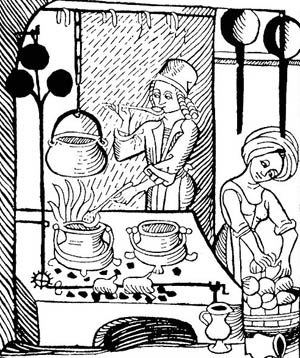
The season of hospitality is upon us, with all its pleasures and burdens. Known in the Christian tradition as Advent, it focuses on the need for preparation, both for the very intimate event of a baby’s birth and for the cosmic birth of a new order. One of my favorite images for the season, if I’m remembering rightly, comes from a series of woodcuts made by a northern Renaissance nun. In it, she imagines herself as a housewife, preparing for the coming company of the Child and the Judge by cleaning the house of her heart: dusting, sweeping, washing, polishing. The images refuse any pretensions to profound theology or high art; they are reassuringly earth-bound and homey. If you pay attention, you can almost smell the baking bread.

“Hospitality” is one of those words whose meaning has changed over the years. In our current culture, it often refers to an industry directed toward travelers or those in need who are expected to pay for its services. If hospitality isn’t a primarily economic exchange, it usually refers to the opening of home and hearth to friends, family, and associates.

In ancient times (or in places that still hew to ancient ways), hospitality wasn’t a service or an option; it was a necessity and a moral imperative. Before the development of institutional hospitality (hospitals, hospices, hostels), vulnerable individuals outside of the normal network of social relations—travelers, refugees, the sick, pilgrims, orphans, widows—were able to rely, at least for a while, on a code of hospitality that brought shame to those who were able and refused to engage it. Christine Pohl, professor of Christian social ethics at Asbury Theological Seminary, writes: “In a number of ancient civilizations, hospitality was viewed as a pillar on which all other morality rested: it encompassed ‘the good.’”

Curiously, the words “host” and “guest” are closely related etymologically, if they don’t actually come from the same source. Even more interestingly, “guest” shares an etymological bed with “enemy,” rooted in the notion of “stranger.” The idea that any of us might move from providing hospitality to needing it—to and from strangers—gives the word a kind of trinitarian energy that caroms from the poles of host to guest to stranger/enemy until the parts are indistinguishable from the whole. I don’t usually feel that charge when I check into a motel, but I think the hospitable artist nun knew that she was a part of that energy, as hostess opening her heart to the Child; as guest and sojourner on the earth; as stranger before the greatest mystery.

One of the reasons I’m thinking about hospitality, aside from the advent of Advent, is that today we’ll welcome seven guests, whom we have never met, to Madroño for the weekend. They’ll be attending “Deer School,” the brainchild of Jesse Griffiths, chef, butcher, and proprietor (with his wife Tamara Mayfield) of the Dai Due supper club and butcher shop. Deer School will include several guided hunts followed by instructions on how to field-dress and use the animal from nose to tail, followed by some really fine eating.

While I’ve been thinking recently about what it means to be a good host (new sheets and shower curtains), I’m also thinking about my role as guest, sojourner, stranger, enemy; after all, they are intimately connected. In last week’s Thanksgiving post, Martin wrote about the hospitable nature of the feast: “On Thanksgiving the acts of preparing, serving, and eating become consciously sacramental; the cook(s) giving, the guest(s) receiving, in a spirit of gratitude that can, sadly, be all too rare at other times of the year....” As one of the cooks this year, I was less attuned to what I was giving than to what had been given to me: the gorgeous vegetables from local farms, the fresh turkey from our over-subscribed friends Jim and Kay Richardson, and the freshly shot and skinned half-hog that unceremoniously appeared on the kitchen counter (and then spent eight hours roasting in a pit) after my brother, his son, our son, and Robert, the redoubtable ranch manager, went hunting early Thursday morning. The astonishing abundance and hospitality of the land was quite literally overwhelming: half a 150-plus-pound sow is a lot of meat.

I’m blundering onto mushy and possibly treacherous literary territory here, I know: Mother Earth nourishing her offspring, big hugs all around. But I’m increasingly grateful for the bounty of the place and hope the same for those who come here seeking community, solitude, rest, refreshment, and, yes, fresh deer meat. We call Madroño Ranch ours by some weird cosmic accident; the more we know it, the more we know that it belongs to itself or to something even broader, wider, more generous. What we hope now is to avoid being the nightmare guest/enemy, the one who comes and overstays his or her welcome within twenty minutes, who demands foods you don’t have, strews clothes all over the house, leaves trash and dirty dishes in the guest room, noisily stays up late, assumes you’ll do all the laundry, and never says please or thank you. Who seems to think he or she owns the place.

We all know places where that’s exactly what has happened; for me, one such place is the stretch of Interstate 35 between San Antonio and Austin, which Martin and I drove last Sunday morning, and which is almost completely lined with outlet malls, chain stores, fast-food franchises, and other such marks of our collective thoughtlessness. Somehow, we’ve managed to promote the idea, especially in the American West and particularly in Texas, that among the rights accruing to property owners is the right to destroy or devalue their property in the name of short-term economic gain. In fact, destroying property may be seen as the ultimate proof of ownership.

I struggled in an earlier post with the idea of land ownership, and I struggle with it still. All land came as a gift at some point. Not literally to its current owner, perhaps, but the land still bears the trace of its giftedness somewhere on that deed. In this season when we prepare for the arrival of guests, giving the gift of hospitality, or head somewhere hoping to be good guests, bringing gifts of thanks, it can be easy to forget that we are also always empty-handed strangers, constantly looking for a wider hospitality than we are ever able to offer or sometimes even to know that we need. We’re only a week past Thanksgiving; this is as good a time as any to thank the land that sustains us. Without it, we can never fill a house with the smells of baking bread and roasting meat—or any of the other things that sustain us.
—Heather


What we’re reading
Heather:
Wallace Stegner, Crossing to Safety (still)
Martin: Ben Macintyre, Operation Mincemeat: How a Dead Man and a Bizarre Plan Fooled the Nazis and Assured an Allied Victory

Friday, May 21, 2010

More on violence: a death in West Austin


Last Thursday got off to a grisly start in our West Austin neighborhood, bringing a stark reminder of the violence inherent in the way we humans live on the land. We usually attempt, more or less successfully, to keep this violence implicit—behind the walls of slaughterhouses, say, or with the cleanup crews who scrape the roadkill off our highways—but every once in a while it bursts forth in explicit, unimaginable horror, demanding to be acknowledged, as in the aftermath of oil spills. Or, on a much smaller scale, on our street last Thursday.

It was about 6:45 a.m. and Chula the Goggle-Eyed Ricochet Hound and I had just set out on our usual two-mile morning perambulation. As we turned the corner to climb the first big hill I saw S. and A., two of our neighbors, standing in A.’s front yard. The light was still tenebrous, and my eyes were still filled with morning blear, so I asked them, stupidly, if everything was okay.

In response, A. gestured at the spiked black steel fence that encloses his back yard and said, “Deer caught on the fence.” I looked again, and sure enough there was a young buck hanging from the top of the fence by one back leg, kicking occasionally in an attempt to get free. Since Chula was getting increasingly agitated, I pulled her away and continued up the hill.

When we returned, some time later, A., S., and the buck were gone. I allowed myself to hope that all had turned out well, but then I heard the unmistakable pop of a gunshot—an unusual sound in our part of Austin—and then another a few seconds later. When we got to the bottom of the hill, I saw a small group of men gathered around something by the curb.

I put Chula back inside and went to investigate. The object by the curb was the buck, his mangled hindquarters covered by a tarp, his eyes rolling around in his head, which thrashed and clattered against the pavement in his death agony. An astonishing amount of blood rolled down the gutter toward the storm drain.

A. filled me in on what had happened in my absence: while S. had gone to fetch a pistol to dispatch the creature, the buck had worked his way loose from the fence, but not before hopelessly mangling both his back legs in his frantic efforts to free himself. He somehow dragged himself across one street and two front yards (including ours) before they caught up with him again. S. fired once and missed, then fired again from point-blank range; unfortunately, as they discovered later, the second shot merely went through the buck’s cheeks, causing him to get up and haul himself across the street, where he finally collapsed in the gutter.

Unwilling to fire any more shots, S. and A. asked C., the neighbor in front of whose house the buck had collapsed, if he had a hunting knife. C. went back inside and got what A. later described as “the world’s dullest hunting knife.” S. hacked at the buck with the knife until he finally slit his throat, but, as A. said, “waiting for the buck to bleed to death became too much, so S. was able to sever its windpipe, which quickly—and thankfully—brought the deer’s life to an end.”

It was at this point that I wandered up. I’d been standing there only a few moments, trying to take in what I was witnessing, when A. looked over my shoulder and said, “Heather doesn’t need to see this.” I turned around and saw her walking toward our little group, and headed back to intercept her. As we walked back up our driveway, I noticed several spots of bright red blood, signs of the buck’s last agonizing procession toward its death. There were more bloodstains on our front walkway, and indeed all across our front yard.

Later, as I hosed some of those stains off, I thought about the other deer which had gotten hung up on A.’s fence last year, another beautiful young buck who managed to gut himself on one of the spikes and hung there, head down, slowly dying. It had been difficult not to think of Jesus hanging on the cross while looking at the helpless creature.

A. and his family had been out of town on vacation, and no one knows how long that buck had been hanging there before someone found him. None of the neighbors who were there that day had a gun—we keep all our family firearms out at Madroño—and eventually we called our local veterinarian, who finally came and administered a lethal injection. We carefully lifted the dead buck off the fence, and a man from the city parks department took the body away.

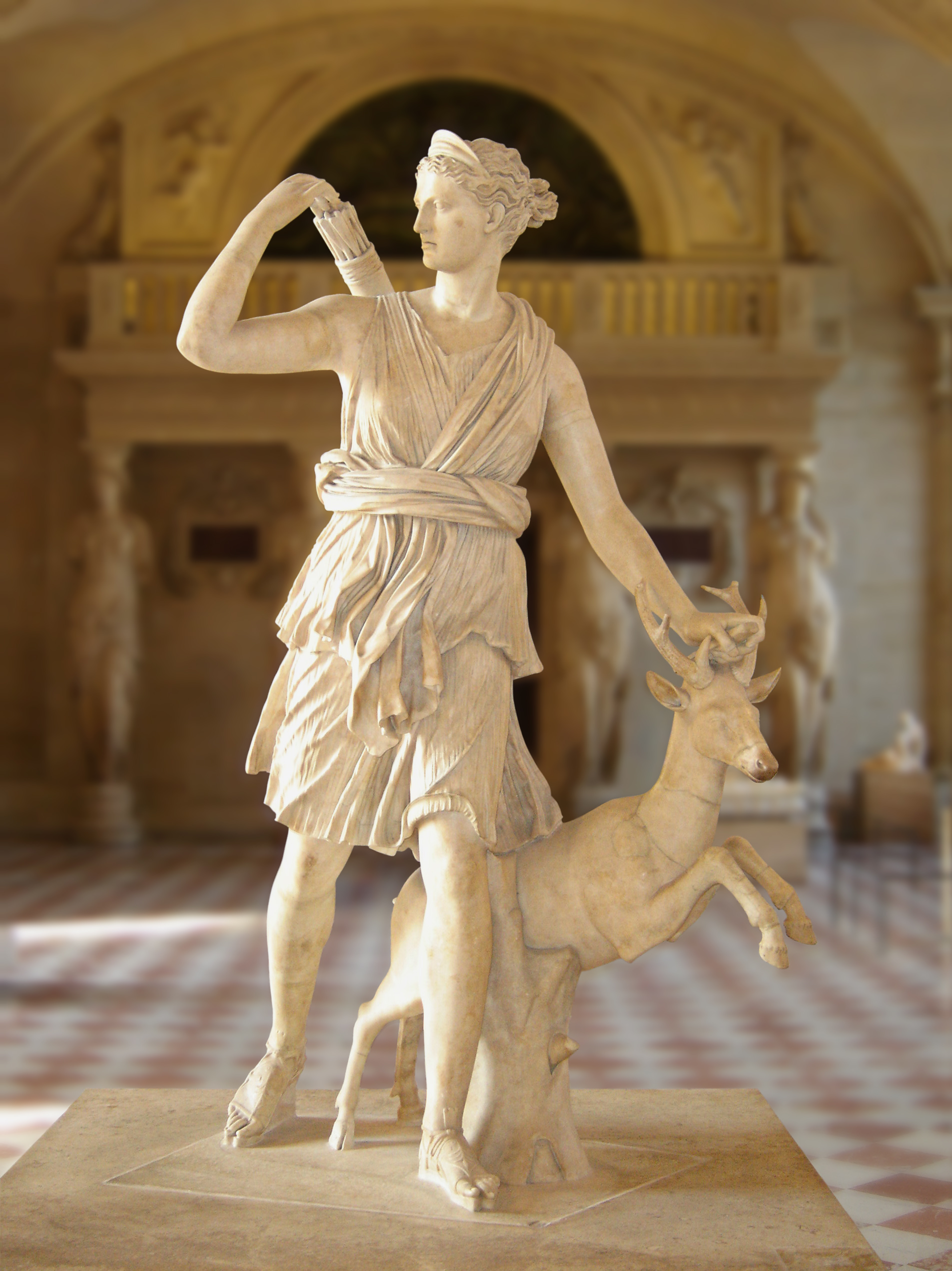
Deer have been living in close proximity to us—and sustaining us—for centuries. They are associated with Artemis/Diana in Greek and Roman mythology, and four stags feed on the world tree in Norse mythology. St. Hubertus, the patron saint of hunters, supposedly saw a crucifix on the head of a stag he’d been pursuing, and St. Giles (depicted above), the Greek hermit, lived with a doe as his only companion. The indigenous Huichol people of Mexico make offerings to the Deer of the Maize and the Deer of the Peyote, and in Shinto, deer are considered messengers to the gods. In Austin, many of us are accustomed to virtually tame deer foraging in our gardens. But the deer that died on A.’s fence, like the countless dead squirrels, raccoons, possums, and deer we see on our roads, remind us of the violence inherent when urban, automotive humanity impinges on wild (or even semi-wild) nature, or vice versa.

It’s silly to think that without us these animals’ lives would be free from suffering, pain, and terror; they all have numerous natural predators and parasites, after all, and those predators and parasites don’t go out of their way to kill humanely. (Sometimes I think it ironic that humane derives from the Middle English word for human, but the fact is we do have a choice in how we kill the animals we use.) And Madroño Ranch is, after all, in the business of selling bison meat, one of the requirements of which is first killing the bison, and we do derive income from hunting leases during deer season. But there’s something about the useless and prolonged horror of the way these deer died that hits me very hard. They weren’t shot for their meat; instead, mutilated by a symbol of human territoriality, they died slow, agonizing, gruesome deaths—victims, in effect, of our notions of private property. Where’s the redemption in that?
—Martin


What we’re reading
Heather: Michael E. McCullough, Beyond Revenge: The Evolution of the Forgiveness Instinct
Martin: Glen David Gold, Sunnyside