Showing posts with label bison. Show all posts

Friday, February 11, 2011

Meat and flourishment: carnivorocity, take three


Martin’s post last week describing the first slaughter (and I use the word “slaughter” advisedly) in our new endeavor as purveyors of bison meat elicited a comment that urged us to consider the ethical fault line (presumably) running through every conscience, that unsteady place where we find ourselves rationalizing our actions to ourselves or to whatever audience our imaginations conjure up.

Martin tried to make his/our unease clear with the post’s title: Bloody Hands. So I’m wondering once again about the ethics of carnivorocity, as visible and treacherous a fault line as abortion, euthanasia, gun control, climate change, or cloning: when you stand on one side of the fault line, it’s easy to think that the earth itself will justify you when it opens up and swallows the dummies over there, proving that you were on the right side, at which point you can stop worrying all the time, for heaven’s sake, and go on your merry way without thinking about the issue ever again.

As usual, diving into the conversations available on the internet just sucked me deeper into the murk. A defense is available for every possible position and offered with wildly varying degrees of civility: meat-eaters supporting vegans and trashing vegetarians; meat-eaters sneering at any thought of self-restriction; vegetarians and vegans calling meat-eaters all sorts of names; vegetarians acknowledging that some meat-eating is environmentally acceptable; meat-eaters acknowledging that American meat production and consumption is for the most part grotesque. What’s a utopian-minded bison rancher to think?

Serendipity, as usual, is my guide: in chasing internet rabbits down their holes, I found a momentary resting place in a review of Maggie Kozel’s book The Color of Atmosphere: One Doctor’s Journey In and Out of Medicine. After describing a flummoxing patient she had as a second-year medical student, Kozel said, “[I] devoured the answers without asking the right questions.”

Of course, if you’re obsessive the way I am, then you’ll immediately begin worrying about what the right questions are, as in, if I’m “right” then others must be “wrong.” One of the hallmarks of the debate about meat-eating and its impact on the environment or the individual soul is the array of statistics and science that each side has amassed to prove the objective superiority of its argument. I’ve been persuaded by both sides and neither side, depending on the time of day, what I’ve just read, the weather, my most recent meal, and/or the health of my family, among other random criteria.

In other words, I don’t think science and statistics by themselves allow us to ask the right questions, since apparently convincing evidence can be found to shore up either side. Eating is one of those human activities rich with multiple levels of meaning; expecting questions directed at a specific level to adequately address the full range is a little like expecting a monoculture to support the diversity a polyculture allows. Although science poses some vitally important questions when it examines the issue of meat-eating, the nature of its inquiry must ignore other equally pressing but less quantifiable questions, such as, what conditions allow a multi-species community to flourish? Does eating meat (by humans) contribute or detract from our community’s flourishment (a word coined by our friend Hugh Fitzsimons of Thunder Heart Bison)?

I hear the howls of protest even before I finish typing this sentence: how do you measure flourishment? Who decides the standards? Invalid! Too subjective! Well, yes. That’s what makes this a fault-line issue: it addresses the limits of our humanity and so necessarily includes subjective experience. To be honest, I don’t know how to measure flourishment; I suspect you just know it when you see it. And when you see it, you’re moved to describe it, knowing that the urge will be frustrated to at least some degree because flourishment, like all fruit, is the result of such a complex interaction of elements in space and time that any description will be incomplete. And of course it’s not a steady state; it waxes and wanes as circumstances change and sometimes double back on themselves.

In this context, the question of whether meat-eating is ethical can be answered unequivocally: it depends. One of the preconditions for flourishment is a sense of justice, a perspective that includes but also rises above the immediate tit-for-tat concerns of fairness. The scope of justice includes not just humanity but the earth itself—and perhaps the cosmos. It unrolls over the course of history, recognizing that particular injustices sometimes take generations, centuries, or millennia to wither, even with the powerful witness and effort of prophets and their followers. As I said in an earlier post, it may be that vegetarians and vegans are living forward into a time where justice is more fully realized. At the same time, issues of fairness and justice press at us every moment in this world where the lion and the lamb cannot yet lie down together, where predators are a vital part of an ecosystem that has developed in sync with domesticated animals.

Can meat be produced and consumed in a way that encourages justice and, hence, flourishment? I think it can. There are multiple instances of communities and societies that eat meat and live within that delicate balance that looks to the long-term well-being and dignity of the system as a whole, places like Joel Salatin’s Polyface Farm, although there are many, many others. (We’d love to hear some of your favorites.) There are multiple instances of communities and cultures flourishing without eating meat, most notably for the purposes of this post the Hindu cultures whose vegetarian cuisines I eat with great pleasure. (We’d love to hear some of your favorites.)

Likewise, there are communities and cultures that eat meat without flourishing, including most of the industrialized world, where concern for short-term profits and their consequent incitement of unrestrained appetite smother any hope of flourishment under mountains of animal excrement and anguish. Those places that encourage us (in the industrialized world) to measure the value of food in one way only—cheap is best—smother flourishment. Food is at the center of family, of community, of myth, of life. To reduce its essence to a single component is to denature its multivalent nutritional value.

Back to the ethical fault line, that place we stand uneasily, knowing that we may be swallowed: may those of us who recognize the fault line join hands—bloody or not—across the chasm and help each other seek the firmer footing of justice as our foundation. Flourishment will surely follow.
—Heather


What we’re reading
Heather:
Hilary Mantel, Wolf Hall (still!)
Martin: Rodney Crowell, Chinaberry Sidewalks

Friday, February 4, 2011

Bloody hands: bison harvest at Madroño Ranch


The very first fruits (though “fruits” hardly seems the right word) of our very first bison harvest are ready to sell, but getting to this point has been a long and sometimes frustrating process. The last stages of that process were both harrowing and, in a dark way, fascinating; squeamish sorts may want to stop reading here. “Meat is murder,” the Smiths sang in 1985, and whether or not you agree with them, it is undeniably a bloody business.

The harvest took place on Monday, January 24. We’d been both dreading and looking forward to it, and planning for it, for months; Robert, our redoubtable ranch manager, had ingeniously cobbled together a refrigerated trailer to haul the dead animals to Mercantile Meat, in Utopia, to be turned into packages of meat, and we had long since chosen the two young bulls, the bison equivalent of obnoxious adolescents, who would be the first to go. Despite all the planning, though, the reality of assuming responsibility for the death of so large and magnificent an animal was more than a little intimidating.

Early on that beautifully clear but chilly Monday morning Heather and I drove up to the flat near Robert’s house, where the herd had gathered. There we met Robert, Meat Inspector Mike, and Robert’s buddies Robert (whom I will henceforth call Other Robert) and Keith (whom I will henceforth call Not Robert), who were there to assist. We all gathered in a circle while Heather read a prayer she’d written for the occasion, which I suspect disconcerted several of those present. Then Robert, Meat Inspector Mike, and Not Robert climbed into Robert’s Chevy Tahoe with Robert’s .270 rifle while Other Robert, Heather, and I kept a safe distance.


A few minutes later, it was over. Two rifle shots shattered the stillness of the morning, and after each, even before we’d finished flinching, 1,500 pounds of bison was dead on the ground. This was the moment we’d been waiting for, and fearing, and the magnificence and sorrow of it were overwhelming. Both deaths were instantaneous and humbling, and strangely intimate; all the world seemed somehow to have narrowed to this short stretch of dirt road; other places, other people, were unimaginable. Robert, Other Robert, and Not Robert worked quickly and efficiently to bleed the first carcass and load it into the trailer, and we turned our attention to the second.

At this point things got really interesting. We knew that bison tend not to scatter when they hear gunfire or see one of their number fall; in fact, frequently the other members of the herd gather around the victim, curious about what has happened to him or her, or perhaps paying their last respects, before getting back to business as usual. But this time, the head bull went over to the second carcass and repeatedly butted and pawed at it, determined to revive his fallen comrade.


This was a problem, since we were not particularly interested in arguing with nearly a ton of angry bison. By yelling and waving, we convinced him to back off a few feet, just far enough so that we could go to work on the carcass, but Robert kept one eye on the angry bull (and on Heather, who had appointed herself the designated angry-bull-shooer). He glared at us throughout the process, but kept his distance.

With both carcasses safely inside the trailer, which had been set to minus-ten degrees, Robert, Other Robert, and Not Robert climbed into the cab of Robert’s pickup and our little caravan set off for Utopia, some thirty miles away.


All had gone about as smoothly as we could have hoped to this point, but we encountered some metaphorical bumps on the road to Utopia. As Robert’s pickup was hauling the laden trailer up FM 337 west of Medina, smoke started pouring out from under the hood: a blown radiator fitting. They limped to the top of the hill, where they found a couple of empty whiskey bottles at the side of the road and, after coasting down the other side, filled them with water from Mill Creek which they poured into the overheated radiator.

Thankfully, the truck made it the rest of the way into Utopia—a little later than we’d planned, true, but it made it. After Robert backed the trailer up to the tiny loading dock we had to drag the dead bison out of the trailer, across the loading dock, and through the tiny door and into the plant—not an easy undertaking, and one which required the combined efforts of Robert, Not Robert, Other Robert, and me, as well as Joe, the owner, and a couple of plant employees. When we were done, I had blood on my hands literally as well as figuratively.


After all our efforts to honor and respect the death of the bison, the way in which they entered the plant seemed disrespectful and undignified. But necessity is a mother, as we say at our house, and it was a tremendous relief finally to have them there.

When we got back to the ranch, we were still a little stunned by the morning’s events. It had already been a long day, and we were still a little unnerved by the magnitude of what we had seen and done (or, more accurately, caused to be done). And we know we still have a lot of work ahead of us; actually figuring out how to sell several hundred pounds of bison meat is way out of our comfort zone. (We’re hoping to sell all of it wholesale, and only in the Bandera/Kerr County area.) But we feel like we’ve taken a major step.

After witnessing a bison harvest at our friend Hugh’s ranch several years ago, Heather wrote a poem called “Sacrifice.” The details are necessarily different, but it still captures some of what we felt:

Ash Wednesday: one year I stood in thick cool
dust along with several others, waiting for
an ancient drama to begin again,
waiting as if I weren’t an actor in it
too. Through the thorny brush the bison
entered, awkward bodies wary, dense beneath
the bulky wreath of muscle draped across
their shoulders. One shook her head—so massive
that her horns looked dainty—watching us with
eyes black as moonless snake-filled summer nights.
We climbed into the pick-up, all except
the shooter, who moved with quiet purpose
as we sat in silence, waiting for the shot
that finally came—shocking, if expected—
and penetrated mercifully, the cow dead
before she finished sinking to the dust.
Another man performed the bleeding when
she was hoisted, limp, still warm, head-down,
carotid artery cascading blood
a color and consistency I had
never seen before, a frothing cochineal
oasis in the thirsty dust. I asked
the shooter if and how he steeled himself
for harvest. Pray two days before, he said,
Sit quietly. We watched the hands prepare
her for the journey, another kind of life.
Her body, treasury of light and grass
and epic wanderings, will enrich
a larger body now, a body more than
body when it knows the incarnate cost—
be it hoofed, winged, scaled or even rooted
life—of nourishing itself. Around us,
bushes burned in lilac, white, and yellow
flames, their incense rising toward the hawks
and caracaras, wheeling in mandalic arcs,
awaiting our departure so to gather
in the dust and then consume the bloody
pool, their bounden duty.

Perhaps subsequent harvests at Madroño Ranch will become more or less routine; doubtless we’ll have a better idea of what to expect, and be somewhat better prepared. (We may even buy a more powerful pickup, one that can pull the trailer to Utopia without overheating.) But I pray we never completely lose the profound sense of awe and, yes, sorrow that attended this first harvest. May we never lose the full awareness of what we do and have done. May we remain humbly thankful for the life—and death—of these magnificent animals. May I always remember the blood on my hands.
—Martin


What we’re reading
Heather:
Hilary Mantel, Wolf Hall
Martin: Roy Bedichek, Adventures with a Texas Naturalist

Friday, January 28, 2011

Shooting holes in the Constitution: some thoughts on guns and violence


Recently, like many Americans, I’ve been thinking about the issue of guns in civil society. The tragic shooting in Tucson certainly focused attention on the topic, as did a story on National Public Radio that identified the United States as the source of most of the guns being used by cartels in the Mexican drug wars, a story that aired days before we visited friends whose ranch is just a few miles from the Rio Grande. But other, more personal circumstances also got me thinking, like the three different episodes of gun violence, or the threat of gun violence, occurred during the past semester on the college campuses (2,000 miles apart) where two of our children are students. And all this happened before our first bison harvest at Madroño Ranch this past Monday, in which two 1,500-pound animals were felled by single shots from a .270 rifle.

Full disclosure: I don’t own a gun myself, although we have a gun safe well stocked with rifles and shotguns at the ranch. (They mostly belong to our son.) My grandfather taught me to shoot with a pellet gun, an activity which he oversaw carefully and I enjoyed mightily. I still take pleasure in target practice and found, the one time I tried it, that shooting skeet was a fine way to while away an afternoon. I don’t hunt and don’t expect that I ever will, although I have no objection to ethical hunting. I’ve thought that it might be wise to have a pistol when I wander around the ranch, in case one of the dogs riles up a pack of feral hogs and brings them back to me. My fear of shooting my own dog is sharper than my fear of rampaging pigs, however, and I remain pistol-less.

While there’s been no change in the number of guns I own, my thinking about guns has changed considerably over the last few years, to wit: I’ve concluded that there’s a difference between urban guns and rural guns. (Yes, yes, hold your applause.) A gun is a necessary tool on a ranch or farm. I’m very grateful that Robert, the ranch’s redoubtable manager, is an excellent shot. If the bulls we harvested this week felt any pain, it was less than momentary; they were dead quite literally within a couple of seconds.

And then there’s the issue of self-defense. A friend recently told me about an encounter he’d had on his remote South Texas ranch with an armed and heavily tattooed non-English-speaking trespasser he suspected of being a member of the fearsome MS-13 gang. My friend didn’t have a firearm at hand, but fortunately, after a tense exchange, the trespasser left. “I’ve never felt so naked,” my friend said. I understand: I, too, would have wanted some clothing in that situation.

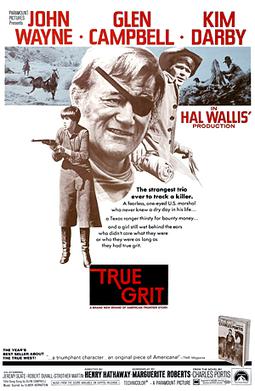
And yet, and yet... we recently saw and thoroughly enjoyed the Coen brothers’ adaptation of True Grit. That is, Martin saw it; I had my hands over my eyes during several violent scenes. Even so, I loved the movie. At the same time, I made a new connection: imbedded in the myth of the American West is the image of the lone gunman, meting out swift and violent justice. No amount of regulation is going to smother the breathe from that compelling image.

Don’t get me wrong; I’m all for intelligent gun control. I’ve never felt so naked as the day that a student opened fire on the UT Austin campus a block from the room where our son Tito was in class. But I emphatically would not have felt more clothed if, as a bill passed by the Texas Senate in 2009 proposed, his fellow students been permitted to carry concealed handguns. Guns do not belong on campuses. Or in the hands of the mentally ill. Anyone who wants to own a gun has a responsibility to register, and law enforcement agencies should be able to trace every gun to its owner. Anyone who wants to buy an automatic or semi-automatic weapon should have to jump through a lot more hoops than a weekend hunter does. Gun shows should be heavily regulated. But the image of that lone, justice-seeking gunman is more powerful than any regulation. Did I walk out of True Grit disgusted by its glorification of violence? Of course not: I loved it, even as I was distressed by some of it. The story is part of my identity as a westerner, as a Texan.

On Wednesday, as I was wrestling with this post, Martin received a membership solicitation from the NRA. I suspect that the trigger for this unlikely offer must be the fact that he recently purchased from Amazon.com a copy of Jose Ortega y Gasset’s Meditations on Hunting, the introduction of which was written by a visiting professor of environmental perception at Dartmouth College—not exactly a rip-roarin’ shoot-’em-up. If I’m correct, the NRA’s tracking mechanisms qualify as spooky at best, and maybe terrifying, but also revelatory of a mentality that refuses to see any kind of subtlety or gradation of perception.

Here’s the opening salvo of that membership solicitation: “Your constitutional right to own a gun is under attack by hundreds of anti-gun politicians, global gun ban diplomats at the U.N., militant anti-hunting extremists, radical billionaires and the freedom-hating Hollywood elite.”

The letter consistently associates freedom with gun ownership; restricting gun ownership equals restricting personal freedom. “Remember: the NRA is the one firewall that stands between our Second Amendment rights and those who would take our freedoms away.” Freedom, in this view, has nothing to do with national service, with love of country and fellow-citizens, with restraint or knowledge or self-discipline.

I visited the NRA website and found it even more appalling than its fear-mongering letter. Of the assault in Tucson, it says: “Our thoughts and prayers are with the victims of this senseless tragedy, including Representative Gabrielle Giffords, and their families during this difficult time. We join the rest of the country in praying for the quick recovery of those injured.” There was no condemnation of the gunman who perpetrated the senseless tragedy. There was found no call for self-examination. There was no exhortation to the faithful to adhere to any code of responsibility or ethics. I found nothing that encouraged gun-owner restraint or training, or an acknowledgment of the enormous social responsibility that comes with owning a gun.

I did find a persistent paranoia that encourages NRA members and sympathizers to view strangers as threatening and potentially aggressive. I did find—even as someone with a sympathetic view of some gun use—a willful and destructive distortion of that figure so many Americans love: Rooster Cogburn, the courageous gunman who takes the law into his own hands and then rides off into the empty landscape. Many of us love Rooster, yes, but his place is in the mythic past, not in the increasingly urban present.

I know and respect—and even love—individual members of the NRA; my grandfather was one of them. I went to its site in hopes of finding something to change my mind about gun control. But I left loathing the rhetoric the NRA has adopted in recent years. (In this regard, I highly recommend Jill Lepore’s excellent article “The Commandments,” about the way various groups, including the NRA, have sought to interpret the Constitution, in the January 17 issue of The New Yorker, and thank our daughter Elizabeth for bringing it to my attention.) To encourage people to think that their fellow citizens are their enemies is surely to unravel the careful work of the Constitution, which recognizes the precarious balance inherent in a federalist system, a balance requiring trust, self-restraint, and mutual good will among its participants. So while calls for legislation are important in curbing American’s extravagant gun violence, they aren’t enough: we need to call the NRA’s violent distortions of the Constitution to account. Maybe guns don’t kill people: maybe it’s NRA rhetoric that kills people.
—Heather


What we’re reading
Heather:
Thich Nhat Hanh, Living Buddha, Living Christ
Martin: Laura Hillenbrand, Unbroken: A World War II Story of Survival, Resilience, and Redemption

Friday, January 21, 2011

South Texas: a fierce and unexpected beauty


Yum! This week has afforded me yet another in a long—seemingly infinite, in fact—series of opportunities to eat crow. Heather and I returned yesterday from a visit to our friends Hugh and Sarah Fitzsimons’ Shape Ranch, outside Carrizo Springs.

As regular readers know, Hugh and Sarah have loomed large in our efforts to get Madroño Ranch off the ground. Hugh, the dueño of Thunder Heart Bison, is our guru in all things bison; in fact, we bought our original herd of twelve animals (which has now tripled in size) from him three years ago.

But our connections with Hugh and Sarah go back much farther than that. Heather had been buying their meat at the farmers’ market for several years before picking up one of the business cards Hugh happened to set out at his booth one day. When she saw his name, something clicked.

“Did your grandmother live on Argyle Avenue?” she asked him.

Startled, Hugh affirmed that she did, and within a very short time he and Heather had determined that their grandparents had lived across the street from each other in Alamo Heights; that Heather had enjoyed many a snack of milk and cookies in Hugh’s grandmother’s kitchen; and that Heather was “Uncle Henry’s” granddaughter (“uncle” in this case being a term of friendship rather than kinship). They hadn’t seen each other for about forty years, but that shared history was the basis of a new friendship.

Furthermore, Sarah‘s brother sings in the choir at our church in Austin, and, as if all that weren’t enough, we subsequently discovered that our daughter Elizabeth and Hugh and Sarah’s daughter Evelyn were not just cabin mates, but actually shared a bunk during a summer at Camp Mystic, many years ago.

The connections, in other words, are various and deep. But even though Heather had been down to Shape Ranch several times to observe Hugh’s bison operation, this week’s visit was my first. Heather had told me that the place was gorgeous, but Heather is after all a native Texan and therefore not to be trusted on such matters.

Now, you have to understand that Carrizo Springs is in South Texas. Flat, scrubby, harsh South Texas, of course, couldn’t be more different from the hilly, wooded, green Central Texas Hill Country which is home to Madroño Ranch. Never mind that most of my experience of them has been restricted to what you can see from a car at seventy miles an hour; as far as I’m concerned, flat places like the central California valleys, the Midwestern corn belt, and, yes, South Texas are to be avoided, or at least passed through as rapidly as possible en route to hillier, and ergo prettier and more interesting, places: the Bay Area, the Sierra Nevada, the Rockies, and the Hill Country.

On Wednesday afternoon, the landscape grew steadily flatter as we made our way from Madroño down to Carrizo Springs via Medina, Utopia, Sabinal, Uvalde, La Pryor, and Crystal City, and all my old prejudices were kicking in, but I was prepared to be a good sport about it, for Hugh and Sarah’s sake.

We drove south out of Carrizo Springs on FM 186 and, a few miles after the pavement gave out, turned in at their front gate, and I began to taste that familiar corvine tang in my mouth. The land was not in fact perfectly flat, but softly undulating, yielding sudden and unexpected vistas. And it was undeniably scrubby, but the winter mesquite and sage and rust-colored seacoast bluestem and purple, pink, and yellow prickly pear were undeniably lovely.


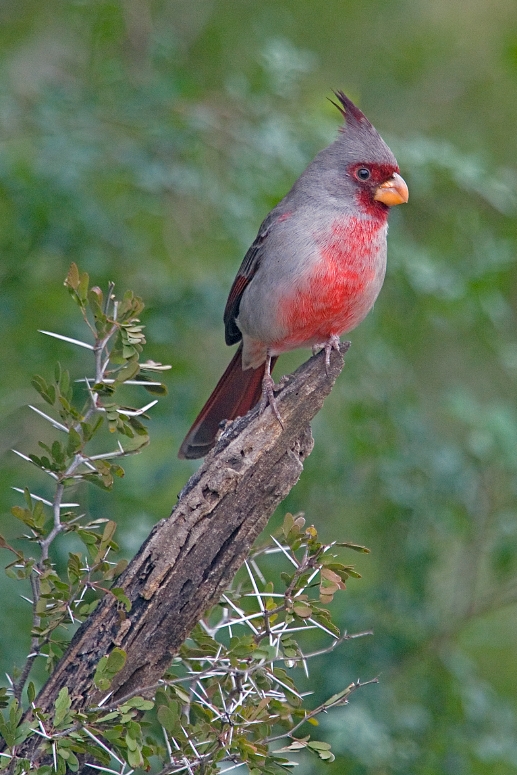
And the birds! Heather is the birder in the family, but even I was amazed by the number and variety of the birds we saw: caracaras and pyrrhuloxias and cardinals and thrashers (both brown and curved-billed) and green jays and white-crowned sparrows and one big blue heron and assorted hawks and kestrels and... well, you get the idea.

After driving several more miles of labyrinthine dirt roads seemingly devoid of physical landmarks, other than the occasional oil pump jack, we somehow arrived at Hugh and Sarah’s house, which is shaded by Arizona ash trees (virtually the only real trees on the place). Hugh and Sarah suggested we dump our bags, grab some beverages, jump in the pickup, and drive up to a picnic table that is their favorite place to watch the sunset. We pulled up and found an amazing 360-degree panorama, with the sun sinking low in the western sky. Sarah told us that when the sun sank low enough, we’d be able to see the mountains of Mexico on the horizon.

Sure enough, as the sky turned tropical-drink orange and pink the mountains came into view. And then, a few minutes later, from the opposite direction, we saw the bright orange full moon rising behind the windmill. Then, to complete the jaw-dropping array of effects, the coyotes—at least two different packs—began serenading us. Clearly, the only thing to do was to return to the house and enjoy dinner and conversation, and still more red wine, around the fire that Hugh built on the back patio.

Yesterday a front blew in, cold and gray and misty, while we were on our morning walk with Hugh and Sarah; the sharp, wet wind made the brunch that followed, of scrambled eggs and sausage and sliced avocado and grapefruit and lots and lots of strong hot coffee, even more welcome. In some ways, with its unnerving, disorienting sameness and plentiful thorns and scarcity of water and shade, this is not a particularly gentle or hospitable land, but yesterday afternoon, when Heather and I finally left to begin the long drive over to I-35 and up to Austin, it felt, just a little, as though we had been expelled from the Garden of Eden. And, believe me, those are not words I ever imagined myself writing about South Texas.

Hey, could I get a side of fries with that order of crow, please?
—Martin


What we’re reading
Heather:
Jon Fasman, The Geographer’s Library
Martin: Suzannah Lessard, The Architect of Desire: Beauty and Danger in the Stanford White Family

Friday, January 7, 2011

A new year at Madroño Ranch: bison harvests, chicken tractors, hog schools, and more


Happy new year! The beginning of the year is always a good time to take stock, so we thought it might be appropriate to look back at what we accomplished—and, erm, failed to accomplish—during the last twelve months. Much remains to be done before our hopes for Madroño Ranch are completely realized, though we took what felt like some significant strides in 2010. With apologies for any perceived self-indulgence, here are some of them.

First, thanks to the wonderful and talented Shawn and Susanne Harrington of Austin’s Asterisk Group, Madroño Ranch now has a vibrant, striking, beautiful visual identity—logo (above), wordmark, etc.—which we hope eventually to splash all over actual and virtual reality. (Madroño Ranch T-shirts! Madroño Ranch gimme caps! Madroño Ranch bumper stickers and koozies and belt buckles and....)

Second, we’ve begun to rethink our initial determination to offer residencies only for environmental writers, however broadly defined (poets, philosophers, essayists, whatever). We had initially thought we would restrict our offerings to writers because, well, as a couple of recovering English majors, we felt like we knew writing better than we knew art, and (perhaps more important) we didn’t want to spend a lot of money on infrastructure (kilns, darkroom facilities, printing presses, whatever). Most writers, after all, are highly mobile these days, requiring little in the way of equipment beyond a laptop computer. But it has become increasingly obvious, even to us, that virtually the same is true of many visual artists as well—digital photographers and collagists, to name just a couple. Painters can travel with paints, portable easels, and suchlike. And then there are environmental artists, like Andy Goldsworthy, who use materials found on-site—rocks, leaves, branches, etc. Why should we exclude such creative thinkers from our pool of potential residents?

Third, while we are still a long way from officially opening our residential program for environmental writers (and artists)—we have yet to construct the small casitas we envision as individual workspaces, and we have yet to hire the necessary personnel to cook and care for our residents—we have managed to find a couple of brave souls willing to serve as “guinea pigs.” Melissa Gaskill and E. Dan Klepper will each spend several days at Madroño Ranch in the next couple of months, working, resting, and experiencing some if not all of what our actual residents will experience once we’re fully up and running. We look forward to hearing their feedback, suggestions, etc.

Fourth, our friend Jesse Griffiths of Dai Due came up with a new and exciting way to open the ranch to a wider public through a variety of sustainable hunting, fishing, and cooking “schools” throughout the year. The first, Deer School, brought six guests to the ranch in November, and was a thoroughgoing success; now we’re looking forward to Hog School in early March and Freshwater Flyfishing School in mid-May, both of which have already sold out. If they go well, we’re hoping to make these (and perhaps other such schools) an annual tradition at Madroño Ranch.

Fifth, we finally gained state approval of the label that will appear on the packages of bison meat we sell, which means we can finally go ahead with our first “harvest” (as it’s euphemistically called) this month. (We had hoped, naively, to harvest our first bison in October, but the approval process turned out to be considerably longer and more complicated than we had imagined.)

Sixth, Heather made significant progress in her quest to become a true chickenista, following the example of local legend Carol Ann Sayle of Austin’s Boggy Creek Farm. Our original flock of fifty or so laying hens took up residence in their bombproof (and, we trust, owl- and hawkproof) new coop, which we call the Chicken Palace (pictured below). A few months later Robert’s brilliant creation the Chicken Tractor (actually a mobile coop on wheels) became the home of a new flock of about twenty younger hens. (As of last week, the two groups were just beginning to commingle.)


Seventh, while we still don’t have an actual Madroño Ranch website (though we’re working on it!), we do have an official Madroño Ranch Facebook page. We invite those of you on that ubiquitous social network to check it out, and click the “Like” button if you’re so inclined; until our website is up and running, that will be the easiest way to keep track of what’s happening at the ranch in what we hope will be an exciting twelve months to come.

Perhaps none of these accomplishments sounds terribly important in and of itself, but each brought us just a little closer to our goal. Our hope for 2011 is that we—and you too, Gentle Reader—keep striding throughout the new year, whether the steps be large ones or small.
—Martin


What we’re reading
Heather:
Marilynne Robinson, Absence of Mind: The Dispelling of Inwardness from the Modern Myth of the Self (still—it’s hard!)
Martin: Michael Lewis, The Big Short: Inside the Doomsday Machine

Friday, November 5, 2010

“Sit. Stay. Stay! I said STAY, dammit!”


Despite the temptation to give myself over to ululations for the natural world in light of the recent midterm elections, I will be brave and strong. In fact, I’ll look to our dogs for clues about how to move ahead in confounding times with good cheer, if not always with a lot of grace, and perhaps with only an occasional low moan or two.

In an earlier post, I considered the change my walking pace has undergone over the years. What has remained constant is the presence of dogs on these rambles. When I’m in Colorado, I usually borrow dogs from my sister or my father. (Walking with my mother’s dogs was often a little demoralizing; she worried aloud that bears and mountain lions might attack them, but she never expressed any anxiety for me.) At Madroño, I’ve walked with a long line of brave and stupid dogs who’ve both saved me from and almost led me to some gruesome fates.

The first was sweet Daisy, a lovely golden retriever/English setter mix and the mildest of dogs—until she was on the ranch, where she became Trained Assassin Daisy, Scourge of Armadillos! I had never known that armadillos had much to say until I watched Daisy in hot pursuit of one at the north end of the property; speedier than it looked, it made a loud whirring noise, as if it were wearing a propeller beanie. Daisy missed that one, but she got lots of others. We decided that she loved them because they were “crunchy on the outside, chewy on the inside.”


One Thanksgiving Day at the ranch, we were all—parents, siblings, children, dogs, friends—walking up the steep hill above the lake when Daisy proudly came galloping up to us with what she must have thought was an unusually hairy armadillo in her mouth. She was delighted until she dropped it at our feet and found that much of it remained in her mouth. (It was, of course, a porcupine.)

Sweet as she was, she allowed us to pull out many of the hundreds of spines in her snout, under her tongue, in her gums, etc., but the job proved to be too much for us. Even though it was a holiday, we tracked down a laconic vet in Hunt who said he wasn’t doing anything but watching football, so sure, bring her on in. When they had gotten Daisy anesthetized and yanked out the remaining spines, Martin said to the vet, “Well, I bet most dogs only make this mistake once, right?” The vet cocked an eyebrow and said, “You’d be surprised.” Thank heavens we haven’t been surprised since then.

A few years later, we found a black puppy with a broken back leg at the gate who turned out to be Phoebe, our now-blind life-guide, about whom Martin wrote admiringly a few weeks ago. Phoebe has been a wonderful walking companion, although one of her chief virtues—steadiness—may very well stem from the fact that her eyesight was never very good; maybe she just didn’t see all those armadillos and porcupines and deer. She did notice snakes, however, and helpfully made little sideways hops to notify me that I should step elsewhere.

But even the admirable Phoebe occasionally caused me dismay. Aside from her tragic and annoying moans whenever I stopped to listen for and look at birds, Phoebe proved to be susceptible to wayward influences like, for example, our next dog, Honey. One day, a couple of months after Daisy died, I was at our neighborhood pharmacy in Austin. A couple of local kids who worked there had brought in a dog they’d found on the downtown hike and bike trail, skittish and covered with fleas. Their mothers had told them to find it another home. I looked and saw a fluff-bomb with an absurdly curling tail who might have had chow and/or golden retriever and/or some mountain dog in her, and maybe a little Ewok too. The kids noticed that I couldn’t take my eyes off her and asked, “Do you want her?” “Yes,” I said, helplessly smitten. Martin said something else, which I can’t repeat here, when I returned home with toothpaste, shampoo, and a new dog, but Honey was irresistible.


She was also, alas, flightier than Phoebe. Once, after the kids and our friend Charles and I had scrambled up a beautiful and nearly inaccessible draw at the ranch, we came upon a herd of aoudads, who were as surprised to see us as we were to see them. Honey got a young aoudad in her sights and went after it, determined to tear its throat out, despite the shrieks and rocks we hurled at her. She backed the youngster into a fence while its mother threatened to eviscerate her with her great curling horns. Charles gallantly gave up his belt to get our darling murderous fluff-bomb under control, as Phoebe valiantly barked encouragement from a safe distance.

Another time, one of my favorite emergency-backup children and I went walking with Phoebe and Honey. We were in the canyon where we had once found a pair of rusted iron bedsteads and a rusted cast-iron Dutch oven, just poking around to see what other inexplicable but suggestive oddities we might find, when we heard a series of distinctively coyotic yips in the dense woods around us. In an instant, the dogs were gone, gone, gone. Despite our most beguiling efforts, Phoebe and Honey yodeled their way up to the top of the draw, and then Dave and I heard something else: snorts. Hogs. The woods were so thick we couldn’t see them, but we could hear them. Lots of them. Close by. Oh, great, I thought. How am I going to explain to my best friend that her sweet gangly son was carved up by feral hogs because my idiot dogs went gallivanting off to be eaten by a pack of coyotes? We all made it back to the house safely, but Phoebe’s irresponsible behavior still galls me.

And then another time, the dogs and I were out by ourselves when they, officers of ranch security, uncovered a plot by a couple dozen sows and piglets to disrupt our walk. Much barkage. Much squealing. Much inelegant scrambling by Someone to get into a tree and above tusk-level. Much hilarity in the kitchen after our return to think about Someone sitting in a scruffy little scrub oak for half an hour wondering if the dogs were still alive and if the pigs were really gone. Phoebe got a really scalding series of lectures for that lapse.

Generally speaking, though, Honey and Phoebe were fine walking companions. When Honey died of cancer a few years ago, we realized that she had been acting as Phoebe’s seeing-eye dog, because Phoebe’s deteriorating eyesight meant she was quite literally lost without her. Phoebe’s ranch rambles have ended, but Chula the Goggle-Eyed Ricochet Hound has become my new companion and is presenting all sorts of interesting challenges.


While she doesn’t seem to have Daisy’s and Honey’s ferocious streak (except, sadly, when it comes to chickens), she has a hair-trigger chase reflex and is speedy enough to catch a deer, as we learned to our amazement a few years ago (fortunately, once she finally cornered it in the angle of a fence, she seemed content just to lie there panting and stare at it), or anything else that roams the ranch. (She’s learned to ignore the bison, a fine survival strategy; despite their awkward-appearing bulkiness, bison are plenty quick themselves, and they definitely don’t like dogs.) I’ve started using a shock collar on her, to discourage her from rocketing off after hogs; I heard not too long ago about a woman whose dogs took off after a bunch of hogs, who then turned on the dogs, who then ran back to their mom, who ended up with sixty stitches in her leg from the pursuing porkers. Fortunately, Chula is a total wienie when it comes to pain, and the early results with the shock collar have been promising.

The adventures, clearly, will continue.
—Heather


What we’re reading
Heather: Wendell Berry, Hannah Coulter
Martin: Dennis Lehane, Shutter Island

Friday, June 18, 2010

Adventures in Business-Land


This week, during a solo trip to Madroño, Heather spent much of her time knocking on doors in Kerrville, Bandera, Medina, Tarpley, and vicinity, hoping to convince chefs and restaurateurs to buy locally raised, grass-fed bison meat from the ranch. Our initial herd of fifteen animals has grown to thirty-six, including a couple of young males who have already, by their obstreperous behavior, nominated themselves as the first to be harvested this fall.

I’m not particularly objective, of course, but I think she could make a pretty compelling case to those potential customers. To wit:
  • Bison meat generally has more protein, iron, and nutrients than beef or chicken;
  • Bison meat is lower in fat and calories than beef or chicken;
  • Our bison spend their lives ranging freely on Madroño’s 1,500 acres, and never set foot on feedlots;
  • Our bison are never injected with or fed growth hormones, steroids, or any other supplements;
  • To ensure the quality of the meat and reduce stress on the animals, our bison will be field-harvested on site under the supervision of a licensed inspector from the Texas Department of State Health Services.
Another point we hope to emphasize is that, since we’re a small-scale, local operation, our customers will also be our neighbors, which means we’ll be accountable and responsive to them in a way that Big Agriculture isn’t. It also means that every penny our customers spend on our meat will stay right here in Central Texas.

Our hope is that the sale of bison meat, eggs, and produce from Madroño will (eventually) provide significant financial support for the residential center for environmental writers we hope to open at the ranch. We know there’s a growing market in Austin for fresh, local, sustainably raised food, but we’re not planning to sell in Austin—too complicated and expensive logistically, plus we wouldn’t want to compete with our friend and mentor Hugh Fitzsimons of Thunder Heart Bison—so we’re hoping to find a comparable demand in the area right around Madroño. (And based on Heather’s schmoozing this week, the early returns are encouraging.)

Make no mistake, though: going into business—especially the business of turning a creature into a commodity—presents all kinds of challenges for a couple of recovering English majors. Virtually all of my adult work experience has been in the nonprofit sector; shifting to something that is explicitly designed to make money, no matter how noble we believe the cause to be, is a bit of a shock. (A couple of years ago we were told that the mother of one of our daughter’s schoolmates referred to us as “just a couple of old hippies.” She did not intend it as a compliment.) As entrepreneurs, we are babes in the woods.

I imagine our first bison harvest will be quite an adventure, as will the processing and distribution that will follow. We’re already moving out of our comfort zone—I’m pretty sure Heather never imagined herself as a salesperson—and confronting a couple thousand pounds of dead buffalo will move us even farther into unknown territory. I mean, business plans? Financial projections? Balance sheets? Puh-lease!


Of course, it’s probably good for us complacent old hippies to be forced out of our comfort zones occasionally; we just have to hope that we don’t make a total cock-up of it.

On the other hand, maybe we don’t want to get too caught up in this whole mercantile thing. I’ve been reading Ian L. McHarg’s influential book Design with Nature, originally published in 1969. McHarg, an expatriate Scot who pioneered the field of environmental planning in the United States, writes witheringly of the prevailing view in his adopted homeland: “Neither love nor compassion, health nor beauty, dignity nor freedom, grace nor delight are important unless they can be priced. If they are non-price benefits or costs they are relegated to inconsequence. The economic model proceeds inexorably towards its self-fulfillment of more and more despoliation, uglification and inhibition to life, all in the name of progress – yet, paradoxically, the components which the model excludes are the most important human ambitions and accomplishments and the requirements for survival.”

Of course, McHarg is hardly the first thinker to decry a fixation on financial gain. In the sixth century BCE, Lao-Tzu put the same sentiment somewhat more pithily: “Chase after money and security and your heart will never unclench.” In a similar vein, I Timothy tells us that “the love of money is the root of all evil.” (I Timothy is also the source of the phrase “filthy lucre,” by the way.) Jesus himself reminds us, in Matthew’s gospel, that “You cannot serve both God and Mammon.”

And yet, and yet... we live in a fallen world, and money is an intrinsic part of it. The love of money may be the root of all evil, but money itself is not necessarily evil. (Or, as Peter J. Gomes writes in The Good Book: Reading the Bible with Mind and Heart, “Wealth is not a sin, but it is a problem.”) The trick, obviously, is to learn money; to use it; to see it as a means to an end, not an end in itself. I mean, why can’t Madroño become an example of enlightened capitalism, a model of a countercultural way of thinking about commerce—a way that emphasizes the small-scale, local, sustainable long term, instead of the bigger-is-better, metastatic, smash-and-grab short term? I think we’ve all seen enough of the latter way of thinking, and its consequences, to last us a good while.

Of course, it’s easy for me to preach self-righteously about the corrupting dangers of the profit motive; we’re unlikely to make enough money selling bison to threaten the state of our souls. Indeed, just breaking even seems like an ambitious goal right now. I'm sure we’ll be writing more about Heather and Martin’s Adventures in Business-Land in the weeks and months to come. In the meantime, pray for us – and our bank account.
—Martin


What we’re reading
Heather: Richard Powers, The Echo Maker
Martin:
Ian L. McHarg, Design with Nature (still)

Friday, May 14, 2010

Madroño’s mythical bison


We spent last weekend at Madroño with Shawn and Susanne Harrington of Asterisk Group, who are designing a visual identity for the ranch suitable for use on business cards, website, food labels, letterhead, gimme caps, T-shirts, coffee mugs, bumper stickers, etc.

Since so much of what we hope to make Madroño stand for is based on a very specific sense of the place and its unique qualities, we wanted to give Shawn and Susanne (and their son Oliver) a tour of the ranch. They especially wanted to get a first-hand look at the buffies, thinking that they’d be an ideal image for the ranch, but unfortunately, as far as the Harrington family is concerned, the Madroño bison remains a mythical beast, more rumor than reality.

It was a gray and drizzly Sunday morning when Robert Selement, our trusty ranch manager, came by and picked us up in his big ol’ pickup. Robert may love showing the place off even more than we do, and Shawn and Susanne oohed and aahed in all the right places, even though the misty weather meant that we had to imagine the normally breathtaking views from up top.


The high point of the tour, of course, was to be a close-up view of the bison, complete with newborn calf (or perhaps calves, as several of the cows seemed to be on the verge of dropping babies). So imagine our chagrin when, after driving all over the ranch for two hours, we failed to get even a single glimpse of them.

You might think it would be hard to lose a herd of thirty or so critters, each weighing in at a thousand pounds or more, even on a place as big as Madroño, but, as Robert said with some asperity, “We’ve got buffalo poop, buffalo hair [where they’d rubbed up against convenient tree branches], and buffalo tracks, but no buffalo.”

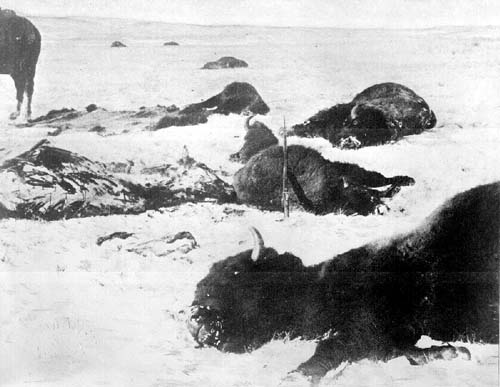
Bison are interesting animals. With a dearth of natural predators, they once roamed the North American prairies in untold millions, and were vital sources of food and other necessities for the Plains Indians. Then the railroads started building across the continent, and the real slaughter began. One of the notable things about bison is that they don’t run away when they hear a gunshot or see one of their fellows fall. Instead, they tend to wander over and nose the corpse of their fallen comrade, in a manner that can seem uncomfortably close to mourning.

This, of course, is one of the reasons they were almost eradicated by nineteenth-century buffalo hunters, but it most assuredly does not mean that they are in any way tame. In fact, they retain a distinct whiff of wildness, even on a ranch; a sublime atavism shines from their dark eyes. When we were in New York last month, we met a rancher from Pennsylvania at the Union Square Greenmarket who told us, astonishingly, that he invites school kids on field trips to wade into the midst of his herds and pat his bison. Just the thought of that made all the hair on our heads stand straight up. (It was quite a sight.)

As if their immense size and somewhat, er, unpredictable temperament weren’t sufficient encouragement to treat bison with a healthy respect, they’re also astonishingly fast and agile. They can jump into the bed of a pickup (or so we’re told; fortunately, we haven’t yet seen that firsthand), or across a cattle guard, or over a four-foot fence (when, that is, they don’t elect simply to go through it). They can work up a substantial head of steam—up to thirty-five miles an hour, in fact, which is faster than even Robert’s trusty pickup can go on Madroño’s steep and rocky roads—and they can move as fast backward as they do forward, which is why they’re sometimes used to train cutting horses. And, as we learned last weekend, they have apparently evolved the ability to turn invisible when they want to.

Shawn and Susanne were pretty good sports about it, and Oliver just wanted to play with an old ammeter that was rattling around in the back of the truck. (It’s hard to predict these things with any certainty, but Oliver at age five seems bound for a career as an electrical engineer.) But I know Robert was concerned; the fence that can keep bison in when they want to go out has yet to be invented, and we feared that they might have decided to pay a social call on the neighbors. Again.

This is always an awkward situation, not least because you can’t really compel bison to do something they don’t want to do—like, for instance, return to your property. Fortunately Robert has conditioned them to respond to the rattling of a bag of feed cubes, and can usually tempt them back from wherever they’ve strayed with the promise of treats. But having several tons of ornery meat invade the place next door is not exactly the way to foster neighborly feelings. (In March the foreman of a West Texas ranch shot fifty-one bison that had gotten loose on his property from the place next door. The fact that the place next door was a hunting ranch, and the bison would otherwise have ended up as little more than targets in a shooting gallery for rich Texans, didn’t make the story any less shocking.)

Fortunately, our neighbors have thus far responded with patience and good cheer, even when the bison cornered a herd of their terrified cattle—it must have looked a little like a scene from one of those old Westerns in which a gang of outlaws menaces some frontier town.

By the time we had to leave, late Sunday afternoon, Robert still hadn’t tracked them down. We lamely told Shawn and Susanne that we hoped they’d come back another time to see the buffies (who finally turned up above the trout ponds, safe and sound and on our side of the fence; I’m quite sure that if bison could snicker, they were snickering at us). I mean, they couldn’t possibly pull that disappearing act twice in a row, could they?

Well, could they?
—Martin

Friday, December 25, 2009

Season’s greetings!


As we approach the end of the year (and decade), we thought a look back at what we’ve accomplished and a look at what lies ahead for Madroño Ranch: A Center for Writing and the Environment might be of interest.

This year was a significant one for us. In 2009 we both turned fifty (or, as Heather put it, celebrated our joint centennial); in addition, we experienced both great personal loss and also tremendous excitement and optimism about Madroño Ranch.

We spent much of the year networking—sort of a new thing for a couple of reclusive nerds like us. In February, we attended the Alliance for Artists Communities’ conference for emerging programs in Charlotte NC. Meeting and talking to Caitlin Strokosch and Russ Smith of the Alliance, and the other attendees, was a galvanizing experience—so many bright, creative people! So many great ideas! So many things to think about!

The Alliance’s annual conference in New Orleans in November was perhaps even more inspiring. Not only did we reconnect with some of the friends we’d made at the Charlotte gathering, we met many more fascinating and brilliant people, some of whose ideas we plan to rip off shamelessly.

But so many questions remain to be answered.... For example, while we highly esteem the visual arts and those who work in them, we’ve been assuming we’d only accept writers as residents at Madroño, on the theory that they require less in the way of infrastructure (i.e., kilns, darkrooms, printing presses, etc.). Now, however, we wonder if we shouldn’t rethink that decision. What if we were to invite, say, sculptors and environmental artists to come out and create place-specific, perhaps ephemeral, works?

And what about size? We’ve agreed that, at least initially, we should restrict ourselves to two or three residents at a time. But should we aspire to more? If so, how many more? Six? Eight? Ten? And how long should they stay? Two weeks? Four weeks? Longer?

The answers to these questions will obviously drive many other basic decisions, such as the center’s physical layout. Our working idea is to provide a central facility with sleeping, cooking/dining, and library facilities, etc., and smaller “satellite” structures (sheds, cabins, pods, whatever) which would serve as secluded places for the residents to work in solitude and quiet.

At first, we assumed we’d build this central facility from scratch, tricking it out with all kinds of cutting-edge off-the-grid technology. Now, however, we’re wondering if, at least initially, we can repurpose the ranch’s existing main house, which is, alas, very much on the grid; doing so would require some structural modifications but would still be significantly cheaper than building from scratch. (Presumably we’d still need to build the satellite workplaces.)

Another fundamental issue to be resolved is what the center’s governance structure should be. A nonprofit? LLC? Foundation? We’ve been talking to various leaders in the nonprofit and small business sectors, in hopes of figuring this out, but at this point it’s still an open question.

And then there’s the whole food thing. (Those of you who know us know that food is never far from our thoughts.) Madroño Ranch is teeming with sources of protein—our herd of twenty-seven bison, our trusty chickens, uncounted feral hogs and deer—and we hope to begin distributing some of it in some fashion. Our first bison harvest will take place in the spring, though we haven’t yet figured out what to do with the meat: give it away? Sell it to restaurants in Kerrville, Fredericksburg, and Bandera? And the meat is only one part of a larger scheme. What if we go into small-scale farming—say, pears, peaches, and apples—and set up a CSA to distribute the produce, with the proceeds (if any) helping support the residency program?

And—here’s an idea we heard in New Orleans and really liked—what if we set up a culinary residency as well, whereby a chef who wants some non-restaurant experience comes out to the ranch and helps develop a truly local cuisine, using only foods grown on the ranch or nearby, while cooking for the other residents?

And how about engaging the local community in some meaningful fashion? Could we offer classes or workshops on the ranch? Invite the ag students at the local high school out to gain experience in organic farming?

Last month we met with a couple of graphic designers to talk about getting a logo to use on business cards, a website, brochures, and letterhead—and (why not?) also on T-shirts, coffee mugs, water bottles, etc. But even that turns out to be more complicated than we'd thought. For one thing, do we need a logo, or two (one for the residency and one for the farming operation)? Or more? Until we figure out how all these ideas and moving parts fit together, coming up with a visual “brand” will have to wait.

Sigh. Sometimes the tasks still facing us seem overwhelming. But we hope to keep forging ahead, slowly if not always surely. Perhaps our first and most tangible accomplishment to date was starting this blog, which we conceived as a way to spread the word about Madroño Ranch and keep our friends and other interested parties abreast of our progress. The fact that you’re reading it now suggests that—what do you know!—it’s working.

Obviously, we still have to do a lot more thinking about all of this. But on the theory that many heads are more likely to produce wisdom than one or two, we’d love to hear your thoughts and suggestions on these and other issues.
—Martin

What we’re reading
Heather: Elizabeth Strout, Olive Kitteridge
Martin: Dylan Thomas, A Child’s Christmas in Wales

Friday, December 11, 2009

Carnivorocity, take two


Meat-eating has been the topic of much discussion recently, at least in what I’ve been reading. Jonathan Safran Foer’s new book, Eating Animals, has generated a significant buzz; if you Google “foer eating animals,” you get 961,000 results. Foer spent three years investigating meat production in the United States, factory farming in particular. Although he himself is a vegan, he says that he has no interest in converting anyone to veganocity; he just wants people to think about where their food—specifically, their meat—comes from.

Although I haven’t come to his vegan, or even vegetarian, conclusions, I think Foer is right. (Ahem. I haven’t read the book.) In my previous post on carnivorocity (a word my spell-check still doesn’t like), I wrote very convincingly about the ethical precondition necessary for meat eating, to wit: awareness of and gratitude for the sacrifice required to satisfy the appetite of the meat-eater, awareness that demands, for those who are to be sacrificed, a life of comfort in the world to which they are adapted. In fact, I think this awareness needs to be extended to vegetables as well; after all, even vegans require sacrifice—it’s just not as messy. By the very act of eating, all creatures—including, most emphatically, humans—participate in the circle of sacrifice, and a circle it most assuredly is; in nature, there is no such thing as a free lunch.

What sacrifice, then, is demanded of us? This year’s edition of The Best American Essays, edited by Mary Oliver, includes an essay by Wendell Berry entitled “Faustian Economics,” originally published in Harper’s Magazine. In it, Berry rails against the American propensity to confuse personal freedom with unlimited consumption, a fantasy that perhaps arose due to the intersection of the Industrial Revolution with the discovery of vast natural resources in the American West. As a nation, we’re confronting the end of this fantasy and “entering a time of inescapable limits”—an opportunity, according to Berry, to become reacquainted with traditional definitions of humanness. By their very nature, humans are, well, natural, and therefore limited. What distinguishes us from other animals (although I think this topic is being hotly debated) is our capacity for self-limitation, self-restraint, particularly as it is “implied in neighborliness, stewardship, thrift, temperance, generosity, care, kindness, friendship, loyalty, and love.”

As long as we base our identity on limitlessness, we deny an essential—and liberating—element of our humanity. As long as we base that fundamentally human activity, commerce, on fantasies of limitlessness, it will be inhuman and inhumane, what Berry calls an “economy of community destruction.” Instead, he would have us cultivate a mindfulness of human limits—agricultural, economic, medical, technological, scientific—in order to reclaim “the knowledge that some things, though limited, are inexhaustible.” He cites intact ecosystems like working forests and farms that give inexhaustibly, given the practice of human self-restraint. He compares this practice to the willing submission of artists to the constraints of their art forms—the poet to the sonnet, the painter to the canvas. The work that arises from this sort of discipline has the capacity to feed us inexhaustibly, a capacity we’ve all experienced when revisiting favorite novels or symphonies or buildings.

The title of Berry’s essay comes from Christopher Marlowe’s Tragical History of Doctor Faustus, first published in 1604, in which Faustus (that’s him in the picture above) sells his soul to Lucifer in exchange for knowledge and power. What Faustus learns—or, more accurately, refuses to learn—is that the human mind and soul are and ought to be subject to limits. When creatures refuse to acknowledge limits, hell is born.

So how do we practice the self-restraint necessary to maintain our humanity? Some, like Foer, argue that abstaining from eating meat is a logical and reasonable sacrifice. I don’t disagree with him, but I don’t think there’s a single way to humane self-restraint. Many indigenous cultures have focused on—even worshipped—the animals that fed them, Native Americans and bisons being a case in point.

I’m not sure any of this will mean much to those people and businesses that value scale and efficiency over humanness. Nor will it mean much to most Americans accustomed to the availability of cheap meat at every meal. But, with Berry, I believe that our humanity is at stake in the choices we make when we eat. When we choose to abet the suffering of animals and ecosystems to feed ourselves, we whittle away at our own humanness. When we choose to limit our choices, we paradoxically open ourselves to the possibility of inexhaustible plenty.

Sounds like a deal to me.
Heather

What we’re reading
Heather: Sylvia A. Earle, The World Is Blue: How Our Fate and the Ocean’s Are One
Martin: Colum McCann, Let the Great World Spin

Monday, August 17, 2009

Welcome...

... to our little corner of the blogosphere! We hope to use this space to start spreading the word about Madroño Ranch: A Center for Writing and the Environment, which currently exists only in our imaginations, and to share our thoughts about writing, the local/sustainable food scene, the beauty of Central Texas, and whatever else crosses our fervid little minds. (We also plan to tell you What we’re reading at the end of each post.)

First, the introductions. We’re Heather and Martin Kohout, we’re married (to each other), and we live most of the time in Austin, Texas. We also own about 1,500 acres near Medina, about two and a half hours west of Austin. Madroño Ranch, named for the madrone trees that grow there, is wild, rough, steep, and rocky, but also blessed with abundant water (a rarity in the Texas Hill Country).

bison at Madrono Ranch
We’ve got a small herd of bison, whose meat we hope to begin distributing locally next spring, and a flock of chickens, whose eggs ditto. Recently, however, Heather decided that we needed to find a way to make Madroño less of a private plaything and more of a public resource. In seeking a way to combine our interests in nature, literature (we’re both writers of a sort), and the local/sustainable food scene, we came up with the idea for Madroño Ranch: A Center for Writing and the Environment. We hope it will be a place for writers to work and think free from the distractions and importunities of everyday life, but also to come together and share ideas, conversation, fellowship, and food—all of them fresh and healthy—around the table. We hope our mission and vision statements give a rough idea of what we’re about.

Our mission:
Inspired by the rhythms of the Texas Hill Country, Madroño Ranch offers writers focused on nature and the environment a source and resource for work and rest, solitude and communion.

Our vision:
Believing in the intelligence and elegance of nature, we envision a world in which creative thinkers devise and articulate ways of aligning human commerce and consciousness more closely with the environment that nourishes and sustains us. Madroño Ranch supports this vision by bringing people together to work, eat, converse, and rest in a setting that resonates with the rhythms of the land, water, and sky. The operations and activities of Madroño Ranch will be economically self-sustaining, to the greatest degree possible, and will exemplify balanced respect for and awareness of community and place.

We’re a long way from making this dream a reality, however, and our learning curve is steep. We hope this blog will be a good first step. We hope you enjoy it and keep coming back for news about the center as well as our random thoughts about writing, food, the environment, and other topics near and dear to our hearts. We also look forward to reading your comments and beginning what we trust will be a mutually rewarding conversation.
—Martin

What we’re reading