Showing posts with label Mary Oliver. Show all posts

Friday, July 16, 2010

There and back again: a geobiography


We recently led a seminar on Madroño Ranch as part of the annual Summer Literary Festival at Gemini Ink, a writing center in San Antonio. The theme of this year’s festival was “What Would Nature Do?” and in our seminar we read and discussed works by Wendell Berry, Annie Dillard, Michael Pollan, Ellen Davis, Lewis Hyde, and Mary Oliver. We also asked the participants to write a brief “geobiography” (as “A Native Hill” is described in the collection The Art of the Commonplace: The Agrarian Essays of Wendell Berry), a statement of how they consider themselves rooted in a particular place. Here’s a slightly modified version of what I wrote:

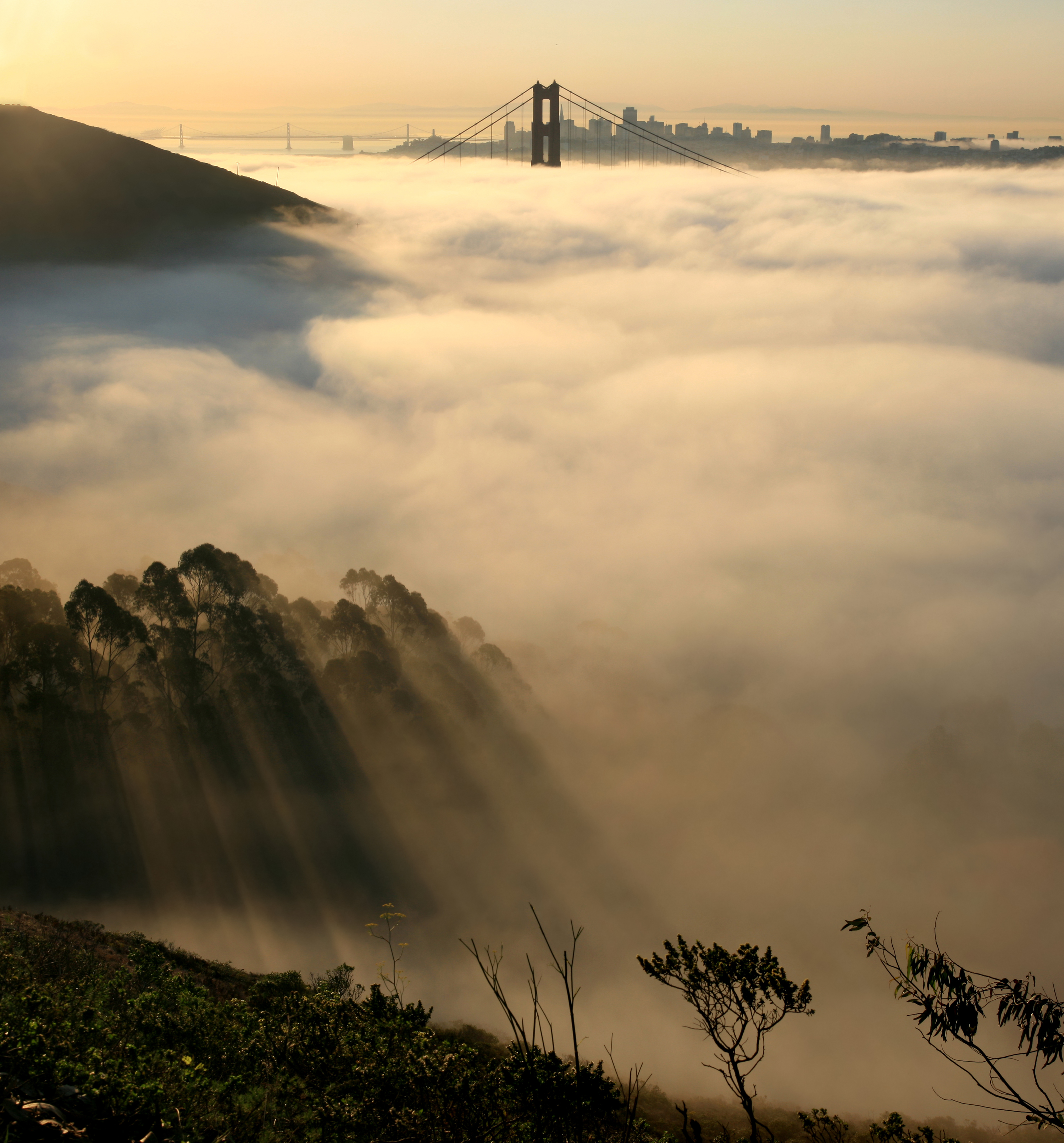
I am a native of the Bay Area, a place that everyone thinks is among the most beautiful in the world. I was born in San Francisco and grew up in Marin County, just to the north of the city across the Golden Gate Bridge; I lived amid the winding hillside lanes and towering redwood and eucalyptus trees of Mill Valley, beneath Mount Tamalpais, until I was eighteen, when I went off to college in Massachusetts. There I met the woman I would marry, a native Texan, as I recounted in an earlier post; she had a job lined up in San Antonio after graduation, I followed her there, and I never lived in California again.

Why did I so thoughtlessly, even eagerly, put California behind me when I left home? In part, I realize in retrospect, I was hoping to escape some not particularly unusual or interesting adolescent angst and family tensions, and to redefine myself as a brighter, happier person in a new setting, among strangers. (I say nothing of the futility of such an effort; I was young and foolish.) Massachusetts, and then Texas, seemed like blessed opportunities, and I clutched at them desperately.

Only… almost despite myself, I continued to count as my closest friends two men I had known almost since birth. Brad and I met in kindergarten; Hans came a few years later. The three of us went all the way through elementary and high school together, and all three of us headed east to college, Brad to Harvard and Hans to Yale. (Both, I hear, pretty good schools.)


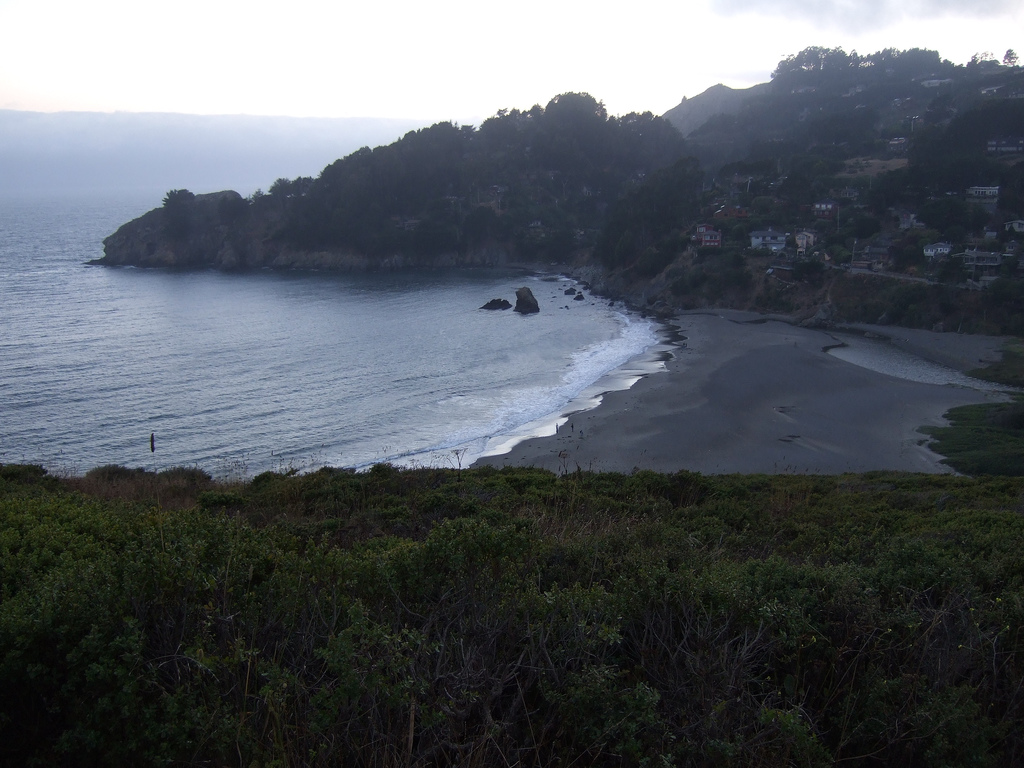
After college, I ended up in Texas, while Brad and Hans returned to California, to Los Angeles and San Francisco respectively. Last year we all turned fifty, and Brad decided we should celebrate the milestone together. So, after much back-and-forthing (all three of us are married with children, with all the scheduling complications that implies), we arranged to meet in San Francisco in March and spend a day in Marin hiking along the California Coastal Trail, six miles from Tennessee Valley to Muir Beach and back again.

It was a beautiful day, we had a wonderful time, and we agreed to make this little reunion an annual event. This year, again, we gathered in March and spent the day hiking in Marin, this time at Pierce Point Ranch on the northern end of Point Reyes National Seashore. Next year we may meet in L.A., in deference to Brad; the year after that, perhaps we’ll meet in Texas.

One of the wonderful gifts this time with Brad and Hans has given me is the opportunity to reconsider my relationship to California. My father was something of an outdoorsman, and when I was a child we went camping and hiking in Marin County, in the Sierras, and even up the coast to Oregon and Washington. For various reasons, I never really enjoyed these trips as much as I should have—or so I thought. But hiking to Muir Beach and at Point Reyes with Brad and Hans forced me to confront an unexpected and long-suppressed truth: I loved this land, and felt comfortable in it in a way I still don’t in Texas, even though Texas is now home. I gloried in half-remembered vistas, in the way the glittering ocean and the crepuscular redwood forests and the rolling dairy farms butted up against each other; in the cypress and eucalyptus and madrone and laurel and manzanita, and in the blooming flowers whose names I’d never learned; in the cool, salty air; in the fog banks drifting in over the Pacific.

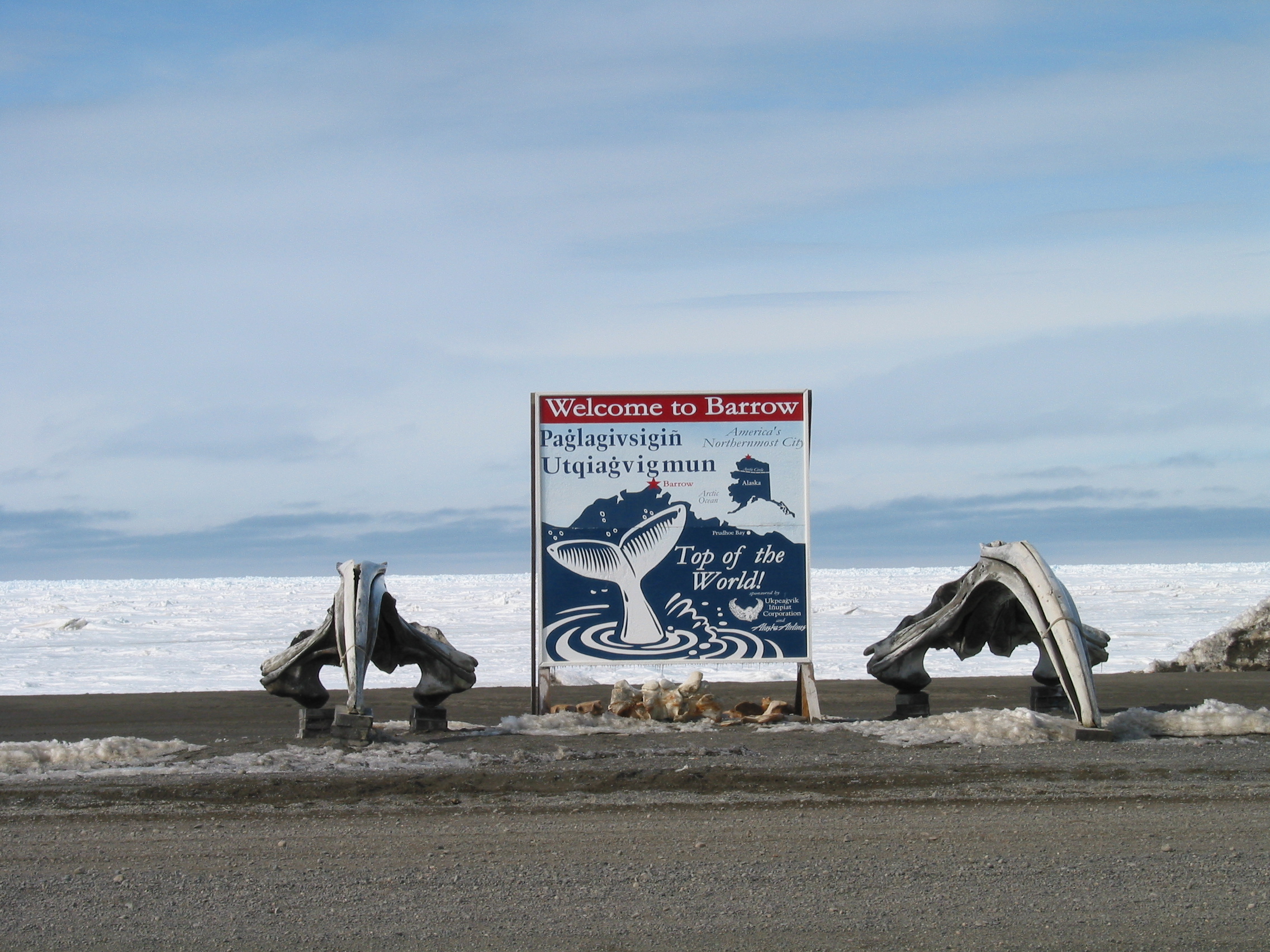
I felt as if a long-shut door in my head had been wrenched open again, and I could look out, for the first time in years, onto the bright green hills of a place I’d forgotten, or almost forgotten—a place I knew at once, with an almost literally breathtaking shock of recognition. I now realize that, having grown up amid such gentle but dramatic beauty (the suggestive, if erroneous, local legend has it that Tamalpais means “Sleeping Lady”), I came to believe that the world is an essentially beneficent place, and that the land is an unfailing source of pleasure and comfort. (I might have reached a different set of conclusions had I grown up in, say, Orla, Texas, or Barrow, Alaska.)

Mostly, however, I realize how much I took for granted, and how unbelievably lucky I was (and am). Over the years I’ve wasted a lot of time and energy in attempting to deny or at least rewrite my past, but now I feel as though I’ve been given a second chance to connect, to learn this land—not as the place I live, perhaps, but as the place I’m from, the place that formed me.
—Martin


What we’re reading
Heather:
Kathryn Stockett, The Help
Martin: Dan O’Brien, Buffalo for the Broken Heart: Restoring Life to a Black Hills Ranch

Friday, July 2, 2010

The literary environment (with apologies to the Williams Alumni Review)


Confession: I consider myself a loyal son of alma mater, but I usually just skim the quarterly Williams Alumni Review before tossing it into the recycling pile. A story in the June issue, however, caught my eye. “The Literary Environment,” by Denise DiFulco, is about the director of the college’s Center for Environmental Studies (CES), a Spanish professor named, confusingly, Jennifer French.

The article notes that a lot of people have asked French how a Spanish professor came to be named the director of the CES. The answer involves her first book, Nature, Neo-Colonialism, and the Spanish American Regional Writers (2005), which examined early twentieth century Latin American literary responses to European economic hegemony in the region. Or something like that. Explains French, “Often those writers, including Horacio Quiroga and José Eustasio Rivera, made central to their narratives the deleterious effects of agriculture and other industries.”

Sadly, I know next to nothing about Latin American literature, and I’d never heard of Quiroga or Rivera, but another quotation from the article really struck me: “At their best, environmental history, philosophy, religion, literary studies, and the like engage the underlying assumptions of environmental policy and environmental science.”

Exactly! I thought. This is a view that resonates profoundly with Heather and me—we are, after all, both English majors—and when we eventually begin accepting environmental writers for residencies at Madroño Ranch, we hope to cast as wide a net as possible.

Say the words "environmental writer" and I suspect that most people think of folks like Bill McKibben or William Cronon or Michael Pollan or David Quammen (all of whom happen to be heroes of ours): essayists or historians with a biological or agricultural bent. They, and many others like them, are among the most important writers we have, and we would be thrilledthrilled—to have them, or their peers, as residents at Madroño. But we also hope to attract novelists and poets and philosophers and theologians and playwrights and screenwriters and memoirists and perhaps even (what the heck) bloggers—pretty much anyone who’s thinking and writing in creative ways about the land and those who have their being on it, and how they affect each other.

Think of the fiction of Wendell Berry, who (much as William Faulkner did in Mississippi) has created a complex and compelling imaginary landscape in Kentucky. (Apparently the American South is particularly suited to this sort of exercise.) Think of the novels of Willa CatherDeath Comes for the Archbishop is still my favorite—and Wallace Stegner, which depict the varied experiences of humans confronted with the vast spaces of the American West. Think of the poetry of Mary Oliver, in which the animal and vegetal and geological is a constant, almost sentient presence, and W. S. Merwin, described in the New York Times as “a fierce critic of the ecological damage humans have wrought.” Think of the economic writings of Paul Hawken and Woody Tasch, critiques of modern industrial capitalism’s obsession with short-term, bottom-line profit at the expense of just about everything else. Heck, think of David Winner’s odd little book Brilliant Orange: The Neurotic Genius of Dutch Football—one of my personal favorites—in which he examines how landscape has affected the style of soccer played in the Netherlands.

Closer to home, think of the gracious and elegant memoirs of John Graves and Roy Bedichek, two of the foundational texts of the environmental movement in Texas; or the beginning of The Path to Power, the first volume of Robert Caro’s epic three-volume biography of Lyndon Johnson, which is still the best short history of the Texas Hill Country I’ve ever read; or even Witold Rybczynski’s magisterial biography of Frederick Law Olmsted—not a Texan, but an astute observer of the state—which is a wonderful narrative summary of nineteenth-century American thought about nature in urban and suburban settings. Each of these works, I believe, has something original and important to say about community in America, community in this case defined as (to crib shamelessly from Pollan’s website) “the places where nature and culture intersect.”

We’d be pretty surprised to receive applications from Faulkner, Cather, Stegner, or Bedichek, since they're, well, dead. But would the rest of them want to come to Madroño Ranch? Well, why not? We hope that the offer of beautiful and rugged surroundings, free from distraction, in which to ponder and dream and focus and unfocus (and eat well, of course; let’s not forget eating well) and bounce ideas off peers, will prove irresistible. Are we aiming high? Of course; but if you don’t aim high, you’ll just keep hitting the ground, right? Who knows—maybe Jennifer French herself will want to come. According to the article, she’s already working on her next book, a study of how memories of the War of the Triple Alliance (fought between Paraguay and the combined forces of Argentina, Brazil, and Uruguay from 1864 to 1870) have influenced attitudes toward land use in Paraguay. Wouldn’t that be cool?
—Martin


What we’re reading
Heather:
Laurie King, Touchstone
Martin: Paul Hawken, The Ecology of Commerce: A Declaration of Sustainability (still)

Friday, February 19, 2010

Massachusetts, part III: take a walk on the wild side


A Very Long Time Ago, my mother brought home a Peter Max-style poster with this quotation from Henry David Thoreau: “In wilderness is the preservation of the world.” Each time we moved, its reappearance was an indication that I was home again despite the bewildering newness of my surroundings. Thanks to this poster, I associated “wilderness” with “home.”

During our recent and ongoing Thoreau binge, I discovered, disconcertingly, that the poster has it wrong. The quotation comes from Thoreau’s essay “Walking,” initially delivered as a (very long) lecture in 1851 and published posthumously in the Atlantic Monthly in 1862. “I wish to speak a word for nature, for absolute Freedom and Wildness, as contrasted with a freedom and Culture merely civil,” he begins. Walking is civilized humanity’s entrée into nature, but Thoreau’s notion of walking is highly particular: “I have met with but one or two persons in the course of my life who understood the art of Walking, that is, of taking walks, who had a genius, so to speak, for sauntering....” For Thoreau, to walk in nature was to be a pilgrim, a sainte-terrer,” simultaneously seeking the holy land and already graced: “It requires a direct dispensation from heaven to become a walker.” Clearly, according to Thoreau, hoofing it to the neighborhood grocery store to pick up a loaf of bread does not qualify as walking.

Nor does walking have anything to do with exercise or taking a break. Walking requires attention. “[I]t is of no use to direct our steps to the woods, if they do not carry us thither. I am alarmed when it happens that I have walked a mile into the woods bodily, without getting there in spirit.... The thought of some work will run in my head, and I am not where my body is; I am out of my senses.” Rather, he says, “you must walk like a camel, which is said to be the only beast which ruminates when walking.” (That’s a joke, I think, but even if it’s not, it ties in nicely with Martin’s post from last week.)

Thoreau found that his preferred direction for a walk was almost always southwestward. “It is hard for me to believe that I shall find fair landscapes or sufficient Wildness and freedom behind the eastern horizon.... I must walk toward Oregon, and not toward Europe.” There is something specifically American in his way of walking, and he predicts that walks through the American landscape will form the American soul: “I trust that we shall be more imaginative; that our thoughts will be clearer, fresher and more ethereal, as our sky—our understanding more comprehensive and broader, like our plains – our intellect generally on a grander scale, like our thunder and lightning, our rivers and mountains and forests—and our hearts shall even correspond in breadth and depth and grandeur to our inland seas.”

He has nothing against civilization, culture, education, the arts, but he felt that they all rely on something unexpected: “The West of which I speak is but another name for the Wild; and what I have been preparing to say is, that in Wildness is the preservation of the world.”

Here is where this Thoreauvian saunter has led us, gentle reader—back to that poster. In Wildness, not wilderness, is the preservation of the world.

I think the distinction is enormously important. “Wilderness” implies an external state; “wildness” is as easily internal as external. Thoreau didn’t want to erase human culture; rather, he sensed that it required wildness, both psychic and physical, in order to flourish.

In one of those beneficent coincidences, I put down Thoreau’s essay a couple of Sundays ago and discovered an article in the New York Times Magazine entitled “Is There an Ecological Unconscious?” The article described a somewhat inchoate field of study in which a clear link is made between human mental health and the health of wild nature. Glenn Albrecht, a philosopher and professor of sustainability at Murdoch University in Perth, Australia, has coined the term “solastagia” to designate “the pain experienced when there is recognition that the place where one resides and that one loves is under immediate assault... a form of homesickness one gets when one is still at home.” A growing number of psychologists agree with Albrecht’s assertion that there is a direct connection between environmental degradation and mental illness. One of them calls not just for intact ecosystems that include large predators but for a “re-wilding of the psyche,” a term perhaps more appealing to poets and transcendentalists than to funders of academic research.

It’s an interesting proposition. What does a re-wilded psyche look like? In his book Monster of God: The Man-Eating Predator in the Jungles of History and the Mind, David Quammen muses on the merits of what he calls “alpha predators,” among them lions, grizzly bears, Nile crocodiles, reticulated pythons, and white sharks. He considers mythical creatures as well, particularly Leviathan as he appears in the book of Job. In examining this uncomfortable perspective on humanity as meal instead of master, Quammen wants us to consider the crucial role this perspective has played “in shaping the way we humans construe our place in the natural world.” In short, it’s important for us to know ourselves as part, not masters, of the food chain. Why? For the same reason God beats Job over the head with questions about Leviathan: who can tame such a furious beast? Can Job? Duh, no. The man-eaters remind us of the life-promoting necessity of humility. As dangerous as they are, the destruction of man-eaters, or even their relegation to zoos, would be more dangerous: we might thus be further encouraged to behave as if we were masters of the universe—a time-tested guarantee for misrule if there ever was one.


A human psyche that resonates with, or trembles at, the roars of actual alpha predators is likely to be awake in a particular way, awake to its own contingency. (If you haven’t read Mary Oliver’s “Alligator Poem,” now is definitely the time to do so.) Years ago, walking in the back reaches of Madroño Ranch, Martin and I heard the unmistakeable scream of a mountain lion. I’ve never reentered that canyon—especially when I’m alone—without taking a deep breath.

So back to the misquotation. As much as I love that old poster, and as vital as I think wilderness is, I think Thoreau got it right. Without access to wildness, without knowing the necessity of bowing before it, we cease to be fully human. And if we can’t fully inhabit our humanity, what home is left for us?
—Heather

What we’re reading
Heather: John Pipkin, Woodsburner: A Novel
Martin: Philip B. Kunhardt III, Peter W. Kunhardt, and Peter W. Kunhardt Jr., Lincoln, Life-Size

Friday, December 11, 2009

Carnivorocity, take two


Meat-eating has been the topic of much discussion recently, at least in what I’ve been reading. Jonathan Safran Foer’s new book, Eating Animals, has generated a significant buzz; if you Google “foer eating animals,” you get 961,000 results. Foer spent three years investigating meat production in the United States, factory farming in particular. Although he himself is a vegan, he says that he has no interest in converting anyone to veganocity; he just wants people to think about where their food—specifically, their meat—comes from.

Although I haven’t come to his vegan, or even vegetarian, conclusions, I think Foer is right. (Ahem. I haven’t read the book.) In my previous post on carnivorocity (a word my spell-check still doesn’t like), I wrote very convincingly about the ethical precondition necessary for meat eating, to wit: awareness of and gratitude for the sacrifice required to satisfy the appetite of the meat-eater, awareness that demands, for those who are to be sacrificed, a life of comfort in the world to which they are adapted. In fact, I think this awareness needs to be extended to vegetables as well; after all, even vegans require sacrifice—it’s just not as messy. By the very act of eating, all creatures—including, most emphatically, humans—participate in the circle of sacrifice, and a circle it most assuredly is; in nature, there is no such thing as a free lunch.

What sacrifice, then, is demanded of us? This year’s edition of The Best American Essays, edited by Mary Oliver, includes an essay by Wendell Berry entitled “Faustian Economics,” originally published in Harper’s Magazine. In it, Berry rails against the American propensity to confuse personal freedom with unlimited consumption, a fantasy that perhaps arose due to the intersection of the Industrial Revolution with the discovery of vast natural resources in the American West. As a nation, we’re confronting the end of this fantasy and “entering a time of inescapable limits”—an opportunity, according to Berry, to become reacquainted with traditional definitions of humanness. By their very nature, humans are, well, natural, and therefore limited. What distinguishes us from other animals (although I think this topic is being hotly debated) is our capacity for self-limitation, self-restraint, particularly as it is “implied in neighborliness, stewardship, thrift, temperance, generosity, care, kindness, friendship, loyalty, and love.”

As long as we base our identity on limitlessness, we deny an essential—and liberating—element of our humanity. As long as we base that fundamentally human activity, commerce, on fantasies of limitlessness, it will be inhuman and inhumane, what Berry calls an “economy of community destruction.” Instead, he would have us cultivate a mindfulness of human limits—agricultural, economic, medical, technological, scientific—in order to reclaim “the knowledge that some things, though limited, are inexhaustible.” He cites intact ecosystems like working forests and farms that give inexhaustibly, given the practice of human self-restraint. He compares this practice to the willing submission of artists to the constraints of their art forms—the poet to the sonnet, the painter to the canvas. The work that arises from this sort of discipline has the capacity to feed us inexhaustibly, a capacity we’ve all experienced when revisiting favorite novels or symphonies or buildings.

The title of Berry’s essay comes from Christopher Marlowe’s Tragical History of Doctor Faustus, first published in 1604, in which Faustus (that’s him in the picture above) sells his soul to Lucifer in exchange for knowledge and power. What Faustus learns—or, more accurately, refuses to learn—is that the human mind and soul are and ought to be subject to limits. When creatures refuse to acknowledge limits, hell is born.

So how do we practice the self-restraint necessary to maintain our humanity? Some, like Foer, argue that abstaining from eating meat is a logical and reasonable sacrifice. I don’t disagree with him, but I don’t think there’s a single way to humane self-restraint. Many indigenous cultures have focused on—even worshipped—the animals that fed them, Native Americans and bisons being a case in point.

I’m not sure any of this will mean much to those people and businesses that value scale and efficiency over humanness. Nor will it mean much to most Americans accustomed to the availability of cheap meat at every meal. But, with Berry, I believe that our humanity is at stake in the choices we make when we eat. When we choose to abet the suffering of animals and ecosystems to feed ourselves, we whittle away at our own humanness. When we choose to limit our choices, we paradoxically open ourselves to the possibility of inexhaustible plenty.

Sounds like a deal to me.
Heather

What we’re reading
Heather: Sylvia A. Earle, The World Is Blue: How Our Fate and the Ocean’s Are One
Martin: Colum McCann, Let the Great World Spin

Friday, December 4, 2009

Listapalooza: top ten books about the environment


And now for the next installment in our internationally celebrated series of lists... and what could be more appropriate from the proprietors of a place called Madroño Ranch: A Center for Writing and the Environment than a list (in alphabetical order by author) of our ten favorite books about the environment?

Wendell Berry, The Unsettling of America: Culture and Agriculture
William Cronon, Changes in the Land: Indians, Colonists, and the Ecology of New England
Annie Dillard, Pilgrim at Tinker Creek
John Graves, Goodbye to a River: A Narrative
Paul Hawken, The Ecology of Commerce: A Declaration of Sustainability
Mary Oliver, What Do We Know: Poems and Prose Poems
Michael Pollan, The Omnivore’s Dilemma: A Natural History of Four Meals
David Quammen, The Song of the Dodo: Island Biogeography in an Age of Extinctions
Wallace Stegner, Angle of Repose
Henry David Thoreau, Walden; Or, Life in the Woods

Of course, we’re struck by the many wonderful and influential books we had to leave out to get down to ten, and we'd love to know your favorites. Let the arguments begin!
—Martin

What we’re reading
Heather: Kate Braestrup, Here If You Need Me: A True Story
Martin: Simon Kuper and Stefan Szymanski, Soccernomics: Why England Loses, Why Germany and Brazil Win, and Why the U.S., Japan, Australia, Turkey—and Even Iraq—Are Destined to Become the Kings of the World’s Most Popular Sport