Showing posts with label environmentalism. Show all posts

Friday, September 17, 2010

Hall of mirrors: the lost art of conversation


Last week I found myself in a conversation with someone who doesn’t believe in AGW and has written a soon-to-be-published book explaining his position. AGW—which I had to look up—is short for anthropogenic global warming, or global warming caused by human activity. That idea is, he contends, “the biggest whopper sold to the public in the history of humankind.”

Now, I’ve read a lot about people like this: they listen to Rush Limbaugh, watch Glenn Beck, think the Earth is 6,000 years old, vote against the teaching of evolution in public schools, read the Bible literally, and vote Republican or Libertarian. I could probably pick them out in a crowd. They just have this look, right?

Except that this young man has a lot in common with, well, me. We’re both English majors from small New England colleges. Both former (at least on my part) doctoral students in literature. Both rowers. Both writers (although he’s been published in high-profile publications like The New Yorker, while I’ve been published in the Anglican Theological Review). Both voted for Obama. Both believers in “clean” energy, whatever that is. We most certainly don’t have that look.

He gave me the basics of his argument, the science of which I followed imperfectly, as I follow all scientific arguments. He caught and retained my attention when he said this: science relies on narrative. In other words, scientists tell stories about their research. They articulate their theories and findings in a particular way, a way that relies on their own experiences, influences, and personal quirks. Facts are facts, but facts aren’t self-interpreting. How the facts are articulated is essential to the final shape of the story.

So here’s the question: why do I take one set of scientific conclusions as gospel and reject another set? I’m not qualified to evaluate the merits of most scientific assertions, period. On what grounds do I choose one interpretation over another? I have to conclude that I rely on considerations other than scientific ones, just as many people do who don’t agree that climate change is caused by human activity, or that the earth is heating up at all. I tend to judge those people using criteria that I don’t generally apply to myself, a predictably unscientific state of affairs which may tarnish the burnished glow of my intellectual honesty.

According to a recent Gallup poll, Democrats are twice as likely as Republicans to believe that the effects of global warming are underway. All of the GOP candidates currently vying for Senate seats doubt the evidence supporting global warming and oppose government action to limit warming pollution. It would seem that most of us in the debate about climate change—and environmental concerns in general—are driven at least as much by political ideology as by science.

One of my daily reads is Grist, an e-zine that calls itself “A Beacon in the Smog.” Among the stories I read this week is one entitled “Stupid Goes Viral: The Climate Zombies of the New GOP.” Near the top of the story comes a staccato burst of single-sentence paragraphs that reads: “Meet the Climate Zombies. They’re mindless. Their stupid is contagious. And if they win, humanity loses.” While the tone is ironic, even flip, the message is clear: we need to be afraid of the politicians who refuse to acknowledge human participation in the destruction of the environment.

The tone of the story sounds very much like Glenn Beck’s when he ridiculed Nancy Pelosi’s anxiety about the rhetorical strategies of Tea Partiers: “This is how they are attempting to silence the Tea Partiers—they are just so hateful, they are going to get violent. During the Tea Parties, liberals in the media were trembling with fear and shaking in their boots. And they were right—see how scary they look? Oh, the horror! Parents, cover your children’s eyes. Of course, no actual violence ever actually happened at any of the Tea Party rallies. But that didn’t stop Nancy Pelosi from crying about the possibility....” While Beck’s tone is ironic, even flip, the message is clear: we need to be afraid of the politicians who want to curtail our right to speak out.

Although I’m more willing to listen to one voice than the other, here’s the problem: neither set of comments is intended to be part of an actual conversation. Both are speaking from within a hall of mirrors in which each auditor is imagined to be a mere projection of the speaker, or at most, a member of the speaker’s monolithic tribe. I recently read a great blog about the “epistemic closure” in much current conservative thinking—the tendency to accept evidence only when it reinforces preexisting opinions—and this from someone who works for the libertarian Cato Institute! But I find evidence of epistemic closure on the left as well, frequently manifested by a tone that smirks, “If you don’t agree with me you’re a moron, and I refuse to converse with morons.”

Well, this moron wants some conversation. In reading Plurality and Ambiguity: Hermeneutics, Religion, Hope, by David Tracy (very interesting, wretched title, periodically intelligible), I found this meaty sentence: “Conversation is a game with some hard rules: say only what you mean; say it as accurately as you can; listen to and respect what the other says, however different or other; be willing to correct or defend your opinions if challenged by the conversation partner; be willing to argue if necessary, to confront if demanded, to endure necessary conflict, to change your mind if evidence suggests it.”

Of course, you can only have a conversation when all the participants agree to these rules, and the Glenn Becks of the world seem usually to want to talk only to themselves in their own halls of mirrors. But when those of us with passionate feelings about the fate of all Earth’s residents, human and non-human alike, sound just like the conversation-stompers on the other side, then we become part of the problem, not the solution. As frustrating as it is to follow the rules—especially when your conversation partner has his back turned, his arms crossed, fingers in his ears and singing “lalalalala”—it becomes even more imperative to walk out of our own hall of mirrors willing to engage (again and again and again) in the hard and morally vital work of conversation in the open air.

Living as I do in my own little hall of mirrors in Austin, my conversational muscles are a tad underdeveloped. I may have to start with the AGW denier I mentioned above, the one who otherwise looks pretty much like me. I’ll try not to call him a moron and try to be willing to change my mind, to leave my tribe and go outside, if evidence suggests that it’s necessary. Now that’s scary.
—Heather


What we’re reading
Heather:
Nick Reding, Methland: The Death and Life of an American Small Town
Martin: Jimmy McDonough, Shakey: Neil Young’s Biography

Friday, August 6, 2010

Cleaning out the mental refrigerator: Niebuhr, McKibben, and Band-Aids


I’ve been surveying the multitude of leftovers in the refrigerator of my mind. When was the last time this thing was cleaned out? Jeez. Prodded into further examination of my last post by subsequent emails, conversations, and readings, I’ve concluded that my thinking is a little moldy and needs either to have the fuzz shaved off or be thrown out. Caveat lector: slightly smelly smorgasbord on the way.

Fuzzy thought number one: Chiding me for a Band-Aid approach to life-threatening environmental crises, a friend emailed this: “I actually think democratic control of the world through political action must be established. For me that means crushing the power of corporations.” On the one hand, I agree fully. The sheer, concentrated force of most multinational corporations is flabbergasting: the fact that British Petroleum still enjoys reasonable financial health despite the costs of the oil spill cleanup beggars the imagination. That much money is as good as a private militia, if not a private nuclear arsenal. Like anything powerful and willful, corporations need constant skeptical scrutiny.

Fuzzy thought number two: Bill McKibben, environmental prophet extraordinaire, was the first speaker a few weeks ago in a new annual lecture series endowed by my father in my mother’s memory at the Aspen Center for Environmental Studies. Martin and I were unable to attend, but my sister told me that the evening was beautiful, the talk was inspiring, and McKibben was a passionate and humble witness to the planet- (and therefore self-) destructive path we’re currently running down. (A few days later he gave a more formal version of his lecture at the Aspen Ideas Festival; either version is very much worth the time it takes to watch.)

Likening the scope of climate change to the devastation of nuclear warfare, he says that Americans “have so far failed to imagine that the explosion of a billion pistons and a billion cylinders each minute around the world could wreak the same kind of damage on the same scale.” Contributing to this failure of imagination are national inertia (we like the way we live); the divide between wealthy and poor nations (how do we tell others not to do what we have done when we are so comfortable?); and, unsurprisingly, the defensive position of the fossil fuel industry, which has hefted its mighty bulk directly on top of anything that might derail profits as usual. Imagine the public response to a campaign by the munitions industry downplaying the effects of nuclear warfare; one assumes that most of us would be thunderstruck. We should be as horrified by an industry that uses “the atmosphere as an open sewer for the effluent of their product” and makes more money than any industry in the history of money. But apparently we're not. Yet.

Fuzzy thought number three: corporations aren’t going away, nor should they. They (can/should) provide the infrastructure that local and sustainable economies need to thrive. The problem comes when mighty corporate bulk squishes the little guys flat, which is what usually happens. Governmental regulations meant to restrain the mighty corporate bulk often squish the little guys even flatter. (That’s about the most sophisticated economic observation I’m capable of producing, so I hope you enjoyed it.)

Fuzzy thoughts numbers four through six, which come from the very back of the bottom shelf: when faced with complex, apparently insoluble problems, my tendency is to go for a walk. Or pull out Band-Aids. Or make a big messy meal requiring lots of cleaning up. (Martin, as chief dishwasher, gets tired of this one.) But having spent the week reading Reinhold Niebuhr, one of the great Christian theologians of the twentieth century, and listening to Bill McKibben, I must sadly conclude that mine are inadequate responses. Writing with the stench of World War II still in the air, Niebuhr rebuked those Christians who had concluded that the only response to evil in the world was pacifism, trusting in power of human goodness to convert evil. Nor did he allow those who act against evil to trust fully in their own righteousness. Rather, he said, we need to be acutely aware that “political controversies are always conflicts between sinners and not between righteous men and sinners. [The Christian faith] ought to mitigate the self-righteousness which is an inevitable concomitant of all human conflict. The spirit of contrition is an important ingredient in the sense of justice.” As tempting as it is to preen, when we choose to fight the bully power of corporations, we need to be clear about our own implication in the tangled web of environmental injustice.

Add Niebuhr’s words to these: McKibben, a mild-mannered science writer, published a column titled “We’re hot as hell and we’re not going to take it anymore” on the TomDispatch.com website this week that immediately went viral. Furthermore, our mild-mannered hero writes specifically about the refusal of our political leaders even to consider climate legislation last week: “So what I want to say is: This is fucked up. The time has come to get mad, and then to get busy.” This from a Methodist Sunday School teacher!

The organization he started in 2008 with seven recent Middlebury College graduates—350.org—was a ragtag effort to organize a worldwide response to climate change. The results of that effort were astonishing. It turns out that the term “environmentalist” does not apply just to a bunch of over-educated, effete white Americans; in fact, the rest of the world—most of it brown, young, poor, and powerless—knows something we Americans still aren’t willing to confront: climate change, driven by fossil fuels, has crippled the regularity of the natural order we rely on for everything. Everything. Everything.

Through 350.org, we have an opportunity on October 10, 2010—10/10/10—to tell the powers that be that we’re hot as hell and we’re not going to take it anymore. We should still walk through our neighborhoods and chat with our neighbors. We should still introduce people to the profound pleasures of eating locally and according to the seasons. Acts like these will give us sustenance for the battle ahead, especially those of us who don’t feel much like fighters, who don’t want to crush anyone or anything, and most especially those of us who don’t want out clean out our refrigerators.
—Heather


What we’re reading
Heather:
Dan O’Brien, Buffalo for the Broken Heart: Restoring Life to a Black Hills Ranch
Martin: Warren St. John, Outcasts United: An American Town, a Refugee Team, and One Woman’s Quest to Make a Difference

Friday, July 23, 2010

Double vision: prophets, tribalism, eugenics, and the environment


As I dog-paddle through the sea of books threatening to drown not just me but the overwhelmed shores of my bedside table, I found these sentences: “For those who draw near and offer themselves before God, satisfaction of hunger is neither an end in itself nor a wholly ‘secular’ event.... [E]ating is a worshipful event, even revelatory; it engenders a healthful knowledge of God.” When I read this, I thought, “Ah, I am a member of the tribe that believes this.”

I briefly met Ellen F. Davis, author of Scripture, Culture, and Agriculture: An Agrarian Reading of the Bible and professor of Bible and practical theology at Duke Divinity School, when she spoke at our church about ten years ago, and I immediately developed a helpless intellectual crush on her. The crush is not diminished by the fact that Our Hero Wendell Berry wrote the foreword to the book and is quoted at the beginning of each chapter.

Davis’s basic claim is that the fertility and habitability of the Earth—and particularly of Israel—are the best indices of the health of the covenant relationship between God and his people. She writes beautifully about that stickiest of words in Genesis 1, when mankind is given “dominion” over the earth. Made in God’s image, we are meant to exercise dominion as God does, and in Genesis 1, the way God exercises dominion is to exclaim in delight over the goodness of his work, and then to declare a day of rest for his delightful creation. Reckless topsoil depletion, toxic pesticides, and Confined Animal Factory Operations, among many other current agricultural practices, would probably not pass the Delight Test.

I read all this with a double vision: on the one hand, I underline passages, write notes, and spray exclamation points in the margins. On the other hand, I think about my neighbors in the Hill Country, many of whom are very conservative Christians, and I wonder how they would react to Davis’s scathing comparison of pharaonic agricultural and economic policies (the ones that made God really, really mad) with the practices of American agribusiness. I’m not sure the book will get a lot of traction here. (Well, or anywhere; the book’s title is so unsexy it might as well be wearing a suit of armor.) And yet it seems to me so clear that Davis’s analysis is Right and needs to be broadcast.

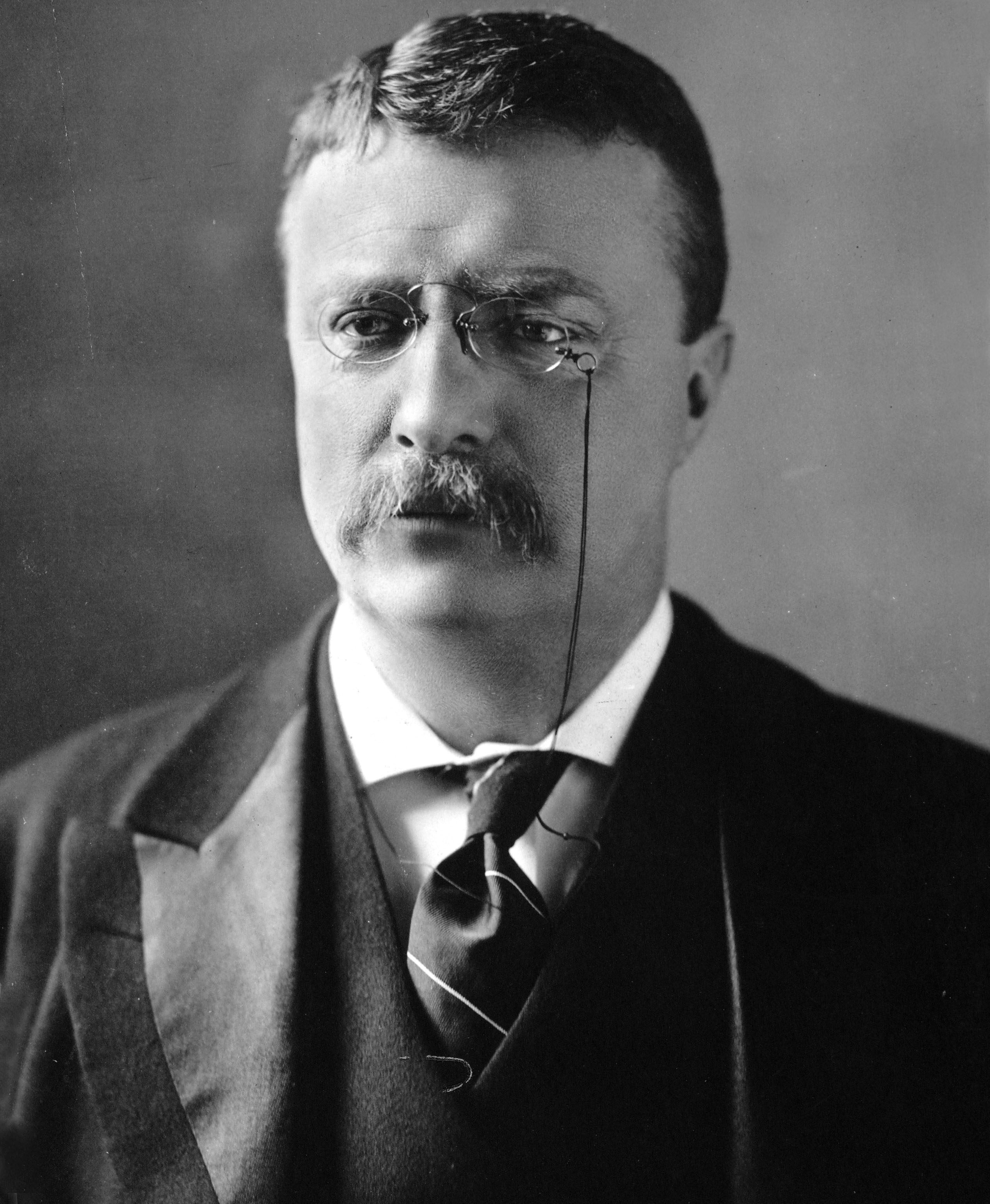
So how do you convince someone you’re right? Well, here’s how not to do it: the way the American conservation movement sounded its earliest notes, at least politically. The current issue of Orion magazine carries a feature story entitled “Conservation and Eugenics: The Environmental Movement’s Dirty Secret.” Charles Wolforth, the author, links Teddy Roosevelt’s New Nationalism, with its emphasis on patriotism and conservation, to the propagation of “higher races,” as opposed to Native Americans, Eskimos, and other "lower races."

Wolforth writes, “These ideas had been developed at Ivy League and other universities, at museums of natural history and anthropology in New York and Washington, in learned societies and in scientific literature. When... world’s fairs focused on the West, the link between natural resources, morality, and racism was drawn ever more explicitly.” Pointedly, Wolforth quotes from Roosevelt’s New Nationalism speech, arguably the launching of the modern conservation movement:

“Of all the questions which can come before this nation, short of the actual preservation of its existence in a great war, there is none which compares in importance with the great central task of leaving this land even a better land for our descendants than it is for us, and training them into a better race to inhabit the land and pass it on. Conservation is a great moral issue, for it involves the patriotic duty of insuring the safety and continuance of the nation.” It also, apparently, involved practicing eugenics.

Awash in my sea of books, I am a descendent of this tribe. No wonder it’s hard to convince many people I'm right.

When I walk through my beloved Austin neighborhood, I’m often beset with the same double vision I have when reading the prophetic environmental writing I’m prone to read. I walk through my neighborhood pleased—delighted—with my wonderful neighbors and their well-tended homes and gardens. As I have mentioned before, walking a couple of blocks can take forty-five minutes or more, depending on who else is out and about and what news needs to be exchanged, which dogs need to be admired, whose children are doing fabulously or exasperatingly nutty things. How can this be a bad thing? And yet I can’t help but be aware of the multitudes of cars, the endless whir of air conditioners, the trucks bearing pesticides that fertilize lawns, the lights that are on all night, the sprinklers running even as it rains. (We, too, are guilty of some of these.) How do you convince people without double vision that the goodness they’re seeing in their way of life is resting on something destructive?

In the fruit of the American environmental movement there is a noxious worm: a sense of righteousness that often gnaws its way into self-righteous tribalism. The ways in which we eat and live are often markers of who we are; when told (or bullyragged) to change these ways, it can seem as if something essential in us has been condemned, most particularly when judgment comes from outside the tribe. Like triumphalist Christians who refuse to acknowledge the ugliness and violence that comes bundled with the hope and beauty of Christian history, triumphalist environmentalism will foment ill-will from people whose health and livelihoods could be enhanced or saved by its message.

Every movement must have its prophets. Traditionally, prophets haven’t been the sort of people you want to invite home for dinner; they eat locusts, dress in skins or nothing at all, sit in cisterns, moan a lot—that sort of thing. The true prophets get listened to not because they're scare-mongering but because they always have an accurate sense of their tribe’s history, an acute awareness of when it has fallen away from its original goodness. They include themselves in their judgments. Despite their very visible eccentricities, there is an essential humility to them. When I pull up behind a pickup truck with a bumper sticker that says “Drill Here Drill Now Pay Less” (along with a Rick Perry sticker) and my first impulse is to jump out of my car and bash in the windshield, I know I’m no prophet. We’re both driving, after all, and I need that gas as much as the other driver does. I’m not passing that humility test.

So where does that leave my tribe, the irritable non-prophets of the environmental persuasion? As an oldest child, I always like to have the right answer to pass on—and enforce, whenever possible. My tribe is frequently stymied. But here’s one thing: invite someone over for dinner, someone not of the tribe. Feed them something that’s beautiful, that’s grown in accordance with the revelatory economy of food kindly produced. And think about this passage from one of Wendell Berry’s Sabbath poems:

Leave your windows and go out, people of the world,
go into the streets, go into the fields, go into the woods
and along the streams. Go together, go alone.
Say no to the Lords of War which is money
which is Fire. Say no by saying yes
to the air, to the earth, to the trees,
yes to the grasses, to the rivers, to the birds
and the animals and every living thing, yes
to the small houses, yes to the children. Yes.
—Heather


What we’re reading
Heather:
Thomas Perry, Strip
Martin: Russell Shorto, The Island at the Center of the World: The Epic Story of Dutch Manhattan and the Forgotten Colony That Shaped America

Friday, March 12, 2010

Mapping the geography of hope: our place in the wilderness


Last week, during a visit to San Francisco that also took us to the nearby Djerassi Resident Artists Program, Martin and I spent a day exploring the Point Reyes National Seashore with his childhood friends Brad and Hans. Before setting off on our hike, we wandered into Point Reyes Books and wandered out again with the first two volumes of the West Marin Review, a nifty literary journal whose inaugural issue considers Wallace Stegner’s claim that “[w]e simply need... wild country available to us, even if we never do more than drive to its edge and look in. For it can be a means of reassuring ourselves of our sanity as creatures, a part of the geography of hope.”

Even if I can’t give coordinates for the geography of hope, I like the idea that it might exist on some map buried deep under the mess in my brain’s glove compartment. In current mainstream environmental thinking, however, humans and wilderness cannot exist together because humans are an inevitable contaminant. Having spent the drive from San Francisco to Point Reyes with my face glued to the car window taking in an enticing new vocabulary of birds, I’d like to think that the geography of hope includes a place where humans are part of wilderness, not set off from it.


Our hike took us north between Tomales Bay and the ocean, through herds of tule elk, watching waves crash on the rocky shore and tender crocuses and poppies huddled in the chilly wind. As we returned to the parking lot at Pierce Point Ranch, we heard the whine of chainsaws; the Park Service was taking down an enormous Monterey cypress, maybe 75 feet tall. The presence of rot in some branches posed a threat to the uninhabited cluster of historic ranch buildings at the head of the trail. The decision to cut down the tree seemed iconic of the destruction endemic to human activity in the natural world.

So it was with interest that I saw an essay in the West Marin Review entitled “The Fiction of Wilderness,” by Mark Dowie, the former editor and publisher of Mother Jones. Dowie suggests that the Wilderness Act of 1964 set in stone the idea that wilderness was best preserved by balkanizing large tracts of land and ejecting any permanent residents who might have lived there, as the Miwok tribe was ejected from Yosemite. He says this creates “a commodified wilderness... a deliberate charade, a culturally constructed neo-Edenic narrative played out for weary human urbanites yearning for the open frontier their ancestors ‘discovered’ then tamed—a place to absorb the sounds and images of virgin nature and forget for a moment the thoroughly unnatural lives they lead.” (Ouch.)

But Dowie suggests an alternative. His research revealed that many aboriginal peoples have nothing analogous to the Western conception of wilderness and were stumped when he tried to explain it to them. The closest equivalents in their languages were domesticated ones: “back yard,” “big farmyard,” “food,” or “pantry.” There was, in other words, no sense of separation between the people and the landscapes they lived in. Dowie quotes a Tarahumaran ethno-ecologist from Mexico who says that in his culture the landscape is granted the same love and affection as family, resulting in a “kincentric ecology.”

Dowie hopes that environmentalist notions of wilderness can change to include the possibility of human activity intimately embedded within the land in a mutually profitable relationship. When we see ourselves as apart from a pristine nature that exists outside the bonds of kinship, we are more likely to commodify and exploit it.

Serendipitously, my reading took me from the West Marin Review to a publication that our friends Hugh and Sarah Fitzsimons of Thunder Heart Bison gave me just before we left for San Francisco. Entitled Five Ways to Value the Working Landscapes of the West, it may not rise immediately to the top of the New York Times best seller list, although it makes for compelling reading. The first essay, “In Praise, and in Appraisal, of the Working Landscapes of the West,” begins with this heartening pronouncement: “The simplest fact about Western ranches tends to be the one which most folks tend to forget: raising range-fed livestock is one of the few economic activities that produces food—and potentially ecosystem health and financial wealth—by keeping landscapes relatively wild, diverse, and resilient.”

We’re planning our first bison harvest in the near future and have hopes of developing a food culture that will feed whoever happens to be staying at Madroño Ranch and perhaps others in the immediate community as well. Our concern can’t stop at our bellies, though: what feeds us must be fed as well, and well fed. The essay’s authors, Gary Paul Nabhan and Ken Meter, write of working landscapes: “if we commit ourselves to eating their bounty, we derive a good portion of our nourishment from the very ground on which we stand. We do not stand apart [my emphasis] from the energy and water flows of our home ground. Instead, they work through us, and we work because of them. The land is not mere scenery suitable only for tourism and leisure. It is a functioning community in which we either live well or poorly, depending on how efficiently and conservatively we participate in the land’s work.” And then, as the clincher, they quote my new hero Henry David Thoreau: “[P]erhaps we are here to ‘meet the expectations of the land’ and not the other way around.”

This whole blog post may be nothing more than a stemwinding rationalization for contaminating the rapidly disappearing Texas wilderness. But I hate the idea that there is no room for an ongoing and mutually satisfying exchange between the landscape and its human inhabitants. We need guides to lead us from here to there, though, guides who know both the intimate history of the land and the capacities and limits of new technologies. Increasingly, these guides are ranchers like Hugh and Sarah who cherish their working landscapes and who, in return, receive its abundance, even in lean times. We’d like Madroño Ranch to find its own place in this geography of hope.
—Heather

What we’re reading
Heather: Henri J. M. Nouwen, In Memoriam
Martin: Jay Parini, Promised Land: Thirteen Books That Changed America

Friday, December 4, 2009

Listapalooza: top ten books about the environment


And now for the next installment in our internationally celebrated series of lists... and what could be more appropriate from the proprietors of a place called Madroño Ranch: A Center for Writing and the Environment than a list (in alphabetical order by author) of our ten favorite books about the environment?

Wendell Berry, The Unsettling of America: Culture and Agriculture
William Cronon, Changes in the Land: Indians, Colonists, and the Ecology of New England
Annie Dillard, Pilgrim at Tinker Creek
John Graves, Goodbye to a River: A Narrative
Paul Hawken, The Ecology of Commerce: A Declaration of Sustainability
Mary Oliver, What Do We Know: Poems and Prose Poems
Michael Pollan, The Omnivore’s Dilemma: A Natural History of Four Meals
David Quammen, The Song of the Dodo: Island Biogeography in an Age of Extinctions
Wallace Stegner, Angle of Repose
Henry David Thoreau, Walden; Or, Life in the Woods

Of course, we’re struck by the many wonderful and influential books we had to leave out to get down to ten, and we'd love to know your favorites. Let the arguments begin!
—Martin

What we’re reading
Heather: Kate Braestrup, Here If You Need Me: A True Story
Martin: Simon Kuper and Stefan Szymanski, Soccernomics: Why England Loses, Why Germany and Brazil Win, and Why the U.S., Japan, Australia, Turkey—and Even Iraq—Are Destined to Become the Kings of the World’s Most Popular Sport

Friday, October 16, 2009

A mother’s legacy


The first sparks for the idea of Madroño Ranch: A Center for Writing and the Environment were kindled about a year ago in conversations with my mother, Jessica Hobby Catto. She has listened carefully and thoughtfully to my sometimes wildly utopian ideas, offering hard-earned practical advice and persistent encouragement.

Her death on September 30 has left me so stunned that I’m having trouble relegating her to the past tense. I am struggling to stay in the present perfect, which refuses to point to a specific time, preferring instead to drift between the present and the past. This grammatical eddy allows me to dawdle a little longer before I face a present and future without her. At the same time, I know that at Madroño her spirit is always present, always past, always future.

My mother’s love for the outdoors shaped my life. The first house I remember was on a bluff north of the San Antonio airport, terrain that didn’t qualify as even remotely suburban at the time. Since my three siblings and I arrived within six years of each other, my mother must have deemed it a survival strategy to push us out of doors as much as possible. We had no immediate neighbors and spent our time pretending to be lost in the woods, investigating the draws and seasonal creeks that occasionally flooded and kept us home from school, and sliding down the cliff (strictly forbidden) to visit the nearest neighbors who rewarded us with butterscotch candies. The gravel road on which we lived was rural enough that people felt comfortable dumping trash on it. Every few months my mother would send us to drag a large trash can and pick up the trash on the road that we could pick up: we were permitted to leave the large appliances and dead livestock. Her point was—and is—clear: some human interactions with the landscape are unacceptable.

She also taught me that love of place is a perfectly reasonable principle by which to order a life. Converted to the Church of High Altitudes at Cimarroncita Ranch Camp in New Mexico, she began proselytizing to her children in the mid-1960s when we began annual summer treks to Aspen, Colorado. In the requisite station wagon filled with pillows, the reek of Panhandle oil and cattle, and squabbling children, we always stopped at the top of then-unpaved Independence Pass (12,000-plus feet above sea level) to play in the snow.

Aspen then had one paved street, one stop sign, a drug store with a soda fountain, and two fine old movie theaters. What more did we need? On days we didn’t hike, my mother shooed us outside to play in the puddles if it was raining or to climb up nearby Aspen Mountain with raincoats or pieces of cardboard upon which we would slide back down the meadow grasses. When my father’s career took us away from Texas and to other interesting venues, Colorado was the place we always returned to, my mother’s spiritual center. Despite her peripatetic life, she had a profound love of the Roaring Fork River valley, its smells and flowers, its imperious weather changes, the varieties of its wildness. These never ceased to sustain her, and she in turn worked to sustain them through her involvement with various environmental causes, particularly land conservation.

When she was diagnosed with metastatic colon cancer in 2007, my parents began spending more time at their San Antonio home to be near the doctors she most trusted. Since she had long since given her heart and energy to Colorado, I was worried that she would feel unmoored during her time in San Antonio, adding to the discomforts of treatment. As we talked about ways in which she could stay connected to the conservation world she loved, especially in a state like Texas that so dearly values its private property rights, the idea of creating a gathering place for people passionate about nurturing the natural world was born.

I know I will eventually move out of the strange timelessness that hovers around times of death, but never completely. Despite her preference for the mountains, she saw the beauties of the Texas Hill Country and bought the original piece of what has become Madroño Ranch more than fifteen years ago. The blessings she bestowed on me—awareness of human limits, love of place, the place itself—are with me as long as I am here to receive them.
—Heather

What we’re reading
Heather: Nicholson Baker, The Anthologist
Martin: Charles Dickens, Great Expectations