Showing posts with label Thunder Heart Bison. Show all posts

Friday, February 11, 2011

Meat and flourishment: carnivorocity, take three


Martin’s post last week describing the first slaughter (and I use the word “slaughter” advisedly) in our new endeavor as purveyors of bison meat elicited a comment that urged us to consider the ethical fault line (presumably) running through every conscience, that unsteady place where we find ourselves rationalizing our actions to ourselves or to whatever audience our imaginations conjure up.

Martin tried to make his/our unease clear with the post’s title: Bloody Hands. So I’m wondering once again about the ethics of carnivorocity, as visible and treacherous a fault line as abortion, euthanasia, gun control, climate change, or cloning: when you stand on one side of the fault line, it’s easy to think that the earth itself will justify you when it opens up and swallows the dummies over there, proving that you were on the right side, at which point you can stop worrying all the time, for heaven’s sake, and go on your merry way without thinking about the issue ever again.

As usual, diving into the conversations available on the internet just sucked me deeper into the murk. A defense is available for every possible position and offered with wildly varying degrees of civility: meat-eaters supporting vegans and trashing vegetarians; meat-eaters sneering at any thought of self-restriction; vegetarians and vegans calling meat-eaters all sorts of names; vegetarians acknowledging that some meat-eating is environmentally acceptable; meat-eaters acknowledging that American meat production and consumption is for the most part grotesque. What’s a utopian-minded bison rancher to think?

Serendipity, as usual, is my guide: in chasing internet rabbits down their holes, I found a momentary resting place in a review of Maggie Kozel’s book The Color of Atmosphere: One Doctor’s Journey In and Out of Medicine. After describing a flummoxing patient she had as a second-year medical student, Kozel said, “[I] devoured the answers without asking the right questions.”

Of course, if you’re obsessive the way I am, then you’ll immediately begin worrying about what the right questions are, as in, if I’m “right” then others must be “wrong.” One of the hallmarks of the debate about meat-eating and its impact on the environment or the individual soul is the array of statistics and science that each side has amassed to prove the objective superiority of its argument. I’ve been persuaded by both sides and neither side, depending on the time of day, what I’ve just read, the weather, my most recent meal, and/or the health of my family, among other random criteria.

In other words, I don’t think science and statistics by themselves allow us to ask the right questions, since apparently convincing evidence can be found to shore up either side. Eating is one of those human activities rich with multiple levels of meaning; expecting questions directed at a specific level to adequately address the full range is a little like expecting a monoculture to support the diversity a polyculture allows. Although science poses some vitally important questions when it examines the issue of meat-eating, the nature of its inquiry must ignore other equally pressing but less quantifiable questions, such as, what conditions allow a multi-species community to flourish? Does eating meat (by humans) contribute or detract from our community’s flourishment (a word coined by our friend Hugh Fitzsimons of Thunder Heart Bison)?

I hear the howls of protest even before I finish typing this sentence: how do you measure flourishment? Who decides the standards? Invalid! Too subjective! Well, yes. That’s what makes this a fault-line issue: it addresses the limits of our humanity and so necessarily includes subjective experience. To be honest, I don’t know how to measure flourishment; I suspect you just know it when you see it. And when you see it, you’re moved to describe it, knowing that the urge will be frustrated to at least some degree because flourishment, like all fruit, is the result of such a complex interaction of elements in space and time that any description will be incomplete. And of course it’s not a steady state; it waxes and wanes as circumstances change and sometimes double back on themselves.

In this context, the question of whether meat-eating is ethical can be answered unequivocally: it depends. One of the preconditions for flourishment is a sense of justice, a perspective that includes but also rises above the immediate tit-for-tat concerns of fairness. The scope of justice includes not just humanity but the earth itself—and perhaps the cosmos. It unrolls over the course of history, recognizing that particular injustices sometimes take generations, centuries, or millennia to wither, even with the powerful witness and effort of prophets and their followers. As I said in an earlier post, it may be that vegetarians and vegans are living forward into a time where justice is more fully realized. At the same time, issues of fairness and justice press at us every moment in this world where the lion and the lamb cannot yet lie down together, where predators are a vital part of an ecosystem that has developed in sync with domesticated animals.

Can meat be produced and consumed in a way that encourages justice and, hence, flourishment? I think it can. There are multiple instances of communities and societies that eat meat and live within that delicate balance that looks to the long-term well-being and dignity of the system as a whole, places like Joel Salatin’s Polyface Farm, although there are many, many others. (We’d love to hear some of your favorites.) There are multiple instances of communities and cultures flourishing without eating meat, most notably for the purposes of this post the Hindu cultures whose vegetarian cuisines I eat with great pleasure. (We’d love to hear some of your favorites.)

Likewise, there are communities and cultures that eat meat without flourishing, including most of the industrialized world, where concern for short-term profits and their consequent incitement of unrestrained appetite smother any hope of flourishment under mountains of animal excrement and anguish. Those places that encourage us (in the industrialized world) to measure the value of food in one way only—cheap is best—smother flourishment. Food is at the center of family, of community, of myth, of life. To reduce its essence to a single component is to denature its multivalent nutritional value.

Back to the ethical fault line, that place we stand uneasily, knowing that we may be swallowed: may those of us who recognize the fault line join hands—bloody or not—across the chasm and help each other seek the firmer footing of justice as our foundation. Flourishment will surely follow.
—Heather


What we’re reading
Heather:
Hilary Mantel, Wolf Hall (still!)
Martin: Rodney Crowell, Chinaberry Sidewalks

Friday, January 21, 2011

South Texas: a fierce and unexpected beauty


Yum! This week has afforded me yet another in a long—seemingly infinite, in fact—series of opportunities to eat crow. Heather and I returned yesterday from a visit to our friends Hugh and Sarah Fitzsimons’ Shape Ranch, outside Carrizo Springs.

As regular readers know, Hugh and Sarah have loomed large in our efforts to get Madroño Ranch off the ground. Hugh, the dueño of Thunder Heart Bison, is our guru in all things bison; in fact, we bought our original herd of twelve animals (which has now tripled in size) from him three years ago.

But our connections with Hugh and Sarah go back much farther than that. Heather had been buying their meat at the farmers’ market for several years before picking up one of the business cards Hugh happened to set out at his booth one day. When she saw his name, something clicked.

“Did your grandmother live on Argyle Avenue?” she asked him.

Startled, Hugh affirmed that she did, and within a very short time he and Heather had determined that their grandparents had lived across the street from each other in Alamo Heights; that Heather had enjoyed many a snack of milk and cookies in Hugh’s grandmother’s kitchen; and that Heather was “Uncle Henry’s” granddaughter (“uncle” in this case being a term of friendship rather than kinship). They hadn’t seen each other for about forty years, but that shared history was the basis of a new friendship.

Furthermore, Sarah‘s brother sings in the choir at our church in Austin, and, as if all that weren’t enough, we subsequently discovered that our daughter Elizabeth and Hugh and Sarah’s daughter Evelyn were not just cabin mates, but actually shared a bunk during a summer at Camp Mystic, many years ago.

The connections, in other words, are various and deep. But even though Heather had been down to Shape Ranch several times to observe Hugh’s bison operation, this week’s visit was my first. Heather had told me that the place was gorgeous, but Heather is after all a native Texan and therefore not to be trusted on such matters.

Now, you have to understand that Carrizo Springs is in South Texas. Flat, scrubby, harsh South Texas, of course, couldn’t be more different from the hilly, wooded, green Central Texas Hill Country which is home to Madroño Ranch. Never mind that most of my experience of them has been restricted to what you can see from a car at seventy miles an hour; as far as I’m concerned, flat places like the central California valleys, the Midwestern corn belt, and, yes, South Texas are to be avoided, or at least passed through as rapidly as possible en route to hillier, and ergo prettier and more interesting, places: the Bay Area, the Sierra Nevada, the Rockies, and the Hill Country.

On Wednesday afternoon, the landscape grew steadily flatter as we made our way from Madroño down to Carrizo Springs via Medina, Utopia, Sabinal, Uvalde, La Pryor, and Crystal City, and all my old prejudices were kicking in, but I was prepared to be a good sport about it, for Hugh and Sarah’s sake.

We drove south out of Carrizo Springs on FM 186 and, a few miles after the pavement gave out, turned in at their front gate, and I began to taste that familiar corvine tang in my mouth. The land was not in fact perfectly flat, but softly undulating, yielding sudden and unexpected vistas. And it was undeniably scrubby, but the winter mesquite and sage and rust-colored seacoast bluestem and purple, pink, and yellow prickly pear were undeniably lovely.


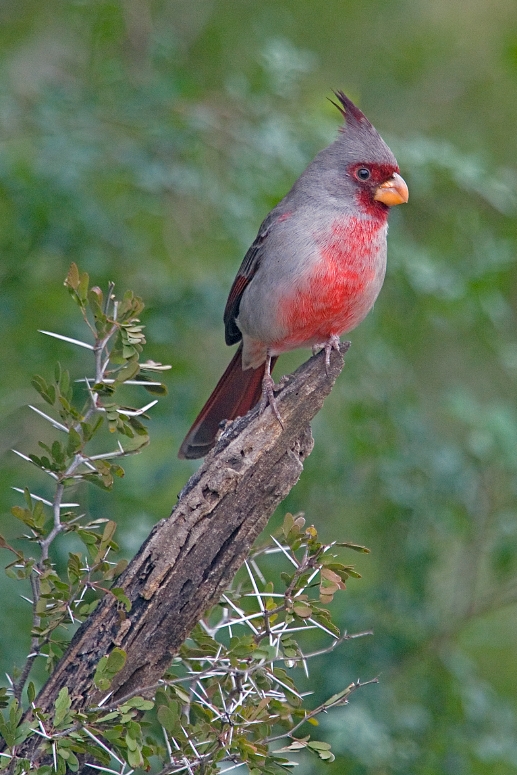
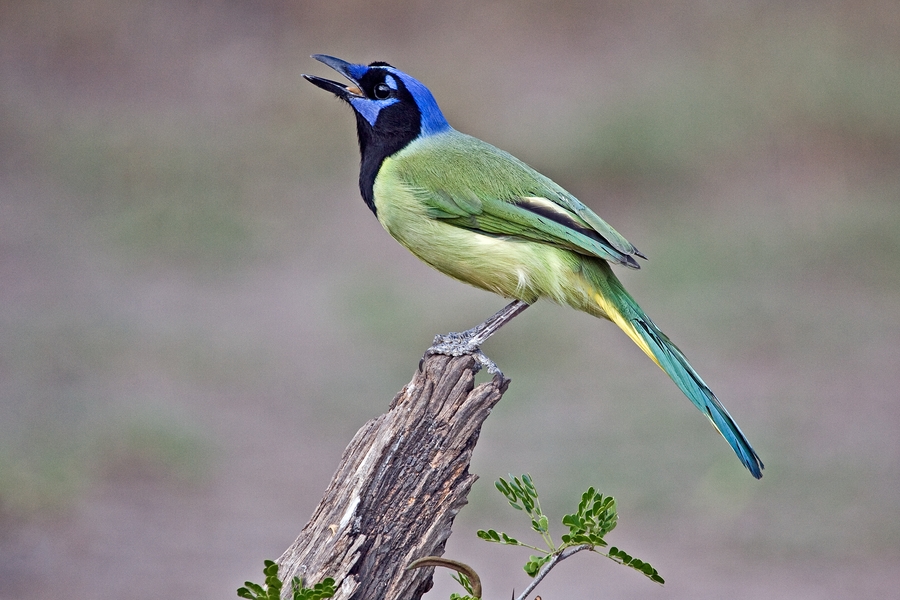
And the birds! Heather is the birder in the family, but even I was amazed by the number and variety of the birds we saw: caracaras and pyrrhuloxias and cardinals and thrashers (both brown and curved-billed) and green jays and white-crowned sparrows and one big blue heron and assorted hawks and kestrels and... well, you get the idea.

After driving several more miles of labyrinthine dirt roads seemingly devoid of physical landmarks, other than the occasional oil pump jack, we somehow arrived at Hugh and Sarah’s house, which is shaded by Arizona ash trees (virtually the only real trees on the place). Hugh and Sarah suggested we dump our bags, grab some beverages, jump in the pickup, and drive up to a picnic table that is their favorite place to watch the sunset. We pulled up and found an amazing 360-degree panorama, with the sun sinking low in the western sky. Sarah told us that when the sun sank low enough, we’d be able to see the mountains of Mexico on the horizon.

Sure enough, as the sky turned tropical-drink orange and pink the mountains came into view. And then, a few minutes later, from the opposite direction, we saw the bright orange full moon rising behind the windmill. Then, to complete the jaw-dropping array of effects, the coyotes—at least two different packs—began serenading us. Clearly, the only thing to do was to return to the house and enjoy dinner and conversation, and still more red wine, around the fire that Hugh built on the back patio.

Yesterday a front blew in, cold and gray and misty, while we were on our morning walk with Hugh and Sarah; the sharp, wet wind made the brunch that followed, of scrambled eggs and sausage and sliced avocado and grapefruit and lots and lots of strong hot coffee, even more welcome. In some ways, with its unnerving, disorienting sameness and plentiful thorns and scarcity of water and shade, this is not a particularly gentle or hospitable land, but yesterday afternoon, when Heather and I finally left to begin the long drive over to I-35 and up to Austin, it felt, just a little, as though we had been expelled from the Garden of Eden. And, believe me, those are not words I ever imagined myself writing about South Texas.

Hey, could I get a side of fries with that order of crow, please?
—Martin


What we’re reading
Heather:
Jon Fasman, The Geographer’s Library
Martin: Suzannah Lessard, The Architect of Desire: Beauty and Danger in the Stanford White Family

Friday, June 18, 2010

Adventures in Business-Land


This week, during a solo trip to Madroño, Heather spent much of her time knocking on doors in Kerrville, Bandera, Medina, Tarpley, and vicinity, hoping to convince chefs and restaurateurs to buy locally raised, grass-fed bison meat from the ranch. Our initial herd of fifteen animals has grown to thirty-six, including a couple of young males who have already, by their obstreperous behavior, nominated themselves as the first to be harvested this fall.

I’m not particularly objective, of course, but I think she could make a pretty compelling case to those potential customers. To wit:
  • Bison meat generally has more protein, iron, and nutrients than beef or chicken;
  • Bison meat is lower in fat and calories than beef or chicken;
  • Our bison spend their lives ranging freely on Madroño’s 1,500 acres, and never set foot on feedlots;
  • Our bison are never injected with or fed growth hormones, steroids, or any other supplements;
  • To ensure the quality of the meat and reduce stress on the animals, our bison will be field-harvested on site under the supervision of a licensed inspector from the Texas Department of State Health Services.
Another point we hope to emphasize is that, since we’re a small-scale, local operation, our customers will also be our neighbors, which means we’ll be accountable and responsive to them in a way that Big Agriculture isn’t. It also means that every penny our customers spend on our meat will stay right here in Central Texas.

Our hope is that the sale of bison meat, eggs, and produce from Madroño will (eventually) provide significant financial support for the residential center for environmental writers we hope to open at the ranch. We know there’s a growing market in Austin for fresh, local, sustainably raised food, but we’re not planning to sell in Austin—too complicated and expensive logistically, plus we wouldn’t want to compete with our friend and mentor Hugh Fitzsimons of Thunder Heart Bison—so we’re hoping to find a comparable demand in the area right around Madroño. (And based on Heather’s schmoozing this week, the early returns are encouraging.)

Make no mistake, though: going into business—especially the business of turning a creature into a commodity—presents all kinds of challenges for a couple of recovering English majors. Virtually all of my adult work experience has been in the nonprofit sector; shifting to something that is explicitly designed to make money, no matter how noble we believe the cause to be, is a bit of a shock. (A couple of years ago we were told that the mother of one of our daughter’s schoolmates referred to us as “just a couple of old hippies.” She did not intend it as a compliment.) As entrepreneurs, we are babes in the woods.

I imagine our first bison harvest will be quite an adventure, as will the processing and distribution that will follow. We’re already moving out of our comfort zone—I’m pretty sure Heather never imagined herself as a salesperson—and confronting a couple thousand pounds of dead buffalo will move us even farther into unknown territory. I mean, business plans? Financial projections? Balance sheets? Puh-lease!


Of course, it’s probably good for us complacent old hippies to be forced out of our comfort zones occasionally; we just have to hope that we don’t make a total cock-up of it.

On the other hand, maybe we don’t want to get too caught up in this whole mercantile thing. I’ve been reading Ian L. McHarg’s influential book Design with Nature, originally published in 1969. McHarg, an expatriate Scot who pioneered the field of environmental planning in the United States, writes witheringly of the prevailing view in his adopted homeland: “Neither love nor compassion, health nor beauty, dignity nor freedom, grace nor delight are important unless they can be priced. If they are non-price benefits or costs they are relegated to inconsequence. The economic model proceeds inexorably towards its self-fulfillment of more and more despoliation, uglification and inhibition to life, all in the name of progress – yet, paradoxically, the components which the model excludes are the most important human ambitions and accomplishments and the requirements for survival.”

Of course, McHarg is hardly the first thinker to decry a fixation on financial gain. In the sixth century BCE, Lao-Tzu put the same sentiment somewhat more pithily: “Chase after money and security and your heart will never unclench.” In a similar vein, I Timothy tells us that “the love of money is the root of all evil.” (I Timothy is also the source of the phrase “filthy lucre,” by the way.) Jesus himself reminds us, in Matthew’s gospel, that “You cannot serve both God and Mammon.”

And yet, and yet... we live in a fallen world, and money is an intrinsic part of it. The love of money may be the root of all evil, but money itself is not necessarily evil. (Or, as Peter J. Gomes writes in The Good Book: Reading the Bible with Mind and Heart, “Wealth is not a sin, but it is a problem.”) The trick, obviously, is to learn money; to use it; to see it as a means to an end, not an end in itself. I mean, why can’t Madroño become an example of enlightened capitalism, a model of a countercultural way of thinking about commerce—a way that emphasizes the small-scale, local, sustainable long term, instead of the bigger-is-better, metastatic, smash-and-grab short term? I think we’ve all seen enough of the latter way of thinking, and its consequences, to last us a good while.

Of course, it’s easy for me to preach self-righteously about the corrupting dangers of the profit motive; we’re unlikely to make enough money selling bison to threaten the state of our souls. Indeed, just breaking even seems like an ambitious goal right now. I'm sure we’ll be writing more about Heather and Martin’s Adventures in Business-Land in the weeks and months to come. In the meantime, pray for us – and our bank account.
—Martin


What we’re reading
Heather: Richard Powers, The Echo Maker
Martin:
Ian L. McHarg, Design with Nature (still)

Friday, June 11, 2010

Home with the armadillo: a love letter to Texas


Recently we and our three kids went to Martin’s native San Francisco to help celebrate his father’s eighty-fifth birthday. The five of us spent an afternoon walking along the cliffs of Point Reyes National Seashore, where the ground was springy, the wind was fierce, and in some spots along the trail we pushed through wildflowers up to our shoulders. Hawks wheeled through the cloudless sky, elk sunned in the lees of the cliffs, and the ocean’s shining hide swelled and stretched like the flanks of a well-groomed, self-satisfied, and very large cat. At one point, our son Tito turned to us and said incredulously, “You mean we had a choice between this and Texas?”

Yes, well. Despite Martin’s entertaining recent post on how he has come to terms with living in Texas, he has spent much of his time in the Lone Star State not entirely convinced that civilized life is possible here—certainly not from May to October, and frequently not after elections. I grew up spending summers in Colorado, where despising Texans is a competitive sport, and as a teenager and young adult I also got to spend time in places of unsurpassed beauty such as the highlands of Guatemala, the Swiss Alps, the Masai Mara, Paris, and the Canadian Rockies. And yet I love Texas and can’t imagine living anywhere else. Time for that apologia, son.

Some of my love of Texas is just an old bad habit. Many fine writers have noted how people stubbornly cling to the smells and sounds of their childhood, sensations that undermine the idea that time moves only into the future. Much of my first decade was spent in the then-unbroken woods just north of the San Antonio airport. The uncanny whinny of the screech owl, the languid moan of the mourning dove, the overpowering sweetness of mountain laurel at Easter, the loneliness of the north wind on a clear winter day: each time I experience these now I’m reminded that the girl who was gripped by them forty years ago is still inside me. She isn’t gone, despite all appearances to the contrary.

There’s more to it than nostalgia, though. Texas tells stories about itself, some of them true. While I know that many find this self-conscious tale-telling irritating—maybe even pathological—I find it sort of comforting. So maybe we actually lost the battle of the Alamo. So maybe the Texas Rangers weren’t a bunch of ethically ripped superheroes. So maybe every cowboy doesn’t have the soul of a poet. But there seems to be a (nearly) conscious yearning for the power of myth to work among us with these stories. Of course, there are stories Texans tell about themselves that I loathe: bigger is better, we should each of us be our own posse, it’s manly to kill animals with automatic weapons and spurn the meat—but this is a place that recognizes the power of stories to shape reality.

One of the stories told over and over in multiple variations is the power and variety of the land itself. One of my favorite signs is on Interstate 10 at the Louisiana-Texas state line. It reads something like this: Beaumont, 20 miles; El Paso, 937 miles. While I have lived only in Central Texas—in some ways the easiest part of the state to love—I’ve learned to respect and admire many of the landscapes between the ends, from east to west and from north to south. I make no claims to anything but the cursory knowledge that comes from road trips involving grumpy children – me and my siblings years ago, and more recently our own children. My parents drove us to Colorado every summer through the Panhandle; Martin and I chose instead to make our annual pilgrimage by way of Fort Stockton and then north through the Pecos wilderness. One hot summer day the gas tank light came on when we were halfway through the hundred inhospitable miles between Pecos and Loving, New Mexico. The prospect of running out of gas here at midday with a dog and several children concentrated the mind wonderfully and caused me to sweat through my clothes despite the car’s air conditioning. (We managed to make it to the next filling station.) We passed by multiple examples of the land’s indifference to human striving: we often threatened to abandon our squabbling children in Orla, an oil ghost town baked into dusty submission, if they didn’t behave. (It didn't help.)

We always planned our route back to Austin through Balmorhea and Fort Davis and, inevitably, a thrashing summer thunderstorm would force us off the highway—or so we assumed, since we couldn’t even see the highway through the mud on the windshield. But before the storm hit, you could see the Guadalupe Mountains to the west, and when we made it to Marfa and the high grasslands, we—well, some of us—were exhilarated by the wind and the shadows, by the pitilessness and delicacy of the Chinati Mountains.

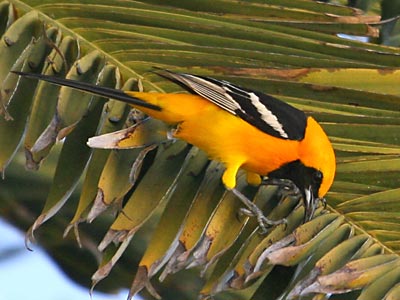
At the other end of the spectrum, I love the featurelessness of the south Texas brush country, an admittedly perverse passion. In March, the mesquite bloom neon green. At least as many things will sting, bite, or poison you as won’t. As our friend and mentor Hugh Fitzsimons of Thunder Heart Bison says, there are two seasons in south Texas: January and summer. At the rare watering holes, there are birds of remarkable beauty: green jays and hooded orioles and American widgeons. Once in April, on my way back from Piedras Negras and Eagle Pass, I drove through a migration of yellow sulphur butterflies that extended for dozens of miles. When I got back to Austin, probably a dozen people pointed out the grotesque beauty of my Suburban’s grille, which had become an extravagant collage of dead butterflies.

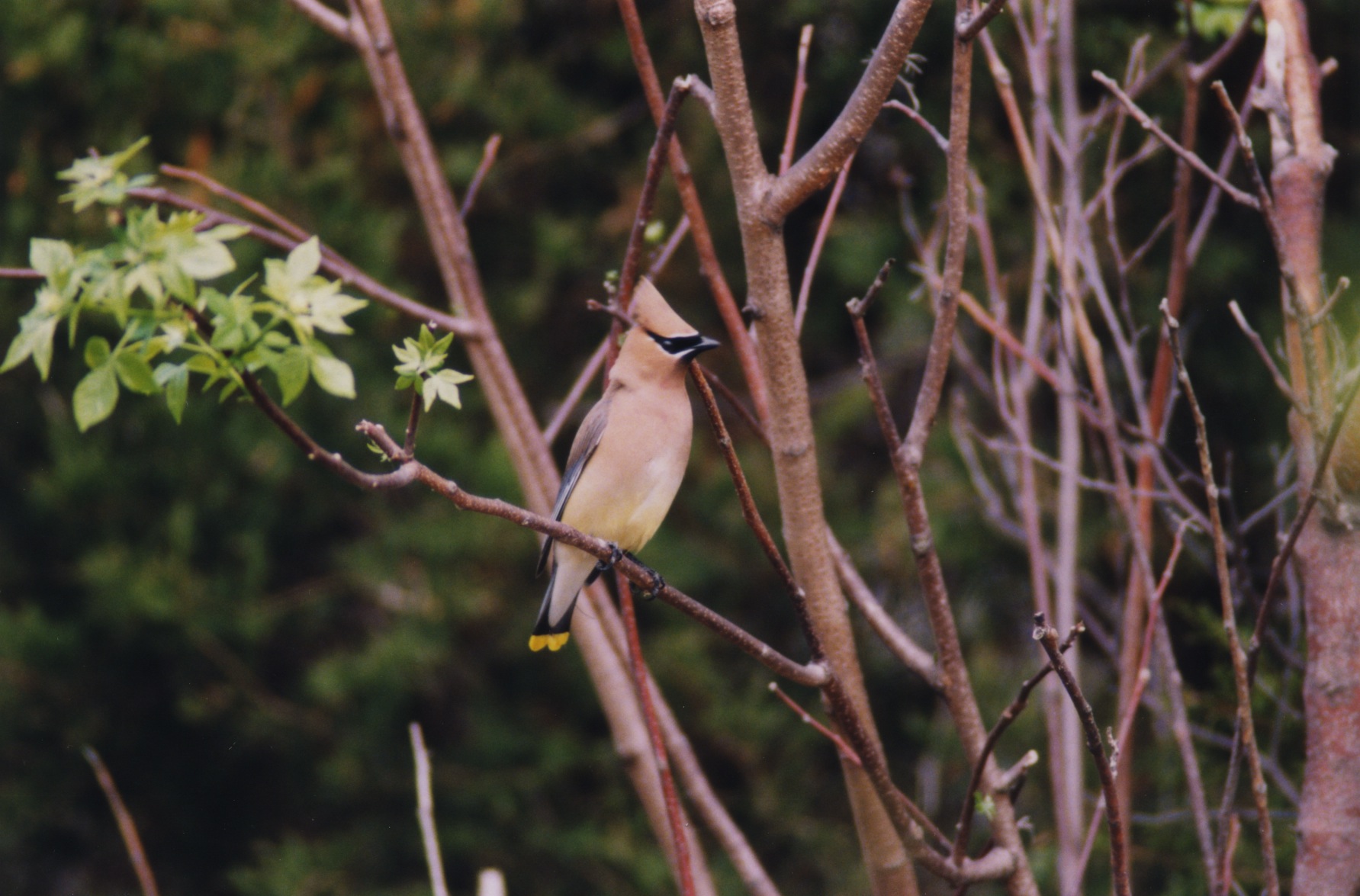
I’m leaving a lot of verses out of my Texas love song, but the last verse here has to be the one about the Hill Country. Loving the Colorado Rockies as much as I love any landscape, I’ve been trained to seek out views, to climb and pant and strain and exult upon reaching the summit. Well, the Hill Country upends that paradigm. Once you make it to the top of the hill—at least at Madroño—the landscape sinks into an unexpected anonymity. The personality of the Hill Country is in its draws and canyons, the intimate interstitial places where oaks and pecans crowd together, and great slabs of limestone create undulating walls and pools, and ferns and cedar sage grow with the demure confidence of cloistered beauty. In February, the draws ring with the slurred chatter of hundreds of intoxicated robins and waxwings. The draws also snarl with the movements of feral hogs, coyotes, and mountain lions, and vibrate with the possibility of rattlesnakes on sunny shelves, the clatter of unseen hooves in caves and cedar brakes, and the songs of maddeningly invisible birds that suddenly move, shine, and disappear again before they can be named. The draws protect and expose, invite and terrify. You want stories? You’ll find them here.

So, son, I’ll be happy to spend time in California, especially in August, even if the locals make fun of how I talk and where I’m from. But I’ll always want to come home.
—Heather


What we're reading
Heather: Belden C. Lane, The Solace of Fierce Landscapes: Exploring Desert and Mountain Spirituality
Martin: Ian L. McHarg, Design with Nature

Friday, March 12, 2010

Mapping the geography of hope: our place in the wilderness


Last week, during a visit to San Francisco that also took us to the nearby Djerassi Resident Artists Program, Martin and I spent a day exploring the Point Reyes National Seashore with his childhood friends Brad and Hans. Before setting off on our hike, we wandered into Point Reyes Books and wandered out again with the first two volumes of the West Marin Review, a nifty literary journal whose inaugural issue considers Wallace Stegner’s claim that “[w]e simply need... wild country available to us, even if we never do more than drive to its edge and look in. For it can be a means of reassuring ourselves of our sanity as creatures, a part of the geography of hope.”

Even if I can’t give coordinates for the geography of hope, I like the idea that it might exist on some map buried deep under the mess in my brain’s glove compartment. In current mainstream environmental thinking, however, humans and wilderness cannot exist together because humans are an inevitable contaminant. Having spent the drive from San Francisco to Point Reyes with my face glued to the car window taking in an enticing new vocabulary of birds, I’d like to think that the geography of hope includes a place where humans are part of wilderness, not set off from it.


Our hike took us north between Tomales Bay and the ocean, through herds of tule elk, watching waves crash on the rocky shore and tender crocuses and poppies huddled in the chilly wind. As we returned to the parking lot at Pierce Point Ranch, we heard the whine of chainsaws; the Park Service was taking down an enormous Monterey cypress, maybe 75 feet tall. The presence of rot in some branches posed a threat to the uninhabited cluster of historic ranch buildings at the head of the trail. The decision to cut down the tree seemed iconic of the destruction endemic to human activity in the natural world.

So it was with interest that I saw an essay in the West Marin Review entitled “The Fiction of Wilderness,” by Mark Dowie, the former editor and publisher of Mother Jones. Dowie suggests that the Wilderness Act of 1964 set in stone the idea that wilderness was best preserved by balkanizing large tracts of land and ejecting any permanent residents who might have lived there, as the Miwok tribe was ejected from Yosemite. He says this creates “a commodified wilderness... a deliberate charade, a culturally constructed neo-Edenic narrative played out for weary human urbanites yearning for the open frontier their ancestors ‘discovered’ then tamed—a place to absorb the sounds and images of virgin nature and forget for a moment the thoroughly unnatural lives they lead.” (Ouch.)

But Dowie suggests an alternative. His research revealed that many aboriginal peoples have nothing analogous to the Western conception of wilderness and were stumped when he tried to explain it to them. The closest equivalents in their languages were domesticated ones: “back yard,” “big farmyard,” “food,” or “pantry.” There was, in other words, no sense of separation between the people and the landscapes they lived in. Dowie quotes a Tarahumaran ethno-ecologist from Mexico who says that in his culture the landscape is granted the same love and affection as family, resulting in a “kincentric ecology.”

Dowie hopes that environmentalist notions of wilderness can change to include the possibility of human activity intimately embedded within the land in a mutually profitable relationship. When we see ourselves as apart from a pristine nature that exists outside the bonds of kinship, we are more likely to commodify and exploit it.

Serendipitously, my reading took me from the West Marin Review to a publication that our friends Hugh and Sarah Fitzsimons of Thunder Heart Bison gave me just before we left for San Francisco. Entitled Five Ways to Value the Working Landscapes of the West, it may not rise immediately to the top of the New York Times best seller list, although it makes for compelling reading. The first essay, “In Praise, and in Appraisal, of the Working Landscapes of the West,” begins with this heartening pronouncement: “The simplest fact about Western ranches tends to be the one which most folks tend to forget: raising range-fed livestock is one of the few economic activities that produces food—and potentially ecosystem health and financial wealth—by keeping landscapes relatively wild, diverse, and resilient.”

We’re planning our first bison harvest in the near future and have hopes of developing a food culture that will feed whoever happens to be staying at Madroño Ranch and perhaps others in the immediate community as well. Our concern can’t stop at our bellies, though: what feeds us must be fed as well, and well fed. The essay’s authors, Gary Paul Nabhan and Ken Meter, write of working landscapes: “if we commit ourselves to eating their bounty, we derive a good portion of our nourishment from the very ground on which we stand. We do not stand apart [my emphasis] from the energy and water flows of our home ground. Instead, they work through us, and we work because of them. The land is not mere scenery suitable only for tourism and leisure. It is a functioning community in which we either live well or poorly, depending on how efficiently and conservatively we participate in the land’s work.” And then, as the clincher, they quote my new hero Henry David Thoreau: “[P]erhaps we are here to ‘meet the expectations of the land’ and not the other way around.”

This whole blog post may be nothing more than a stemwinding rationalization for contaminating the rapidly disappearing Texas wilderness. But I hate the idea that there is no room for an ongoing and mutually satisfying exchange between the landscape and its human inhabitants. We need guides to lead us from here to there, though, guides who know both the intimate history of the land and the capacities and limits of new technologies. Increasingly, these guides are ranchers like Hugh and Sarah who cherish their working landscapes and who, in return, receive its abundance, even in lean times. We’d like Madroño Ranch to find its own place in this geography of hope.
—Heather

What we’re reading
Heather: Henri J. M. Nouwen, In Memoriam
Martin: Jay Parini, Promised Land: Thirteen Books That Changed America