Showing posts with label home. Show all posts

Friday, March 4, 2011

Maps and mobility: living in, not on, the land


I was surprised, while reading Rebecca Solnit’s fascinating Infinite City: A San Francisco Atlas, to realize that I probably know substantially more about the history of Texas than I do about the history of my native San Francisco.

Of course, this realization should hardly have come as a surprise. After all, I’ve lived in Texas for more than half my life, whereas I left California at age seventeen, for college, and never moved back. Moreover, I spent more than half of my time in Texas working for the Texas State Historical Association, mostly researching and writing local history.

Still, it was a little bit of a shock. Despite my recent purchase of a spiffy pair of Lucchese boots, I still frequently think of myself as a Californian, not a Texan. Texas is where I live, but California is where I’m from, and that can be a significant difference. Especially in the South (and Texas is in many ways as much a part of the South as of the West), where you’re from—your “people,” your frame of reference—is still as important as who you are. But while I retain vivid, detailed mental and sensory images of San Francisco and the Bay Area—the sights, the sounds, the smells, and, yes, the tastes—I don’t really know how and why they came to be. In Texas, on the other hand, I learned a lot of the stories before learning the places they explain.

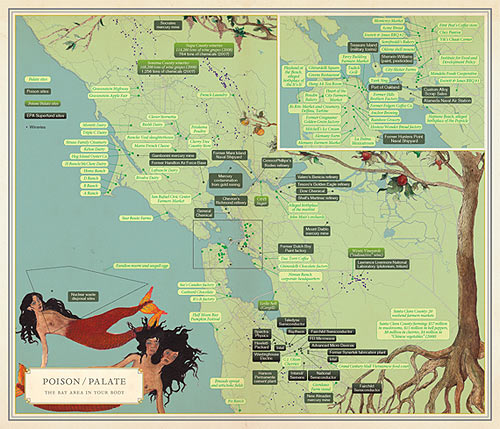
Solnit’s book presents both foreground imagery and background narrative. It is a series of maps and essays which manifest unexpected symmetries or contradictions: “Monarchs and Queens,” which simultaneously maps butterfly populations and sites significant in the history of the city’s queer population; “Poison/Palate” (above), which juxtaposes some of the Bay Area’s leading “foodie” establishments (Chez Panisse, Niman Ranch, etc.) with nearby mercury mines, oil refineries, chemical plants, and other sources of toxic pollution; and so on.

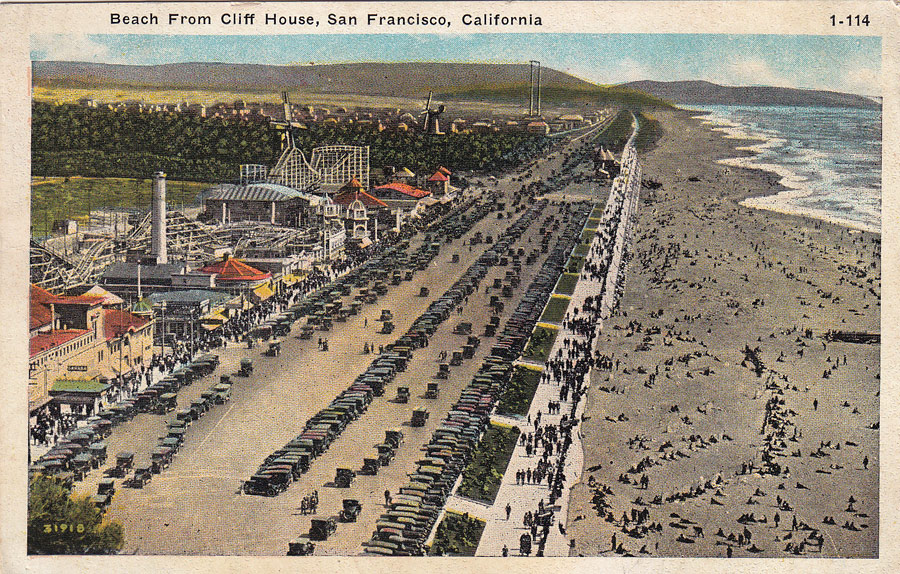
In reading and looking at this beautiful book—and it really is beautiful—I have learned a lot of local history, and also experienced that rush of nostalgia that accompanies any return, be it literal or literary, to your homeland. Just seeing the names on the maps, the extant and (especially) the long gone—Playland at the Beach! the Surf Theater! Winterland! Zim’s!—brought on a shiver of memory worthy of a Proustian madeleine. As Solnit writes, “the longer you live here, the more you live with a map that no longer matches the actual terrain.” She notes that the residents of Managua, Nicaragua, long after an earthquake that destroyed much of the city, “gave directions by saying things like, ‘Turn left where the tree used to be.’”

Similarly, my San Francisco is a palimpsest, an accretion of layers and memories, things and people living and dead, real and fictional—Emperor Norton and Sam Spade, Lawrence Ferlinghetti and Harry Callahan, and countless others. All of them were and are integral parts of where I’m from.

But that very notion of being from someplace is somewhat vexed. Locals say “I’m from here” all the time, but to me saying you’re from someplace usually implies motion, absence, a sense that you’re no longer there—that you’ve left it behind. In the United States, we have traditionally defined ourselves as an entire nation of people who are from somewhere else. My mother was born in Italy and my father in Brazil (though his parents were born in Scotland and Austria), which makes me about as American as you can get. After all, even the so-called Native Americans who were here before European contact originally came from somewhere else, presumably across the Beringian land bridge in pursuit of mammoth and bison.

In a fundamental sense, then, ours is a culture built on the sense of limitless opportunity awaiting us just beyond the horizon, just over that next rise. We have never stayed put, geographically or socioeconomically: the Louisiana Purchase, Manifest Destiny, the Mexican War, the California Gold Rush, the Civil War, and the Dust Bowl all pushed or pulled the new nation westward, across the continent, and we still seem to believe that, if we really make a hash of things where we are now, we can always pick up and move on to some uninhabited place (traditionally further west) where we can start fresh.

And some astonishing transformations did indeed take place out on that peripatetic frontier: a poor boy from Kentucky by way of Indiana and Illinois turned into Abraham Lincoln, an itinerant river pilot and printer’s apprentice from Missouri headed west and turned into Mark Twain, and so on. Even after Frederick Jackson Turner famously proclaimed the end of the frontier in 1893, our restlessness did not cease. In the twentieth century, the promise of economic opportunity and escape from Jim Crow drove the great migration of African Americans from the South to the north and west. Our current president, a son of Kansas and Kenya who was born in Hawaii and spent part of his childhood in Indonesia, is merely the most recent testament to the persistent power of the American notion of mobility, whether upward or westward.

Back to the Left Coast. In Infinite City, Solnit writes, “A city is a particular kind of place, perhaps best described as many worlds in one place; it compounds many versions without quite reconciling them, though some cross over to live in multiple worlds—in Chinatown or queer space, in a drug underworld or a university community, in a church’s sphere or a hospital’s intersections.” This is inarguably true of San Francisco, or for that matter any city; I would only add that it is no less true of a farm, a rural village, or any place that has borne the prints of generations of human existence. Like, say, Madroño Ranch.

All maps, even ones as imaginative and beautiful as the ones in Infinite City, are by definition reductive. They represent reality in two dimensions; we experience it in (at least) three. Maps, in other words, lack depth, and depth is what makes us and our world real. We don’t inhabit places flatly (though we certainly inhabit plenty of flat places!), but in depth, both geographical and temporal.

That depth is what we hope to gain personally at Madroño Ranch and also encourage in others, but we know we cannot simply will it into being. It grows and accumulates over time, and with care and effort; it is, in fact, a kind of rote learning, going over the same ground again and again, literally and metaphorically, until you have worn a track into the surface. John Muir noted that “Most people are on the world, not in it”; one of our hopes, now that our Austin nest is empty and we’re at the ranch more often, is that we can gradually learn to live and move in, not just on, this small part of the planet.

This is why Heather has grown increasingly ambivalent about travel; the world is full of fascinating places, but we’ve barely scratched the surface of our own. We hope it’s not (or not just) provincialism, but we want to be here.
—Martin


What we’re reading
Heather:
Adam Gopnik, Angels and Ages: A Short Book About Darwin, Lincoln, and Modern Life
Martin: Steven Rinella, American Buffalo: In Search of a Lost Icon

Friday, June 11, 2010

Home with the armadillo: a love letter to Texas


Recently we and our three kids went to Martin’s native San Francisco to help celebrate his father’s eighty-fifth birthday. The five of us spent an afternoon walking along the cliffs of Point Reyes National Seashore, where the ground was springy, the wind was fierce, and in some spots along the trail we pushed through wildflowers up to our shoulders. Hawks wheeled through the cloudless sky, elk sunned in the lees of the cliffs, and the ocean’s shining hide swelled and stretched like the flanks of a well-groomed, self-satisfied, and very large cat. At one point, our son Tito turned to us and said incredulously, “You mean we had a choice between this and Texas?”
Yes, well. Despite Martin’s entertaining recent post on how he has come to terms with living in Texas, he has spent much of his time in the Lone Star State not entirely convinced that civilized life is possible here—certainly not from May to October, and frequently not after elections. I grew up spending summers in Colorado, where despising Texans is a competitive sport, and as a teenager and young adult I also got to spend time in places of unsurpassed beauty such as the highlands of Guatemala, the Swiss Alps, the Masai Mara, Paris, and the Canadian Rockies. And yet I love Texas and can’t imagine living anywhere else. Time for that apologia, son.

Some of my love of Texas is just an old bad habit. Many fine writers have noted how people stubbornly cling to the smells and sounds of their childhood, sensations that undermine the idea that time moves only into the future. Much of my first decade was spent in the then-unbroken woods just north of the San Antonio airport. The uncanny whinny of the screech owl, the languid moan of the mourning dove, the overpowering sweetness of mountain laurel at Easter, the loneliness of the north wind on a clear winter day: each time I experience these now I’m reminded that the girl who was gripped by them forty years ago is still inside me. She isn’t gone, despite all appearances to the contrary.

There’s more to it than nostalgia, though. Texas tells stories about itself, some of them true. While I know that many find this self-conscious tale-telling irritating—maybe even pathological—I find it sort of comforting. So maybe we actually lost the battle of the Alamo. So maybe the Texas Rangers weren’t a bunch of ethically ripped superheroes. So maybe every cowboy doesn’t have the soul of a poet. But there seems to be a (nearly) conscious yearning for the power of myth to work among us with these stories. Of course, there are stories Texans tell about themselves that I loathe: bigger is better, we should each of us be our own posse, it’s manly to kill animals with automatic weapons and spurn the meat—but this is a place that recognizes the power of stories to shape reality.

One of the stories told over and over in multiple variations is the power and variety of the land itself. One of my favorite signs is on Interstate 10 at the Louisiana-Texas state line. It reads something like this: Beaumont, 20 miles; El Paso, 937 miles. While I have lived only in Central Texas—in some ways the easiest part of the state to love—I’ve learned to respect and admire many of the landscapes between the ends, from east to west and from north to south. I make no claims to anything but the cursory knowledge that comes from road trips involving grumpy children – me and my siblings years ago, and more recently our own children. My parents drove us to Colorado every summer through the Panhandle; Martin and I chose instead to make our annual pilgrimage by way of Fort Stockton and then north through the Pecos wilderness. One hot summer day the gas tank light came on when we were halfway through the hundred inhospitable miles between Pecos and Loving, New Mexico. The prospect of running out of gas here at midday with a dog and several children concentrated the mind wonderfully and caused me to sweat through my clothes despite the car’s air conditioning. (We managed to make it to the next filling station.) We passed by multiple examples of the land’s indifference to human striving: we often threatened to abandon our squabbling children in Orla, an oil ghost town baked into dusty submission, if they didn’t behave. (It didn't help.)

We always planned our route back to Austin through Balmorhea and Fort Davis and, inevitably, a thrashing summer thunderstorm would force us off the highway—or so we assumed, since we couldn’t even see the highway through the mud on the windshield. But before the storm hit, you could see the Guadalupe Mountains to the west, and when we made it to Marfa and the high grasslands, we—well, some of us—were exhilarated by the wind and the shadows, by the pitilessness and delicacy of the Chinati Mountains.

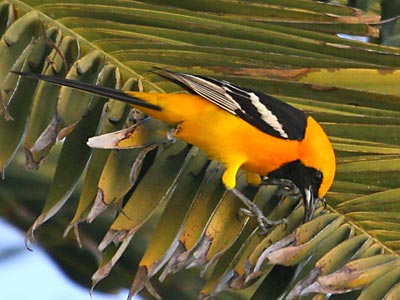
At the other end of the spectrum, I love the featurelessness of the south Texas brush country, an admittedly perverse passion. In March, the mesquite bloom neon green. At least as many things will sting, bite, or poison you as won’t. As our friend and mentor Hugh Fitzsimons of Thunder Heart Bison says, there are two seasons in south Texas: January and summer. At the rare watering holes, there are birds of remarkable beauty: green jays and hooded orioles and American widgeons. Once in April, on my way back from Piedras Negras and Eagle Pass, I drove through a migration of yellow sulphur butterflies that extended for dozens of miles. When I got back to Austin, probably a dozen people pointed out the grotesque beauty of my Suburban’s grille, which had become an extravagant collage of dead butterflies.

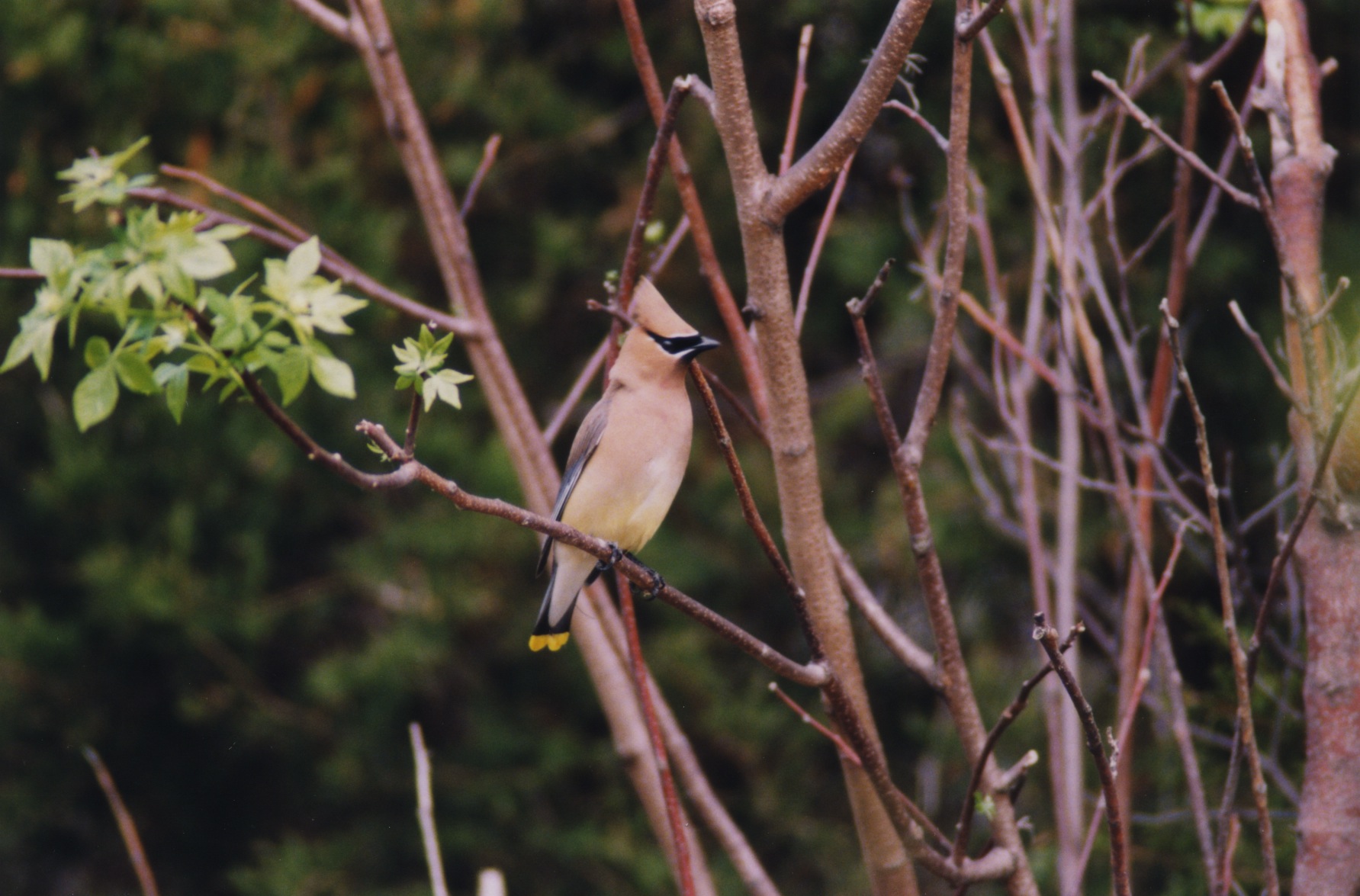
I’m leaving a lot of verses out of my Texas love song, but the last verse here has to be the one about the Hill Country. Loving the Colorado Rockies as much as I love any landscape, I’ve been trained to seek out views, to climb and pant and strain and exult upon reaching the summit. Well, the Hill Country upends that paradigm. Once you make it to the top of the hill—at least at Madroño—the landscape sinks into an unexpected anonymity. The personality of the Hill Country is in its draws and canyons, the intimate interstitial places where oaks and pecans crowd together, and great slabs of limestone create undulating walls and pools, and ferns and cedar sage grow with the demure confidence of cloistered beauty. In February, the draws ring with the slurred chatter of hundreds of intoxicated robins and waxwings. The draws also snarl with the movements of feral hogs, coyotes, and mountain lions, and vibrate with the possibility of rattlesnakes on sunny shelves, the clatter of unseen hooves in caves and cedar brakes, and the songs of maddeningly invisible birds that suddenly move, shine, and disappear again before they can be named. The draws protect and expose, invite and terrify. You want stories? You’ll find them here.

So, son, I’ll be happy to spend time in California, especially in August, even if the locals make fun of how I talk and where I’m from. But I’ll always want to come home.
—Heather


What we're reading
Heather: Belden C. Lane, The Solace of Fierce Landscapes: Exploring Desert and Mountain Spirituality
Martin: Ian L. McHarg, Design with Nature