Showing posts with label San Antonio. Show all posts

Friday, September 10, 2010

Most memorable meals, take one: fire in the hole!


tamal with salsa verde

The other night, inspired by a typically wonderful dinner at Texas French Bread, my Best Gal and I got to talking about our favorite meals ever, and what made them so. Eventually, we decided that it might be interesting to write about some of our most memorable meals. Since it happened to be my turn to grind out our weekly post, I got to go first, but we hope to turn this into an occasional series. Stay tuned!

For the purposes of our discussion, I arbitrarily ruled out meals that Heather, an amazing cook in her own right, had made at home, which knocked out a bunch of contenders: her pork posole, her made-from-scratch pizza baked in the wood-burning oven in the backyard, her weapons-grade ratatouille, her charcoal-grilled bison-lamb burgers with all the fixin’s, and so on.

With those delectable meals off the table, so to speak, my thoughts turned immediately to the tagine we enjoyed on the pillow-strewn rooftop of an inn in Morocco’s Atlas Mountains, and the tortelli at that trattoria (I can’t even remember its name) we blundered into by pure chance near the Duomo di San Martino in Lucca. Less exotically, I remembered wonderful meals at Higgins, in downtown Portland, Oregon; at Delfina and Swan Oyster Depot, in San Francisco; and at Savoy, in New York’s Soho.

Closer to home, I fondly recalled the burgers and Shypoke Eggs (actually a form of trompe l’oeil nachos) at the late lamented Little Hipp’s in San Antonio. And then there was that “Whole Hog” dinner prepared by Jesse Griffiths of Dai Due last year: seven incredibly delicious courses, each featuring some form of pork—even dessert, which was beignets fried in pork lard. (Oops! Please excuse me while I wipe the drool off my keyboard.)

Somewhat disconcertingly for a couple of self-styled foodies, though, we found that we could rarely remember the dishes that made up these meals in much detail. Rather, what we tended to recall was the setting, and the company, and other such trivia. Not that the food wasn’t important, of course; but we concluded that it takes more than merely wonderful food to make a truly memorable meal. When it all comes together, there is something magical about the combination of the flavor and texture and smell of the food, and the comfort of the setting in which it is served, and true ease and delight in the presence of one’s companions (and what a wonderfully evocative word companion is, deriving from the Latin “with bread”—literally, one with whom you would break bread).

Or, alternately, a truly memorable meal might just involve intense pain and suffering, like the one I’m about to describe. Almost thirty years ago, during the summer after we graduated from college, we set off on a 4,500-mile road trip from Massachusetts to San Francisco and then back to San Antonio—all in Heather’s un-air conditioned Toyota Tercel hatchback, nicknamed Pollo for reasons now lost in the mists of time.

It was an eventful journey—in New Orleans someone busted in one of Pollo’s windows and made off with everything we owned, including the all-important cooler full of cold beverages, and in San Francisco each of my parents had an, um, entertaining reaction to my newly pierced ear—but in some ways the high point occurred as we were making our way back to Texas in July.

We’d been following Interstate 40 eastward, but we had an early edition of Jane and Michael Stern’s book Roadfood in which we read about this Mexican joint in the dusty little town of Socorro, New Mexico, and even though Socorro was some seventy-five miles out of our way we decided (ah, youth!) that it would be worth the detour.

We reached Socorro at the height of the scorching mid-afternoon heat and found the restaurant, next to the railroad tracks and surrounded by chickens, without too much trouble. It was almost completely deserted, in that dead time between the lunch and dinner crowds, and as we walked to our table we caught a brief glimpse of an enormous black cast-iron stove in the kitchen, surrounded by a swarm of diminutive elderly women in black.

Heather ordered… I don’t know; enchiladas or something. I ordered the tamales with salsa verde, I can’t remember why; perhaps the book recommended them? We sipped our iced tea while the women in the kitchen got busy; when the food arrived, it looked and smelled fabulous. We both dug in enthusiastically, and almost immediately I realized I was in waaaaay over my head.

The tamales were wonderful, but that verde sauce... oh, my God. It’s still probably the spiciest thing I’ve ever eaten. My body’s alarm bells started clanging, the warning lights began flashing; my forehead, and then my scalp and neck and upper body, started pouring sweat like Albert Brooks in Broadcast News.

Soon my T-shirt was soaked; still the heat kept building. I drained several glasses of iced tea, to little effect. I noticed that all the women who worked in the kitchen had come out to watch me; they stood in the doorway, pointing and giggling, like a gaggle of highly amused crows.

Somehow I made it all the way through the tamales, then, trying to marshal my last shreds of dignity, stood up, marched out to the car, and changed my sopping wet T-shirt. Did the women applaud when I returned? I can’t remember, though they certainly should have. I’ve had many fiery meals since then, but none could compare to that one. Fortunately, my youthful constitution absorbed the dreadful punishment with no long-term ill effects, and we went on our way to Texas.

Yeah, that was a memorable meal, all right. Won’t you tell us about some of yours?
—Martin


What we’re reading
Heather:
Joan Didion, The Year of Magical Thinking
Martin: Peter Carey, Parrot and Olivier in America

Friday, June 11, 2010

Home with the armadillo: a love letter to Texas


Recently we and our three kids went to Martin’s native San Francisco to help celebrate his father’s eighty-fifth birthday. The five of us spent an afternoon walking along the cliffs of Point Reyes National Seashore, where the ground was springy, the wind was fierce, and in some spots along the trail we pushed through wildflowers up to our shoulders. Hawks wheeled through the cloudless sky, elk sunned in the lees of the cliffs, and the ocean’s shining hide swelled and stretched like the flanks of a well-groomed, self-satisfied, and very large cat. At one point, our son Tito turned to us and said incredulously, “You mean we had a choice between this and Texas?”

Yes, well. Despite Martin’s entertaining recent post on how he has come to terms with living in Texas, he has spent much of his time in the Lone Star State not entirely convinced that civilized life is possible here—certainly not from May to October, and frequently not after elections. I grew up spending summers in Colorado, where despising Texans is a competitive sport, and as a teenager and young adult I also got to spend time in places of unsurpassed beauty such as the highlands of Guatemala, the Swiss Alps, the Masai Mara, Paris, and the Canadian Rockies. And yet I love Texas and can’t imagine living anywhere else. Time for that apologia, son.

Some of my love of Texas is just an old bad habit. Many fine writers have noted how people stubbornly cling to the smells and sounds of their childhood, sensations that undermine the idea that time moves only into the future. Much of my first decade was spent in the then-unbroken woods just north of the San Antonio airport. The uncanny whinny of the screech owl, the languid moan of the mourning dove, the overpowering sweetness of mountain laurel at Easter, the loneliness of the north wind on a clear winter day: each time I experience these now I’m reminded that the girl who was gripped by them forty years ago is still inside me. She isn’t gone, despite all appearances to the contrary.

There’s more to it than nostalgia, though. Texas tells stories about itself, some of them true. While I know that many find this self-conscious tale-telling irritating—maybe even pathological—I find it sort of comforting. So maybe we actually lost the battle of the Alamo. So maybe the Texas Rangers weren’t a bunch of ethically ripped superheroes. So maybe every cowboy doesn’t have the soul of a poet. But there seems to be a (nearly) conscious yearning for the power of myth to work among us with these stories. Of course, there are stories Texans tell about themselves that I loathe: bigger is better, we should each of us be our own posse, it’s manly to kill animals with automatic weapons and spurn the meat—but this is a place that recognizes the power of stories to shape reality.

One of the stories told over and over in multiple variations is the power and variety of the land itself. One of my favorite signs is on Interstate 10 at the Louisiana-Texas state line. It reads something like this: Beaumont, 20 miles; El Paso, 937 miles. While I have lived only in Central Texas—in some ways the easiest part of the state to love—I’ve learned to respect and admire many of the landscapes between the ends, from east to west and from north to south. I make no claims to anything but the cursory knowledge that comes from road trips involving grumpy children – me and my siblings years ago, and more recently our own children. My parents drove us to Colorado every summer through the Panhandle; Martin and I chose instead to make our annual pilgrimage by way of Fort Stockton and then north through the Pecos wilderness. One hot summer day the gas tank light came on when we were halfway through the hundred inhospitable miles between Pecos and Loving, New Mexico. The prospect of running out of gas here at midday with a dog and several children concentrated the mind wonderfully and caused me to sweat through my clothes despite the car’s air conditioning. (We managed to make it to the next filling station.) We passed by multiple examples of the land’s indifference to human striving: we often threatened to abandon our squabbling children in Orla, an oil ghost town baked into dusty submission, if they didn’t behave. (It didn't help.)

We always planned our route back to Austin through Balmorhea and Fort Davis and, inevitably, a thrashing summer thunderstorm would force us off the highway—or so we assumed, since we couldn’t even see the highway through the mud on the windshield. But before the storm hit, you could see the Guadalupe Mountains to the west, and when we made it to Marfa and the high grasslands, we—well, some of us—were exhilarated by the wind and the shadows, by the pitilessness and delicacy of the Chinati Mountains.

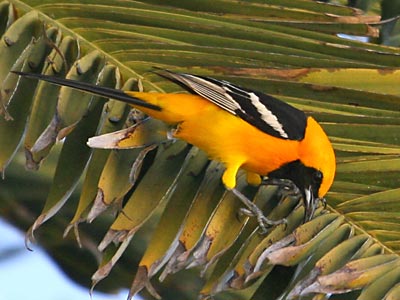
At the other end of the spectrum, I love the featurelessness of the south Texas brush country, an admittedly perverse passion. In March, the mesquite bloom neon green. At least as many things will sting, bite, or poison you as won’t. As our friend and mentor Hugh Fitzsimons of Thunder Heart Bison says, there are two seasons in south Texas: January and summer. At the rare watering holes, there are birds of remarkable beauty: green jays and hooded orioles and American widgeons. Once in April, on my way back from Piedras Negras and Eagle Pass, I drove through a migration of yellow sulphur butterflies that extended for dozens of miles. When I got back to Austin, probably a dozen people pointed out the grotesque beauty of my Suburban’s grille, which had become an extravagant collage of dead butterflies.

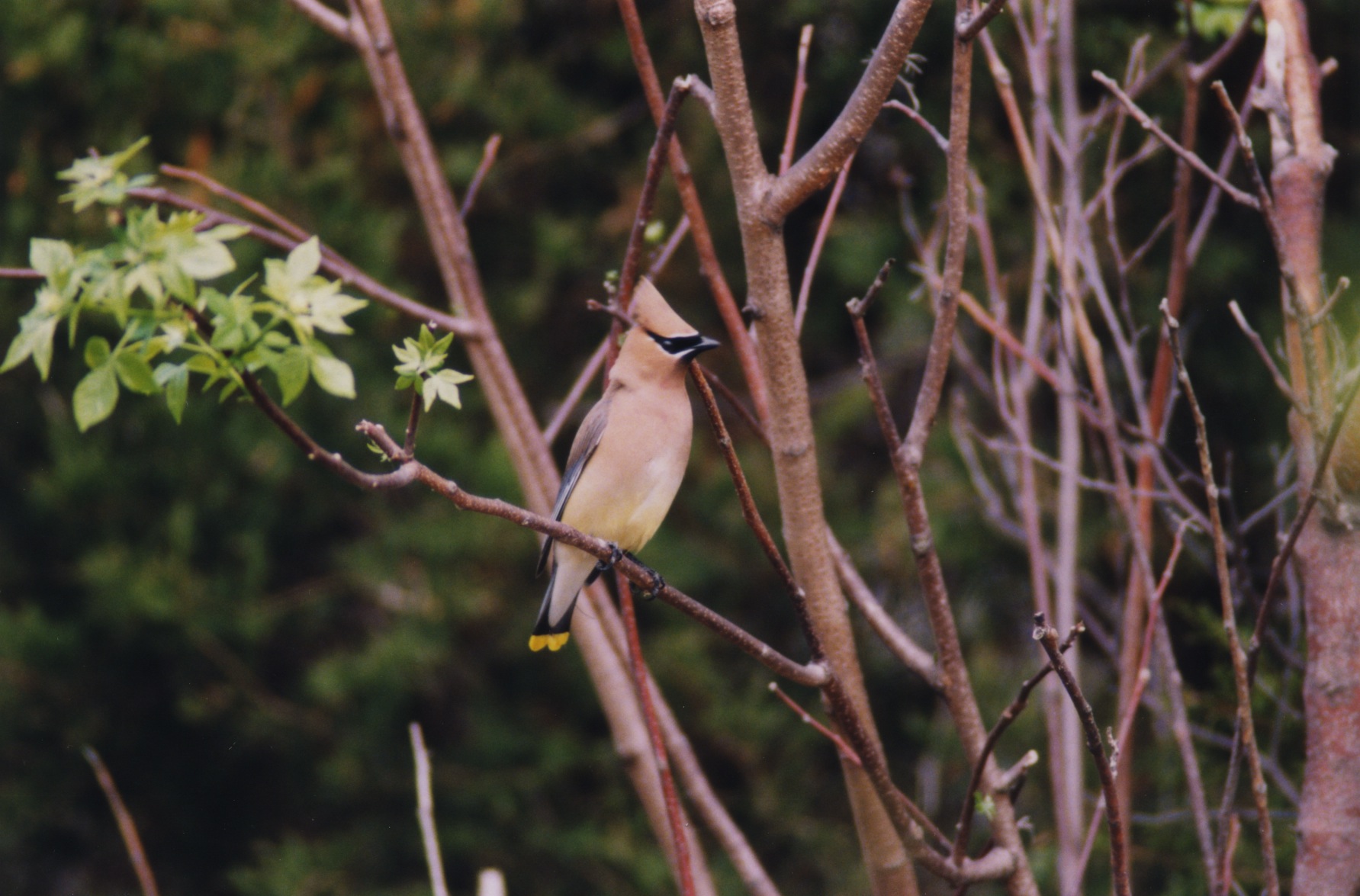
I’m leaving a lot of verses out of my Texas love song, but the last verse here has to be the one about the Hill Country. Loving the Colorado Rockies as much as I love any landscape, I’ve been trained to seek out views, to climb and pant and strain and exult upon reaching the summit. Well, the Hill Country upends that paradigm. Once you make it to the top of the hill—at least at Madroño—the landscape sinks into an unexpected anonymity. The personality of the Hill Country is in its draws and canyons, the intimate interstitial places where oaks and pecans crowd together, and great slabs of limestone create undulating walls and pools, and ferns and cedar sage grow with the demure confidence of cloistered beauty. In February, the draws ring with the slurred chatter of hundreds of intoxicated robins and waxwings. The draws also snarl with the movements of feral hogs, coyotes, and mountain lions, and vibrate with the possibility of rattlesnakes on sunny shelves, the clatter of unseen hooves in caves and cedar brakes, and the songs of maddeningly invisible birds that suddenly move, shine, and disappear again before they can be named. The draws protect and expose, invite and terrify. You want stories? You’ll find them here.

So, son, I’ll be happy to spend time in California, especially in August, even if the locals make fun of how I talk and where I’m from. But I’ll always want to come home.
—Heather


What we're reading
Heather: Belden C. Lane, The Solace of Fierce Landscapes: Exploring Desert and Mountain Spirituality
Martin: Ian L. McHarg, Design with Nature

Friday, April 30, 2010

“You may ask yourself, well, how did I get here?”


Funny how things turn out sometimes.

I was born and raised in the San Francisco Bay Area, went to college in Massachusetts, and grew up (to the extent that I grew up at all) with fairly liberal political views. I am neither a hunter nor a serious fisherman. I have owned a series of foreign cars, but never a pickup. I have never owned a cowboy hat, either, and the first pair of cowboy boots I ever bought was from a hip boutique on the King’s Road in London. And I really, really hate the Dallas Cowboys. I am, in other words, a Yankee.

And then I fell in love with a girl from Texas, and everything changed. I have lived most of the last three decades—virtually my whole adult life—in the Lone Star State, a fact which still astonishes me and no doubt puzzles many of my childhood and college friends, to whom Texas is a vast desert filled with cacti, rattlesnakes, and gun-totin’, snuff-dippin’, rip-snortin’ Republican rednecks. Dangerous, in other words. But, almost thirty years later, here I am.

Heather and I were classmates and fellow English majors at that Massachusetts college, and we fell in love and/or lust during the spring of our senior year. Not only was she gorgeous, smart, and funny, but, being a native Texan, she was exotic, too. Her family lived in San Antonio until she was ten, when her father got a job with the gummint and they moved to the Washington DC area, but her father’s father still lived in the Alamo City, and she had a job lined up after graduation as a reporter for the late and not-terribly-lamented San Antonio Light.

I, on the other hand, had no job prospects whatsoever—planning ahead has never been my strong suit—and figured I might as well follow her to Texas. (I actually wrote to the San Antonio Spurs offering my services as a short, untalented point guard who couldn’t shoot, pass, jump, or go to my right, and received a surprisingly gracious rejection letter from Bob Bass, who was then the team’s general manager.)

After graduation, we embarked on an epic cross-country journey, driving in Heather’s un-air conditioned Toyota Tercel from Williamstown to San Francisco, by way of Washington DC, New Orleans, Houston, San Antonio, and Aspen, to visit my (divorced) parents, and then back to San Antonio to begin what we naively thought of as our adult lives.

The trip was full of incident, but the high points were our stays in Houston, where we visited Heather’s formidable maternal grandmother, and San Antonio, where we spent a week with her even more formidable paternal grandfather.

Boppa took one look at me, with my bushy beard, long hair, and earring, and decided, not unreasonably, that I was Bad News. The famous family story is that when we left San Antonio to push on to the West Coast, he called Heather’s father and asked, “Now where are those two going again?”

Heather’s father replied that we were heading to San Francisco to see my parents before eventually returning to San Antonio. There was a thoughtful pause, and then Boppa observed, “Lotta motels between here and San Francisco.”

When we finally made it back to San Antonio, we took him out to dinner twice a week, on the nights when “the help” was off; on Thursday nights we went to the Argyle, and on Sunday nights to the San Antonio Country Club. I drove the car, opened the doors, fetched him the one weak Chivas and water he was allowed per night, and generally did my best to ingratiate myself, but for the rest of his life (he died about six months later), he never called me anything but “Whiskers,” as in “Whiskers, get me a drink,” or “Whiskers, go git the car.” I’d tug on my forelock or fetlock or whatever that thing is and say, “Yes, sir,” and go off wondering what the hell I’d gotten myself into.

That was a tough year, in a lot of ways. I found work as the editor of a little weekly newspaper, the San Antonio Citizen-News, that served the southwestern part of the city around Lackland Air Force Base; since we were living in north-central San Antonio, I neither knew nor cared anything about that part of the city, so my job was not terribly fulfilling. I bought a used Fiat 128, which consumed several quarts of oil a week and was (in the way of all Fiats) almost comically unreliable, so twice a day I’d set off to drive across the city never knowing if I’d actually arrive at my destination, which didn’t exactly help my frame of mind. One hot afternoon the Fiat conked out in the middle of Broadway, and Heather and I had to push it several blocks to my apartment.

My most memorable co-worker at the Citizen-News was Oscar, the sports editor. He was a bald, stocky retired Air Force sergeant, and he cussed constantly and with amazing creativity. He also had a notorious temper; I was told that he carried a baseball bat in the trunk of his car, and if another driver cut him off or otherwise offended him he would pull it out and go to work on their fenders and taillights. Oscar was also apparently a creature of habit; the story was that once, when he came home to discover that his wife had rearranged the living room furniture, he wordlessly got out his toolbox, moved the furniture back to its previous positions, and nailed it to the floor. In fact, he was always perfectly nice to me, but I definitely tried to stay on his good side.

Perhaps unsurprisingly, Heather and I broke up after a year or so in San Antonio. She moved up to Austin to begin graduate school, and I, once again flying blind, decided to move to Washington DC, where I landed a job on the staff of Sen. Bill Bradley. I enjoyed my time in Our Nation’s Capital, at times perhaps a little more than was good for me; I’m not sure my liver has ever forgiven me. But I got my feet under me a little bit, found out I could more or less survive on my own in the world, and eventually, a year or so later, Heather and I patched things up. I moved back to Texas, this time to Austin, where I too began grad school, in American studies. We got married a couple of years later, and the rest, as they say, is history.

And now here we are, in the second decade of the twenty-first century, and I find myself the would-be co-proprietor of an enterprise that seeks to celebrate and emphasize the unique character of Texas, or at least the beautiful part of it known as the Hill Country. Our kids have grown up in Austin, and while all three have elected to leave the state for college (the youngest, a high school senior, is bound for Ohio next year), the older two have already come back. They’ve come back home.
—Martin


What we’re reading
Martin: Katherine Howe, The Physick Book of Deliverance Dane