Funny how things turn out sometimes.
I was born and raised in the San Francisco Bay Area, went to college in Massachusetts, and grew up (to the extent that I grew up at all) with fairly liberal political views. I am neither a hunter nor a serious fisherman. I have owned a series of foreign cars, but never a pickup. I have never owned a cowboy hat, either, and the first pair of cowboy boots I ever bought was from a hip boutique on the King’s Road in London. And I really, really hate the Dallas Cowboys. I am, in other words, a Yankee.
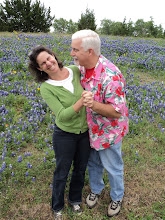
And then I fell in love with a girl from Texas, and everything changed. I have lived most of the last three decades—virtually my whole adult life—in the Lone Star State, a fact which still astonishes me and no doubt puzzles many of my childhood and college friends, to whom Texas is a vast desert filled with cacti, rattlesnakes, and gun-totin’, snuff-dippin’, rip-snortin’ Republican rednecks. Dangerous, in other words. But, almost thirty years later, here I am.
Heather and I were classmates and fellow English majors at that Massachusetts college, and we fell in love and/or lust during the spring of our senior year. Not only was she gorgeous, smart, and funny, but, being a native Texan, she was exotic, too. Her family lived in San Antonio until she was ten, when her father got a job with the gummint and they moved to the Washington DC area, but her father’s father still lived in the Alamo City, and she had a job lined up after graduation as a reporter for the late and not-terribly-lamented San Antonio Light.
I, on the other hand, had no job prospects whatsoever—planning ahead has never been my strong suit—and figured I might as well follow her to Texas. (I actually wrote to the San Antonio Spurs offering my services as a short, untalented point guard who couldn’t shoot, pass, jump, or go to my right, and received a surprisingly gracious rejection letter from Bob Bass, who was then the team’s general manager.)
After graduation, we embarked on an epic cross-country journey, driving in Heather’s un-air conditioned Toyota Tercel from Williamstown to San Francisco, by way of Washington DC, New Orleans, Houston, San Antonio, and Aspen, to visit my (divorced) parents, and then back to San Antonio to begin what we naively thought of as our adult lives.
The trip was full of incident, but the high points were our stays in Houston, where we visited Heather’s formidable maternal grandmother, and San Antonio, where we spent a week with her even more formidable paternal grandfather.
Boppa took one look at me, with my bushy beard, long hair, and earring, and decided, not unreasonably, that I was Bad News. The famous family story is that when we left San Antonio to push on to the West Coast, he called Heather’s father and asked, “Now where are those two going again?”
Heather’s father replied that we were heading to San Francisco to see my parents before eventually returning to San Antonio. There was a thoughtful pause, and then Boppa observed, “Lotta motels between here and San Francisco.”
When we finally made it back to San Antonio, we took him out to dinner twice a week, on the nights when “the help” was off; on Thursday nights we went to the Argyle, and on Sunday nights to the San Antonio Country Club. I drove the car, opened the doors, fetched him the one weak Chivas and water he was allowed per night, and generally did my best to ingratiate myself, but for the rest of his life (he died about six months later), he never called me anything but “Whiskers,” as in “Whiskers, get me a drink,” or “Whiskers, go git the car.” I’d tug on my forelock or fetlock or whatever that thing is and say, “Yes, sir,” and go off wondering what the hell I’d gotten myself into.
That was a tough year, in a lot of ways. I found work as the editor of a little weekly newspaper, the San Antonio Citizen-News, that served the southwestern part of the city around Lackland Air Force Base; since we were living in north-central San Antonio, I neither knew nor cared anything about that part of the city, so my job was not terribly fulfilling. I bought a used Fiat 128, which consumed several quarts of oil a week and was (in the way of all Fiats) almost comically unreliable, so twice a day I’d set off to drive across the city never knowing if I’d actually arrive at my destination, which didn’t exactly help my frame of mind. One hot afternoon the Fiat conked out in the middle of Broadway, and Heather and I had to push it several blocks to my apartment.
My most memorable co-worker at the Citizen-News was Oscar, the sports editor. He was a bald, stocky retired Air Force sergeant, and he cussed constantly and with amazing creativity. He also had a notorious temper; I was told that he carried a baseball bat in the trunk of his car, and if another driver cut him off or otherwise offended him he would pull it out and go to work on their fenders and taillights. Oscar was also apparently a creature of habit; the story was that once, when he came home to discover that his wife had rearranged the living room furniture, he wordlessly got out his toolbox, moved the furniture back to its previous positions, and nailed it to the floor. In fact, he was always perfectly nice to me, but I definitely tried to stay on his good side.
Perhaps unsurprisingly, Heather and I broke up after a year or so in San Antonio. She moved up to Austin to begin graduate school, and I, once again flying blind, decided to move to Washington DC, where I landed a job on the staff of Sen. Bill Bradley. I enjoyed my time in Our Nation’s Capital, at times perhaps a little more than was good for me; I’m not sure my liver has ever forgiven me. But I got my feet under me a little bit, found out I could more or less survive on my own in the world, and eventually, a year or so later, Heather and I patched things up. I moved back to Texas, this time to Austin, where I too began grad school, in American studies. We got married a couple of years later, and the rest, as they say, is history.
And now here we are, in the second decade of the twenty-first century, and I find myself the would-be co-proprietor of an enterprise that seeks to celebrate and emphasize the unique character of Texas, or at least the beautiful part of it known as the Hill Country. Our kids have grown up in Austin, and while all three have elected to leave the state for college (the youngest, a high school senior, is bound for Ohio next year), the older two have already come back. They’ve come back home.
—Martin
What we’re reading
Heather: Heather Rogers, Green Gone Wrong: How Our Economy Is Undermining the Environmental Revolution
Martin: Katherine Howe, The Physick Book of Deliverance Dane