Showing posts with label sense of place. Show all posts

Friday, March 4, 2011

Maps and mobility: living in, not on, the land


I was surprised, while reading Rebecca Solnit’s fascinating Infinite City: A San Francisco Atlas, to realize that I probably know substantially more about the history of Texas than I do about the history of my native San Francisco.

Of course, this realization should hardly have come as a surprise. After all, I’ve lived in Texas for more than half my life, whereas I left California at age seventeen, for college, and never moved back. Moreover, I spent more than half of my time in Texas working for the Texas State Historical Association, mostly researching and writing local history.

Still, it was a little bit of a shock. Despite my recent purchase of a spiffy pair of Lucchese boots, I still frequently think of myself as a Californian, not a Texan. Texas is where I live, but California is where I’m from, and that can be a significant difference. Especially in the South (and Texas is in many ways as much a part of the South as of the West), where you’re from—your “people,” your frame of reference—is still as important as who you are. But while I retain vivid, detailed mental and sensory images of San Francisco and the Bay Area—the sights, the sounds, the smells, and, yes, the tastes—I don’t really know how and why they came to be. In Texas, on the other hand, I learned a lot of the stories before learning the places they explain.

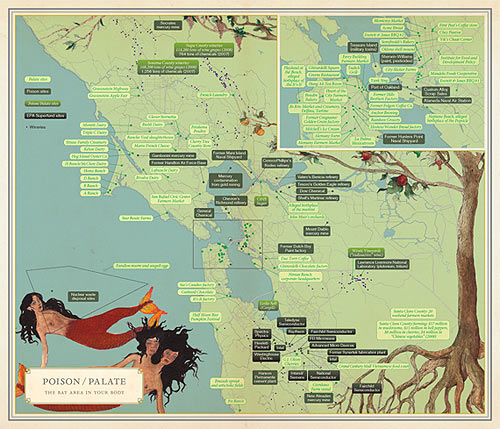
Solnit’s book presents both foreground imagery and background narrative. It is a series of maps and essays which manifest unexpected symmetries or contradictions: “Monarchs and Queens,” which simultaneously maps butterfly populations and sites significant in the history of the city’s queer population; “Poison/Palate” (above), which juxtaposes some of the Bay Area’s leading “foodie” establishments (Chez Panisse, Niman Ranch, etc.) with nearby mercury mines, oil refineries, chemical plants, and other sources of toxic pollution; and so on.

In reading and looking at this beautiful book—and it really is beautiful—I have learned a lot of local history, and also experienced that rush of nostalgia that accompanies any return, be it literal or literary, to your homeland. Just seeing the names on the maps, the extant and (especially) the long gone—Playland at the Beach! the Surf Theater! Winterland! Zim’s!—brought on a shiver of memory worthy of a Proustian madeleine. As Solnit writes, “the longer you live here, the more you live with a map that no longer matches the actual terrain.” She notes that the residents of Managua, Nicaragua, long after an earthquake that destroyed much of the city, “gave directions by saying things like, ‘Turn left where the tree used to be.’”

Similarly, my San Francisco is a palimpsest, an accretion of layers and memories, things and people living and dead, real and fictional—Emperor Norton and Sam Spade, Lawrence Ferlinghetti and Harry Callahan, and countless others. All of them were and are integral parts of where I’m from.

But that very notion of being from someplace is somewhat vexed. Locals say “I’m from here” all the time, but to me saying you’re from someplace usually implies motion, absence, a sense that you’re no longer there—that you’ve left it behind. In the United States, we have traditionally defined ourselves as an entire nation of people who are from somewhere else. My mother was born in Italy and my father in Brazil (though his parents were born in Scotland and Austria), which makes me about as American as you can get. After all, even the so-called Native Americans who were here before European contact originally came from somewhere else, presumably across the Beringian land bridge in pursuit of mammoth and bison.

In a fundamental sense, then, ours is a culture built on the sense of limitless opportunity awaiting us just beyond the horizon, just over that next rise. We have never stayed put, geographically or socioeconomically: the Louisiana Purchase, Manifest Destiny, the Mexican War, the California Gold Rush, the Civil War, and the Dust Bowl all pushed or pulled the new nation westward, across the continent, and we still seem to believe that, if we really make a hash of things where we are now, we can always pick up and move on to some uninhabited place (traditionally further west) where we can start fresh.

And some astonishing transformations did indeed take place out on that peripatetic frontier: a poor boy from Kentucky by way of Indiana and Illinois turned into Abraham Lincoln, an itinerant river pilot and printer’s apprentice from Missouri headed west and turned into Mark Twain, and so on. Even after Frederick Jackson Turner famously proclaimed the end of the frontier in 1893, our restlessness did not cease. In the twentieth century, the promise of economic opportunity and escape from Jim Crow drove the great migration of African Americans from the South to the north and west. Our current president, a son of Kansas and Kenya who was born in Hawaii and spent part of his childhood in Indonesia, is merely the most recent testament to the persistent power of the American notion of mobility, whether upward or westward.

Back to the Left Coast. In Infinite City, Solnit writes, “A city is a particular kind of place, perhaps best described as many worlds in one place; it compounds many versions without quite reconciling them, though some cross over to live in multiple worlds—in Chinatown or queer space, in a drug underworld or a university community, in a church’s sphere or a hospital’s intersections.” This is inarguably true of San Francisco, or for that matter any city; I would only add that it is no less true of a farm, a rural village, or any place that has borne the prints of generations of human existence. Like, say, Madroño Ranch.

All maps, even ones as imaginative and beautiful as the ones in Infinite City, are by definition reductive. They represent reality in two dimensions; we experience it in (at least) three. Maps, in other words, lack depth, and depth is what makes us and our world real. We don’t inhabit places flatly (though we certainly inhabit plenty of flat places!), but in depth, both geographical and temporal.

That depth is what we hope to gain personally at Madroño Ranch and also encourage in others, but we know we cannot simply will it into being. It grows and accumulates over time, and with care and effort; it is, in fact, a kind of rote learning, going over the same ground again and again, literally and metaphorically, until you have worn a track into the surface. John Muir noted that “Most people are on the world, not in it”; one of our hopes, now that our Austin nest is empty and we’re at the ranch more often, is that we can gradually learn to live and move in, not just on, this small part of the planet.

This is why Heather has grown increasingly ambivalent about travel; the world is full of fascinating places, but we’ve barely scratched the surface of our own. We hope it’s not (or not just) provincialism, but we want to be here.
—Martin


What we’re reading
Heather:
Adam Gopnik, Angels and Ages: A Short Book About Darwin, Lincoln, and Modern Life
Martin: Steven Rinella, American Buffalo: In Search of a Lost Icon

Friday, February 18, 2011

These boots were made for blogging


Cowboy boots are on my mind today. And (heh) on my feet.

Of course cowboy boots come with so much symbolic weight it’s a wonder I can even walk in them. The cowboy is the most iconic, romantic, heroic figure in American history. Lean, laconic, and independent, he represents the way we like to imagine ourselves: tough as nails, self-reliant, unafraid of violence but guided always by a rigid code of honor. Owen Wister and Zane Grey helped establish the archetype, and Roy Rogers, Gene Autry, Audie Murphy, Gary Cooper, John Wayne, and Clint Eastwood, among many others, elaborated it for generations of children (and adults) on screens both large and small. In an increasingly urbanized society the image of the cowboy may seem quaint and anachronistic, but it can still exert a powerful pull.

All of which only partially explains why I just bought myself a pair of Luccheses—NV1503s in waxed and burnished olive leather, if you must know, as in the photo above—and why that’s such an unlikely thing for me to have done. Allow me to explain:

I have traditionally had a sort of ambivalent attitude toward cowboy boots. I have tended to associate them more with a certain kind of urban Texan—plump, loud, razor-cut hair, wearing pressed jeans and a white shirt, driving a too-big pickup—than with the rugged individualist of the bygone frontier. And then of course there’s that whole unfortunate association with a certain professional football team based in Dallas.

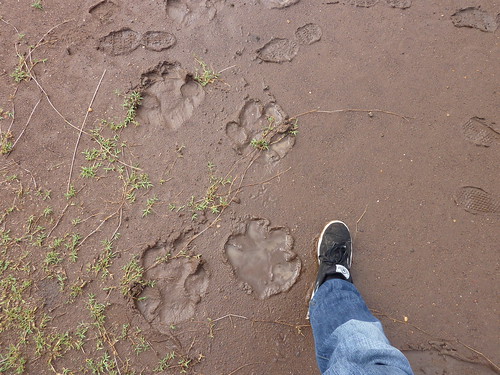
Moreover, my feet are famous throughout the tri-county area for their extraordinary width and flatness. They are the Great Plains of footdom. My footprints resemble the round tracks of a hippo rather than the delicately scalloped tracks of most humans.

Perhaps it’s not surprising, then, that I have a long and often painful history with cowboy boots. I bought my first pair in London, of all places, at a very trendy boutique on Chelsea’s Kings Road, during our honeymoon many years ago. (I know, I know: what kind of idiot travels from Texas to England to buy cowboy boots? All I can say in my defense is that Heather had just bought a pair, and I didn’t want to be left out. Also, I was young and foolish.) They were a sort of honey-colored suede, with white stitching, lethally pointed toes, and rakishly undercut heels. They were also one size too small, and way too narrow. The shopkeeper—a pox upon his cynical soul—assured me that they would stretch, which was of course utter nonsense. I probably wore them no more than twice, each time suffering horribly while they were on and requiring a great deal of assistance to peel them off my swollen feet, before finally coming to my senses and giving them away.

A few years later Heather’s parents gave me a pair of boots for Christmas. They were made of thick reddish-brown leather, completely devoid of decorative stitching, with squarish toes instead of the classic pointy ones—in other words, they weren’t really cowboy boots at all. They were, however, the correct size. I wore them a few times, usually at Christmas parties and the like, before deciding that they were just too heavy to wear much in Texas.

But these new Luccheses fit my astoundingly wide, flat feet right out of the box, and they are lightweight enough to make me think I might be able to wear them comfortably even when the temperature is above freezing. Moreover, they are quite dazzlingly beautiful: fairly restrained, as cowboy boots go, with decorative contrast stitching on the shaft and more subtle stitching on the insteps, though the toes are sharply pointed.

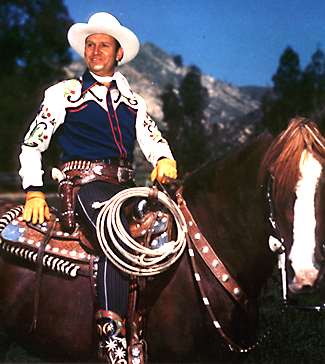
How often will I actually wear them? I have no idea; I may ultimately conclude that they make me look more like this guy than this guy. Also, we seem to be moving into spring, and my usual warm-weather wardrobe involves shorts, a T-shirt, and Birkenstocks, with a Hawaiian shirt and sneakers for more formal occasions. Still, I like looking at them in my closet, and it’s nice knowing they’re there if and when I need them.

The bottom line is that these boots are a symbol of my willingness to take on the trappings of my time and place. We live in Texas, and we own a ranch; we are Westerners, in other words, and we yearn to partake of the best of that heritage. I’ve made no secret of my loathing for many aspects of contemporary Texas (just ask Heather). Wearing cowboy boots is a step—a small step, perhaps, but a significant one—in my long journey toward acceptance and acknowledgment of who and where I am. This is my life, and these, believe it or not, are my boots.

Next on my shopping list: a Nudie’s suit!
—Martin


What we’re reading
Heather:
William H. Eddy, The Other Side of the World: Essays on Mind and Nature
Martin: Philipp Meyer, American Rust

Friday, July 16, 2010

There and back again: a geobiography


We recently led a seminar on Madroño Ranch as part of the annual Summer Literary Festival at Gemini Ink, a writing center in San Antonio. The theme of this year’s festival was “What Would Nature Do?” and in our seminar we read and discussed works by Wendell Berry, Annie Dillard, Michael Pollan, Ellen Davis, Lewis Hyde, and Mary Oliver. We also asked the participants to write a brief “geobiography” (as “A Native Hill” is described in the collection The Art of the Commonplace: The Agrarian Essays of Wendell Berry), a statement of how they consider themselves rooted in a particular place. Here’s a slightly modified version of what I wrote:

I am a native of the Bay Area, a place that everyone thinks is among the most beautiful in the world. I was born in San Francisco and grew up in Marin County, just to the north of the city across the Golden Gate Bridge; I lived amid the winding hillside lanes and towering redwood and eucalyptus trees of Mill Valley, beneath Mount Tamalpais, until I was eighteen, when I went off to college in Massachusetts. There I met the woman I would marry, a native Texan, as I recounted in an earlier post; she had a job lined up in San Antonio after graduation, I followed her there, and I never lived in California again.

Why did I so thoughtlessly, even eagerly, put California behind me when I left home? In part, I realize in retrospect, I was hoping to escape some not particularly unusual or interesting adolescent angst and family tensions, and to redefine myself as a brighter, happier person in a new setting, among strangers. (I say nothing of the futility of such an effort; I was young and foolish.) Massachusetts, and then Texas, seemed like blessed opportunities, and I clutched at them desperately.

Only… almost despite myself, I continued to count as my closest friends two men I had known almost since birth. Brad and I met in kindergarten; Hans came a few years later. The three of us went all the way through elementary and high school together, and all three of us headed east to college, Brad to Harvard and Hans to Yale. (Both, I hear, pretty good schools.)


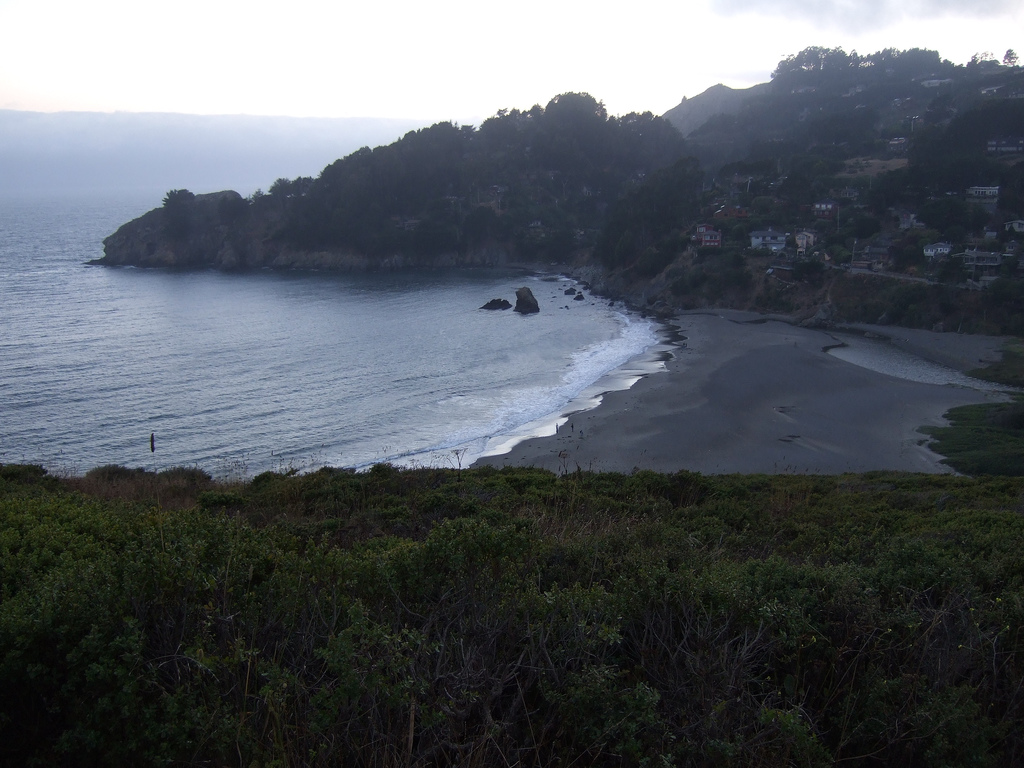
After college, I ended up in Texas, while Brad and Hans returned to California, to Los Angeles and San Francisco respectively. Last year we all turned fifty, and Brad decided we should celebrate the milestone together. So, after much back-and-forthing (all three of us are married with children, with all the scheduling complications that implies), we arranged to meet in San Francisco in March and spend a day in Marin hiking along the California Coastal Trail, six miles from Tennessee Valley to Muir Beach and back again.

It was a beautiful day, we had a wonderful time, and we agreed to make this little reunion an annual event. This year, again, we gathered in March and spent the day hiking in Marin, this time at Pierce Point Ranch on the northern end of Point Reyes National Seashore. Next year we may meet in L.A., in deference to Brad; the year after that, perhaps we’ll meet in Texas.

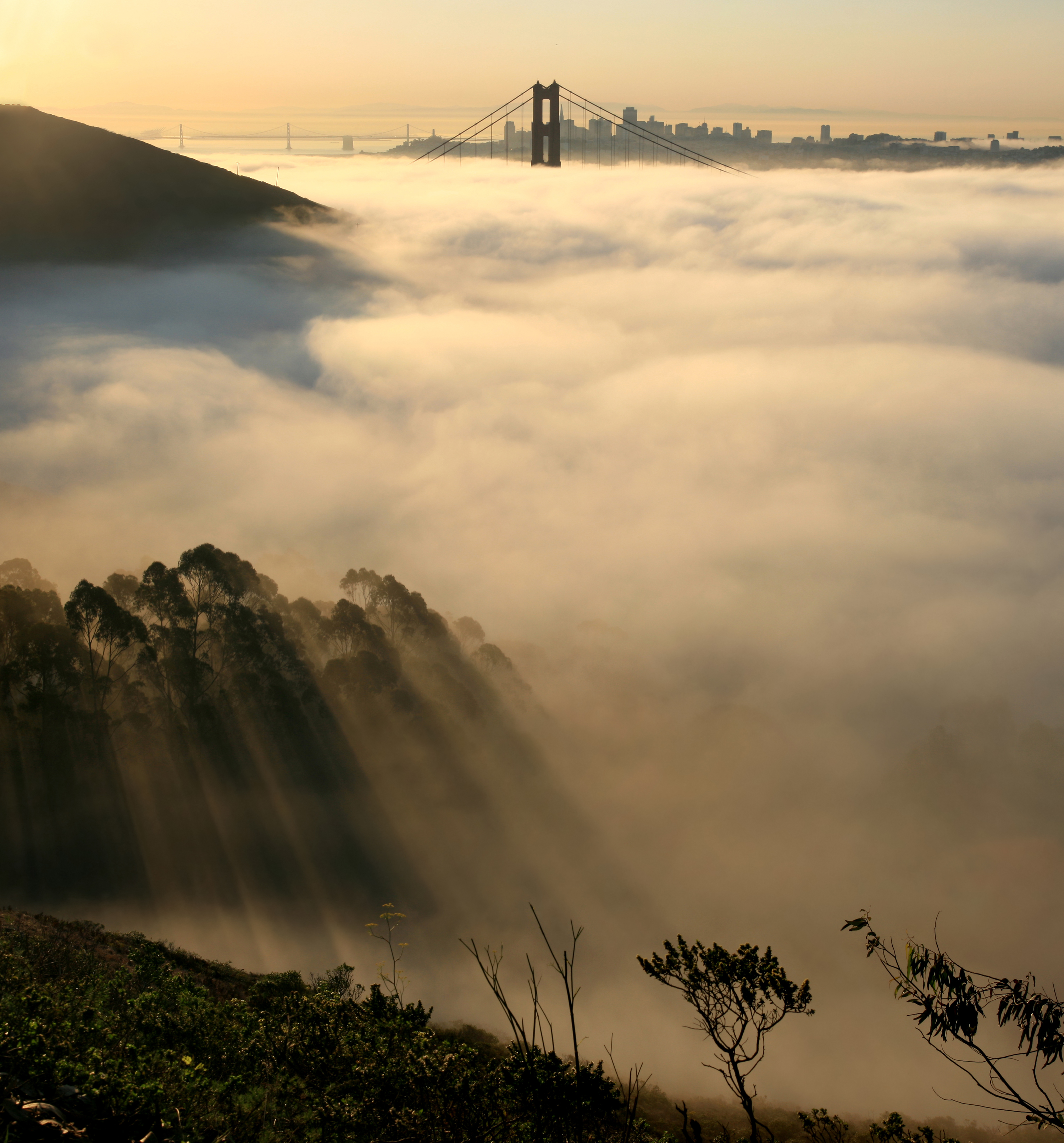
One of the wonderful gifts this time with Brad and Hans has given me is the opportunity to reconsider my relationship to California. My father was something of an outdoorsman, and when I was a child we went camping and hiking in Marin County, in the Sierras, and even up the coast to Oregon and Washington. For various reasons, I never really enjoyed these trips as much as I should have—or so I thought. But hiking to Muir Beach and at Point Reyes with Brad and Hans forced me to confront an unexpected and long-suppressed truth: I loved this land, and felt comfortable in it in a way I still don’t in Texas, even though Texas is now home. I gloried in half-remembered vistas, in the way the glittering ocean and the crepuscular redwood forests and the rolling dairy farms butted up against each other; in the cypress and eucalyptus and madrone and laurel and manzanita, and in the blooming flowers whose names I’d never learned; in the cool, salty air; in the fog banks drifting in over the Pacific.

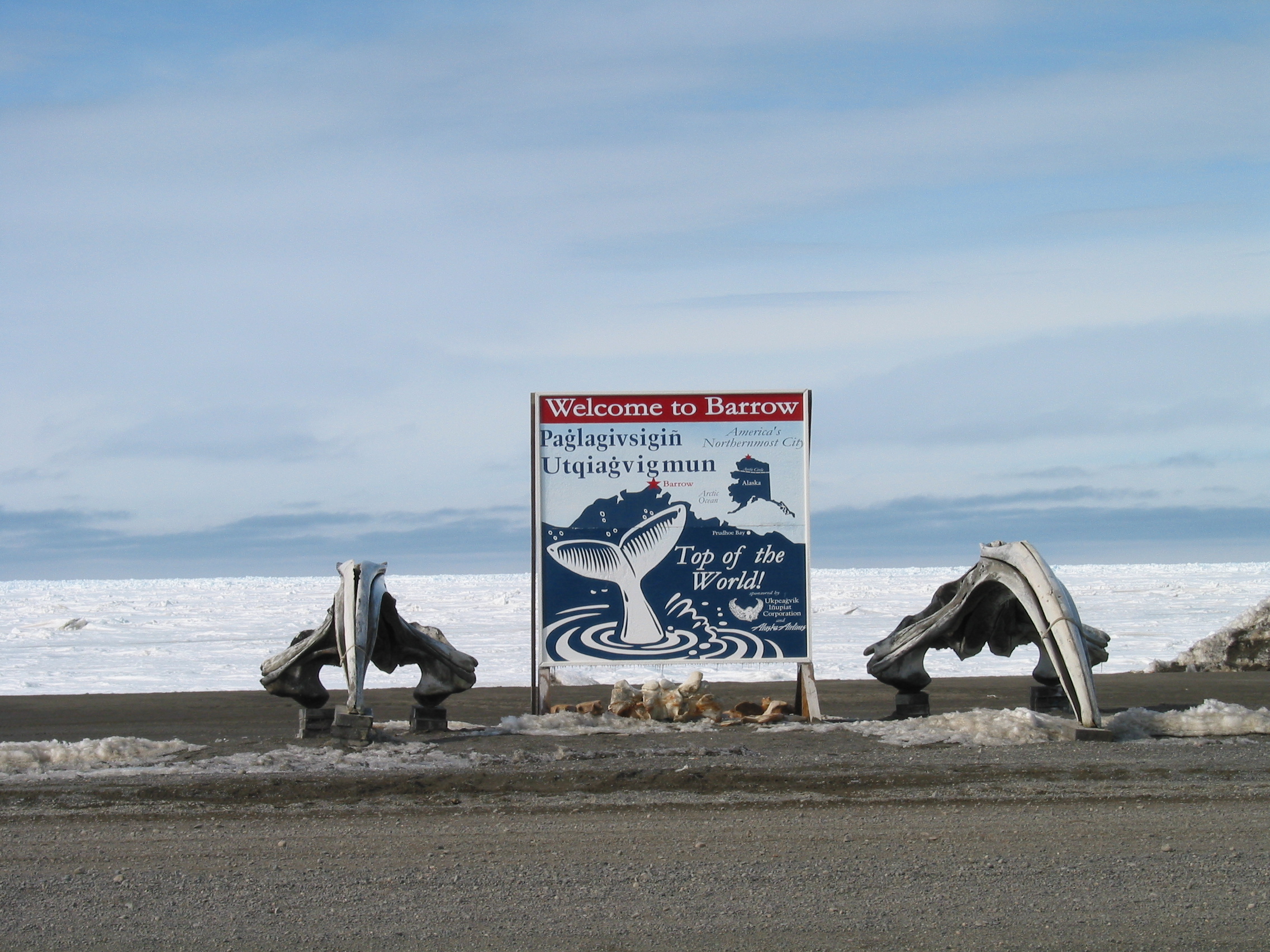
I felt as if a long-shut door in my head had been wrenched open again, and I could look out, for the first time in years, onto the bright green hills of a place I’d forgotten, or almost forgotten—a place I knew at once, with an almost literally breathtaking shock of recognition. I now realize that, having grown up amid such gentle but dramatic beauty (the suggestive, if erroneous, local legend has it that Tamalpais means “Sleeping Lady”), I came to believe that the world is an essentially beneficent place, and that the land is an unfailing source of pleasure and comfort. (I might have reached a different set of conclusions had I grown up in, say, Orla, Texas, or Barrow, Alaska.)

Mostly, however, I realize how much I took for granted, and how unbelievably lucky I was (and am). Over the years I’ve wasted a lot of time and energy in attempting to deny or at least rewrite my past, but now I feel as though I’ve been given a second chance to connect, to learn this land—not as the place I live, perhaps, but as the place I’m from, the place that formed me.
—Martin


What we’re reading
Heather:
Kathryn Stockett, The Help
Martin: Dan O’Brien, Buffalo for the Broken Heart: Restoring Life to a Black Hills Ranch

Thursday, November 19, 2009

Extra! Americans losing sense of place!


One of the things that we hope will characterize Madroño Ranch: A Center for Writing and the Environment is a strong sense of place. It’s right there, implicitly and explicitly, in our mission and vision statements, just off to your right.

But how does one develop a sense of place? One answer, at least in part, and for those of us of a certain age, has been by reading the local newspaper. But the newspaper as we know it seems to be going the way of the 8-track and the VHS tape. Increasingly, people opt to get their news in a way that doesn’t leave ink smudges on their hands, or require drying in the oven on rainy mornings. In other words, they're reading the “paper” online.

In “Final Edition: Twilight of the American Newspaper,” in the November issue of Harper’s, Richard Rodriguez examines the decline of his (and my) hometown paper, the San Francisco Chronicleand the historical importance of the newspaper in American life.

The press, Rodriguez argues, was the indicator and bestower of civic stature: “It was the pride and the function of the American newspaper in the nineteenth century to declare the forming congregation of buildings and services a city—a place busy enough or populated enough to have news.” In addition, the rise of the newspaper was a sign of the small-d democratic nature of American culture, “a vestige of the low-church impulse toward universal literacy whereby the new country imagined it could read and write itself into existence.”

But, for many, the newspaper seems to have outlived its usefulness. The Atlantic Monthly’s Megan McArdle, in an online (of course) column titled “The Media Death Spiral,” writes, “The circulation figures for the top 25 dailies in the U.S. are out, and they’re horrifying. The median decline is well into the teens; only the Wall Street Journal gained (very slightly).”

She adds, “I think we’re witnessing the end of the newspaper business, full stop, not the end of the newspaper business as we know it. The economics just aren’t there.”

Those of us who read the Austin American-Statesman have noted the signs already: a shrinking paper, meaning fewer ads and less revenue; the anorexic classifieds (a victim of craigslist) tacked onto the back of the Life and Arts section; the business and metro sections combined.

Why should we care whether or not the Statesman survives? According to Rodriguez, “When a newspaper dies in America, it is not simply that a commercial enterprise has failed; a sense of place has failed. If the San Francisco Chronicle is near death... it is because San Francisco’s sense of itself as a city is perishing."

Does he exaggerate? Maybe. But once the newspapers are gone, he asks, “who will tell us what it means to live as citizens of Seattle or Denver or Ann Arbor? The truth is we no longer want to live in Seattle or Denver or Ann Arbor. Our inclination has led us to invent a digital cosmopolitanism that begins and ends with ‘I.’”

Rodriguez quotes a friend of his, a journalist from India: “If I think of what many of my friends and I read these days, it is still a newspaper, but it is clipped and forwarded in bits and pieces on email—a story from the New York Times, a piece from Salon, a blog from the Huffington Post, something from the Times of India, from YouTube. It is like a giant newspaper being assembled at all hours, from every corner of the world, still with news but no roots in a place. Perhaps we do not need a sense of place anymore.”

That statement really bothers me, for a couple of reasons. I can understand the appeal of what Philip Meyer, a student of the industry, calls “the demassification of the media”; in the bottom-up model of journalism, each consumer is free to pick and choose the information he or she deems most valuable, rather than being forced to rely on the judgment of a corporate editor. What could be more democratic?

But such a model does come with a cost. As Meyer writes in his book The Vanishing Newspaper: Saving Journalism in the Information Age, “If we’re all attending to different messages, our capacity to understand one another is diminished.”

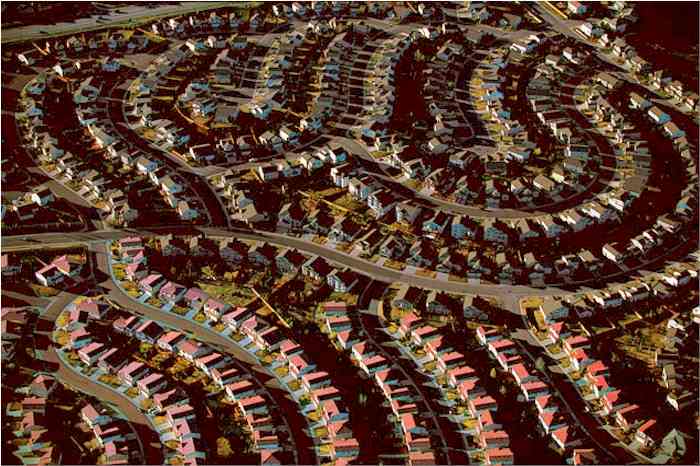
And what about that speculation from Rodriguez’s friend, “Perhaps we do not need a sense of place anymore”? Perhaps not. But I don’t want to live in a world where people no longer feel connected to the land and the people around them. In a society that has traditionally viewed “light[ing] out for the territory,” in the words of that old newspaperman Mark Twain, as the solution to every problem, how do we convince folks that they have a stake in, and a responsibility to, their surroundings? As strip malls and chain stores and fast-food outlets and cookie-cutter housing developments and, yes, the internet make every place more like every other place, how are we supposed to know or care where we are?

I don’t know the answer to that question, but I think we better find one. People who feel strongly connected to their surroundings, urban or rural or in between, feel that the place is theirs; they know it, feel it, eat it, sleep it, and live it. They’re also more likely to take care of it. I certainly hope that the things that make Madroño Ranch special to us—the hills, the water, the rocks, the trees—will outlive us, and our children, and our children’s children, and we intend to do all we can to make sure they do.
—Martin

What we’re reading
Heather: Mary Oliver (ed.), The Best American Essays 2009
Martin: Douglas Brinkley, The Wilderness Warrior: Theodore Roosevelt and the Crusade for America