Showing posts with label nature. Show all posts

Friday, March 25, 2011

Tragic waste: some thoughts on the s-word


Watching the bats from the kitchen stoop at Madroño Ranch the other morning was a little like watching my own thoughts. They swooped in and out of my line of vision, limited by the dawn darkness, more audible than visible.

Actually, my comparison is disrespectful of the bats; their flight is only apparently erratic, driven by the ever-changing location of the insects they were chasing. My thoughts are actually erratic. As the promise of light bloomed into dawn, the bats settled into the bat house, a feat of precision flying and landing almost like none I’ve seen, and I noticed the pile of guano under the house and thought that soon it would be time to collect it and put it into the compost pile.

And so began my musings on shit and the difference between good shit and bad shit. My apologies to the bats become ever more profound.

One of our current projects at the ranch is figuring out how to use the abundant quantities of manure the residents of the Chicken Palace produce. Currently, it’s just collected and dumped onto the compost pile, but we’re working on a plan to get the chickens more fresh greenery to eat, in part self-fertilized (by the chickens, that is). We’re planning to cordon their pasture off into sections and seed the sections with cover crops, alfalfa, rye—whatever the season will grow. We’ll soon have a rainwater collection system in place and will be able to irrigate with it (assuming it ever rains again). Using a portable fence, we’ll be able to rotate the chickens from section to section. We have no idea if this will work, but it seems like a good idea and a fine, closed-loop use of all that poop. We’re also looking to collect buffalo leavings (summer “interns”: consider yourselves warned!) and use them as well.

Perhaps you’ve noticed that I used all sorts of synonyms for shit in the previous paragraph; one of the few I didn’t use is “waste,” because in natural systems, or systems that mimic natural systems, shit isn’t waste, it’s integral and beneficial. Paraphrasing Our Hero Wendell Berry, Michael Pollan notes in The Omnivore’s Dilemma: A Natural History of Four Mealsthat industrial agriculture has taken an elegant solution—crops feed animals, whose manure in turn fertilizes crops—and “divide[d] it into two new problems: a fertility problem on the farm... and a pollution problem on the feedlot.” Concentrated Animal Feeding Operations (CAFOs), the current source of most of America’s meat, produce mountains of manure that becomes toxic to the animals and to the communities around them, and the monoculture farming that produces most of America’s grains and vegetables doesn’t use animals to fertilize the soil, requiring farmers to use chemicals instead. That’s the difference between good and bad shit: when something that could be beneficial becomes useless, even toxic, waste.

In fact, I’m beginning to wonder if a community’s or even a culture’s capacity to endure might not be assessed by how effectively it mimics nature in dealing with its own discharge. I’ve just been rereading T. C. Boyle’s darkly comic Drop City, which begins at a northern California commune of the same name in 1970. The commune’s stated raison d’etre is to provide its residents with a place to escape the confines of bourgeois America and get back to the land and basic values by expanding their consciousness with meditation and drugs.

Of course the place is utter chaos, overflowing with the metaphoric excrescences of abusive sexual practices, racism, child neglect, and rampant narcissism, along with literal shit. The septic system is overloaded and the two characters who concern themselves with the problem get no help at all from the community. Eventually, the county government threaten to raze the buildings because the commune constitutes a health hazard. Because they can’t deal with their own shit on any level, the residents of Drop City abandon what was once beautiful land and move their chaos to the bush country of Alaska just as summer is waning. When they get there, most of them realize that they need to leave or get their shit together so they don’t die.

The problem is that getting your shit together necessitates acknowledging that you are, in fact, going to die. (It’s still Lent, after all. You knew we’d get to this.) Ernest Becker, in his Pulitzer Prize-winning The Denial of Death, identifies the human dilemma in scatological terms: we are the “god[s] who shit.”
Look at man [sic], the impossible creature! Here nature... [has] created an animal who has no defense against full perception of the external world, an animal completely open to experience.... He not only lives in this moment, but expands his inner self to yesterday, his curiosity to centuries ago, his fears to five billion years from now when the sun will cool, his hopes to eternity from now. He lives not only on a tiny territory, not even on an entire planet, but in a galaxy, in a universe, and in dimensions beyond visible universes. It is appalling, the burden man bears, the experiential burden.... Each thing is a problem and man can shut out nothing. As Maslow has well said, “It is precisely the god-like in ourselves that we are ambivalent about, fascinated by and fearful of, motivated to and defensive against. This is one aspect of the basic human predicament, that we are simultaneously worms and gods.” There it is again: gods with anuses.
Human civilization, says Becker, is built on this unease, which encourages us to throw our energies into an “immortality project” by which we deny our smelly mortality; those who confront it with none of the filters an immortality project provides wither into mental illness. Becker doesn’t attempt to solve this conundrum but rather to set some boundaries within which we can wrestle with it with “the courage to be.” He writes in his conclusion: “We need the boldest creative myths, not only to urge men on but also and perhaps especially to help men see the reality of their condition. We have to be as hard-headed as possible about reality and possibility.”

So it was with interest that I watched the video produced by a Japanese media artist to explain to Japanese children why everyone was so worried about the Fukushima nuclear reactor after it was damaged by the tsunami and earthquake on March 3. The video compares the damaged nuclear reactor to a boy with an upset stomach who needs to poop. So far the boy has just farted—smelly enough for everyone around him—but the video assures us that a team of selfless doctors are doing all they can to prevent Nuclear Boy from pushing out his stinky poop.

The video says that the Fukushima reactor is more like Three Mile Island Boy—who just farted—than like Chernobyl Boy, who not only pooped but had diarrhea that went everywhere, likening nuclear waste to a dirty diaper. My first thought after watching it was that Japanese doctors would be overwhelmed by waves of constipated children, convinced that evacuating their bowels might bring their struggling nation to even deeper depths. My next thought moved me to images in last Sunday’s New York Times of the city of Chernobyl in its abandoned state and the interview with one of the guardians of “the sarcophagus,” the concrete structure built to contain Reactor No. 4, and that can’t come in contact with water without risking the escape of highly radioactive fumes. Scientists estimate that an area around the reactor the size of Switzerland will remain affected for up to 300 years. The aftermath of a nuclear meltdown “is a problem that does not exist on a human time frame.” The guardian figures that the work he does will be available to his children and grandchildren.

Using my heavily truncated recapitulation of Becker’s thought, it seems that proponents of nuclear power (which I have sometimes been) are refusing to be “as hard headed as possible about reality and possibility,” are as unwilling to get our shit together as the drug-addled utopians of Drop City. We are as schizophrenic as the video artist who proposes that we just not poop. A few pages away from the article about Chernobyl was a piece by a Japanese astrophysicist who wrote in reference to the Fukushima reactor crisis:
Until a few years ago, power usage in Japan was such that during the summer Obon holidays, when people typically return to their ancestral homes, it would have been possible to meet demand even if all nuclear power plants were turned off. Now, nuclear energy has come to be indispensable for both industry and for our daily lives. Our excessive consumption of energy has somehow become part of our very character; it is something we no longer think twice about.
Now that I’m trying to tie together all these thematic threads, I have to swoop back to my bat-intensive stoop, to the manure-heavy compost pile in the pasture outside the Chicken Palace. May we humans be as useful as Madroño’s bats and chickens as we consider our energy future; may we refuse to resort to the narcissistic chaos of Drop City’s residents, who left their spiritual and literal bad shit for someone else to deal with.
—Heather


What we’re reading
Heather:
Karen Armstrong, Twelve Steps to a Compassionate Life
Martin: Nicholson Baker, The Anthologist

Friday, July 2, 2010

The literary environment (with apologies to the Williams Alumni Review)


Confession: I consider myself a loyal son of alma mater, but I usually just skim the quarterly Williams Alumni Review before tossing it into the recycling pile. A story in the June issue, however, caught my eye. “The Literary Environment,” by Denise DiFulco, is about the director of the college’s Center for Environmental Studies (CES), a Spanish professor named, confusingly, Jennifer French.

The article notes that a lot of people have asked French how a Spanish professor came to be named the director of the CES. The answer involves her first book, Nature, Neo-Colonialism, and the Spanish American Regional Writers (2005), which examined early twentieth century Latin American literary responses to European economic hegemony in the region. Or something like that. Explains French, “Often those writers, including Horacio Quiroga and José Eustasio Rivera, made central to their narratives the deleterious effects of agriculture and other industries.”

Sadly, I know next to nothing about Latin American literature, and I’d never heard of Quiroga or Rivera, but another quotation from the article really struck me: “At their best, environmental history, philosophy, religion, literary studies, and the like engage the underlying assumptions of environmental policy and environmental science.”

Exactly! I thought. This is a view that resonates profoundly with Heather and me—we are, after all, both English majors—and when we eventually begin accepting environmental writers for residencies at Madroño Ranch, we hope to cast as wide a net as possible.

Say the words "environmental writer" and I suspect that most people think of folks like Bill McKibben or William Cronon or Michael Pollan or David Quammen (all of whom happen to be heroes of ours): essayists or historians with a biological or agricultural bent. They, and many others like them, are among the most important writers we have, and we would be thrilled—thrilled—to have them, or their peers, as residents at Madroño. But we also hope to attract novelists and poets and philosophers and theologians and playwrights and screenwriters and memoirists and perhaps even (what the heck) bloggers—pretty much anyone who’s thinking and writing in creative ways about the land and those who have their being on it, and how they affect each other.

Think of the fiction of Wendell Berry, who (much as William Faulkner did in Mississippi) has created a complex and compelling imaginary landscape in Kentucky. (Apparently the American South is particularly suited to this sort of exercise.) Think of the novels of Willa Cather—Death Comes for the Archbishop is still my favorite—and Wallace Stegner, which depict the varied experiences of humans confronted with the vast spaces of the American West. Think of the poetry of Mary Oliver, in which the animal and vegetal and geological is a constant, almost sentient presence, and W. S. Merwin, described in the New York Times as “a fierce critic of the ecological damage humans have wrought.” Think of the economic writings of Paul Hawken and Woody Tasch, critiques of modern industrial capitalism’s obsession with short-term, bottom-line profit at the expense of just about everything else. Heck, think of David Winner’s odd little book Brilliant Orange: The Neurotic Genius of Dutch Football—one of my personal favorites—in which he examines how landscape has affected the style of soccer played in the Netherlands.

Closer to home, think of the gracious and elegant memoirs of John Graves and Roy Bedichek, two of the foundational texts of the environmental movement in Texas; or the beginning of The Path to Power, the first volume of Robert Caro’s epic three-volume biography of Lyndon Johnson, which is still the best short history of the Texas Hill Country I’ve ever read; or even Witold Rybczynski’s magisterial biography of Frederick Law Olmsted—not a Texan, but an astute observer of the state—which is a wonderful narrative summary of nineteenth-century American thought about nature in urban and suburban settings. Each of these works, I believe, has something original and important to say about community in America, community in this case defined as (to crib shamelessly from Pollan’s website) “the places where nature and culture intersect.”

We’d be pretty surprised to receive applications from Faulkner, Cather, Stegner, or Bedichek, since they're, well, dead. But would the rest of them want to come to Madroño Ranch? Well, why not? We hope that the offer of beautiful and rugged surroundings, free from distraction, in which to ponder and dream and focus and unfocus (and eat well, of course; let’s not forget eating well) and bounce ideas off peers, will prove irresistible. Are we aiming high? Of course; but if you don’t aim high, you’ll just keep hitting the ground, right? Who knows—maybe Jennifer French herself will want to come. According to the article, she’s already working on her next book, a study of how memories of the War of the Triple Alliance (fought between Paraguay and the combined forces of Argentina, Brazil, and Uruguay from 1864 to 1870) have influenced attitudes toward land use in Paraguay. Wouldn’t that be cool?
—Martin


What we’re reading
Heather:
Laurie King, Touchstone
Martin: Paul Hawken, The Ecology of Commerce: A Declaration of Sustainability (still)

Friday, June 11, 2010

Home with the armadillo: a love letter to Texas


Recently we and our three kids went to Martin’s native San Francisco to help celebrate his father’s eighty-fifth birthday. The five of us spent an afternoon walking along the cliffs of Point Reyes National Seashore, where the ground was springy, the wind was fierce, and in some spots along the trail we pushed through wildflowers up to our shoulders. Hawks wheeled through the cloudless sky, elk sunned in the lees of the cliffs, and the ocean’s shining hide swelled and stretched like the flanks of a well-groomed, self-satisfied, and very large cat. At one point, our son Tito turned to us and said incredulously, “You mean we had a choice between this and Texas?”

Yes, well. Despite Martin’s entertaining recent post on how he has come to terms with living in Texas, he has spent much of his time in the Lone Star State not entirely convinced that civilized life is possible here—certainly not from May to October, and frequently not after elections. I grew up spending summers in Colorado, where despising Texans is a competitive sport, and as a teenager and young adult I also got to spend time in places of unsurpassed beauty such as the highlands of Guatemala, the Swiss Alps, the Masai Mara, Paris, and the Canadian Rockies. And yet I love Texas and can’t imagine living anywhere else. Time for that apologia, son.

Some of my love of Texas is just an old bad habit. Many fine writers have noted how people stubbornly cling to the smells and sounds of their childhood, sensations that undermine the idea that time moves only into the future. Much of my first decade was spent in the then-unbroken woods just north of the San Antonio airport. The uncanny whinny of the screech owl, the languid moan of the mourning dove, the overpowering sweetness of mountain laurel at Easter, the loneliness of the north wind on a clear winter day: each time I experience these now I’m reminded that the girl who was gripped by them forty years ago is still inside me. She isn’t gone, despite all appearances to the contrary.

There’s more to it than nostalgia, though. Texas tells stories about itself, some of them true. While I know that many find this self-conscious tale-telling irritating—maybe even pathological—I find it sort of comforting. So maybe we actually lost the battle of the Alamo. So maybe the Texas Rangers weren’t a bunch of ethically ripped superheroes. So maybe every cowboy doesn’t have the soul of a poet. But there seems to be a (nearly) conscious yearning for the power of myth to work among us with these stories. Of course, there are stories Texans tell about themselves that I loathe: bigger is better, we should each of us be our own posse, it’s manly to kill animals with automatic weapons and spurn the meat—but this is a place that recognizes the power of stories to shape reality.

One of the stories told over and over in multiple variations is the power and variety of the land itself. One of my favorite signs is on Interstate 10 at the Louisiana-Texas state line. It reads something like this: Beaumont, 20 miles; El Paso, 937 miles. While I have lived only in Central Texas—in some ways the easiest part of the state to love—I’ve learned to respect and admire many of the landscapes between the ends, from east to west and from north to south. I make no claims to anything but the cursory knowledge that comes from road trips involving grumpy children – me and my siblings years ago, and more recently our own children. My parents drove us to Colorado every summer through the Panhandle; Martin and I chose instead to make our annual pilgrimage by way of Fort Stockton and then north through the Pecos wilderness. One hot summer day the gas tank light came on when we were halfway through the hundred inhospitable miles between Pecos and Loving, New Mexico. The prospect of running out of gas here at midday with a dog and several children concentrated the mind wonderfully and caused me to sweat through my clothes despite the car’s air conditioning. (We managed to make it to the next filling station.) We passed by multiple examples of the land’s indifference to human striving: we often threatened to abandon our squabbling children in Orla, an oil ghost town baked into dusty submission, if they didn’t behave. (It didn't help.)

We always planned our route back to Austin through Balmorhea and Fort Davis and, inevitably, a thrashing summer thunderstorm would force us off the highway—or so we assumed, since we couldn’t even see the highway through the mud on the windshield. But before the storm hit, you could see the Guadalupe Mountains to the west, and when we made it to Marfa and the high grasslands, we—well, some of us—were exhilarated by the wind and the shadows, by the pitilessness and delicacy of the Chinati Mountains.

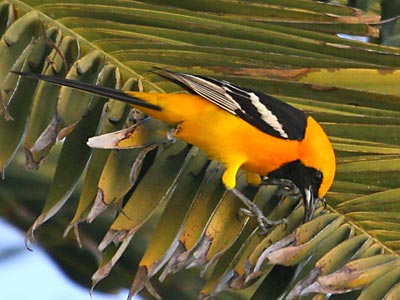
At the other end of the spectrum, I love the featurelessness of the south Texas brush country, an admittedly perverse passion. In March, the mesquite bloom neon green. At least as many things will sting, bite, or poison you as won’t. As our friend and mentor Hugh Fitzsimons of Thunder Heart Bison says, there are two seasons in south Texas: January and summer. At the rare watering holes, there are birds of remarkable beauty: green jays and hooded orioles and American widgeons. Once in April, on my way back from Piedras Negras and Eagle Pass, I drove through a migration of yellow sulphur butterflies that extended for dozens of miles. When I got back to Austin, probably a dozen people pointed out the grotesque beauty of my Suburban’s grille, which had become an extravagant collage of dead butterflies.

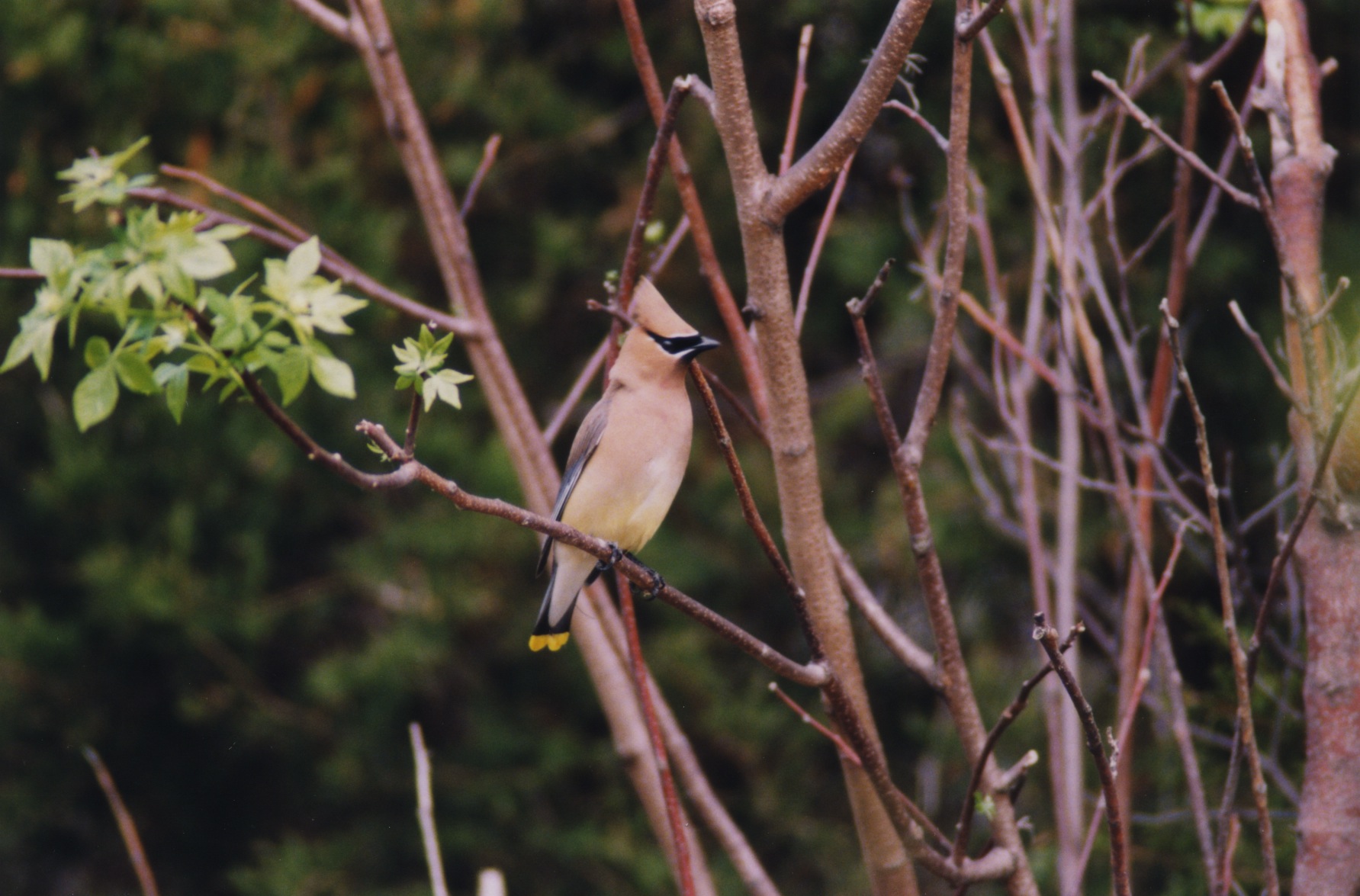
I’m leaving a lot of verses out of my Texas love song, but the last verse here has to be the one about the Hill Country. Loving the Colorado Rockies as much as I love any landscape, I’ve been trained to seek out views, to climb and pant and strain and exult upon reaching the summit. Well, the Hill Country upends that paradigm. Once you make it to the top of the hill—at least at Madroño—the landscape sinks into an unexpected anonymity. The personality of the Hill Country is in its draws and canyons, the intimate interstitial places where oaks and pecans crowd together, and great slabs of limestone create undulating walls and pools, and ferns and cedar sage grow with the demure confidence of cloistered beauty. In February, the draws ring with the slurred chatter of hundreds of intoxicated robins and waxwings. The draws also snarl with the movements of feral hogs, coyotes, and mountain lions, and vibrate with the possibility of rattlesnakes on sunny shelves, the clatter of unseen hooves in caves and cedar brakes, and the songs of maddeningly invisible birds that suddenly move, shine, and disappear again before they can be named. The draws protect and expose, invite and terrify. You want stories? You’ll find them here.

So, son, I’ll be happy to spend time in California, especially in August, even if the locals make fun of how I talk and where I’m from. But I’ll always want to come home.
—Heather


What we're reading
Heather: Belden C. Lane, The Solace of Fierce Landscapes: Exploring Desert and Mountain Spirituality
Martin: Ian L. McHarg, Design with Nature

Friday, January 15, 2010

James Cameron, Alexis de Tocqueville, and the nature of nature


In a recent op-ed column in the New York Times, Ross Douthat examines the underlying values of James Cameron’s movie Avatar and links it to a tide of pantheism coursing through Hollywood in particular and America in general. As a nation, Douthat argues, we have almost from our inception tended to collapse distinctions and seek unity, a tendency Alexis de Tocqueville noted in the 1830s: “When the conditions of society are becoming more equal... [t]he idea of unity so possesses man and is sought by him so generally that if he thinks he has found it, he readily yields himself to repose in that belief. Not content with the discovery that there is nothing in the world but a creation and a Creator, he is still embarrassed by this primary division of things and seeks to expand and simplify his conception by including God and the universe in one great whole.” We Americans, it seems, are born to pantheism as the sparks fly upward.

Douthat believes that we should fight, or at least question, this impulse. He doubts whether nature “actually deserves a religious response.” The traditional monotheistic religions confront the problem of evil, struggling to reconcile a loving creator with suffering and death. Pantheism can't address this basic human concern, according to Douthat, because nature “is suffering and death. Its harmonies require violence. Its ‘circle of life’ is really a cycle of mortality.” Religion, he believes, exists in part to pull self-conscious humanity, simultaneously of nature and outside it, out of this tragic cycle. Without religion—Christianity, for Douthat—there is no escape “upward,” only a downward abandonment of our consciousness. Pantheism leaves us with only dust and ashes.

Since the Madroño Ranch mission and vision statements (just to the right of this column) rest comfortably on a foundation of Christian pantheism—defined as finding God in all things—I can’t help but respond. Here’s why I think Douthat's definition of Christianity and its relationship to the material world—i.e., nature—needs to be questioned.

Christianity arose at the confluence of two distinct and, in some ways, contradictory traditions: Judaism, which tended to see the divine as simultaneously transcendent and thoroughly enmeshed with created matter, and Platonism, which opposed the corruption of the material to the purity of the eternal. The Nicene Creed, adopted in 325, endorsed the latter view by asserting the doctrine of creatio ex nihilo, which asserts that creation did not arise from eternally preexisting materials and that God created the universe from scratch. 

The poetic cosmology of the creed, however, left room for multiple interpretations. My personal favorite comes from Maximus the Confessor (c. 580–662), who set the scene for Eastern Orthodoxy and declared that Jesus was the first person to become fully human and thus, paradoxically, divine. Jesus thereby reopened the clogged conduit between the created and divine realms, and his call to humanity is to live fully, as he did, into the image of the divine imprinted in all of us. Western Christianity, however, preferred a top-down model in which the initiative for divine-mortal interaction was exclusively unilateral, leaving humanity in the dust, so to speak.

I present this radically reductive, tongue-in-cheek summary to suggest that the relationship between God and creation (and humanity and the rest of creation) may be more complicated than some Western Christians (like Douthat) believe. Shortly after reading Douthat’s column, I read another recent New York Times article by Natalie Angier. In it, she describes research being conducted on the complexity of plants, specifically on “their keen sensitivity to the environment, the speed with which they react to changes in the environment, and the extraordinary number of tricks that plants will rally to fight off attackers and solicit help from afar....” Says one researcher, “Even if you have quite a bit of knowledge about plants, it’s still surprising to see how sophisticated they can be.” Attributes we’ve always ascribed to humans alone seem to be much more widely spread than anyone imagined, moving out of the animal kingdom, even. Using and eating plants may be a much more fraught enterprise than we’d supposed. If the right relationship between humans and animals has inspired a multigenerational series of philosophical and theological contortions, what will happen when we find that algae are, like us, just a little lower than the angels?

One of the things that’s becoming clear to this utter non-scientist and spastic theologian is that the created order becomes more intricate and surprising the more we study it, repeatedly requiring us to question assumptions that we had thought were beyond questioning. “Your job as a scientist is to find out how you’re fooling yourself,” says astrophysicist Saul Perlmutter. I would say this is true in most human endeavors, most particularly if you’re claiming knowledge of God. (Which I do all the time. I figure God has got to be a bossy oldest daughter, like me.) Does nature deserve a religious response? How can it not?

Douthat may have been saying that nature is not worthy of worship, but worship is not the only religious response available to us. According to many Christian thinkers (and doers), we are called to love even our enemies because they too are formed in the image of God. What might it mean to find the image of God outside the narrow confines of humanity? Surely we would need to love that image with the same constancy and self-discipline required to love our irritating fellow humans. Rather than trapping us in the tragic cycle of mortality, this kind of commitment—to love the natural world as we would love God, our neighbors, and ourselves—strikes me as precisely what leads to wisdom, even if it means collapsing traditional distinctions (sorry, Alexis!) between heaven and earth.
—Heather

What we’re reading
Heather: Karen Armstrong, The Case for God (still!)

Sunday, September 13, 2009

The wonder and power of water...

... in a time of drought are, oddly, matched only in times of flood. The Texas Hill Country is in the grip of a drought unparalleled at least since the 1950s. This drought has been so fierce that cattle going to drink at their accustomed (and empty) tanks have found themselves mired in mud so viscous and vicious that they are unable to extricate themselves from it. Even if ranchers find the cattle before they die of dehydration, they’re often as helpless as the foundered cows, unable to do anything but shoot them to relieve their misery.

happy bullfrog in Slippery Creek, August 2009
While at Madroño we’ve been surveying parched rangeland and dropping water tables with dismay, we still have what now is revealed to be the astonishing gift of running water. At the far northwest corner of the property, our intrepid ranch manager Robert Selement and his gang of “coolies”—comprised mostly of his own children—have been cleaning out what we call the trout ponds, which have been choked with silt and vegetation for several decades.

Heather Kohout at the trout ponds, August 2009
The trout ponds are three dammed pools, each about 70 feet long and five to eight feet deep, which spill over at the end into Slippery Creek, which snakes its way southward down the valley until it flows into Wallace Creek. The water for Slippery Creek comes straight out of the rocks and is mostly routed through a series of lovingly crafted stone holding pens built in the 1970s and intended for raising brown trout.

As it emerges from its heavily shaded, ferny grotto, the water is astonishingly cold, cold enough to make you gasp if you have the nerve to sit in it. By the time it becomes shallow Slippery Creek, it’s pleasantly cool—to anyone but a trout, that is; the breeding venture petered out pretty quickly. (Much to their mutual surprise, our son Tito managed to pull a trout out of Wallace Creek about ten years ago, but that was the last one we’ve seen.)

But the beautiful stone work, the soothing sound of falling water, and the rich coolness remain. During this wretchedly hot summer, Robert keeps his workers going by working elsewhere during the (relatively) cool mornings and saving work at the trout ponds for the worst of the afternoon’s heat (hence, “coolies”). Several of the cracks in the rock that usually leak water are dry now, making the small, steady flow that rises from underground even more remarkable, its apparently modest output sustaining the life and well-being of countless creatures and plants. What a blessing!

N.B. We wrote and scheduled this post several weeks ago, anticipating Martin the Macho Tech Man’s absence as he marches across northern England. So I think we have actually caused the rain that’s been falling steadily for the last few days—sort of like leaving your car windows open. The drought is not yet broken, but it is certainly bent.
—Heather

What we’re reading
Heather: Mary Oliver, Evidence: Poems

Monday, August 17, 2009

Welcome...

... to our little corner of the blogosphere! We hope to use this space to start spreading the word about Madroño Ranch: A Center for Writing and the Environment, which currently exists only in our imaginations, and to share our thoughts about writing, the local/sustainable food scene, the beauty of Central Texas, and whatever else crosses our fervid little minds. (We also plan to tell you What we’re reading at the end of each post.)

First, the introductions. We’re Heather and Martin Kohout, we’re married (to each other), and we live most of the time in Austin, Texas. We also own about 1,500 acres near Medina, about two and a half hours west of Austin. Madroño Ranch, named for the madrone trees that grow there, is wild, rough, steep, and rocky, but also blessed with abundant water (a rarity in the Texas Hill Country).

bison at Madrono Ranch
We’ve got a small herd of bison, whose meat we hope to begin distributing locally next spring, and a flock of chickens, whose eggs ditto. Recently, however, Heather decided that we needed to find a way to make Madroño less of a private plaything and more of a public resource. In seeking a way to combine our interests in nature, literature (we’re both writers of a sort), and the local/sustainable food scene, we came up with the idea for Madroño Ranch: A Center for Writing and the Environment. We hope it will be a place for writers to work and think free from the distractions and importunities of everyday life, but also to come together and share ideas, conversation, fellowship, and food—all of them fresh and healthy—around the table. We hope our mission and vision statements give a rough idea of what we’re about.

Our mission:
Inspired by the rhythms of the Texas Hill Country, Madroño Ranch offers writers focused on nature and the environment a source and resource for work and rest, solitude and communion.

Our vision:
Believing in the intelligence and elegance of nature, we envision a world in which creative thinkers devise and articulate ways of aligning human commerce and consciousness more closely with the environment that nourishes and sustains us. Madroño Ranch supports this vision by bringing people together to work, eat, converse, and rest in a setting that resonates with the rhythms of the land, water, and sky. The operations and activities of Madroño Ranch will be economically self-sustaining, to the greatest degree possible, and will exemplify balanced respect for and awareness of community and place.

We’re a long way from making this dream a reality, however, and our learning curve is steep. We hope this blog will be a good first step. We hope you enjoy it and keep coming back for news about the center as well as our random thoughts about writing, food, the environment, and other topics near and dear to our hearts. We also look forward to reading your comments and beginning what we trust will be a mutually rewarding conversation.
—Martin

What we’re reading