Showing posts with label Texas Rangers. Show all posts

Friday, November 12, 2010

A holy fool in “the land of the Philistines”


Greeks and Trojans, Christians and Muslims, Jews and Arabs, Serbs and Croats, Tutsis and Hutus—the collision of cultures is rarely, if ever, a pleasant sight. The protracted and bloody war between the Plains Indians, especially the Comanches, and the white settlers of Texas is among the most horrifying of all, marked by unimaginable violence and cynical deception on both sides. But even in the cruelest conflicts there can be people who exemplify honor and integrity. Such an exemplar was the quixotic Robert Simpson Neighbors, one of the most intriguing, foolhardy, and tragically heroic figures in nineteenth-century Texas.

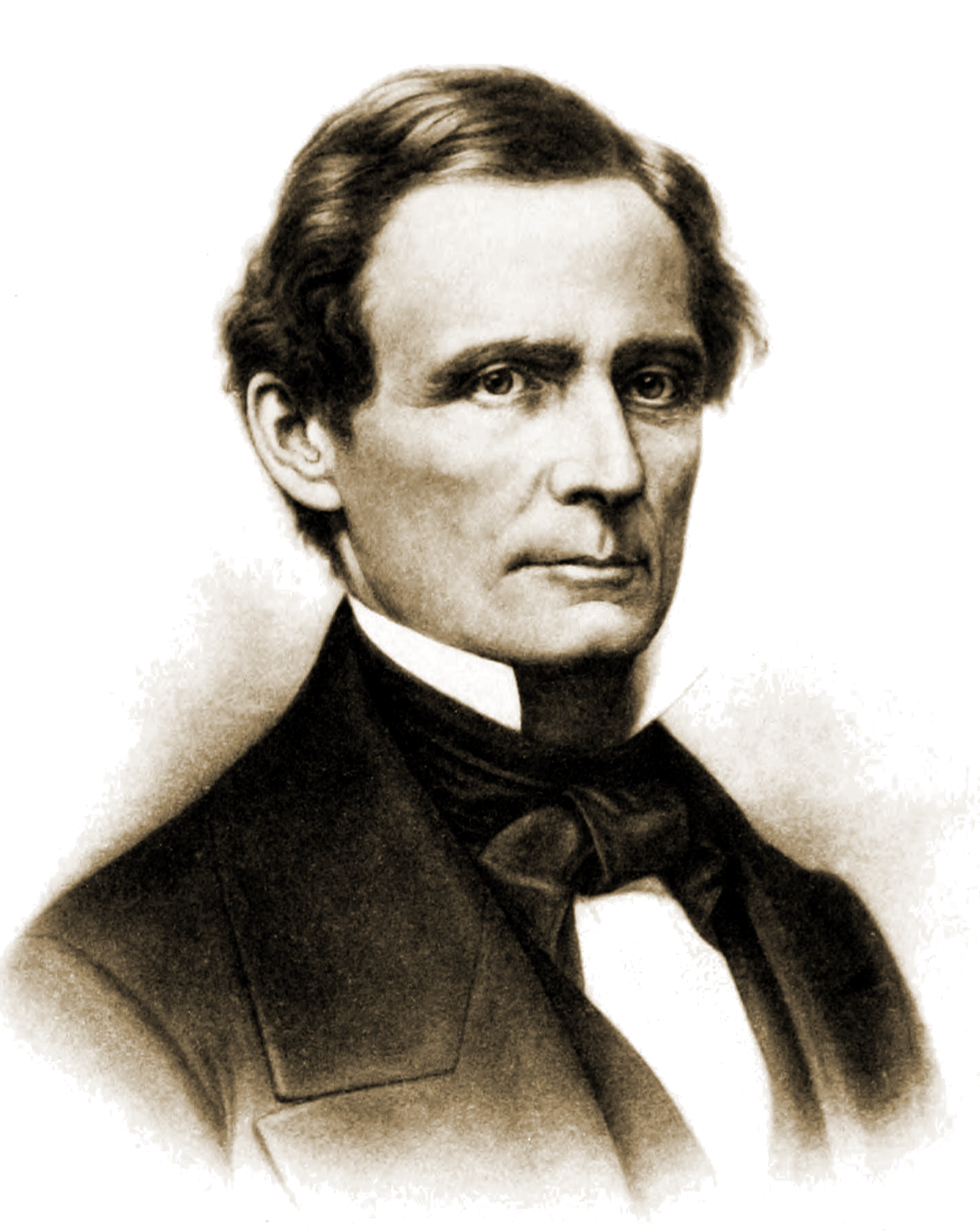
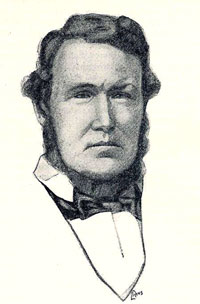
Thanks to S. C. Gwynne’s excellent new book, Empire of the Summer Moon: Quanah Parker and the Rise and Fall of the Comanches, the Most Powerful Indian Tribe in American History, Neighbors (pictured above) has been on my mind again. (Several years ago I actually thought I might try to write a biography of him, but eventually the impulse passed.) I guess I’ve always had a soft spot for those who try, against all odds, to do the right thing, and Neighbors certainly qualifies.

Born in Virginia in 1815, he was orphaned at the age of four and raised by a guardian. He arrived in Texas in 1836, after a couple of years in Louisiana, and from 1839 to 1841 served as assistant quartermaster and acting quartermaster of the army of the Republic of Texas. He served under John Hays during the Mexican War and was taken prisoner in San Antonio by Gen. Adrián Woll in 1842. After his release in 1844, he became the republic’s agent to the Lipan Apaches and Tonkawas; in 1847, after Texas became part of the United States, Neighbors received a federal appointment as Texas commissioner of Indian affairs.

This was not an easy position. As Mike Campbell, the dean of Texas historians, notes in his magisterial Gone to Texas: A History of the Lone Star State, the federal government was virtually powerless to stop white settlers from occupying land ostensibly belonging to the Indians, because Texas, uniquely among the United States, retained ownership of its public lands when it joined the union; thus, federal law did not apply on the lands where the Indians lived, and the state seemed unable or unwilling to keep land-hungry white settlers from trespassing. As the Penateka Comanche chief Buffalo Hump told Neighbors, with some asperity, “For a long time a great many [white] people have been passing through my country; they kill all the game and burn the country, and trouble me very much.” Neighbors noted in March 1848 that this persistent trespassing “must necessarily and inevitably lead to serious difficulty.”

Moreover, Neighbors’ distaste for violence was out of step with public sentiment. He tried to negotiate the return of Cynthia Ann Parker, the most celebrated Indian captive of them all (and the mother of Quanah Parker), but the Comanches rebuffed his efforts; Neighbors reported to his superiors in Washington that “I am assured by the friendly Comanche chiefs that I would have to use force to induce the party that has her to give her up.” (Cynthia Ann was unwillingly returned to white civilization in 1860, when Texas Rangers under Sul Ross accidentally captured her during a raid on a Comanche encampment on a tributary of the Pease River in north Texas.)

Neighbors, a Democrat, lost his federal job after the Whig Zachary Taylor was elected president in 1848, but was reappointed when Franklin Pierce reclaimed the White House for the Democrats four years later. (In the meantime, Neighbors found time to lead an expedition that established a trail between San Antonio and El Paso, part of which was later used by the Butterfield Overland Mail; organize El Paso County; marry Elizabeth Ann Mays in Seguin; and serve in the state legislature.)

Neighbors was thus part of the vast machinery that slowly but inexorably (and often violently and duplicitously) squeezed the Indians off their ancestral lands, clearing the way for white occupation of the American west. But Neighbors was different from most of his fellow Indian agents: he treated the Indians with respect, and stubbornly defended them against the accusations, frequently fabricated, of land-hungry settlers who coveted the land set aside for reservations.

Needless to say, this was not a popular stand in Texas, and Neighbors made many enemies among his fellow whites. In the mid-1850s, he decided that the only way to end the escalating tensions and violence was to establish reservations beyond the existing line of settlement. He finally succeeded in getting Secretary of War Jefferson Davis to authorize the establishment of two reservations on the upper Brazos. Neighbors hoped to convince the previously nomadic Indians to settle down and become farmers—a shockingly misguided, if not downright stupid, notion, and one that was clearly doomed to failure. As it was, less than five hundred of the Penateka Comanches (only about a third of the band’s entire population) moved onto the Clear Fork Reservation, at Camp Cooper in Throckmorton County. About a thousand other Indians, mostly Caddos and Wichitas, moved onto the Brazos Reservation, south of Fort Belknap in Young County.

And then, of course, the line of white settlement, moving inexorably westward, reached the upper Brazos, with predictable results. Whites who coveted the land began blaming the reservation Indians for the depredations committed by those who had refused to move onto the reservations. The loathsome John R. Baylor, who had been fired as an agent on the Clear Fork Reservation after feuding with Neighbors, became the editor of a virulently anti-Indian newspaper called The White Man and pledged himself to exterminating the Indians; toward that end, he called for, and even organized, violence against the reservation Indians. While acknowledging that the residents of the Brazos and Clear Fork reservations were more sinned against than sinning, the government finally concluded that enough was enough, and decided to end the experiment.

In the summer of 1859, therefore, Neighbors supervised the removal of all 1,500 residents of the Brazos and Clear Fork reservations to a new reservation on the Washita River in Indian Territory. (Among the contractors involved in this trek was the San Antonio freighter James Duff, soon to become a notorious figure in the Hill Country, as I wrote in an earlier post.) In August, after leading his charges across the Red River, Neighbors wrote to his wife that he had left “the land of the Philistines.” Upon his return to Fort Belknap a little over a month later he was murdered, shot in the back by Edward Cornett, a man he didn’t even know but who apparently despised his conciliatory attitude toward the Indians. In The Texas Rangers, Walter Prescott Webb reported the story that a group of Texas Rangers, outraged by Neighbors’ assassination, “went after Ed Cornett, and brought him to justice without the aid of judge or jury.”

I suspect that Neighbors himself, a man of honor and principle who believed wholeheartedly in the sanctity of the law, would not have approved. He seems to have been one of those ostentatiously virtuous men who manage to alienate and offend their fellows while living unimpeachable lives; perhaps the rest of us simply can’t stand being reminded how far short of the mark we fall. In fact, Neighbors may have had more than a whiff of self-righteousness about him. In Empire of the Summer Moon, Gwynne says that Neighbors’ behavior as Indian agent was characterized by “earnest and well-meaning naïveté,” as opposed to the “pure hypocrisy” of many of his peers, which sounds like fairly faint praise. By attempting to stand in the way of Manifest Destiny, trying to turn the Penateka Comanches into farmers, and expecting the government to live up to the terms of its own treaties, Neighbors may have revealed himself as a fool. But we will never stop needing such fools, men and women who are unafraid to speak truth to power even at the risk of their lives, and God help us if they ever disappear entirely.

Jeez. I promise I’ll try to find something a little cheerier to write about next time.
—Martin


What we’re reading
Heather:
Wayne C. Booth, Modern Dogma and the Rhetoric of Assent
Martin: S. C. Gwynne, Empire of the Summer Moon: Quanah Parker and the Rise and Fall of the Comanches, the Most Powerful Indian Tribe in American History

Friday, June 11, 2010

Home with the armadillo: a love letter to Texas


Recently we and our three kids went to Martin’s native San Francisco to help celebrate his father’s eighty-fifth birthday. The five of us spent an afternoon walking along the cliffs of Point Reyes National Seashore, where the ground was springy, the wind was fierce, and in some spots along the trail we pushed through wildflowers up to our shoulders. Hawks wheeled through the cloudless sky, elk sunned in the lees of the cliffs, and the ocean’s shining hide swelled and stretched like the flanks of a well-groomed, self-satisfied, and very large cat. At one point, our son Tito turned to us and said incredulously, “You mean we had a choice between this and Texas?”

Yes, well. Despite Martin’s entertaining recent post on how he has come to terms with living in Texas, he has spent much of his time in the Lone Star State not entirely convinced that civilized life is possible here—certainly not from May to October, and frequently not after elections. I grew up spending summers in Colorado, where despising Texans is a competitive sport, and as a teenager and young adult I also got to spend time in places of unsurpassed beauty such as the highlands of Guatemala, the Swiss Alps, the Masai Mara, Paris, and the Canadian Rockies. And yet I love Texas and can’t imagine living anywhere else. Time for that apologia, son.

Some of my love of Texas is just an old bad habit. Many fine writers have noted how people stubbornly cling to the smells and sounds of their childhood, sensations that undermine the idea that time moves only into the future. Much of my first decade was spent in the then-unbroken woods just north of the San Antonio airport. The uncanny whinny of the screech owl, the languid moan of the mourning dove, the overpowering sweetness of mountain laurel at Easter, the loneliness of the north wind on a clear winter day: each time I experience these now I’m reminded that the girl who was gripped by them forty years ago is still inside me. She isn’t gone, despite all appearances to the contrary.

There’s more to it than nostalgia, though. Texas tells stories about itself, some of them true. While I know that many find this self-conscious tale-telling irritating—maybe even pathological—I find it sort of comforting. So maybe we actually lost the battle of the Alamo. So maybe the Texas Rangers weren’t a bunch of ethically ripped superheroes. So maybe every cowboy doesn’t have the soul of a poet. But there seems to be a (nearly) conscious yearning for the power of myth to work among us with these stories. Of course, there are stories Texans tell about themselves that I loathe: bigger is better, we should each of us be our own posse, it’s manly to kill animals with automatic weapons and spurn the meat—but this is a place that recognizes the power of stories to shape reality.

One of the stories told over and over in multiple variations is the power and variety of the land itself. One of my favorite signs is on Interstate 10 at the Louisiana-Texas state line. It reads something like this: Beaumont, 20 miles; El Paso, 937 miles. While I have lived only in Central Texas—in some ways the easiest part of the state to love—I’ve learned to respect and admire many of the landscapes between the ends, from east to west and from north to south. I make no claims to anything but the cursory knowledge that comes from road trips involving grumpy children – me and my siblings years ago, and more recently our own children. My parents drove us to Colorado every summer through the Panhandle; Martin and I chose instead to make our annual pilgrimage by way of Fort Stockton and then north through the Pecos wilderness. One hot summer day the gas tank light came on when we were halfway through the hundred inhospitable miles between Pecos and Loving, New Mexico. The prospect of running out of gas here at midday with a dog and several children concentrated the mind wonderfully and caused me to sweat through my clothes despite the car’s air conditioning. (We managed to make it to the next filling station.) We passed by multiple examples of the land’s indifference to human striving: we often threatened to abandon our squabbling children in Orla, an oil ghost town baked into dusty submission, if they didn’t behave. (It didn't help.)
We always planned our route back to Austin through Balmorhea and Fort Davis and, inevitably, a thrashing summer thunderstorm would force us off the highway—or so we assumed, since we couldn’t even see the highway through the mud on the windshield. But before the storm hit, you could see the Guadalupe Mountains to the west, and when we made it to Marfa and the high grasslands, we—well, some of us—were exhilarated by the wind and the shadows, by the pitilessness and delicacy of the Chinati Mountains.

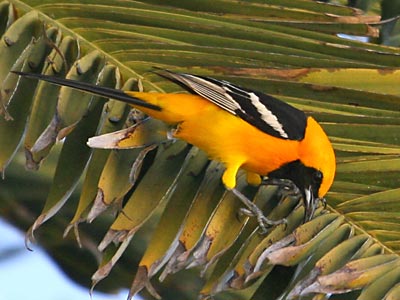
At the other end of the spectrum, I love the featurelessness of the south Texas brush country, an admittedly perverse passion. In March, the mesquite bloom neon green. At least as many things will sting, bite, or poison you as won’t. As our friend and mentor Hugh Fitzsimons of Thunder Heart Bison says, there are two seasons in south Texas: January and summer. At the rare watering holes, there are birds of remarkable beauty: green jays and hooded orioles and American widgeons. Once in April, on my way back from Piedras Negras and Eagle Pass, I drove through a migration of yellow sulphur butterflies that extended for dozens of miles. When I got back to Austin, probably a dozen people pointed out the grotesque beauty of my Suburban’s grille, which had become an extravagant collage of dead butterflies.

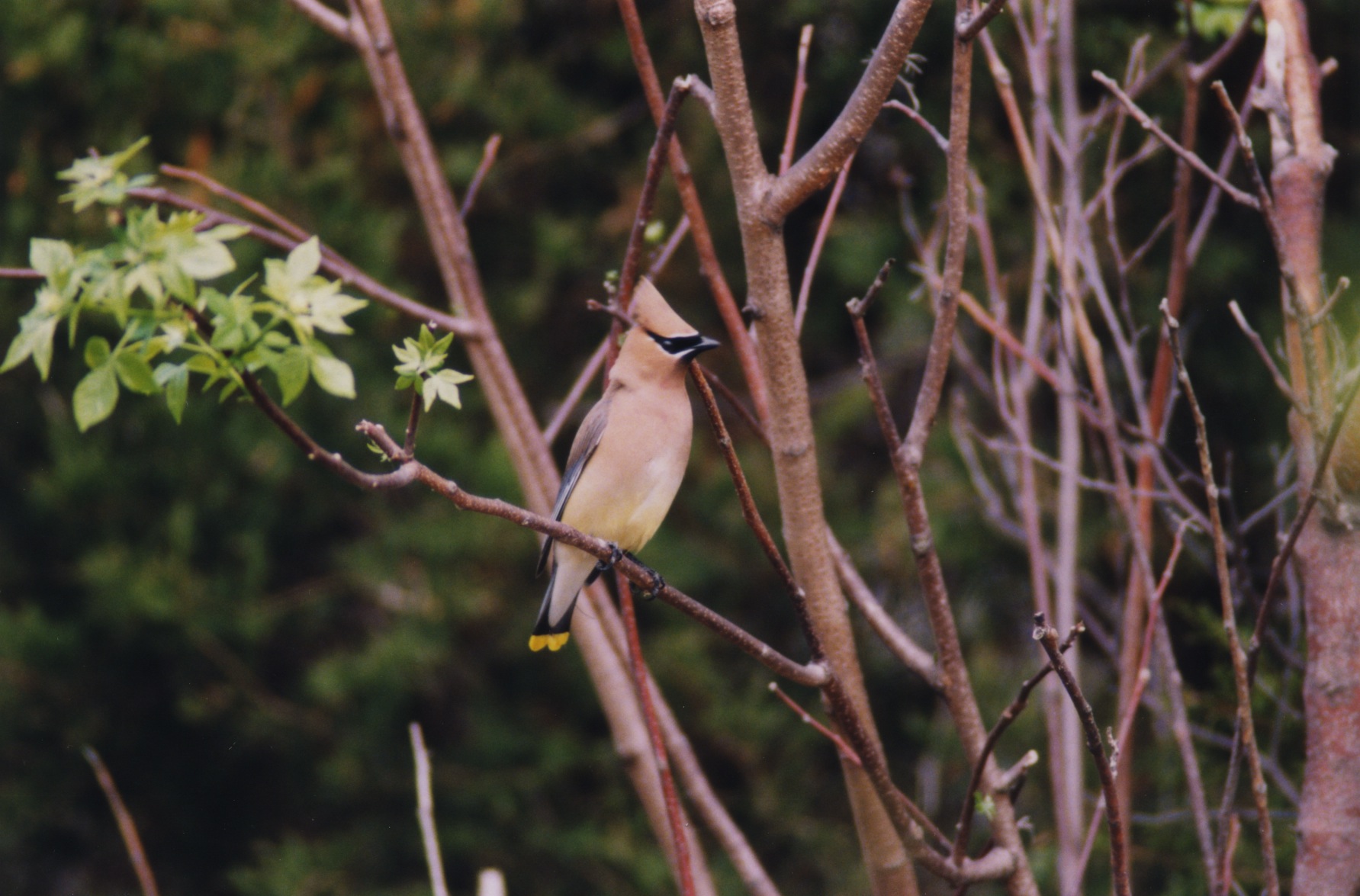
I’m leaving a lot of verses out of my Texas love song, but the last verse here has to be the one about the Hill Country. Loving the Colorado Rockies as much as I love any landscape, I’ve been trained to seek out views, to climb and pant and strain and exult upon reaching the summit. Well, the Hill Country upends that paradigm. Once you make it to the top of the hill—at least at Madroño—the landscape sinks into an unexpected anonymity. The personality of the Hill Country is in its draws and canyons, the intimate interstitial places where oaks and pecans crowd together, and great slabs of limestone create undulating walls and pools, and ferns and cedar sage grow with the demure confidence of cloistered beauty. In February, the draws ring with the slurred chatter of hundreds of intoxicated robins and waxwings. The draws also snarl with the movements of feral hogs, coyotes, and mountain lions, and vibrate with the possibility of rattlesnakes on sunny shelves, the clatter of unseen hooves in caves and cedar brakes, and the songs of maddeningly invisible birds that suddenly move, shine, and disappear again before they can be named. The draws protect and expose, invite and terrify. You want stories? You’ll find them here.

So, son, I’ll be happy to spend time in California, especially in August, even if the locals make fun of how I talk and where I’m from. But I’ll always want to come home.
—Heather


What we're reading
Heather: Belden C. Lane, The Solace of Fierce Landscapes: Exploring Desert and Mountain Spirituality
Martin: Ian L. McHarg, Design with Nature

Friday, June 4, 2010

Listapalooza: top ten Texas movies


Yup, another one of those crazy lists. This time we thought we’d offer our ten favorite movies about (or set in, or somehow related to) Texas. Pass the popcorn, and turn off that damn cell phone!

Dancer, Texas Pop. 81
Giant
The Last Picture Show
Lone Star
Lonesome Dove (yes, we know it was originally a TV miniseries, but give us a break!)
No Country for Old Men
The Searchers
Tender Mercies
Terms of Endearment
The Three Burials of Melquiades Estrada

Bonus movie trivia: The iconic silent Western star Tom Mix, who claimed in his autobiography that he was born and raised on a ranch on the Rio Grande, was actually a native of Pennsylvania who never lived in Texas, though governor James Allred named him an honorary Texas Ranger in 1935.
—Martin


What we’re reading
Heather: Anne Fadiman, The Spirit Catches You and You Fall Down: A Hmong Child, Her American Doctors, and the Collision of Two Cultures
Martin: David Grann, The Lost City of Z: A Tale of Deadly Obsession in the Amazon

Friday, October 9, 2009

Bigfoot Wallace

Wallace Creek, which flows through Madroño Ranch, is named for Bigfoot Wallace, the legendary nineteenth-century Texas Ranger and Indian fighter who received a grant of 320 acres about five miles north of Medina in 1849. Wallace was celebrated as “the Daniel Boone of Texas,” and the stories of his exploits are plenteous and colorful. Some of them may even be true. Here’s a brief sampling:

William A. A. (Bigfoot) Wallace

William A. A. Wallace (1817-1899) weighed 13 pounds at the time of his birth in Virginia. He came west in 1837 to avenge the deaths of his older brother and cousin, who had been killed in the Goliad Massacre fighting against Mexico in the Texas Revolution; alas, the Battle of San Jacinto occurred before he left home, ending the conflict and eliminating, at least temporarily, his opportunity to “take pay out of the Mexicans.” When the schooner on which he sailed from New Orleans was caught in a violent storm, Wallace was the only person aboard, including the crew, who was not prostrated by seasickness; when they reached Galveston, he was the only one who did not have to be carried ashore.

In 1839, he unexpectedly came face to face with a Waco warrior on a narrow path on Austin's Mount Bonnell. Without taking time to aim, Wallace fired the rifle he had been carrying and the warrior, mortally wounded, fell off the cliff and into the Colorado River.

In 1842, Wallace volunteered for the ill-fated Somervell and Mier expeditions into Mexico; he was captured and survived a stint in the notorious Perote Prison. After returning to Texas, he joined the Texas Rangers and fought in the Mexican War.

Wallace was the first man to carry the mail from San Antonio to El Paso. Once, having been forced to walk many miles after losing his mules to Indians, he stopped at the first house he came to and ate 27 eggs before heading on into El Paso for a full meal.

Are all these stories true? Probably not. J. Frank Dobie wrote that “Wallace was as honest as daylight but liked to stretch the blanket and embroider his stories”—and Dobie certainly knew a bit about blanket-stretching. In the end, though, the factuality of the stories is immaterial. To quote the editor in The Man Who Shot Liberty Valance“This is the West, sir. When the truth becomes legend, print the legend.”
—Martin

What we’re reading
Heather: Austin American-Statesman comics (it’s been a tough week)
Martin: E. O. Wilson, Naturalist