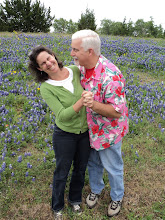
Showing posts with label walking. Show all posts

Friday, November 5, 2010

“Sit. Stay. Stay! I said STAY, dammit!”


Despite the temptation to give myself over to ululations for the natural world in light of the recent midterm elections, I will be brave and strong. In fact, I’ll look to our dogs for clues about how to move ahead in confounding times with good cheer, if not always with a lot of grace, and perhaps with only an occasional low moan or two.

In an earlier post, I considered the change my walking pace has undergone over the years. What has remained constant is the presence of dogs on these rambles. When I’m in Colorado, I usually borrow dogs from my sister or my father. (Walking with my mother’s dogs was often a little demoralizing; she worried aloud that bears and mountain lions might attack them, but she never expressed any anxiety for me.) At Madroño, I’ve walked with a long line of brave and stupid dogs who’ve both saved me from and almost led me to some gruesome fates.

The first was sweet Daisy, a lovely golden retriever/English setter mix and the mildest of dogs—until she was on the ranch, where she became Trained Assassin Daisy, Scourge of Armadillos! I had never known that armadillos had much to say until I watched Daisy in hot pursuit of one at the north end of the property; speedier than it looked, it made a loud whirring noise, as if it were wearing a propeller beanie. Daisy missed that one, but she got lots of others. We decided that she loved them because they were “crunchy on the outside, chewy on the inside.”


One Thanksgiving Day at the ranch, we were all—parents, siblings, children, dogs, friends—walking up the steep hill above the lake when Daisy proudly came galloping up to us with what she must have thought was an unusually hairy armadillo in her mouth. She was delighted until she dropped it at our feet and found that much of it remained in her mouth. (It was, of course, a porcupine.)

Sweet as she was, she allowed us to pull out many of the hundreds of spines in her snout, under her tongue, in her gums, etc., but the job proved to be too much for us. Even though it was a holiday, we tracked down a laconic vet in Hunt who said he wasn’t doing anything but watching football, so sure, bring her on in. When they had gotten Daisy anesthetized and yanked out the remaining spines, Martin said to the vet, “Well, I bet most dogs only make this mistake once, right?” The vet cocked an eyebrow and said, “You’d be surprised.” Thank heavens we haven’t been surprised since then.

A few years later, we found a black puppy with a broken back leg at the gate who turned out to be Phoebe, our now-blind life-guide, about whom Martin wrote admiringly a few weeks ago. Phoebe has been a wonderful walking companion, although one of her chief virtues—steadiness—may very well stem from the fact that her eyesight was never very good; maybe she just didn’t see all those armadillos and porcupines and deer. She did notice snakes, however, and helpfully made little sideways hops to notify me that I should step elsewhere.

But even the admirable Phoebe occasionally caused me dismay. Aside from her tragic and annoying moans whenever I stopped to listen for and look at birds, Phoebe proved to be susceptible to wayward influences like, for example, our next dog, Honey. One day, a couple of months after Daisy died, I was at our neighborhood pharmacy in Austin. A couple of local kids who worked there had brought in a dog they’d found on the downtown hike and bike trail, skittish and covered with fleas. Their mothers had told them to find it another home. I looked and saw a fluff-bomb with an absurdly curling tail who might have had chow and/or golden retriever and/or some mountain dog in her, and maybe a little Ewok too. The kids noticed that I couldn’t take my eyes off her and asked, “Do you want her?” “Yes,” I said, helplessly smitten. Martin said something else, which I can’t repeat here, when I returned home with toothpaste, shampoo, and a new dog, but Honey was irresistible.


She was also, alas, flightier than Phoebe. Once, after the kids and our friend Charles and I had scrambled up a beautiful and nearly inaccessible draw at the ranch, we came upon a herd of aoudads, who were as surprised to see us as we were to see them. Honey got a young aoudad in her sights and went after it, determined to tear its throat out, despite the shrieks and rocks we hurled at her. She backed the youngster into a fence while its mother threatened to eviscerate her with her great curling horns. Charles gallantly gave up his belt to get our darling murderous fluff-bomb under control, as Phoebe valiantly barked encouragement from a safe distance.

Another time, one of my favorite emergency-backup children and I went walking with Phoebe and Honey. We were in the canyon where we had once found a pair of rusted iron bedsteads and a rusted cast-iron Dutch oven, just poking around to see what other inexplicable but suggestive oddities we might find, when we heard a series of distinctively coyotic yips in the dense woods around us. In an instant, the dogs were gone, gone, gone. Despite our most beguiling efforts, Phoebe and Honey yodeled their way up to the top of the draw, and then Dave and I heard something else: snorts. Hogs. The woods were so thick we couldn’t see them, but we could hear them. Lots of them. Close by. Oh, great, I thought. How am I going to explain to my best friend that her sweet gangly son was carved up by feral hogs because my idiot dogs went gallivanting off to be eaten by a pack of coyotes? We all made it back to the house safely, but Phoebe’s irresponsible behavior still galls me.

And then another time, the dogs and I were out by ourselves when they, officers of ranch security, uncovered a plot by a couple dozen sows and piglets to disrupt our walk. Much barkage. Much squealing. Much inelegant scrambling by Someone to get into a tree and above tusk-level. Much hilarity in the kitchen after our return to think about Someone sitting in a scruffy little scrub oak for half an hour wondering if the dogs were still alive and if the pigs were really gone. Phoebe got a really scalding series of lectures for that lapse.

Generally speaking, though, Honey and Phoebe were fine walking companions. When Honey died of cancer a few years ago, we realized that she had been acting as Phoebe’s seeing-eye dog, because Phoebe’s deteriorating eyesight meant she was quite literally lost without her. Phoebe’s ranch rambles have ended, but Chula the Goggle-Eyed Ricochet Hound has become my new companion and is presenting all sorts of interesting challenges.


While she doesn’t seem to have Daisy’s and Honey’s ferocious streak (except, sadly, when it comes to chickens), she has a hair-trigger chase reflex and is speedy enough to catch a deer, as we learned to our amazement a few years ago (fortunately, once she finally cornered it in the angle of a fence, she seemed content just to lie there panting and stare at it), or anything else that roams the ranch. (She’s learned to ignore the bison, a fine survival strategy; despite their awkward-appearing bulkiness, bison are plenty quick themselves, and they definitely don’t like dogs.) I’ve started using a shock collar on her, to discourage her from rocketing off after hogs; I heard not too long ago about a woman whose dogs took off after a bunch of hogs, who then turned on the dogs, who then ran back to their mom, who ended up with sixty stitches in her leg from the pursuing porkers. Fortunately, Chula is a total wienie when it comes to pain, and the early results with the shock collar have been promising.

The adventures, clearly, will continue.
—Heather


What we’re reading
Heather: Wendell Berry, Hannah Coulter
Martin: Dennis Lehane, Shutter Island

Friday, August 20, 2010

“A cup of tea, a warm bath, and a brisk walk”


A path is little more than a habit that comes with knowledge of a place.
—Wendell Berry

If you are ready to leave father and mother, and brother and sister, and wife and child and friends, and never see them again; if you have paid your debts, and made your will, and settled all your affairs, and are a free man; then you are ready for a walk.
—Henry David Thoreau

I’m an enthusiastic walker and believe firmly in walking’s spiritual, psychic, and medicinal benefits. Whenever our kids were feeling puny, they were usually told that a cup of tea, a warm bath, and a brisk walk would put them in order—one of the reasons my family nickname is “Deathmarch.” “We’re DYING,” they’d moan. “You’ll feel better after a walk,” I’d respond. After tugging a drooping daughter on one particularly frustrating foot-dragging outing, we discovered she had mono. But I’m sure the walk did her good.

Both nature and nurture have gone into creating this momster that is me: my mother used to frog-march my three siblings and me up the mountains around the Roaring Fork Valley in Colorado, hoping to create the conditions for quiet evenings in the little cabin we stayed in every summer. “It didn’t work,” she admitted. “The four of you never got worn out, but I sure did.” (That’s a somewhat older me walking in Colorado in the photo above.)

So whether it’s genetics or training, I walk, and Madroño has been—and surely will continue to be—a treasure trove of most excellent walks.

When we first started going to Madroño, when our youngest was a wee babe and the other two not much older, sneaking out for walks made me feel both guilty and liberated: for a brief time, at least, I was free to look at, listen to, think about, or not think about whatever I wanted, without interruption. Now that our youngest is leaving for college, I still feel that solitary walks are a guilty pleasure, albeit one about which I’m increasingly less apologetic, but I still feel the sense of release that comes when I head out the door with at least one ecstatic dog who’s noticed I’ve put on my boots and my hat and picked up my binoculars. (Walking with unbelievably brave and stupid dogs will be undoubtedly be my next blog topic.)

For a long time, I went for what my dear friend Ellen calls the yodelaiEEoo pace of walking: trying to cover as much ground as quickly as possible, preferably headed up or down steep inclines. This is a really dumb way to walk in the Texas Hill Country, especially if you’re not on a road and even if you are. First of all, if you’re off-roading and going uphill, there’s not a lot of purchase, given the rocks, leaves, and cedar detritus that cover the heavily wooded hills. There’s even less purchase when you’re coming downhill, which can look a lot like skiing, especially if you’re a really spastic skier. But off-road descents can be easier than on-road ones: once, when our youngest was about five or six, I bullied her into walking down the steepest road on the ranch with me, after we had driven up. She was so little that her relatively slight weight couldn't overcome the force of incline + scree; the final equation was an extremely sore little heinie from having her feet shoot out from under her every three steps or so.

Aside from the falling down problem, when you’re moving at the yodelaiEEoo pace, it’s very easy to miss all the Interesting Stuff to be found—or to run straight into it when you’d really rather not. I was walking on one of the roads on top one morning in June many years ago at a yodelaiEEoo pace only to find myself entangled in an enormous—no, I mean ENORMOUS—spider web. After shrieking, dancing, frantically patting my head, pulling my clothes off, etc., I slowed down enough to notice these spiders. I still don’t know what kind they were—maybe golden orbs? As I walked along, twitching and squinting with every step I took, I saw their webs everywhere. Some of them spanned fifteen- to twenty-foot gaps. How had they done that? Parachuted? Hailed taxis to drive them across? Not only were the webs huge, but they were invisible until you were two inches away from them. They taught me to slow down AND to limbo.

Once the kids got big enough, we went for what we called scrambles, which involved walking up and/or down one of the many mysterious draws that pepper the ranch. Walking with children, of course, cannot occur at a yodelaiEEoo pace, at least not until they’re bigger and stronger than you and you start calling plaintively: “Guys? Guys? Hey, wait for me!” But while I was still bigger and stronger than they were, we loved to go poke around in the draws, especially with some of our family’s emergency back-up children. (We haven’t actually outgrown this.) The kids were the ones who found all the Interesting Stuff: the rocks that looked like Swiss cheese or hearts, the iron bedsteads alongside a cast-iron Dutch oven, the fossils, the arrowheads and stone tools, the tiny flowers and ferns hiding in the shade, the little caves, the really weird bugs, the secret springs. And the snakes.

I must say a word about walking and snakes. I’ve climbed up, fallen down, and poked through a lot (though not nearly all) of the property, and I’ve concluded that snakes don’t want to see me any more than I want to see them. I try to be sure I can see where I’m putting my hands and feet, and dogs (at least the smart ones, if any such exist) are often helpful, hopping sideways to let you know that you shouldn’t step on that spot. Robert, the intrepid ranch manager, sees them all the time, but he does things like drain and dig around in the bottom of ponds. I’ve been lucky so far, with one notable exception.

One warm November day my then-fifteen-year-old son and I went walking to the back of the property. For some reason, he had brought a shotgun, and as we were walking through a patch of tall grass, he stopped and said calmly but urgently, “Mom. Snake.” And one step ahead of me was the fattest, longest, ugliest water moccasin I had ever seen. As it slithered off, he shot it, securing his place in my heart (and my ankles, where I probably would have been bitten had he not been there) as a hero.

As I've become more interested in birds, my yodelaiEEoo pace has become a thing of the past, for a couple of reasons. One is the difficulty of trying to track the little boogers through thick live-oak canopies or heavy underbrush. Another is having to stop and listen to them over the clatter I make. Our beloved old black Lab Phoebe is too blind and creaky to walk with me now, but back in the day she hated these stop-and-listen moments; if I paused for more than a minute or two she commenced with a low and pitiful moaning that wouldn’t let up until we started again. Phoebe liked the yodelaiEEoo pace. But even she was stilled into silence that February day when we turned into a usually still canyon only to hear the voices of what turned out to be literally thousands of robins and cedar waxwings, feasting—and maybe drunk—on cedar berries. The noise level was on par with I don’t know what: maybe a middle school hallway after the last class of the year, but considerably less smelly.

In fact, much to my family’s astonishment, I’ve learned to walk places and then just sit, at least sometimes. Chula the Goggle-Eyed Ricochet Hound walks with me now that Phoebe can’t, and Chula is fine with just sitting. (She has other issues that will be revealed in my walking-with-dogs post.) Did you know that certain grasses snap and crackle when the sun first hits them on cold mornings? I must have spent twenty minutes on my hands and knees one morning trying to figure out what was making that noise. Bugs? The little creatures in my head? Nope, it was just the grass talking. We had a lovely conversation, while Chula looked on, quietly concerned.

Perhaps, finally, it’s time for a new family nickname.
—Heather


What we’re reading
Heather:
Rebecca Solnit, A Paradise Built in Hell: The Extraordinary Communities That Arise in Disaster
Martin: Ellen Lupton, Thinking with Type: A Critical Guide for Designers, Writers, Editors, & Students (still)

Friday, October 2, 2009

By shank’s mare across England


Last month Martin and his friend Bruce spent two weeks backpacking across northern England. Here’s his report:

Bruce, who’s been going to the U.K. every summer for several decades, is a veteran country walker; he’s done the famous Wainwright Coast-to-Coast walk and numerous other routes in England and Scotland. This time, however, we followed (more or less) a relatively new alternate route, set forth by a fellow named David Maughan in his 1997 book On Foot from Coast to Coast: The North of England Way, that took us from Ravenglass on the Irish Sea to Scarborough on the North Sea.

We covered 200 miles in two weeks, which works out to an average of just over 14 miles a day, though there was one three-day stretch when we totaled about 60 miles. We brought only what would fit in our packs, and made our way using Maughan’s book, various Ordnance Survey maps, and compasses. We only got lost a few times, and never terribly badly.

There are, however, limits to our masochism; we decided we were much too old to camp out, and whereas Maughan designed his route to bring the walker to a different youth hostel each night, Bruce rejiggered our itinerary to take us from inn to inn instead. (Well, we did spend one night at the Windermere Youth Hostel in Troutbeck, but it was surprisingly upscale—not at all like the hostels I remember from when I was, um, a youth.)

We both kept journals, but the impressions have already begun to blur: was it in Ainderby Quernhow or Cold Kirby that the village cats came and greeted us? Did we walk through the grounds of Jervaulx Abbey or Rievaulx Abbey? Was it Lowgill Viaduct or Dent Head Viaduct where I took that picture of Bruce walking under the archway? Was it the market square in Masham or Helmsley that was festooned with flowers?

Despite the tricks and lapses of middle-aged memory, however, I know the parts of England that we traversed in a way that I don’t know, say, Pflugerville or Round Rock, even though they’re just up the interstate from us in Austin. Having to make your way on foot, step by laborious step, forces you to pay attention to the land and the sky and the flora and fauna around you. I certainly don’t pretend to be an expert on the Lake District or the Yorkshire Dales, but I do feel connected to them in a way that I wouldn’t otherwise have experienced.

And, I might add, there’s something indescribably wonderful about limping into a pub late in the afternoon, after many hard miles of walking, and sitting down to a cool pint of Black Sheep ale or Strongbow cider. I drink a fair amount of beer here in Texas—it’s about the best way I know to beat the heat of a Texas summer—but during our time in England, we felt like we’d really earned it.

—Martin

What we’re reading
Heather: William Boyd, Restless
Martin: James Montague, When Friday Comes: Football in the War Zone