Friday, February 19, 2010

Massachusetts, part III: take a walk on the wild side


A Very Long Time Ago, my mother brought home a Peter Max-style poster with this quotation from Henry David Thoreau: “In wilderness is the preservation of the world.” Each time we moved, its reappearance was an indication that I was home again despite the bewildering newness of my surroundings. Thanks to this poster, I associated “wilderness” with “home.”

During our recent and ongoing Thoreau binge, I discovered, disconcertingly, that the poster has it wrong. The quotation comes from Thoreau’s essay “Walking,” initially delivered as a (very long) lecture in 1851 and published posthumously in the Atlantic Monthly in 1862. “I wish to speak a word for nature, for absolute Freedom and Wildness, as contrasted with a freedom and Culture merely civil,” he begins. Walking is civilized humanity’s entrée into nature, but Thoreau’s notion of walking is highly particular: “I have met with but one or two persons in the course of my life who understood the art of Walking, that is, of taking walks, who had a genius, so to speak, for sauntering....” For Thoreau, to walk in nature was to be a pilgrim, a sainte-terrer,” simultaneously seeking the holy land and already graced: “It requires a direct dispensation from heaven to become a walker.” Clearly, according to Thoreau, hoofing it to the neighborhood grocery store to pick up a loaf of bread does not qualify as walking.

Nor does walking have anything to do with exercise or taking a break. Walking requires attention. “[I]t is of no use to direct our steps to the woods, if they do not carry us thither. I am alarmed when it happens that I have walked a mile into the woods bodily, without getting there in spirit.... The thought of some work will run in my head, and I am not where my body is; I am out of my senses.” Rather, he says, “you must walk like a camel, which is said to be the only beast which ruminates when walking.” (That’s a joke, I think, but even if it’s not, it ties in nicely with Martin’s post from last week.)

Thoreau found that his preferred direction for a walk was almost always southwestward. “It is hard for me to believe that I shall find fair landscapes or sufficient Wildness and freedom behind the eastern horizon.... I must walk toward Oregon, and not toward Europe.” There is something specifically American in his way of walking, and he predicts that walks through the American landscape will form the American soul: “I trust that we shall be more imaginative; that our thoughts will be clearer, fresher and more ethereal, as our sky—our understanding more comprehensive and broader, like our plains – our intellect generally on a grander scale, like our thunder and lightning, our rivers and mountains and forests—and our hearts shall even correspond in breadth and depth and grandeur to our inland seas.”

He has nothing against civilization, culture, education, the arts, but he felt that they all rely on something unexpected: “The West of which I speak is but another name for the Wild; and what I have been preparing to say is, that in Wildness is the preservation of the world.”

Here is where this Thoreauvian saunter has led us, gentle reader—back to that poster. In Wildness, not wilderness, is the preservation of the world.

I think the distinction is enormously important. “Wilderness” implies an external state; “wildness” is as easily internal as external. Thoreau didn’t want to erase human culture; rather, he sensed that it required wildness, both psychic and physical, in order to flourish.

In one of those beneficent coincidences, I put down Thoreau’s essay a couple of Sundays ago and discovered an article in the New York Times Magazine entitled “Is There an Ecological Unconscious?” The article described a somewhat inchoate field of study in which a clear link is made between human mental health and the health of wild nature. Glenn Albrecht, a philosopher and professor of sustainability at Murdoch University in Perth, Australia, has coined the term “solastagia” to designate “the pain experienced when there is recognition that the place where one resides and that one loves is under immediate assault... a form of homesickness one gets when one is still at home.” A growing number of psychologists agree with Albrecht’s assertion that there is a direct connection between environmental degradation and mental illness. One of them calls not just for intact ecosystems that include large predators but for a “re-wilding of the psyche,” a term perhaps more appealing to poets and transcendentalists than to funders of academic research.

It’s an interesting proposition. What does a re-wilded psyche look like? In his book Monster of God: The Man-Eating Predator in the Jungles of History and the Mind, David Quammen muses on the merits of what he calls “alpha predators,” among them lions, grizzly bears, Nile crocodiles, reticulated pythons, and white sharks. He considers mythical creatures as well, particularly Leviathan as he appears in the book of Job. In examining this uncomfortable perspective on humanity as meal instead of master, Quammen wants us to consider the crucial role this perspective has played “in shaping the way we humans construe our place in the natural world.” In short, it’s important for us to know ourselves as part, not masters, of the food chain. Why? For the same reason God beats Job over the head with questions about Leviathan: who can tame such a furious beast? Can Job? Duh, no. The man-eaters remind us of the life-promoting necessity of humility. As dangerous as they are, the destruction of man-eaters, or even their relegation to zoos, would be more dangerous: we might thus be further encouraged to behave as if we were masters of the universe—a time-tested guarantee for misrule if there ever was one.


A human psyche that resonates with, or trembles at, the roars of actual alpha predators is likely to be awake in a particular way, awake to its own contingency. (If you haven’t read Mary Oliver’s “Alligator Poem,” now is definitely the time to do so.) Years ago, walking in the back reaches of Madroño Ranch, Martin and I heard the unmistakeable scream of a mountain lion. I’ve never reentered that canyon—especially when I’m alone—without taking a deep breath.

So back to the misquotation. As much as I love that old poster, and as vital as I think wilderness is, I think Thoreau got it right. Without access to wildness, without knowing the necessity of bowing before it, we cease to be fully human. And if we can’t fully inhabit our humanity, what home is left for us?
—Heather

What we’re reading
Heather: John Pipkin, Woodsburner: A Novel
Martin: Philip B. Kunhardt III, Peter W. Kunhardt, and Peter W. Kunhardt Jr., Lincoln, Life-Size

Friday, February 12, 2010

The Great Texas Camel Experiment


Susan Orlean’s wonderful story on mules in the military in this week’s issue of The New Yorker mentions one of my favorite, and most unlikely, episodes of Hill Country history: the U.S. Army’s Great Texas Camel Experiment of the 1850s.

Ultimately, the experiment was a failure; in Orlean’s words, “The camels were superior in terms of strength, but they were vicious, tended to cough up foul-smelling chunks of food, and made horrible groans and roars that terrified the horses.” Still, enough of the beasts went AWOL that for several decades unwary sojourners in the American Southwest occasionally found themselves face to face with a living, spitting embodiment of Oriental exoticism.

Before the Civil War, much of Texas was considered to be part of the “Great American Desert,” a vast area of the Southwest that was still largely uninhabited and considered unsuitable for agriculture. American expansionism was about to prove that characterization wrong, at least in the short term, though Timothy Egan’s terrific book The Worst Hard Time: The Untold Story of Those Who Survived the Great American Dust Bowl vividly describes the horrific long-term result. But in the mid-nineteenth century, the War Department had to figure out a way to protect settlers and supply lines in this fearsome territory, and decided that using camels, instead of horses or mules, to carry troops and freight might be one way to do so.

The story of the Texas camel experiment actually begins in Florida, where Col. George H. Crosman apparently first thought about using camels for military purposes as far back as 1836. Crosman eventually asked Maj. Henry C. Wayne to look into the idea, and Wayne eventually reported to Secretary of War Jefferson Davis that the experiment would cost a mere $30,000. Congress duly authorized the expenditure in March 1855, and a little over a year later, on April 29, 1856, the naval storeship Supply arrived in Indianola, Texas, carrying thirty-three of the beasts (both one-hump Arabians and two-hump Bactrians), including one calf that had been born at sea, and three Arabs and two Turks whose job it would be to tend the creatures. The crossing had not been easy; the crew had to tie the camels to the deck during storms so they wouldn’t slide overboard, and the animals proved to be susceptible to seasickness.

On June 4, Wayne finally started his exotic caravan westward toward Camp Verde, south of Kerrville, pausing in Victoria to have the camels clipped. The industrious Mrs. Mary A. Shirkey of that town spun and knit a pair of camel hair socks as a gift for President Franklin Pierce, but Pierce reportedly found them so foul-smelling that he refused to wear them.

Wayne put the camels to work ferrying supplies between Camp Verde (a little over ten miles east of the future site of Madroño Ranch, as the crow flies) and San Antonio, with encouraging results. A second boatload of camels arrived in 1857, and some made the long trek to new quarters in California. An officer who led a caravan to the Big Bend country noted in his journal that the camels “performed most admirably,” adding that “No such march as this could be made with any security without them.”

Unfortunately, however, reports soon surfaced that the camels’ wide, soft feet, perfectly adapted for crossing desert sands in North Africa and the Near East, were not well suited to the rocky terrain of the the American Southwest. In addition, the soldiers were not fond of the camels, and vice versa; the officer who led the expedition to California noted that the beasts smelled bad and tended to bite or spit at the troops, and the horses and mules were unable to keep up with them.

Eventually, thanks in part to the complications brought on by the Civil War, the army decided to get out of the camel business. Some of the animals were sold to zoos, circuses, and mine operators. Others were simply turned loose to wander the Southwest; in 1885, the five-year-old Douglas MacArthur was terrified when he unexpectedly encountered one of the unlikely beasts near an army fort in New Mexico. Ten years later, the San Francisco Chronicle noted that Many a passenger on the Southern Pacific railroad trains has had a sight of some gaunt, bony and decrepit old camel away off in the distance.” Today, the last of the original camels has long since disappeared, though a metal statue in front of the Camp Verde General Store commemorates their presence, and the Texas Camel Corps, a dedicated group of enthusiasts, keeps a number of the animals for pack trips, commercials, Christmas pageants, and the like.


Medina’s Early Days, one of the late Dorothy Hatfield Ferguson’s books of local history, includes the reminiscences of James Washington “Okra” Walker, who worked with the camels at Camp Verde. Walker was born in 1847, and in 1862, with the Civil War underway, decided to join the army and have a share in the fighting. Instead, much to his chagrin, the fifteen-year-old orphan found himself assigned to take care of the camels at Camp Verde. Looking back on the experience years later, Okra grudgingly admitted that the camels did have some advantages over other beasts of burden, principally “the ability to do without water for an incredibly long time,” but he never really warmed up to them, noting that “they weren’t as easy to look at as a good cuttin’ pony.” Moreover, they seemed much given to malingering, held grudges for any perceived mistreatment, and had the habit of spitting on those they didn’t like. “They also frightened the mules and horses and generally looked mighty out of place.”

When the experiment finally ended, Okra Walker, for one, was not sorry to see them go: “I guess I’d fooled with those beasts so long, and was [so] disgusted that I’d had to herd camels instead of fighting in the Civil War, that I never as much [as] asked one question pertaining to those camels or the buyer’s plans for them.... When those camels left Camp Verde, they went out of my life forever. I shouted after them, ‘Thank God you’re gone!’”

We have no plans to acquire camels for Madroño—I’m pretty sure Robert, our manager, would kill us if we did—but I like to imagine them roaming the ranch’s hills like the aoudads and other fugitive exotics we occasionally see today. And who knows? Perhaps the great-grandchild of some Arabian or Bactrian import is still out there, running free and gazing down at us with that inimitable camelicious mixture of disdain and amusement, sneering, “I’ll never be your beast of burden.”
—Martin 


What we’re reading
Heather: Philip Pullman, His Dark Materials trilogy
Martin: Ted Gioia, Delta Blues: The Life and Times of the Mississippi Masters Who Revolutionized American Music

Friday, February 5, 2010

Massachusetts, part II: in defense of Thoreau


On our recent trip to snowy Massachusetts, as Heather told you last week, we carved out time for a pilgrimage to Walden Pond, just south of Concord, the very wellspring of American conservationism. Walden Pond, of course, is where that notorious crank Henry David Thoreau lived alone for two years in a tiny cabin he built himself on land owned by his friend and mentor Ralph Waldo Emerson, an experience recounted in his seminal Walden; or, Life in the Woodspublished in 1854.

Off the top of my head, I can think of no book or author more misunderstood, then or now. Even Emerson missed the point; in his eulogy of Thoreau, the Sage of Concord said that his protégé’s lack of ambition meant that, “instead of engineering for all America, he was the captain of a huckleberry party.” To this day, many dismiss Thoreau as either a misanthropic hermit or a parasitic hypocrite. 

In fact, while he may indeed have been a little weird, and stubborn as hell, he was far more humane, even charming, than common opinion would have you believe. And, far from lacking ambition, he intended his book to be a revolutionary manifesto, pointing to an entirely new way of thinking amid the hustle and bustle of industrializing, materialistic nineteenth-century America. In Walden he seeks “to brag as lustily as chanticleer in the morning, standing on his roost, if only to wake my neighbors up.” Robert Sullivan calls the book (appropriately, given its context) “a machine, a device intended to charge and change the reader, rather than incite a withdrawal from society,” and this is an important point. Thoreau wanted to change the world, not ignore it. His cabin was, as he noted, only a mile and a half from the middle of Concord, and the world was constantly impinging on him, in the form of curious friends, wandering woodcutters, runaway slaves, errant fishermen, and, perhaps most obtrusive of all, the nearby railroad. That’s why I love my photo of Walden Pond at the top of this post: you can see the beauty of the woods, but you can also see the contrail of a plane passing overhead, a reminder that this place is not in fact as removed from the world as it might seem. 

I think Thoreau would have appreciated the juxtaposition. He was profoundly countercultural, but always engaged. His advice in Walden is not to retreat from the distractions of modern life, but to confront them and face them down. He was a profoundly patriotic man—I do not believe it was a coincidence that he moved into his cabin on July 4—and he deplored the degenerate materialism of his time; his residence beside the pond, and the book that resulted from it, were intended to remind his countrymen of the first principles of the nation’s founding fathers.

If you haven't actually read Walden, I highly recommend it. I was assigned it in high school, but found it so impenetrably, unutterably dull that I can't recall if I ever made it past the first page. I picked it up again recently and found it startlingly lively, occasionally maddening, and often hilarious. Why did no one ever tell me that Thoreau was so funny?

For example, early in the book’s first chapter, rather unpromisingly entitled “Economy," he disarmingly admits that much of what is to follow is self-centered, pointing out that “I should not talk so much about myself if there were any body else whom I knew as well.”

And here he is on his neighbors’ reluctance to venture out to Walden Pond at night: “I believe that men are generally still a little afraid of the dark, though the witches are all hung, and Christianity and candles have been introduced.”

And then there’s this, possibly my favorite passage in the book, on the disadvantages of living in a cabin:
One inconvenience I sometimes experienced in so small a house, the difficulty of getting to a sufficient distance from my guest when we began to utter the big thoughts in big words. You want room for your thoughts to get into sailing trim and run a course or two before they make their port. The bullet of your thought must have overcome its lateral and ricochet motion and fallen into its last and steady course before it reaches the ear of the hearer, else it may plough out again through the side of his head.
And yet, despite the flashes of shrewd New England wit (and as the critic and naturalist Joseph Wood Krutch noted, “He meant his jokes and was never more serious than when he was being funny”), I cannot think of Thoreau without a tinge of sadness. He must have been, in many ways, an exasperating and difficult man, but I suspect he never really understood why other people found him so. He tried courageously to say exactly what he meant, and believed sincerely that what he said could help make the world a better and happier place, if people would just pay attention. Alas, they didn’t; Thoreau’s writings were notoriously poor sellers during his lifetime, and Walden took five years to sell out its first printing of two thousand copies.

In his 1842 lecture "The Transcendentalist," Emerson admitted that “we have yet no man who has leaned entirely on his character, and eaten angels’ food; who, trusting to his sentiments, found life made of miracles; who, working for universal aims, found himself fed, he knew not how; clothed, sheltered, and weaponed, he knew not how; and yet it was done by his own hands.”

Thoreau began his sojourn at Walden Pond three years later, and if he didn’t quite fulfill his mentors absurdly tall order—after all, his mother still brought him food and did his laundry, and he dined frequently with the Emersons—he probably came as close as anyone, before or since. “In the long run men hit only what they aim at,” he wrote in Walden. “Therefore, though they should fail immediately, they had better aim at something high.” American literature has known few better marksmen.
—Martin

What we’re reading

Friday, January 29, 2010

Massachusetts, part I: of books and houses and hospitality


On our very brief trip to Massachusetts last weekend, Martin and I drove straight from Boston’s Logan Airport to Concord in hopes of glimpsing one of the hotbeds of American utopian thinking before the winter sun set. Driving through snowy woods and by quaint (and probably drafty) colonial homes, it was clear that we were a loooong way from Texas.

On the plane, Martin was reading a compilation of Henry David Thoreaus writings. Martin reading is not an unusual sight. Noteworthy was the fact that he was underlining in the book, something I have never seen him do in nearly thirty years of pretty continuous association. (Our ongoing discussion" over the propriety of marking up books could well be the subject of another blog.) For the first time, he just couldnt help himself; Thoreaus aphoristic and slyly funny prose begged for some kind of physical interaction. In the same vein, he required me to listen or read for myself what so tickled him. Thoreaus spirit, utterly inaccessible to Martin (and me) when Walden was assigned reading in high school, was suddenly uncontainable and had to be shared.

I found this slightly annoying. The snippets I heard and read clashed with what I was reading on the plane, Lorrie Moore’s A Gate at the Stairs, a somewhat dystopian novel about post-9/11 life in a Midwestern university town, narrated by a woman student raised on a nearby farm by early organic-minded parents. Thoreaus mid-nineteenth century voice felt arch and artificial in comparison and the contrast was grating, like walking from a quiet, dim study into the brightly lit noise of a teenager’s room. But the shock of seeing Martin underline in a book stunned me into keeping, just barely, a receptive ear.

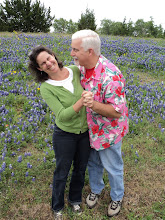
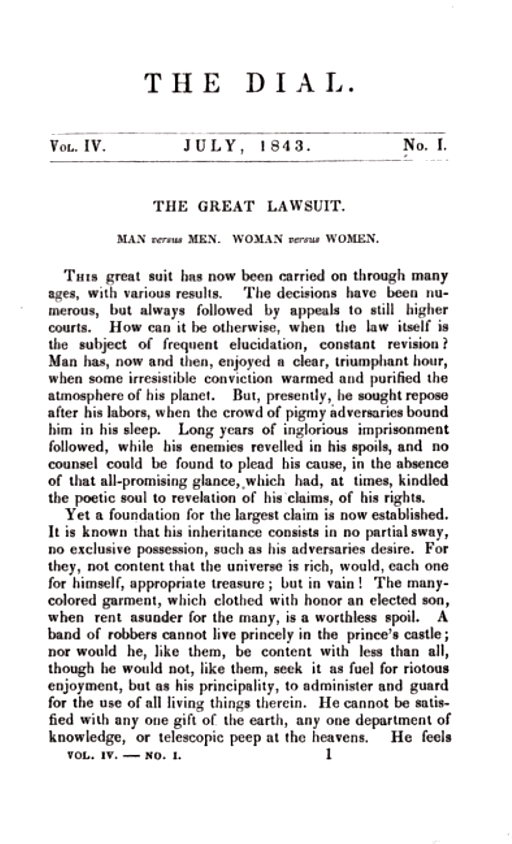
We conquered the tangle of highways to Concord with only a few wrong turns. Walking into Orchard House, the Alcott home (Louisa May, Bronson, et al.), at 2:58 and knowing that it closed at 3 (thats me approaching the front door in the photo above), we played the weve-traveled-so-far card and won a wonderful private tour with a sympathetic and knowledgeable docent. Although Little Women may have a sentimental ring to twenty-first-century ears, it resonates with the profoundly utopian thinking—and physically taxing reality—of the world Louisa May Alcott lived in. Orchard House showed signs of both worlds: charming eccentricities (Louisas sister Mays sweet pre-Raphaelite pencil drawings on her bedroom walls) and structural frailties (buckling floors, chilly drafts). Bronson Alcott, Louisas father, was a visionary of the first order, rarely concerning himself with such practicalities as earning enough money to feed and shelter his family, and thereby propelling Louisa into the unusual role of supporting her family financially with her writing. As a teacher, Alcott developed a race- and gender-neutral child-centered pedagogy that most people found scandalous, even immoral, and that most Americans today take for granted. He helped establish a commune, Fruitlands, an early back-to-nature effort, which failed quickly but interested many other questing spirits of the time, Ralph Waldo Emerson, Nathaniel Hawthorne, and Thoreau among them. He was a frequent contributor to the Transcendentalist journal The Dial and was often mocked for his opaque prose, and yet the influence of American Transcendentalism, especially in the environmental movement, is still alive and kicking today. It was a tour worth taking and a house worth visiting.


From the Alcott home we drove to Walden Pond in the waning light. Ive heard many people express the same dismay on seeing Walden Pond they do when they see the Alamo (its so small!), but its several times the size of the lake at Madroño Ranch, so I wasnt at all disappointed. We crunched through the snow along the edge, noting the space between the ponds ice and the shore while watching two men out on the ice doing something indecipherable with unidentifiable equipment. As the heatless sun began to sink behind the trees, we came to the spot where Thoreau built his cabin, now marked only by low concrete posts (see photo above), although his words remain carved on a nearby wooden sign: I went to the woods because I wished to live deliberately, to front only the essential facts of life, and see if I could not learn what it had to teach, and not, when I came to die, discover that I had not lived. As I stood there beating my hands together and stamping my frozen feet, I wondered if on a monochromatic winter afternoon like this Thoreau would have high-tailed it to Emerson’s house for a little warm food and company, as apparently he was wont to do.

Later, as we sat in a blessedly warm house in Wellesley, I began reading Martin’s volume of Thoreau and found myself beguiled, first by the slightly fustian voice of Joseph Wood Krutch, who wrote the introduction, and then by Thoreau’s own words, until Martin rather selfishly reclaimed his book. I went back to my literary farm girl, reading about the role of her father’s farm in her recovery from multiple heartbreaks.

This week, while waddling around Austin’s Lady Bird Lake (a body of water as beloved to me as Walden Pond was to Thoreau), I found myself thinking about Martin’s spontaneous overflow of powerful underlining and the odd stability of words, their capacity to be sturdy dwelling places despite their formless origins in the tohubohu of the human spirit. (Isn’t “tohubohu” a word you can live in? I do, actually, since it means chaos.) Martin’s invitation on the plane for me to join him in Thoreau’s house was a kind of evangelism, the best kind: a delighted discovery that clamors to be shared. Even though I was seated happily in Lorrie Moore’s house (which, with its love of place, is built on top of Thoreau’s) with all the doors closed and blinds drawn, Martin convinced me that the house Thoreau built was so splendid that I had to go in—which I did, grudgingly at first, but with increasing pleasure.

Hospitality from so many quarters: from the kind docent at Orchard House; between the walls of books; from my tickled husband; from the friend of a friend who opened her house to us; even in the cold empty space in Walden Woods marked off by the Massachusetts Department of Conservation and Recreation. Thoreau reached out from the past and invited us into its tohubohu, asking for our response and drawing from us a tiny new creation. Not bad for a crusty, allegedly misanthropic Yankee.
—Heather

What we’re reading
Heather: Billy Collins (ed.), Bright Wings: An Illustrated Anthology of Poems About Birds
Martin: Jonathan Gould, Can’t Buy Me Love: The Beatles, Britain, and America

Thursday, January 21, 2010

Kerrville’s Singing Brakeman


Long before the first annual Kerrville Folk Festival in 1972, the city was for a short time the home of “the father of country music.” James Charles (Jimmie) Rodgers, nicknamed “the Singing Brakeman” for his background on the railroads, was the first person unanimously elected to the Country Music Hall of Fame in 1961, and his “blue yodel,” heard most famously on “Blue Yodel No. 1 (T for Texas),” was hugely influential.

Rodgers was born in 1897 in either Meridian, Mississippi, or Geiger, Alabama, depending on which source you believe, and died of a lung hemorrhage in 1933 in New York City, but many folks don’t know that he lived in Kerrville, about fifteen miles north of Madroño Ranch, from 1929 to 1932. Back then, the state of Texas, and particularly the Hill Country, enjoyed a reputation for clean and healthful air—Kerrville was the site of the Thompson Sanatorium and the State Sanatorium for Negroes—and Rodgers moved there in hopes of curing, or at least alleviating, the tuberculosis that eventually killed him.

His father Aaron was a foreman on the Mobile and Ohio Railroad, but Jimmie was a born entertainer. (His mother Eliza died when he was only four.) By the time he was thirteen, he had twice run away from home to join the tent-show circuit. The first time, he stole some sheets from his sister-in-law to make a crude tent, reimbursing her with the money he earned before he was recaptured. The second time, he charged an expensive tent to his father, without his father’s knowledge. After that, Aaron Rodgers decided to keep a closer eye on his wayward son and got him a job as a water boy on the Mobile and Ohio. A few years later, thanks to his older brother Walter, who was a conductor on the New Orleans and Northeastern, Jimmie got a job as a brakeman on the same line. As it turned out, working on the railroad was the best possible preparation for his future career, as he learned a number of songs, as well as how to play guitar and banjo, from African-American rail workers while traveling the South. (He later recorded with black artists Louis Armstrong and Clifford Gibson.)

Rodgers married Carrie Williamson in 1920 and had two daughters, one of whom died in infancy, but any chance that he would settle into a conventional career with the railroad ended in 1924, when he contracted TB. Forced to retire from the New Orleans and Northeastern, he once again turned to show business. He organized a traveling show that performed across the southeast until a cyclone destroyed his tent. By 1927 he had settled in Asheville, North Carolina, perhaps in the belief that the mountain air would help his lungs. In Asheville, he worked briefly as a city detective, but the show biz bug had infected him as deeply as the TB bacterium. He performed on local radio station WWNC; recruited a band called the Tenneva Ramblers, which he renamed the Jimmie Rodgers Entertainers; and signed a recording contract with the Victor Talking Machine Company. At this point, things began moving very fast for Rodgers.

In August 1927, he traveled to Bristol, Tennessee, for the legendary “Bristol Sessions,” at which the Carter Family also made their first recordings. His first recording, “Sleep Baby Sleep” backed with “The Soldier’s Sweetheart,” was released in October and was a moderate success. His next recording session, a month later in Camden, New Jersey, yielded “Away Out on the Mountain” and “T for Texas,” which sold half a million copies and made him a star. Jazz Age America, it seemed, couldn’t get enough of this skinny fellow with a plain-spoken vocal style so relaxed it makes Willie Nelson sound nervous by comparison. Between 1927 and 1933, Rodgers sold twenty million records and earned as much as $100,000 a year, but much of his income went to pay his medical bills, and he finally had to give up touring altogether.

Back in 1929, when Rodgers built a $50,000 mansion there, Kerrville was better known for mohair sheep than music; in fact, some called it the “Mohair Capital of the World.” A lot has changed since then—the number of sheep has dropped dramatically, while the human population has quadrupled, to more than 20,000—but “Blue Yodeler’s Paradise” still stands at 617 West Main Street. By 1932, however, Rodgers had moved to San Antonio, where he had a weekly radio show. He was dead within a year.


Kerrville should be proud that the Singing Brakeman once called the city home, albeit briefly. His music embodies the best aspects of our national life, bringing together many of the strands of American folk culture: black and white, southern and western, urban and rural. There aren’t many who have managed the same trick.
—Martin

What we’re reading
Heather: Lorrie Moore, A Gate at the Stairs
Martin: Timothy Egan, The Worst Hard Time: The Untold Story of Those Who Survived the Great American Dust Bowl

Friday, January 15, 2010

James Cameron, Alexis de Tocqueville, and the nature of nature


In a recent op-ed column in the New York Times, Ross Douthat examines the underlying values of James Cameron’s movie Avatar and links it to a tide of pantheism coursing through Hollywood in particular and America in general. As a nation, Douthat argues, we have almost from our inception tended to collapse distinctions and seek unity, a tendency Alexis de Tocqueville noted in the 1830s: “When the conditions of society are becoming more equal... [t]he idea of unity so possesses man and is sought by him so generally that if he thinks he has found it, he readily yields himself to repose in that belief. Not content with the discovery that there is nothing in the world but a creation and a Creator, he is still embarrassed by this primary division of things and seeks to expand and simplify his conception by including God and the universe in one great whole.” We Americans, it seems, are born to pantheism as the sparks fly upward.

Douthat believes that we should fight, or at least question, this impulse. He doubts whether nature actually deserves a religious response. The traditional monotheistic religions confront the problem of evil, struggling to reconcile a loving creator with suffering and death. Pantheism can't address this basic human concern, according to Douthat, because nature is suffering and death. Its harmonies require violence. Its ‘circle of life’ is really a cycle of mortality.” Religion, he believes, exists in part to pull self-conscious humanity, simultaneously of nature and outside it, out of this tragic cycle. Without religion—Christianity, for Douthat—there is no escape “upward,” only a downward abandonment of our consciousness. Pantheism leaves us with only dust and ashes.

Since the Madroño Ranch mission and vision statements (just to the right of this column) rest comfortably on a foundation of Christian pantheism—defined as finding God in all things—I cant help but respond. Here’s why I think Douthat's definition of Christianity and its relationship to the material world—i.e., nature—needs to be questioned.

Christianity arose at the confluence of two distinct and, in some ways, contradictory traditions: Judaism, which tended to see the divine as simultaneously transcendent and thoroughly enmeshed with created matter, and Platonism, which opposed the corruption of the material to the purity of the eternal. The Nicene Creed, adopted in 325, endorsed the latter view by asserting the doctrine of creatio ex nihilo, which asserts that creation did not arise from eternally preexisting materials and that God created the universe from scratch. 

The poetic cosmology of the creed, however, left room for multiple interpretations. My personal favorite comes from Maximus the Confessor (c. 580–662), who set the scene for Eastern Orthodoxy and declared that Jesus was the first person to become fully human and thus, paradoxically, divine. Jesus thereby reopened the clogged conduit between the created and divine realms, and his call to humanity is to live fully, as he did, into the image of the divine imprinted in all of us. Western Christianity, however, preferred a top-down model in which the initiative for divine-mortal interaction was exclusively unilateral, leaving humanity in the dust, so to speak.

I present this radically reductive, tongue-in-cheek summary to suggest that the relationship between God and creation (and humanity and the rest of creation) may be more complicated than some Western Christians (like Douthat) believe. Shortly after reading Douthat’s column, I read another recent New York Times article by Natalie Angier. In it, she describes research being conducted on the complexity of plants, specifically on their keen sensitivity to the environment, the speed with which they react to changes in the environment, and the extraordinary number of tricks that plants will rally to fight off attackers and solicit help from afar.... Says one researcher, Even if you have quite a bit of knowledge about plants, it’s still surprising to see how sophisticated they can be.” Attributes we’ve always ascribed to humans alone seem to be much more widely spread than anyone imagined, moving out of the animal kingdom, even. Using and eating plants may be a much more fraught enterprise than we’d supposed. If the right relationship between humans and animals has inspired a multigenerational series of philosophical and theological contortions, what will happen when we find that algae are, like us, just a little lower than the angels?

One of the things that’s becoming clear to this utter non-scientist and spastic theologian is that the created order becomes more intricate and surprising the more we study it, repeatedly requiring us to question assumptions that we had thought were beyond questioning. “Your job as a scientist is to find out how you’re fooling yourself,” says astrophysicist Saul Perlmutter. I would say this is true in most human endeavors, most particularly if you’re claiming knowledge of God. (Which I do all the time. I figure God has got to be a bossy oldest daughter, like me.) Does nature deserve a religious response? How can it not?

Douthat may have been saying that nature is not worthy of worship, but worship is not the only religious response available to us. According to many Christian thinkers (and doers), we are called to love even our enemies because they too are formed in the image of God. What might it mean to find the image of God outside the narrow confines of humanity? Surely we would need to love that image with the same constancy and self-discipline required to love our irritating fellow humans. Rather than trapping us in the tragic cycle of mortality, this kind of commitment—to love the natural world as we would love God, our neighbors, and ourselves—strikes me as precisely what leads to wisdom, even if it means collapsing traditional distinctions (sorry, Alexis!) between heaven and earth.
Heather

What we’re reading
Heather: Karen Armstrong, The Case for God (still!)

Friday, January 8, 2010

The Frontier Times and auld lang syne


Happy Belated New Year, O Faithful Reader! And what better way to belly up to a brand-new year (and decade) than by contemplating the past? And what better place to contemplate the past, both personal and communal, than the Frontier Times Museum in Bandera, Texas?

A stuffed two-headed goat; a dentist’s chair and equipment from the 1880s; dead fleas wearing tiny human clothes (magnifying glass provided); a cluster of melted nails from the Great Chicago Fire of 1871.

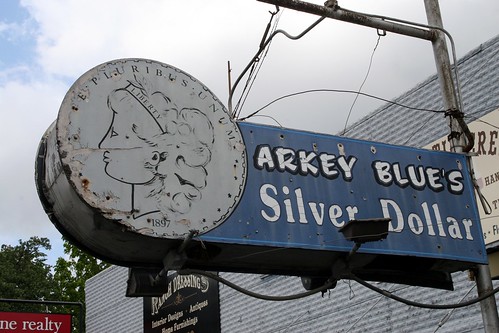
If you’ve never been there, you’re missing something special. Bandera, which likes to bill itself as “the Cowboy Capital of the World,” boasts a number of attractions: Arkey Blue’s Silver Dollar Saloon, where musical legends like Ernest Tubb, Hank Thompson, Willie Nelson, and Robert Earl Keen have been known to appear; the OST Restaurant (officially the Old Spanish Trail, but fondly known as the Old Sloppy Table), where you can dine in the John Wayne Room, a shrine to the Duke (who supposedly stopped in during the filming of The Alamo in 1960), or perch on a saddle at the bar; and numerous dude ranches, where you can try not to think about Jack Palance in City Slickers

But for my money the Frontier Times Museum beats them all hollow. You can talk about your Louvre and your British Museum, your Prado and your Uffizi, your Met and your MOMA, but the Frontier Times is pretty much my favorite museum ever. Wandering through it is like exploring your grandparents’ attic, if your grandparents happened to be eccentric and obsessive collectors of (mostly) Western memorabilia, and perhaps addicted to psychotropic drugs.

A diorama of the 1843 battle of Bandera Pass, using plastic cowboys and Indians; a photograph of John Wesley Hardin’s bullet-riddled corpse; the shrunken head of a Jivaro Indian woman; a map of Texas made out of rattlesnake rattles.

The Frontier Times Museum was the brainchild of J. Marvin Hunter, a newspaperman and amateur historian who founded the Frontier Times, a magazine dedicated to “frontier history, border tragedy, and pioneer achievement,” in 1923. The Frontier Times, which ceased publication in 2004, was a successor of Hunter’s Frontier Magazine, founded by Hunter’s father and published from 1910 to 1917; of this earlier publication, Hunter once wrote that its articles “are true in detail, though in some instances names and dates may be incorrect.”

Mrs. Louisa Gordon’s collection of 400 bells from around the world, with a pen-and-ink sketch of Mrs. Gordon’s grandfather’s house in England; a stuffed armadillo displayed beneath a hanging clarinet and sousaphone; stereoscopic views of the Taj Mahal, Acropolis, and Matterhorn.

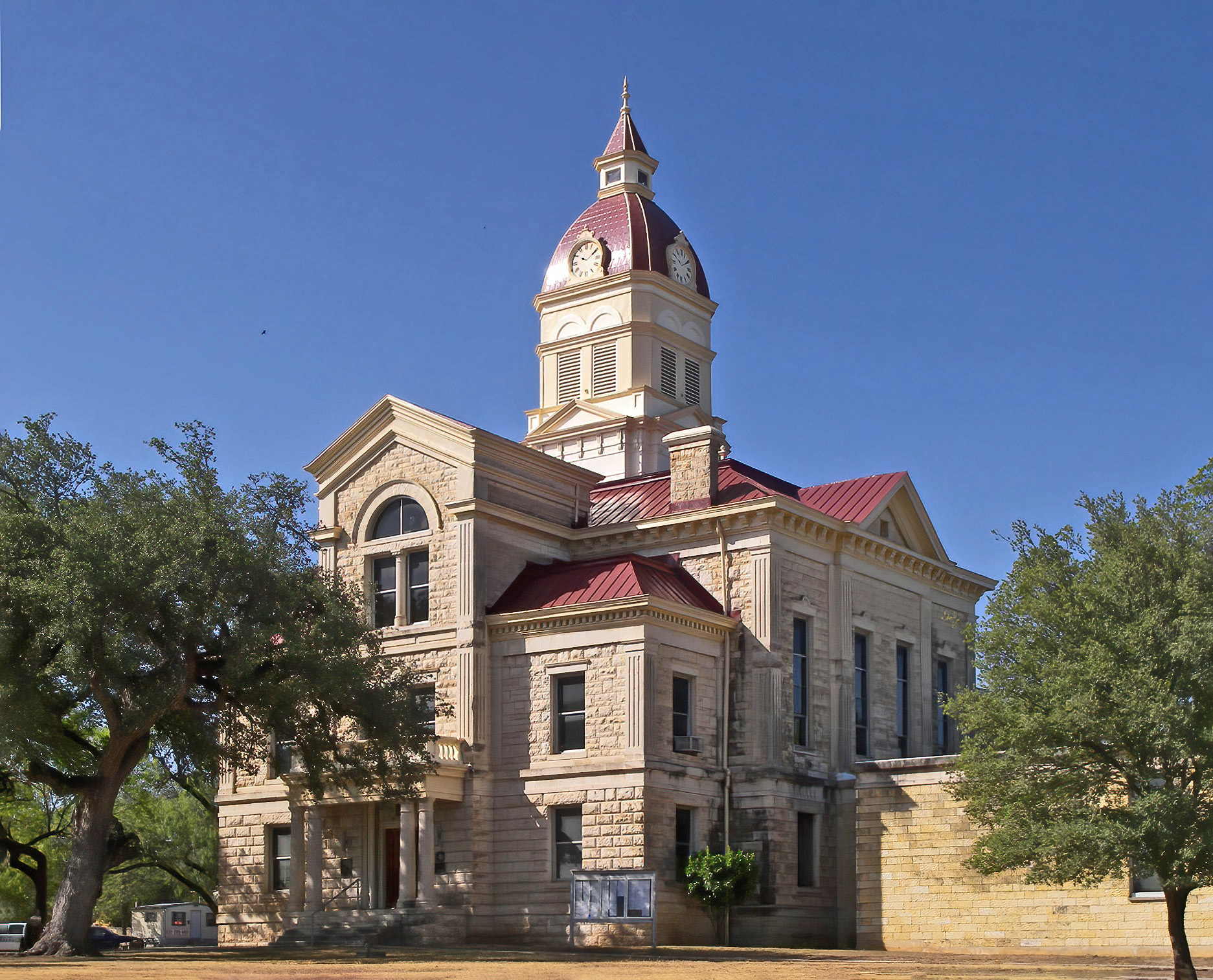
As might be expected from someone with such a, well, flexible attitude toward the writing of history, Hunter was also an indiscriminate collector of memorabilia and relics. In 1927 he decided to share the wealth, as it were, and bought a small stone house two blocks from the Bandera County courthouse to show off his stuff.


But the collection grew like Topsy, and an addition was built in 1933, and then another in 1972. The effect is as if anybody in Bandera who ever went anywhere and brought anything back and eventually got tired of tripping over it in the garage just figured, “What the hell, let’s give it to the Frontier Times.” As a result, and unlike many museums, the Frontier Times is still adding to its collection, which now includes more than 30,000 items, and storage is becoming an issue.

German army helmets from World War I and World War II; a combination knife and fork for a one-armed man; a diary kept by “someone” in Geneva NY from 1835 to 1837; a serpent made of several hundred old English postage stamps.

The museum itself is charmingly low-key, its treasures arranged in what seems like random order, and many of the exhibit labels are either hand-written or typed on index cards, with occasional misspellings. Blessedly, you can make it through all three rooms in less than an hour, if you hurry. But take your time; the place is a unique meditation on the nature of history, a look inside the mind of a man and his community and a record of what they found worthy of preservation and celebration. As such, it is eminently deserving of more leisurely appreciation. I wonder what future generations will make of what we leave behind?

Plastic bottles from Poland, vintage 2006; a photograph of Judge Paul Desmuke of Jourdanton TX, who had no arms, playing the violin with his feet; a pillow stuffed with hair from camels brought to Texas by the U.S. Army in the 1850s; a Japanese shoe.
—Martin

What we’re reading
Heather: Karen Armstrong, The Case for God
Martin: Nick Hornby, Juliet, Naked