Friday, February 18, 2011

These boots were made for blogging


Cowboy boots are on my mind today. And (heh) on my feet.

Of course cowboy boots come with so much symbolic weight it’s a wonder I can even walk in them. The cowboy is the most iconic, romantic, heroic figure in American history. Lean, laconic, and independent, he represents the way we like to imagine ourselves: tough as nails, self-reliant, unafraid of violence but guided always by a rigid code of honor. Owen Wister and Zane Grey helped establish the archetype, and Roy Rogers, Gene Autry, Audie Murphy, Gary Cooper, John Wayne, and Clint Eastwood, among many others, elaborated it for generations of children (and adults) on screens both large and small. In an increasingly urbanized society the image of the cowboy may seem quaint and anachronistic, but it can still exert a powerful pull.

All of which only partially explains why I just bought myself a pair of Luccheses—NV1503s in waxed and burnished olive leather, if you must know, as in the photo above—and why that’s such an unlikely thing for me to have done. Allow me to explain:

I have traditionally had a sort of ambivalent attitude toward cowboy boots. I have tended to associate them more with a certain kind of urban Texan—plump, loud, razor-cut hair, wearing pressed jeans and a white shirt, driving a too-big pickup—than with the rugged individualist of the bygone frontier. And then of course there’s that whole unfortunate association with a certain professional football team based in Dallas.

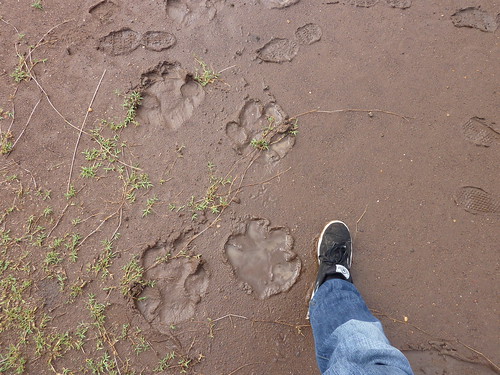
Moreover, my feet are famous throughout the tri-county area for their extraordinary width and flatness. They are the Great Plains of footdom. My footprints resemble the round tracks of a hippo rather than the delicately scalloped tracks of most humans.

Perhaps it’s not surprising, then, that I have a long and often painful history with cowboy boots. I bought my first pair in London, of all places, at a very trendy boutique on Chelsea’s Kings Road, during our honeymoon many years ago. (I know, I know: what kind of idiot travels from Texas to England to buy cowboy boots? All I can say in my defense is that Heather had just bought a pair, and I didn’t want to be left out. Also, I was young and foolish.) They were a sort of honey-colored suede, with white stitching, lethally pointed toes, and rakishly undercut heels. They were also one size too small, and way too narrow. The shopkeeper—a pox upon his cynical soul—assured me that they would stretch, which was of course utter nonsense. I probably wore them no more than twice, each time suffering horribly while they were on and requiring a great deal of assistance to peel them off my swollen feet, before finally coming to my senses and giving them away.

A few years later Heather’s parents gave me a pair of boots for Christmas. They were made of thick reddish-brown leather, completely devoid of decorative stitching, with squarish toes instead of the classic pointy ones—in other words, they weren’t really cowboy boots at all. They were, however, the correct size. I wore them a few times, usually at Christmas parties and the like, before deciding that they were just too heavy to wear much in Texas.

But these new Luccheses fit my astoundingly wide, flat feet right out of the box, and they are lightweight enough to make me think I might be able to wear them comfortably even when the temperature is above freezing. Moreover, they are quite dazzlingly beautiful: fairly restrained, as cowboy boots go, with decorative contrast stitching on the shaft and more subtle stitching on the insteps, though the toes are sharply pointed.

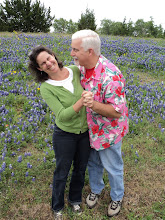
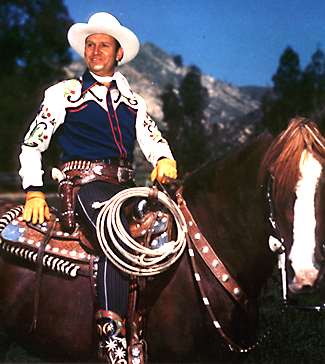
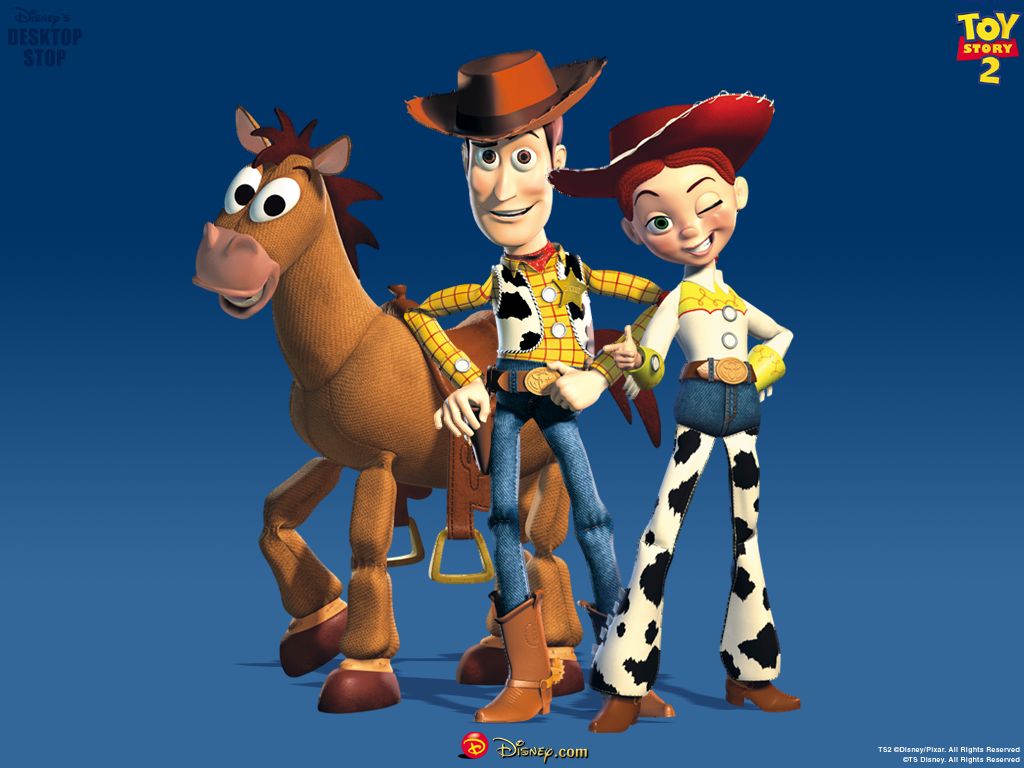
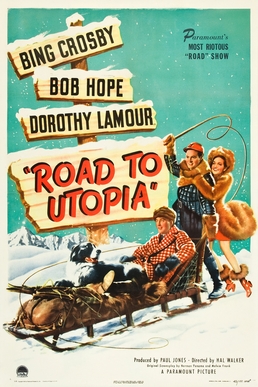
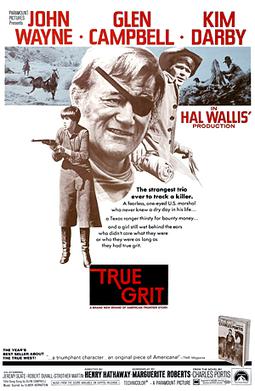
How often will I actually wear them? I have no idea; I may ultimately conclude that they make me look more like this guy than this guy. Also, we seem to be moving into spring, and my usual warm-weather wardrobe involves shorts, a T-shirt, and Birkenstocks, with a Hawaiian shirt and sneakers for more formal occasions. Still, I like looking at them in my closet, and it’s nice knowing they’re there if and when I need them.

The bottom line is that these boots are a symbol of my willingness to take on the trappings of my time and place. We live in Texas, and we own a ranch; we are Westerners, in other words, and we yearn to partake of the best of that heritage. I’ve made no secret of my loathing for many aspects of contemporary Texas (just ask Heather). Wearing cowboy boots is a step—a small step, perhaps, but a significant one—in my long journey toward acceptance and acknowledgment of who and where I am. This is my life, and these, believe it or not, are my boots.

Next on my shopping list: a Nudie’s suit!
—Martin


What we’re reading
Heather:
William H. Eddy, The Other Side of the World: Essays on Mind and Nature
Martin: Philipp Meyer, American Rust

Friday, February 11, 2011

Meat and flourishment: carnivorocity, take three


Martin’s post last week describing the first slaughter (and I use the word “slaughter” advisedly) in our new endeavor as purveyors of bison meat elicited a comment that urged us to consider the ethical fault line (presumably) running through every conscience, that unsteady place where we find ourselves rationalizing our actions to ourselves or to whatever audience our imaginations conjure up.

Martin tried to make his/our unease clear with the post’s title: Bloody Hands. So I’m wondering once again about the ethics of carnivorocity, as visible and treacherous a fault line as abortion, euthanasia, gun control, climate change, or cloning: when you stand on one side of the fault line, it’s easy to think that the earth itself will justify you when it opens up and swallows the dummies over there, proving that you were on the right side, at which point you can stop worrying all the time, for heaven’s sake, and go on your merry way without thinking about the issue ever again.

As usual, diving into the conversations available on the internet just sucked me deeper into the murk. A defense is available for every possible position and offered with wildly varying degrees of civility: meat-eaters supporting vegans and trashing vegetarians; meat-eaters sneering at any thought of self-restriction; vegetarians and vegans calling meat-eaters all sorts of names; vegetarians acknowledging that some meat-eating is environmentally acceptable; meat-eaters acknowledging that American meat production and consumption is for the most part grotesque. What’s a utopian-minded bison rancher to think?

Serendipity, as usual, is my guide: in chasing internet rabbits down their holes, I found a momentary resting place in a review of Maggie Kozel’s book The Color of Atmosphere: One Doctor’s Journey In and Out of Medicine. After describing a flummoxing patient she had as a second-year medical student, Kozel said, “[I] devoured the answers without asking the right questions.”

Of course, if you’re obsessive the way I am, then you’ll immediately begin worrying about what the right questions are, as in, if I’m “right” then others must be “wrong.” One of the hallmarks of the debate about meat-eating and its impact on the environment or the individual soul is the array of statistics and science that each side has amassed to prove the objective superiority of its argument. I’ve been persuaded by both sides and neither side, depending on the time of day, what I’ve just read, the weather, my most recent meal, and/or the health of my family, among other random criteria.

In other words, I don’t think science and statistics by themselves allow us to ask the right questions, since apparently convincing evidence can be found to shore up either side. Eating is one of those human activities rich with multiple levels of meaning; expecting questions directed at a specific level to adequately address the full range is a little like expecting a monoculture to support the diversity a polyculture allows. Although science poses some vitally important questions when it examines the issue of meat-eating, the nature of its inquiry must ignore other equally pressing but less quantifiable questions, such as, what conditions allow a multi-species community to flourish? Does eating meat (by humans) contribute or detract from our community’s flourishment (a word coined by our friend Hugh Fitzsimons of Thunder Heart Bison)?

I hear the howls of protest even before I finish typing this sentence: how do you measure flourishment? Who decides the standards? Invalid! Too subjective! Well, yes. That’s what makes this a fault-line issue: it addresses the limits of our humanity and so necessarily includes subjective experience. To be honest, I don’t know how to measure flourishment; I suspect you just know it when you see it. And when you see it, you’re moved to describe it, knowing that the urge will be frustrated to at least some degree because flourishment, like all fruit, is the result of such a complex interaction of elements in space and time that any description will be incomplete. And of course it’s not a steady state; it waxes and wanes as circumstances change and sometimes double back on themselves.

In this context, the question of whether meat-eating is ethical can be answered unequivocally: it depends. One of the preconditions for flourishment is a sense of justice, a perspective that includes but also rises above the immediate tit-for-tat concerns of fairness. The scope of justice includes not just humanity but the earth itself—and perhaps the cosmos. It unrolls over the course of history, recognizing that particular injustices sometimes take generations, centuries, or millennia to wither, even with the powerful witness and effort of prophets and their followers. As I said in an earlier post, it may be that vegetarians and vegans are living forward into a time where justice is more fully realized. At the same time, issues of fairness and justice press at us every moment in this world where the lion and the lamb cannot yet lie down together, where predators are a vital part of an ecosystem that has developed in sync with domesticated animals.

Can meat be produced and consumed in a way that encourages justice and, hence, flourishment? I think it can. There are multiple instances of communities and societies that eat meat and live within that delicate balance that looks to the long-term well-being and dignity of the system as a whole, places like Joel Salatin’s Polyface Farm, although there are many, many others. (We’d love to hear some of your favorites.) There are multiple instances of communities and cultures flourishing without eating meat, most notably for the purposes of this post the Hindu cultures whose vegetarian cuisines I eat with great pleasure. (We’d love to hear some of your favorites.)

Likewise, there are communities and cultures that eat meat without flourishing, including most of the industrialized world, where concern for short-term profits and their consequent incitement of unrestrained appetite smother any hope of flourishment under mountains of animal excrement and anguish. Those places that encourage us (in the industrialized world) to measure the value of food in one way only—cheap is best—smother flourishment. Food is at the center of family, of community, of myth, of life. To reduce its essence to a single component is to denature its multivalent nutritional value.

Back to the ethical fault line, that place we stand uneasily, knowing that we may be swallowed: may those of us who recognize the fault line join hands—bloody or not—across the chasm and help each other seek the firmer footing of justice as our foundation. Flourishment will surely follow.
—Heather


What we’re reading
Heather:
Hilary Mantel, Wolf Hall (still!)
Martin: Rodney Crowell, Chinaberry Sidewalks

Friday, February 4, 2011

Bloody hands: bison harvest at Madroño Ranch


The very first fruits (though “fruits” hardly seems the right word) of our very first bison harvest are ready to sell, but getting to this point has been a long and sometimes frustrating process. The last stages of that process were both harrowing and, in a dark way, fascinating; squeamish sorts may want to stop reading here. “Meat is murder,” the Smiths sang in 1985, and whether or not you agree with them, it is undeniably a bloody business.

The harvest took place on Monday, January 24. We’d been both dreading and looking forward to it, and planning for it, for months; Robert, our redoubtable ranch manager, had ingeniously cobbled together a refrigerated trailer to haul the dead animals to Mercantile Meat, in Utopia, to be turned into packages of meat, and we had long since chosen the two young bulls, the bison equivalent of obnoxious adolescents, who would be the first to go. Despite all the planning, though, the reality of assuming responsibility for the death of so large and magnificent an animal was more than a little intimidating.

Early on that beautifully clear but chilly Monday morning Heather and I drove up to the flat near Robert’s house, where the herd had gathered. There we met Robert, Meat Inspector Mike, and Robert’s buddies Robert (whom I will henceforth call Other Robert) and Keith (whom I will henceforth call Not Robert), who were there to assist. We all gathered in a circle while Heather read a prayer she’d written for the occasion, which I suspect disconcerted several of those present. Then Robert, Meat Inspector Mike, and Not Robert climbed into Robert’s Chevy Tahoe with Robert’s .270 rifle while Other Robert, Heather, and I kept a safe distance.


A few minutes later, it was over. Two rifle shots shattered the stillness of the morning, and after each, even before we’d finished flinching, 1,500 pounds of bison was dead on the ground. This was the moment we’d been waiting for, and fearing, and the magnificence and sorrow of it were overwhelming. Both deaths were instantaneous and humbling, and strangely intimate; all the world seemed somehow to have narrowed to this short stretch of dirt road; other places, other people, were unimaginable. Robert, Other Robert, and Not Robert worked quickly and efficiently to bleed the first carcass and load it into the trailer, and we turned our attention to the second.

At this point things got really interesting. We knew that bison tend not to scatter when they hear gunfire or see one of their number fall; in fact, frequently the other members of the herd gather around the victim, curious about what has happened to him or her, or perhaps paying their last respects, before getting back to business as usual. But this time, the head bull went over to the second carcass and repeatedly butted and pawed at it, determined to revive his fallen comrade.


This was a problem, since we were not particularly interested in arguing with nearly a ton of angry bison. By yelling and waving, we convinced him to back off a few feet, just far enough so that we could go to work on the carcass, but Robert kept one eye on the angry bull (and on Heather, who had appointed herself the designated angry-bull-shooer). He glared at us throughout the process, but kept his distance.

With both carcasses safely inside the trailer, which had been set to minus-ten degrees, Robert, Other Robert, and Not Robert climbed into the cab of Robert’s pickup and our little caravan set off for Utopia, some thirty miles away.


All had gone about as smoothly as we could have hoped to this point, but we encountered some metaphorical bumps on the road to Utopia. As Robert’s pickup was hauling the laden trailer up FM 337 west of Medina, smoke started pouring out from under the hood: a blown radiator fitting. They limped to the top of the hill, where they found a couple of empty whiskey bottles at the side of the road and, after coasting down the other side, filled them with water from Mill Creek which they poured into the overheated radiator.

Thankfully, the truck made it the rest of the way into Utopia—a little later than we’d planned, true, but it made it. After Robert backed the trailer up to the tiny loading dock we had to drag the dead bison out of the trailer, across the loading dock, and through the tiny door and into the plant—not an easy undertaking, and one which required the combined efforts of Robert, Not Robert, Other Robert, and me, as well as Joe, the owner, and a couple of plant employees. When we were done, I had blood on my hands literally as well as figuratively.


After all our efforts to honor and respect the death of the bison, the way in which they entered the plant seemed disrespectful and undignified. But necessity is a mother, as we say at our house, and it was a tremendous relief finally to have them there.

When we got back to the ranch, we were still a little stunned by the morning’s events. It had already been a long day, and we were still a little unnerved by the magnitude of what we had seen and done (or, more accurately, caused to be done). And we know we still have a lot of work ahead of us; actually figuring out how to sell several hundred pounds of bison meat is way out of our comfort zone. (We’re hoping to sell all of it wholesale, and only in the Bandera/Kerr County area.) But we feel like we’ve taken a major step.

After witnessing a bison harvest at our friend Hugh’s ranch several years ago, Heather wrote a poem called “Sacrifice.” The details are necessarily different, but it still captures some of what we felt:

Ash Wednesday: one year I stood in thick cool
dust along with several others, waiting for
an ancient drama to begin again,
waiting as if I weren’t an actor in it
too. Through the thorny brush the bison
entered, awkward bodies wary, dense beneath
the bulky wreath of muscle draped across
their shoulders. One shook her head—so massive
that her horns looked dainty—watching us with
eyes black as moonless snake-filled summer nights.
We climbed into the pick-up, all except
the shooter, who moved with quiet purpose
as we sat in silence, waiting for the shot
that finally came—shocking, if expected—
and penetrated mercifully, the cow dead
before she finished sinking to the dust.
Another man performed the bleeding when
she was hoisted, limp, still warm, head-down,
carotid artery cascading blood
a color and consistency I had
never seen before, a frothing cochineal
oasis in the thirsty dust. I asked
the shooter if and how he steeled himself
for harvest. Pray two days before, he said,
Sit quietly. We watched the hands prepare
her for the journey, another kind of life.
Her body, treasury of light and grass
and epic wanderings, will enrich
a larger body now, a body more than
body when it knows the incarnate cost—
be it hoofed, winged, scaled or even rooted
life—of nourishing itself. Around us,
bushes burned in lilac, white, and yellow
flames, their incense rising toward the hawks
and caracaras, wheeling in mandalic arcs,
awaiting our departure so to gather
in the dust and then consume the bloody
pool, their bounden duty.

Perhaps subsequent harvests at Madroño Ranch will become more or less routine; doubtless we’ll have a better idea of what to expect, and be somewhat better prepared. (We may even buy a more powerful pickup, one that can pull the trailer to Utopia without overheating.) But I pray we never completely lose the profound sense of awe and, yes, sorrow that attended this first harvest. May we never lose the full awareness of what we do and have done. May we remain humbly thankful for the life—and death—of these magnificent animals. May I always remember the blood on my hands.
—Martin


What we’re reading
Heather:
Hilary Mantel, Wolf Hall
Martin: Roy Bedichek, Adventures with a Texas Naturalist

Friday, January 28, 2011

Shooting holes in the Constitution: some thoughts on guns and violence


Recently, like many Americans, I’ve been thinking about the issue of guns in civil society. The tragic shooting in Tucson certainly focused attention on the topic, as did a story on National Public Radio that identified the United States as the source of most of the guns being used by cartels in the Mexican drug wars, a story that aired days before we visited friends whose ranch is just a few miles from the Rio Grande. But other, more personal circumstances also got me thinking, like the three different episodes of gun violence, or the threat of gun violence, occurred during the past semester on the college campuses (2,000 miles apart) where two of our children are students. And all this happened before our first bison harvest at Madroño Ranch this past Monday, in which two 1,500-pound animals were felled by single shots from a .270 rifle.

Full disclosure: I don’t own a gun myself, although we have a gun safe well stocked with rifles and shotguns at the ranch. (They mostly belong to our son.) My grandfather taught me to shoot with a pellet gun, an activity which he oversaw carefully and I enjoyed mightily. I still take pleasure in target practice and found, the one time I tried it, that shooting skeet was a fine way to while away an afternoon. I don’t hunt and don’t expect that I ever will, although I have no objection to ethical hunting. I’ve thought that it might be wise to have a pistol when I wander around the ranch, in case one of the dogs riles up a pack of feral hogs and brings them back to me. My fear of shooting my own dog is sharper than my fear of rampaging pigs, however, and I remain pistol-less.

While there’s been no change in the number of guns I own, my thinking about guns has changed considerably over the last few years, to wit: I’ve concluded that there’s a difference between urban guns and rural guns. (Yes, yes, hold your applause.) A gun is a necessary tool on a ranch or farm. I’m very grateful that Robert, the ranch’s redoubtable manager, is an excellent shot. If the bulls we harvested this week felt any pain, it was less than momentary; they were dead quite literally within a couple of seconds.

And then there’s the issue of self-defense. A friend recently told me about an encounter he’d had on his remote South Texas ranch with an armed and heavily tattooed non-English-speaking trespasser he suspected of being a member of the fearsome MS-13 gang. My friend didn’t have a firearm at hand, but fortunately, after a tense exchange, the trespasser left. “I’ve never felt so naked,” my friend said. I understand: I, too, would have wanted some clothing in that situation.

And yet, and yet... we recently saw and thoroughly enjoyed the Coen brothers’ adaptation of True Grit. That is, Martin saw it; I had my hands over my eyes during several violent scenes. Even so, I loved the movie. At the same time, I made a new connection: imbedded in the myth of the American West is the image of the lone gunman, meting out swift and violent justice. No amount of regulation is going to smother the breathe from that compelling image.

Don’t get me wrong; I’m all for intelligent gun control. I’ve never felt so naked as the day that a student opened fire on the UT Austin campus a block from the room where our son Tito was in class. But I emphatically would not have felt more clothed if, as a bill passed by the Texas Senate in 2009 proposed, his fellow students been permitted to carry concealed handguns. Guns do not belong on campuses. Or in the hands of the mentally ill. Anyone who wants to own a gun has a responsibility to register, and law enforcement agencies should be able to trace every gun to its owner. Anyone who wants to buy an automatic or semi-automatic weapon should have to jump through a lot more hoops than a weekend hunter does. Gun shows should be heavily regulated. But the image of that lone, justice-seeking gunman is more powerful than any regulation. Did I walk out of True Grit disgusted by its glorification of violence? Of course not: I loved it, even as I was distressed by some of it. The story is part of my identity as a westerner, as a Texan.

On Wednesday, as I was wrestling with this post, Martin received a membership solicitation from the NRA. I suspect that the trigger for this unlikely offer must be the fact that he recently purchased from Amazon.com a copy of Jose Ortega y Gasset’s Meditations on Hunting, the introduction of which was written by a visiting professor of environmental perception at Dartmouth College—not exactly a rip-roarin’ shoot-’em-up. If I’m correct, the NRA’s tracking mechanisms qualify as spooky at best, and maybe terrifying, but also revelatory of a mentality that refuses to see any kind of subtlety or gradation of perception.

Here’s the opening salvo of that membership solicitation: “Your constitutional right to own a gun is under attack by hundreds of anti-gun politicians, global gun ban diplomats at the U.N., militant anti-hunting extremists, radical billionaires and the freedom-hating Hollywood elite.”

The letter consistently associates freedom with gun ownership; restricting gun ownership equals restricting personal freedom. “Remember: the NRA is the one firewall that stands between our Second Amendment rights and those who would take our freedoms away.” Freedom, in this view, has nothing to do with national service, with love of country and fellow-citizens, with restraint or knowledge or self-discipline.

I visited the NRA website and found it even more appalling than its fear-mongering letter. Of the assault in Tucson, it says: “Our thoughts and prayers are with the victims of this senseless tragedy, including Representative Gabrielle Giffords, and their families during this difficult time. We join the rest of the country in praying for the quick recovery of those injured.” There was no condemnation of the gunman who perpetrated the senseless tragedy. There was found no call for self-examination. There was no exhortation to the faithful to adhere to any code of responsibility or ethics. I found nothing that encouraged gun-owner restraint or training, or an acknowledgment of the enormous social responsibility that comes with owning a gun.

I did find a persistent paranoia that encourages NRA members and sympathizers to view strangers as threatening and potentially aggressive. I did find—even as someone with a sympathetic view of some gun use—a willful and destructive distortion of that figure so many Americans love: Rooster Cogburn, the courageous gunman who takes the law into his own hands and then rides off into the empty landscape. Many of us love Rooster, yes, but his place is in the mythic past, not in the increasingly urban present.

I know and respect—and even love—individual members of the NRA; my grandfather was one of them. I went to its site in hopes of finding something to change my mind about gun control. But I left loathing the rhetoric the NRA has adopted in recent years. (In this regard, I highly recommend Jill Lepore’s excellent article “The Commandments,” about the way various groups, including the NRA, have sought to interpret the Constitution, in the January 17 issue of The New Yorker, and thank our daughter Elizabeth for bringing it to my attention.) To encourage people to think that their fellow citizens are their enemies is surely to unravel the careful work of the Constitution, which recognizes the precarious balance inherent in a federalist system, a balance requiring trust, self-restraint, and mutual good will among its participants. So while calls for legislation are important in curbing American’s extravagant gun violence, they aren’t enough: we need to call the NRA’s violent distortions of the Constitution to account. Maybe guns don’t kill people: maybe it’s NRA rhetoric that kills people.
—Heather


What we’re reading
Heather:
Thich Nhat Hanh, Living Buddha, Living Christ
Martin: Laura Hillenbrand, Unbroken: A World War II Story of Survival, Resilience, and Redemption

Friday, January 21, 2011

South Texas: a fierce and unexpected beauty


Yum! This week has afforded me yet another in a long—seemingly infinite, in fact—series of opportunities to eat crow. Heather and I returned yesterday from a visit to our friends Hugh and Sarah Fitzsimons’ Shape Ranch, outside Carrizo Springs.

As regular readers know, Hugh and Sarah have loomed large in our efforts to get Madroño Ranch off the ground. Hugh, the dueño of Thunder Heart Bison, is our guru in all things bison; in fact, we bought our original herd of twelve animals (which has now tripled in size) from him three years ago.

But our connections with Hugh and Sarah go back much farther than that. Heather had been buying their meat at the farmers’ market for several years before picking up one of the business cards Hugh happened to set out at his booth one day. When she saw his name, something clicked.

“Did your grandmother live on Argyle Avenue?” she asked him.

Startled, Hugh affirmed that she did, and within a very short time he and Heather had determined that their grandparents had lived across the street from each other in Alamo Heights; that Heather had enjoyed many a snack of milk and cookies in Hugh’s grandmother’s kitchen; and that Heather was “Uncle Henry’s” granddaughter (“uncle” in this case being a term of friendship rather than kinship). They hadn’t seen each other for about forty years, but that shared history was the basis of a new friendship.

Furthermore, Sarah‘s brother sings in the choir at our church in Austin, and, as if all that weren’t enough, we subsequently discovered that our daughter Elizabeth and Hugh and Sarah’s daughter Evelyn were not just cabin mates, but actually shared a bunk during a summer at Camp Mystic, many years ago.

The connections, in other words, are various and deep. But even though Heather had been down to Shape Ranch several times to observe Hugh’s bison operation, this week’s visit was my first. Heather had told me that the place was gorgeous, but Heather is after all a native Texan and therefore not to be trusted on such matters.

Now, you have to understand that Carrizo Springs is in South Texas. Flat, scrubby, harsh South Texas, of course, couldn’t be more different from the hilly, wooded, green Central Texas Hill Country which is home to Madroño Ranch. Never mind that most of my experience of them has been restricted to what you can see from a car at seventy miles an hour; as far as I’m concerned, flat places like the central California valleys, the Midwestern corn belt, and, yes, South Texas are to be avoided, or at least passed through as rapidly as possible en route to hillier, and ergo prettier and more interesting, places: the Bay Area, the Sierra Nevada, the Rockies, and the Hill Country.

On Wednesday afternoon, the landscape grew steadily flatter as we made our way from Madroño down to Carrizo Springs via Medina, Utopia, Sabinal, Uvalde, La Pryor, and Crystal City, and all my old prejudices were kicking in, but I was prepared to be a good sport about it, for Hugh and Sarah’s sake.

We drove south out of Carrizo Springs on FM 186 and, a few miles after the pavement gave out, turned in at their front gate, and I began to taste that familiar corvine tang in my mouth. The land was not in fact perfectly flat, but softly undulating, yielding sudden and unexpected vistas. And it was undeniably scrubby, but the winter mesquite and sage and rust-colored seacoast bluestem and purple, pink, and yellow prickly pear were undeniably lovely.


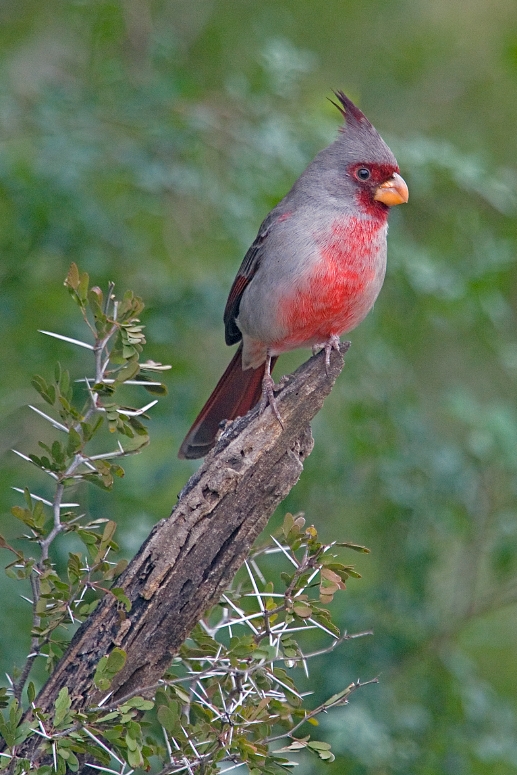
And the birds! Heather is the birder in the family, but even I was amazed by the number and variety of the birds we saw: caracaras and pyrrhuloxias and cardinals and thrashers (both brown and curved-billed) and green jays and white-crowned sparrows and one big blue heron and assorted hawks and kestrels and... well, you get the idea.

After driving several more miles of labyrinthine dirt roads seemingly devoid of physical landmarks, other than the occasional oil pump jack, we somehow arrived at Hugh and Sarah’s house, which is shaded by Arizona ash trees (virtually the only real trees on the place). Hugh and Sarah suggested we dump our bags, grab some beverages, jump in the pickup, and drive up to a picnic table that is their favorite place to watch the sunset. We pulled up and found an amazing 360-degree panorama, with the sun sinking low in the western sky. Sarah told us that when the sun sank low enough, we’d be able to see the mountains of Mexico on the horizon.

Sure enough, as the sky turned tropical-drink orange and pink the mountains came into view. And then, a few minutes later, from the opposite direction, we saw the bright orange full moon rising behind the windmill. Then, to complete the jaw-dropping array of effects, the coyotes—at least two different packs—began serenading us. Clearly, the only thing to do was to return to the house and enjoy dinner and conversation, and still more red wine, around the fire that Hugh built on the back patio.

Yesterday a front blew in, cold and gray and misty, while we were on our morning walk with Hugh and Sarah; the sharp, wet wind made the brunch that followed, of scrambled eggs and sausage and sliced avocado and grapefruit and lots and lots of strong hot coffee, even more welcome. In some ways, with its unnerving, disorienting sameness and plentiful thorns and scarcity of water and shade, this is not a particularly gentle or hospitable land, but yesterday afternoon, when Heather and I finally left to begin the long drive over to I-35 and up to Austin, it felt, just a little, as though we had been expelled from the Garden of Eden. And, believe me, those are not words I ever imagined myself writing about South Texas.

Hey, could I get a side of fries with that order of crow, please?
—Martin


What we’re reading
Heather:
Jon Fasman, The Geographer’s Library
Martin: Suzannah Lessard, The Architect of Desire: Beauty and Danger in the Stanford White Family

Friday, January 14, 2011

The rising light


Although it’s sometimes hard to tell, we’re in the season of rising light.

Some of us have a confused relationship with this time of year. The prevailing story, at least in Western culture, has a particular purchase on anyone who’s lived through a northeastern, Midwestern, or Great Plains winter: that story relates the flare of cheer in the Christmas season, followed by a plunge into the long, dark, depressing slog of January, February, and March. People who live in this story yearn for sunlit beaches, skimpy clothing, and drinks with little umbrellas in them, reminding them of what they’ve temporarily left behind. Anyone with aching snow-shoveling muscles in New England after this week’s blizzard will attest to the power of this story of the season. The rising of the light—the lengthening of days—is a promise of kinder times ahead.

Many of us in central Texas long—perversely, perhaps—for this story to ring true here as well. (I’m wife or mother of some of them.) We yearn for a white Christmas, and when the late December temperature creeps up to the 80 degree mark, we moan, “It’s not supposed to be like this! It’s supposed to be cold!” Despite the prevailing story that cold and dark are to be dreaded, in central Texas this is the season to yearn for, the season of dark and (intermittent) cold. For at least some of the year, it’s the light and heat, not the cold and dark, that can be downright unpleasant, almost unbearable. I feel that our winter and spring (so compressed they can be conflated) are the equivalent of fall in New England: tourists come and say, “How beautiful!” but the natives sigh, knowing that what’s just ahead will require some toughness to get through. Here it can be a real pleasure to burrow into the dark; the rising light brings with it a whiff of the (probable) scorching to come.

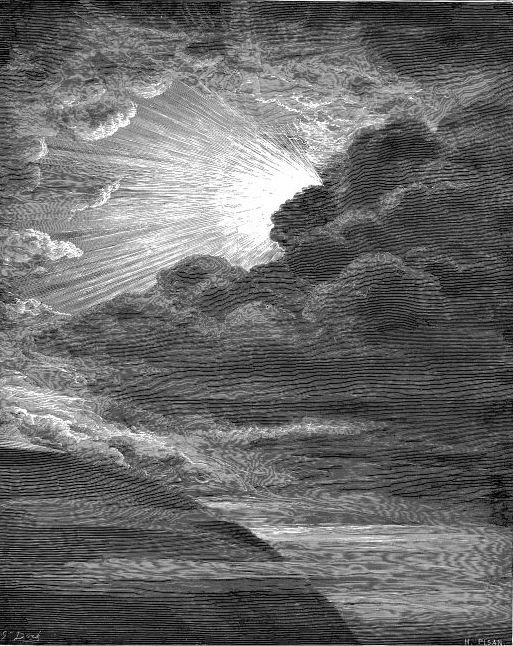
My musing on light has its roots in non-climatological terrain as well; Martin and I are in a group that’s reading and discussing Genesis: Translation and Commentary, by Robert Alter. Although there’s no particular comment on that most famous of first utterances, Let there be light, I can’t help but think about what it might mean that light is the firstborn of creation, at least according to Jews and Christians. This light is distinctive from sun- and moonlight, which weren’t created until the fourth day, and which seem to be subordinate to the aboriginal light of the first day. As God’s breath hovered over the waters, over the deep, and the darkness, God spoke, and there was light. And God saw the light: presumably this means that God had not experienced light before this moment, although virtually everything I just wrote—God, experienced, light, before this moment—should probably be in quotation marks or resting upon a tower of footnotes. But according to this story, light is humanity’s older sibling, both of them created by that which knew the deep, the dark, the tohu-bohu before they did in a distinctive way: before the light.

I’ve also been lurching my way through Marilyn Robinson’s elegant new screed Absence of Mind: The Dispelling of Inwardness from the Modern Myth of the Self, in which she argues against what she sees as an absurdly reductive definition of the human brain and mind by some, perhaps many, modern scientists, a definition that refuses to take into account what she calls “that haunting I who wakes in the night wondering where time has gone, the I we waken to sharply aware that we have been unfaithful to ourselves, that a life lived otherwise would have acknowledged a yearning more our own than any of the daylit motives whose behests we answer to so diligently.” This “haunting I,” so profoundly felt, is dismissed by those scientists (or “parascientists,” as she calls them) as mere subjectivity or, worse, evidence of the annoyingly persistent and primitive superstition we moderns call religion.

In one of those serendipitous encounters with my subconscious, as I reread Robinson’s description of this persistent human sense of hauntedness, of leasing interior real estate to someone you recognize but don’t really know, I read the next sentence completely wrong. She writes: “Our religious traditions give us as the name of God two deeply mysterious words, one deeply mysterious utterance: I AM.” Except at first, I read “I AM”—God’s own self-definition—as “1 A.M.”

I AM often awake at 1 a.m., in the deepest dark of the night, the time when most of us know ourselves to be haunted. If you awaken at 1 a.m. with a dream vibrating in your mind, the dream stays with you in ways that it doesn’t when you wake to light. Sometimes you can play with the dream, poke and shape it in ways that make it pop when it encounters daylight. Sometimes at 1 a.m. you can be wide awake and create as complicated a nightmare as any dreaming mind can produce. To stalk the mind at night—at least, for some of us—is to move as close to the realm of tohubohu, of aboriginal chaos, as created beings are able to get, at least without ingesting psychotropic drugs or harrowing the hell of human atrocity.

Despite the categorical confusion it causes, this season may be my favorite, if for no other reason than the blade-bright light of late afternoon, especially as I get to see it from the kitchen window at Madroño. The copper and golden grasses of the pasture in front of the house blaze as the sun drops behind the western hills, each shoot seemingly sharp enough to pierce the chests of the bison passing across it. The bison themselves look like something out of an ancient dream, not the product of my own tiny experiences but arising from some atavistic communal memory. There are those who might pooh-pooh these moments as fanciful or irrelevant to anything “real.” But in this time of rising light, this time between sleep and waking, between the relief of winter and the slog of summer, I’m compelled to remember that light and humanity once inhabited the same chaotic womb, that we rise and fall together. It’s a good season, once you’ve written your thank-you notes, to watch the rising light with gratitude for the family of creation. And with resignation, too: if it’s already January 14, August will be here before we can even blink.
—Heather


What we’re reading
Heather:
Cynthia Bourgeault, The Meaning of Mary Magdalene: Discovering the Woman at the Heart of Christianity
Martin: Keith Richards with James Fox, Life

Friday, January 7, 2011

A new year at Madroño Ranch: bison harvests, chicken tractors, hog schools, and more


Happy new year! The beginning of the year is always a good time to take stock, so we thought it might be appropriate to look back at what we accomplished—and, erm, failed to accomplish—during the last twelve months. Much remains to be done before our hopes for Madroño Ranch are completely realized, though we took what felt like some significant strides in 2010. With apologies for any perceived self-indulgence, here are some of them.

First, thanks to the wonderful and talented Shawn and Susanne Harrington of Austin’s Asterisk Group, Madroño Ranch now has a vibrant, striking, beautiful visual identity—logo (above), wordmark, etc.—which we hope eventually to splash all over actual and virtual reality. (Madroño Ranch T-shirts! Madroño Ranch gimme caps! Madroño Ranch bumper stickers and koozies and belt buckles and....)

Second, we’ve begun to rethink our initial determination to offer residencies only for environmental writers, however broadly defined (poets, philosophers, essayists, whatever). We had initially thought we would restrict our offerings to writers because, well, as a couple of recovering English majors, we felt like we knew writing better than we knew art, and (perhaps more important) we didn’t want to spend a lot of money on infrastructure (kilns, darkroom facilities, printing presses, whatever). Most writers, after all, are highly mobile these days, requiring little in the way of equipment beyond a laptop computer. But it has become increasingly obvious, even to us, that virtually the same is true of many visual artists as well—digital photographers and collagists, to name just a couple. Painters can travel with paints, portable easels, and suchlike. And then there are environmental artists, like Andy Goldsworthy, who use materials found on-site—rocks, leaves, branches, etc. Why should we exclude such creative thinkers from our pool of potential residents?

Third, while we are still a long way from officially opening our residential program for environmental writers (and artists)—we have yet to construct the small casitas we envision as individual workspaces, and we have yet to hire the necessary personnel to cook and care for our residents—we have managed to find a couple of brave souls willing to serve as “guinea pigs.” Melissa Gaskill and E. Dan Klepper will each spend several days at Madroño Ranch in the next couple of months, working, resting, and experiencing some if not all of what our actual residents will experience once we’re fully up and running. We look forward to hearing their feedback, suggestions, etc.

Fourth, our friend Jesse Griffiths of Dai Due came up with a new and exciting way to open the ranch to a wider public through a variety of sustainable hunting, fishing, and cooking “schools” throughout the year. The first, Deer School, brought six guests to the ranch in November, and was a thoroughgoing success; now we’re looking forward to Hog School in early March and Freshwater Flyfishing School in mid-May, both of which have already sold out. If they go well, we’re hoping to make these (and perhaps other such schools) an annual tradition at Madroño Ranch.

Fifth, we finally gained state approval of the label that will appear on the packages of bison meat we sell, which means we can finally go ahead with our first “harvest” (as it’s euphemistically called) this month. (We had hoped, naively, to harvest our first bison in October, but the approval process turned out to be considerably longer and more complicated than we had imagined.)

Sixth, Heather made significant progress in her quest to become a true chickenista, following the example of local legend Carol Ann Sayle of Austin’s Boggy Creek Farm. Our original flock of fifty or so laying hens took up residence in their bombproof (and, we trust, owl- and hawkproof) new coop, which we call the Chicken Palace (pictured below). A few months later Robert’s brilliant creation the Chicken Tractor (actually a mobile coop on wheels) became the home of a new flock of about twenty younger hens. (As of last week, the two groups were just beginning to commingle.)


Seventh, while we still don’t have an actual Madroño Ranch website (though we’re working on it!), we do have an official Madroño Ranch Facebook page. We invite those of you on that ubiquitous social network to check it out, and click the “Like” button if you’re so inclined; until our website is up and running, that will be the easiest way to keep track of what’s happening at the ranch in what we hope will be an exciting twelve months to come.

Perhaps none of these accomplishments sounds terribly important in and of itself, but each brought us just a little closer to our goal. Our hope for 2011 is that we—and you too, Gentle Reader—keep striding throughout the new year, whether the steps be large ones or small.
—Martin


What we’re reading
Heather:
Marilynne Robinson, Absence of Mind: The Dispelling of Inwardness from the Modern Myth of the Self (still—it’s hard!)
Martin: Michael Lewis, The Big Short: Inside the Doomsday Machine