Friday, March 18, 2011

March Madness: mountain laurels, plastic ducks, and 'roid rage


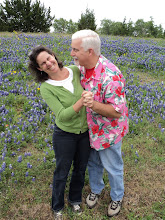
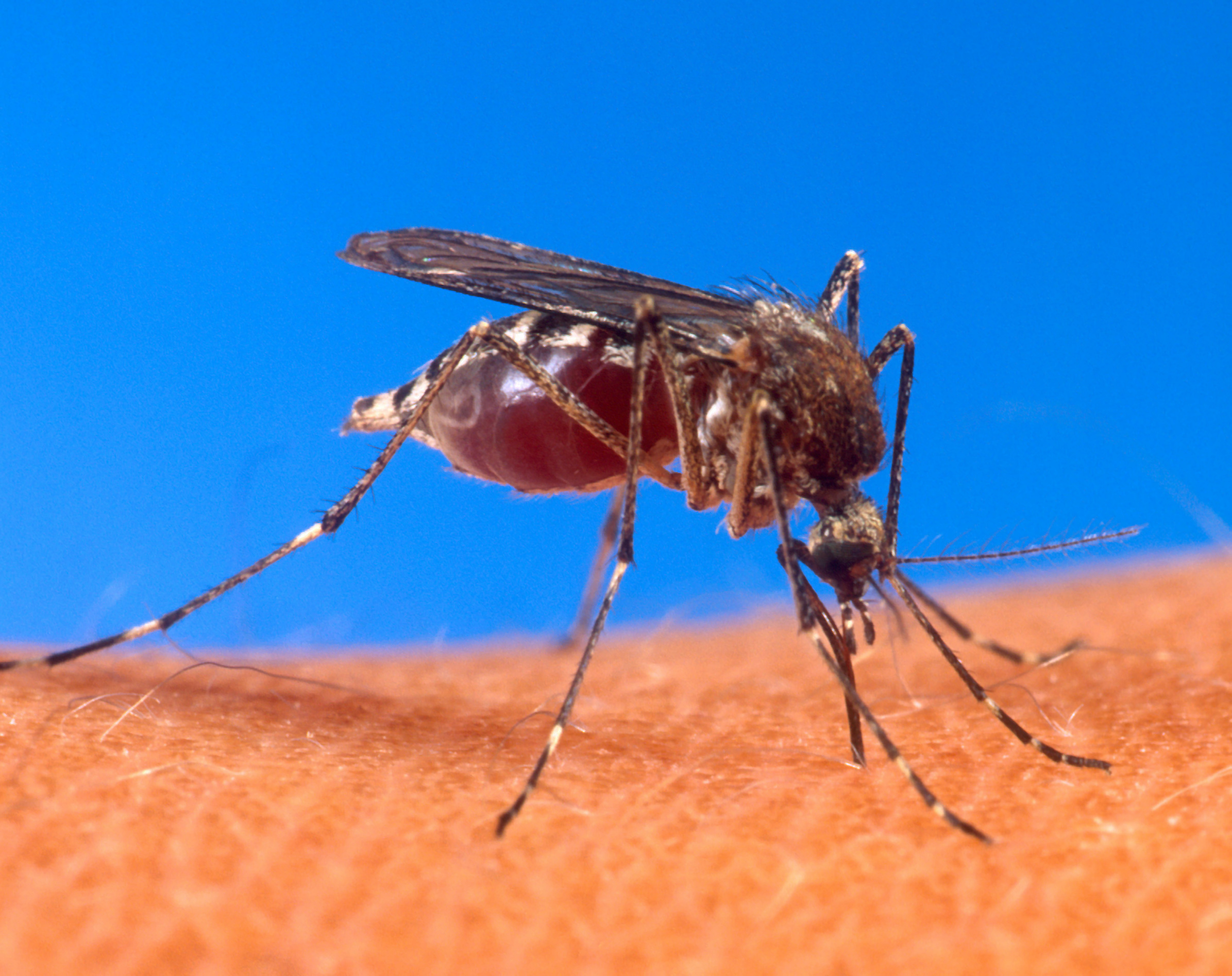
I apologize in advance if this post seems unusually grumpy; I’ve been in a lousy mood all week. The arrival of spring in Central Texas always has this effect on me. As the weather turns warm and moist and the redbuds and pear trees burst forth in clouds of colored blossoms, as the mountain laurels fill the air with the scent of grape Kool-Aid, as Heather and the rest of humanity get all goo-goo-eyed over the season of hope and rebirth, of pastel colors and eggs and baby chicks and bunnies, I grow ever gloomier, because I know what the sights and smells of spring really augur: the onset of another brutally hot summer. And in Texas, summer can last well into what would be considered fall, or even winter, in other places. To me, spring is the annual reminder that I’m about to spend six or seven months covered in a thin film of sweat. And did I mention the mosquitoes?

Perhaps it’s because I grew up in a cool, even chilly climate, but after almost three decades in Texas I have yet to acclimate fully to the summers here. Heather, on the other hand, loves hot weather; our personal comfort zones have only about a ten-degree overlap, as once the mercury climbs above 90° I begin to melt, and once it drops below 80° she begins to freeze. Under the circumstances, I think it’s pretty remarkable that we’ve been together for thirty years and married for twenty-five.

Of course hanging over everything else this week is the dreadful news of the earthquake and tsunami that devastated Japan, and the grim aftermath, with threats of nuclear disaster. We can’t yet know the final outcome of these events, but I worry that they may be a harbinger of even more catastrophes to come. A story on Grist.org suggested that climate change might cause more seismic and volcanic activity, as melting ice masses change pressures on the earth’s crust.

That’s scary all right. Equally scary are fears of massive radiation leaks from damaged nuclear reactors. We know that coal and oil and natural gas are all finite sources of energy, and that solar and wind power have limitations; nuclear power was supposed to be a sort of panacea, although we can wonder about the wisdom of building reactors in any place prone to major seismic activity. And then there’s that pesky problem of what to do with all that radioactive waste....

These gloomy reflections fit right in with the book I’ve been reading, Donovan Hohn’s Moby-Duck: The True Story of 28,800 Bath Toys Lost at Sea and the Beachcombers, Oceanographers, Environmentalists, and Fools, Including the Author, Who Went in Search of Them. The light-hearted title and subtitle are deceptive; the book is actually a thoughtful, and frequently depressing, contemplation of the problems of industrialization and pollution, and, most germane to the grim news from Japan, of the unintended consequences of technological advances. Reading it has not improved my mood.

It does, however, tell a fascinating tale. On January 10, 1992, south of the Aleutians and just west of the international date line, a freighter sailing across the northern Pacific from Hong Kong to Tacoma encountered rough weather. Somehow, as the ship rolled and plunged, two columns of containers stacked on the ship’s deck broke free and fell overboard, and at least one of them burst open as it fell, setting 7,200 packages of plastic bath toys – each containing a red beaver, green frog, and blue turtle, in addition to the yellow duck pictured on the book’s cover, but who’d buy a book titled, say, Moby-Turtle? – loose upon the waters. As the toys began washing up in unlikely places, they attracted attention from various news media – who could resist such a story? – and Hohn became obsessed with them.

The book ranges widely, both geographically and thematically: Hohn’s obsession takes him from his home in New York to (among other places) Alaska, Hawaii, South Korea, Greenland, and China’s Pearl River Delta, the industrial zone where the bath toys were manufactured, and he manages to work in reflections on the plastics industry (with a nice shout-out to my old UT Austin American studies honcho Jeff Meikle), the changing definition of childhood, the history of American environmentalism, and more. He writes well and often amusingly, but the overall message of his book is dire: we are almost literally drowning in waste, and we don’t really know what to do about it. Apparent solutions turn out merely to mask, or perhaps exacerbate, the problem; sincerely well-intentioned people disagree violently about what to do. And more and more garbage ends up in the oceans.

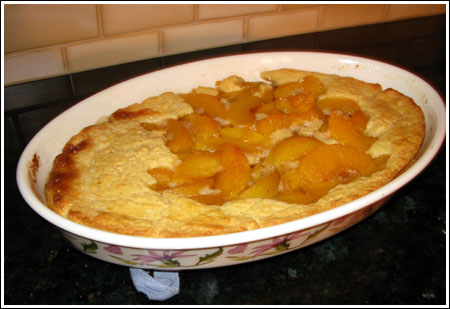
There was a time when all of this might have been ameliorated somewhat by the fact that spring signals the return of baseball. “Spring training”! I used to consider those the two most joyful words in the English language, other than “peach cobbler” and “tax rebate.” But that was before the steroid-fueled nightmare of the last fifteen years, in which unnaturally swollen sluggers rewrote the record book and permanently distorted the shape and balance of the National Pastime.

Now baseball is all but dead to me, and spring is when Tito and I fill out our NCAA tournament brackets, an annual exercise which makes manifest the depths of my almost complete ignorance of college basketball. (I usually pick the University of North Carolina Tar Heels to win it all, because I’ve always been a sucker for their baby-blue uniforms, but this year, in case you’re wondering, I boldly picked Duke to beat Kansas in the championship game.)

I don’t know what it will take to pull me out of my annual springtime slough of despond. Maybe the Blue Devils will actually go all the way (or, if not, maybe UNC will pull off an upset). Maybe the endorphins and tryptophan in a megadose of Easter chocolate will jolt me into a more agreeable frame of mind. Or maybe I just need to find more cheerful reading material.
—Martin


What we’re reading
Heather:
Karen Armstrong, Twelve Steps to a Compassionate Life
Martin: Donovan Hohn, Moby-Duck: The True Story of 28,800 Bath Toys Lost at Sea and the Beachcombers, Oceanographers, Environmentalists, and Fools, Including the Author, Who Went in Search of Them

Friday, March 11, 2011

Lenten reflections: dead trees, bafflement, and submission


Fittingly, this Ash Wednesday began with a vigorous north wind, the kind that knocks dead branches out of trees and can make you a little leery about walking outdoors. It blew me back to the moment that I first got a glimpse into the meaning of Lent.

I had vaguely thought of “giving something up for Lent” as an opportunity to practice self-discipline and to display a sense of commitment to a “good” life, a sort of spiritual calisthenics that made you feel better, especially when you stopped. The events I recalled weren’t, on the surface, particularly interesting or dramatic, but they allowed me to see myself from a previously undiscovered vantage point; for the first time, I could see I was like a tree filled with dead branches that needed some serious pruning in order to keep growing. Observing Lent wasn’t a way to prove how strong I was; it was a space offered in which I might look at all my dead branches and wonder how I, with the north wind’s help, might clear some of them out, while trusting that I wouldn’t get knocked out by falling timber.

A time for submission—no wonder Lent gets a bad rap. Who wants to submit, especially after a look at the roots of the word: “sub-” is from the Latin for “under,” and “-mit” is from “mittere,” to send or throw or hurl. To submit to something is to hurl yourself under it—“it” presumably being a force much greater than your itty-bitty self, a force like, say, a speeding F350 pick-up. In fact, it might even take some courage to submit to the scouring blast of Lent.

In last week’s post, Martin considered some of the complexities of being from a particular place, ending with a beautifully expressed desire to be here, rooted in this rocky Hill Country soil. Imagine his exasperation when I said last night that I felt like I needed a vacation. My desire to run away (presumably temporary) probably has several sources, but one of them may be an awareness that the idea of Madroño Ranch is taking on heft and weight, leaving behind the dreamy elasticity of fantasy.

I’m reminded of my reaction to our daughter Elizabeth’s first vision test. It had been suggested by her third grade teacher, who had never had a student make so many arithmetic mistakes, especially in copying problems from the chalkboard onto paper. The test results were normal; Elizabeth wasn’t nearsighted, just math-impaired. First I mourned that she would never be an astronaut or an engineer or a mathematician, but then I realized that we now knew more about who she really was; she was beginning to take on her own form, independent of my fantasies for her.

In a lovely essay entitled “Poetry and Marriage: The Use of Old Forms,” Wendell Berry (of course) unearths the kinship between marriage and formal poetry: both begin in “the giving of words,” and live out their time standing by those words:
In marriage as in poetry, the given word implies the acceptance of a form that is never entirely of one’s own making. When understood seriously enough, a form is a way of accepting and living within the limits of creaturely life. We live only one life and die only one death. A marriage cannot include everybody, because the reach of responsibility is short. A poem cannot be about everything, for the reach of attention and insight is short.
Choosing a form implies the setting of limits, limits that appear arbitrary from the outside or at the outset, but that can open into generosity and possibility as they are practiced. Even as they limit, these old forms point their practitioners to a way through self-delusion toward truth, through loneliness toward community. Individual failures are certainly possible, but they aren’t necessarily arguments against the forms themselves. In fact,
“[i]t may be... that form serves us best when it works as an obstruction to baffle us and deflect our intended course. It may be that when we no longer know what to do we have come to our real work and that we no longer know which way to go we have begun our real journey. The mind that is not baffled is not employed. The impeded stream is the one that sings.”
This past weekend we hosted “Hog School” at the ranch, the second in an ongoing series of sustainable hunting/butchering/cooking/eating extravaganzas put on by Jesse Griffith of Austin’s Dai Due supper club. I spent much of the weekend baffled (and not in a good way) by rifle-toting guests scattered across the property hunting feral hogs, by the seemingly effortless magic with which chef Morgan Angelone produced gorgeous and delicious treats from the kitchen (my kitchen, mind you, my philandering kitchen purring in someone else’s hands), by my own mental contortions.

I finally decided to go for a walk where I was unlikely to be mistaken for a hog. Marching through the field by the lake and muttering imprecations against the wind (no birds to watch), the lack of rain (no grass coming up), and the hunters (no long walks available), I decided to climb to the base of the cliffs above me and head back to the house by a new route.

Though they can be steep, the Hill Country hills aren’t exactly the Alps; climbing to the base of the cliffs only takes a few minutes and a lot of grabs at branches to keep from sliding back down in the loose mulch and rocks that just barely hold the hills up. Once I got into the still-leafless trees, I began lurching across the perpetually shifting terrain and found that it was impossible to walk and look at the same time; if I wanted to walk, I had to watch my feet carefully, and if I wanted to look, I had to stop and make sure I was balanced before I shifted my gaze. It made for slow going because, unexpectedly, there was a lot to see that I hadn’t noticed from below.

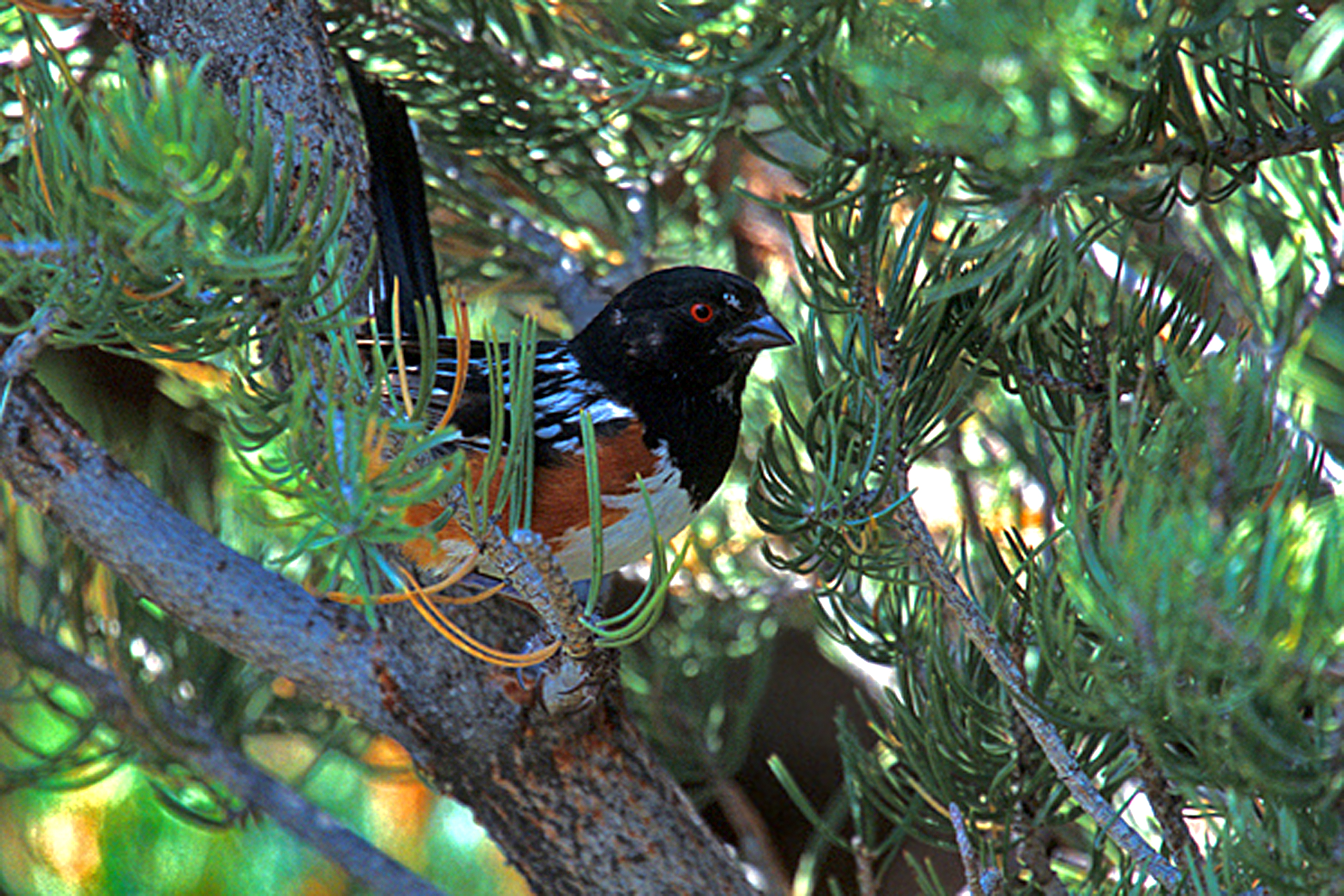
I found a fine moss-covered boulder that allowed me a new vantage point from which to look down and into the trees and brush I normally looked up at, a posture that causes the painful condition among birders known as “warbler neck.” I quickly misidentified several sparrows, and with an un-aching neck, was able to track down some raucous spotted towhees making rude observations from a clump of yaupons and to lecture them briefly. Staring at my feet as I staggered across the hillside, I found that grasses, indeed, were beginning to sprout, despite the drought. Skidding onto my derriere—it always happens off-roading on these hills—I was able to observe the first blush of blooming redbud tree, closely guarded by the great daggered yucca beside it. And then, as the wind picked up again, the rich thick smell of honey clogged the air. The source? Tiny yellow blossoms nestled under agarita spines—tiny and extravagantly generous and impossible to pick without getting pricked. The wind blew my hat off, and, setting off multiple rockslides, I chased it gracelessly down the hill.

Limits: from dust you were made and to dust you shall return. Bafflement: unexpected forms arising, unforeseen paths opening. Submission: throwing the deadwood of the ego into the flames of the Unnamable One. That’s a lot to wrestle with for the mere forty days of Lent.
—Heather


What we’re reading
Heather:
Adam Gopnick, Angels and Ages: A Short Book About Darwin, Lincoln, and Modern Life
Martin: Donovan Hohn, Moby-Duck: The True Story of 28,800 Bath Toys Lost at Sea and of the Beachcombers, Oceanographers, Environmentalists, and Fools, Including the Author, Who Went in Search of Them

Friday, March 4, 2011

Maps and mobility: living in, not on, the land


I was surprised, while reading Rebecca Solnit’s fascinating Infinite City: A San Francisco Atlas, to realize that I probably know substantially more about the history of Texas than I do about the history of my native San Francisco.

Of course, this realization should hardly have come as a surprise. After all, I’ve lived in Texas for more than half my life, whereas I left California at age seventeen, for college, and never moved back. Moreover, I spent more than half of my time in Texas working for the Texas State Historical Association, mostly researching and writing local history.

Still, it was a little bit of a shock. Despite my recent purchase of a spiffy pair of Lucchese boots, I still frequently think of myself as a Californian, not a Texan. Texas is where I live, but California is where I’m from, and that can be a significant difference. Especially in the South (and Texas is in many ways as much a part of the South as of the West), where you’re from—your “people,” your frame of reference—is still as important as who you are. But while I retain vivid, detailed mental and sensory images of San Francisco and the Bay Area—the sights, the sounds, the smells, and, yes, the tastes—I don’t really know how and why they came to be. In Texas, on the other hand, I learned a lot of the stories before learning the places they explain.

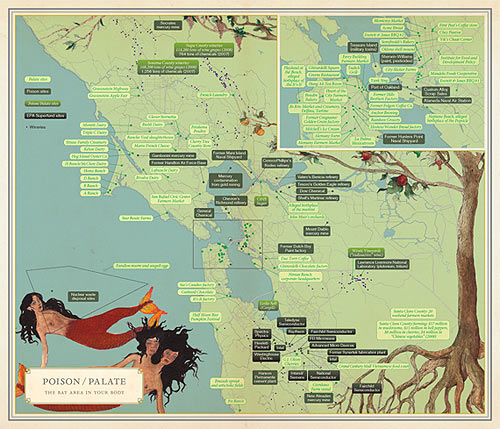
Solnit’s book presents both foreground imagery and background narrative. It is a series of maps and essays which manifest unexpected symmetries or contradictions: “Monarchs and Queens,” which simultaneously maps butterfly populations and sites significant in the history of the city’s queer population; “Poison/Palate” (above), which juxtaposes some of the Bay Area’s leading “foodie” establishments (Chez Panisse, Niman Ranch, etc.) with nearby mercury mines, oil refineries, chemical plants, and other sources of toxic pollution; and so on.

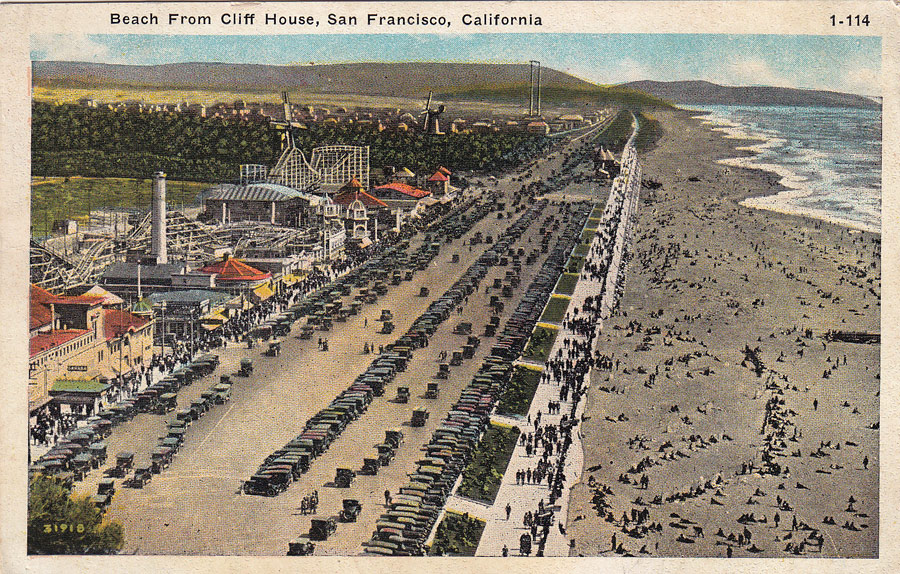
In reading and looking at this beautiful book—and it really is beautiful—I have learned a lot of local history, and also experienced that rush of nostalgia that accompanies any return, be it literal or literary, to your homeland. Just seeing the names on the maps, the extant and (especially) the long gone—Playland at the Beach! the Surf Theater! Winterland! Zim’s!—brought on a shiver of memory worthy of a Proustian madeleine. As Solnit writes, “the longer you live here, the more you live with a map that no longer matches the actual terrain.” She notes that the residents of Managua, Nicaragua, long after an earthquake that destroyed much of the city, “gave directions by saying things like, ‘Turn left where the tree used to be.’”

Similarly, my San Francisco is a palimpsest, an accretion of layers and memories, things and people living and dead, real and fictional—Emperor Norton and Sam Spade, Lawrence Ferlinghetti and Harry Callahan, and countless others. All of them were and are integral parts of where I’m from.

But that very notion of being from someplace is somewhat vexed. Locals say “I’m from here” all the time, but to me saying you’re from someplace usually implies motion, absence, a sense that you’re no longer there—that you’ve left it behind. In the United States, we have traditionally defined ourselves as an entire nation of people who are from somewhere else. My mother was born in Italy and my father in Brazil (though his parents were born in Scotland and Austria), which makes me about as American as you can get. After all, even the so-called Native Americans who were here before European contact originally came from somewhere else, presumably across the Beringian land bridge in pursuit of mammoth and bison.

In a fundamental sense, then, ours is a culture built on the sense of limitless opportunity awaiting us just beyond the horizon, just over that next rise. We have never stayed put, geographically or socioeconomically: the Louisiana Purchase, Manifest Destiny, the Mexican War, the California Gold Rush, the Civil War, and the Dust Bowl all pushed or pulled the new nation westward, across the continent, and we still seem to believe that, if we really make a hash of things where we are now, we can always pick up and move on to some uninhabited place (traditionally further west) where we can start fresh.

And some astonishing transformations did indeed take place out on that peripatetic frontier: a poor boy from Kentucky by way of Indiana and Illinois turned into Abraham Lincoln, an itinerant river pilot and printer’s apprentice from Missouri headed west and turned into Mark Twain, and so on. Even after Frederick Jackson Turner famously proclaimed the end of the frontier in 1893, our restlessness did not cease. In the twentieth century, the promise of economic opportunity and escape from Jim Crow drove the great migration of African Americans from the South to the north and west. Our current president, a son of Kansas and Kenya who was born in Hawaii and spent part of his childhood in Indonesia, is merely the most recent testament to the persistent power of the American notion of mobility, whether upward or westward.

Back to the Left Coast. In Infinite City, Solnit writes, “A city is a particular kind of place, perhaps best described as many worlds in one place; it compounds many versions without quite reconciling them, though some cross over to live in multiple worlds—in Chinatown or queer space, in a drug underworld or a university community, in a church’s sphere or a hospital’s intersections.” This is inarguably true of San Francisco, or for that matter any city; I would only add that it is no less true of a farm, a rural village, or any place that has borne the prints of generations of human existence. Like, say, Madroño Ranch.

All maps, even ones as imaginative and beautiful as the ones in Infinite City, are by definition reductive. They represent reality in two dimensions; we experience it in (at least) three. Maps, in other words, lack depth, and depth is what makes us and our world real. We don’t inhabit places flatly (though we certainly inhabit plenty of flat places!), but in depth, both geographical and temporal.

That depth is what we hope to gain personally at Madroño Ranch and also encourage in others, but we know we cannot simply will it into being. It grows and accumulates over time, and with care and effort; it is, in fact, a kind of rote learning, going over the same ground again and again, literally and metaphorically, until you have worn a track into the surface. John Muir noted that “Most people are on the world, not in it”; one of our hopes, now that our Austin nest is empty and we’re at the ranch more often, is that we can gradually learn to live and move in, not just on, this small part of the planet.

This is why Heather has grown increasingly ambivalent about travel; the world is full of fascinating places, but we’ve barely scratched the surface of our own. We hope it’s not (or not just) provincialism, but we want to be here.
—Martin


What we’re reading
Heather:
Adam Gopnik, Angels and Ages: A Short Book About Darwin, Lincoln, and Modern Life
Martin: Steven Rinella, American Buffalo: In Search of a Lost Icon

Friday, February 25, 2011

"If you got a field that don't yield": writer's block and the language of community


One of the many notable gatherings Martin and I participated in this past weekend was the opening of my sister Isa Catto Shaw’s show at the Harvey/Meadows Gallery in Aspen, Colorado. In a series of watercolors and collages, she took the dark, mute burden of grief over the death of our mother and worked it into beautifully articulate packages, in some ways (perhaps) making that grief more easily borne because it is shared with a community of unknown mourners who see the paintings, with the community of artists from whom she has drawn inspiration, and from the community in which she and her family live. As far as I could tell, the opening was a wonderful success, the gallery full to overflowing as Isa and the ceramicist Doug Casebeer, with whom she shared the show, each spoke movingly about the impetus behind their individual efforts.

Knowing that she had been working like a madman for several months, I was glad (and deeply moved) to see the results of her labors. And aggravated. We’ve been talking since our mother died about a collaboration of my poetry and Isa’s art to be entitled “Blessings of a Mother.” Isa’s done her part, and it’s intimidatingly beautiful.

I, on the other hand, have done squat. This doesn’t mean I haven’t thought obsessively about the project or that I haven’t written multiple lists of topics and scraps of lines and stillborn poems. It does mean that I’ve been willing to be endlessly distracted and grumpy about it. I’ve developed all sorts of hypotheses about why I’m not writing and what I might do about it, most of them ultimately involving running away from home. My favorite defense against the terrorism of the blank page is to read, figuring that in doing so I’m in the company of someone else who has faced, at least temporarily, the tyranny of That Which Demands Expression And Remains Unexpressed. Plus, if I’m reading, I can’t write.

So here’s what I’m currently reading to fend off—and perhaps eventually to outsmart—the intimidation tactics of the blank page: Standing by Words, a collection of essays by Wendell Berry, in particular the title essay and its assertion that the primary obligation of language is to connect the idiom of the internal self with the multivalent tongues the self encounters in community, both human and otherwise. When language loses that capacity—a loss currently encouraged by the forces of industrial technology—both the self and its community languish in their isolation, succumbing eventually to a fatal disconnection from the web of love and life.

As always, Berry is defiantly unfashionable, insisting on the possibility of “fidelity between words and speakers or words and things or words and acts.” He believes that genuine communication is possible, even if its processes are ultimately mysterious and unavailable for dissection by specialists. The life of language is rooted in community and by the precision that life in community necessitates: “It sounds like this: ‘How about letting me borrow your tall jack?’ Or: ‘The old hollow beech blew down last night.’ Or, beginning a story, ‘Do you remember that time...?’ I would call this community speech. Its words have the power of pointing to things visible either to eyesight or to memory.” Community speech doesn’t imagine abstract futures; rather, it deals with what IS. It creates a walkway between internal, personal systems and external, public systems. Community speech registers the need to include both objective and subjective experience; it deflects the argot of specialists; it recognizes spheres of being beyond its domain. Says Berry:
If one wishes to promote the life of language, one must promote the life of the community—a discipline many times more trying, difficult, and long than that of linguistics, but having at least the virtue of hopefulness. It escapes the despair always implicit in specializations: the cultivation of discrete parts without respect or responsibility for the whole.... [Community speech] is limited by responsibility on the on the one hand and by humility on the other, or in Milton’s terms, by magnanimity and devotion.
Although I would argue with Berry’s assertion that all specialists are without awareness of their place in the “whole household in which life is lived” and thereby exclude themselves from the liveliness of community speech, I hearken to the limits he sets on speech, limits that protect the tender shoots of hopefulness, a crop that can be distressingly rare in an often grief-stricken world.

Forgive me. For an essay that aims, in part, to wrestle with ways to express the specificity and universality of grief, my language is so far distressingly abstract, a symptom, I suspect, of my current stuckness. I just received a note from an acquaintance who recently lost her husband to pancreatic cancer; she wrote that although she and her daughter have prepared for his death for a year, “it is like the bad dream where you show up for an exam without having read the book, in your PJs, totally unprepared.” I was struck by the generosity of the image, by her assumption that, though I have not experienced her particular and devastating sorrow, I could somehow imaginatively engage with it, and that we both belonged to the same community, despite the fact that we’ve only met twice before.

Writing is usually perceived to be a solitary pursuit, and in a very literal way it is. I’m trying to remember, however, that when I stare at the blank page or screen I’m seldom alone. (I’m not referring to the cats who often take naps behind me on my chair.) Trying to remember: trying to listen for the cloud of witnesses, the dead and the unborn, that root us in the past and impel us toward the future. I found Rainer Maria Rilke’s Duino Elegies compelling after my mother’s death, in part because their language is so rich and their meaning so elusive, like a whispered conversation from another plane of being. In the translation by J. B. Leishman and Stephen Spender, they begin with this lament:

Who, if I cried, would hear me among the angelic
orders? And if one of them suddenly
pressed me against his heart, I should fade in the strength of his
stronger existence. For Beauty’s nothing
but beginning of Terror we’re still just able to bear,
and why we adore it so is because it serenely disdains
to destroy us. Every angel is terrible.
And so I repress myself, and swallow the call-note
Of depth-dark sobbing.

Although Rilke refuses to call on the angels, they soar in and out of the poems, weaving them together, helping create a complex whole from parts threatening to hurtle toward meaninglessness and isolation.

I’m usually suspicious of angel-talk, but Wendell Berry and my widowed acquaintance and my sister all remind me that I am—we are all— surrounded by angels, by community, even when we don’t sense its presence. When we are deaf to its song, we are deaf to our own.

Now if they’d only settle down and write those poems for me. Or at least recommend some nice writer’s residency where I could get them started.
—Heather


What we’re reading
Heather:
Wendell Berry, Standing by Words: Essays
Martin: Rebecca Solnit, Infinite City: A San Francisco Atlas

Friday, February 18, 2011

These boots were made for blogging


Cowboy boots are on my mind today. And (heh) on my feet.

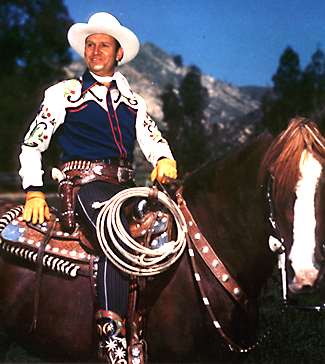
Of course cowboy boots come with so much symbolic weight it’s a wonder I can even walk in them. The cowboy is the most iconic, romantic, heroic figure in American history. Lean, laconic, and independent, he represents the way we like to imagine ourselves: tough as nails, self-reliant, unafraid of violence but guided always by a rigid code of honor. Owen Wister and Zane Grey helped establish the archetype, and Roy Rogers, Gene Autry, Audie Murphy, Gary Cooper, John Wayne, and Clint Eastwood, among many others, elaborated it for generations of children (and adults) on screens both large and small. In an increasingly urbanized society the image of the cowboy may seem quaint and anachronistic, but it can still exert a powerful pull.

All of which only partially explains why I just bought myself a pair of Luccheses—NV1503s in waxed and burnished olive leather, if you must know, as in the photo above—and why that’s such an unlikely thing for me to have done. Allow me to explain:

I have traditionally had a sort of ambivalent attitude toward cowboy boots. I have tended to associate them more with a certain kind of urban Texan—plump, loud, razor-cut hair, wearing pressed jeans and a white shirt, driving a too-big pickup—than with the rugged individualist of the bygone frontier. And then of course there’s that whole unfortunate association with a certain professional football team based in Dallas.

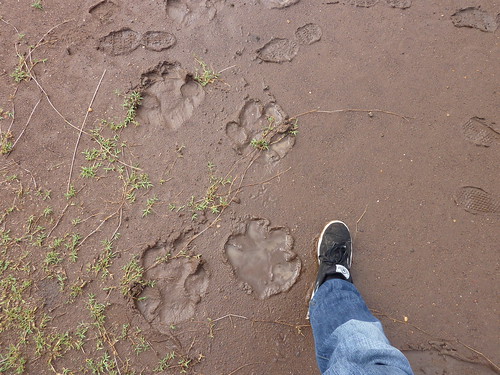
Moreover, my feet are famous throughout the tri-county area for their extraordinary width and flatness. They are the Great Plains of footdom. My footprints resemble the round tracks of a hippo rather than the delicately scalloped tracks of most humans.

Perhaps it’s not surprising, then, that I have a long and often painful history with cowboy boots. I bought my first pair in London, of all places, at a very trendy boutique on Chelsea’s Kings Road, during our honeymoon many years ago. (I know, I know: what kind of idiot travels from Texas to England to buy cowboy boots? All I can say in my defense is that Heather had just bought a pair, and I didn’t want to be left out. Also, I was young and foolish.) They were a sort of honey-colored suede, with white stitching, lethally pointed toes, and rakishly undercut heels. They were also one size too small, and way too narrow. The shopkeeper—a pox upon his cynical soul—assured me that they would stretch, which was of course utter nonsense. I probably wore them no more than twice, each time suffering horribly while they were on and requiring a great deal of assistance to peel them off my swollen feet, before finally coming to my senses and giving them away.

A few years later Heather’s parents gave me a pair of boots for Christmas. They were made of thick reddish-brown leather, completely devoid of decorative stitching, with squarish toes instead of the classic pointy ones—in other words, they weren’t really cowboy boots at all. They were, however, the correct size. I wore them a few times, usually at Christmas parties and the like, before deciding that they were just too heavy to wear much in Texas.

But these new Luccheses fit my astoundingly wide, flat feet right out of the box, and they are lightweight enough to make me think I might be able to wear them comfortably even when the temperature is above freezing. Moreover, they are quite dazzlingly beautiful: fairly restrained, as cowboy boots go, with decorative contrast stitching on the shaft and more subtle stitching on the insteps, though the toes are sharply pointed.

How often will I actually wear them? I have no idea; I may ultimately conclude that they make me look more like this guy than this guy. Also, we seem to be moving into spring, and my usual warm-weather wardrobe involves shorts, a T-shirt, and Birkenstocks, with a Hawaiian shirt and sneakers for more formal occasions. Still, I like looking at them in my closet, and it’s nice knowing they’re there if and when I need them.

The bottom line is that these boots are a symbol of my willingness to take on the trappings of my time and place. We live in Texas, and we own a ranch; we are Westerners, in other words, and we yearn to partake of the best of that heritage. I’ve made no secret of my loathing for many aspects of contemporary Texas (just ask Heather). Wearing cowboy boots is a step—a small step, perhaps, but a significant one—in my long journey toward acceptance and acknowledgment of who and where I am. This is my life, and these, believe it or not, are my boots.

Next on my shopping list: a Nudie’s suit!
—Martin


What we’re reading
Heather:
William H. Eddy, The Other Side of the World: Essays on Mind and Nature
Martin: Philipp Meyer, American Rust

Friday, February 11, 2011

Meat and flourishment: carnivorocity, take three


Martin’s post last week describing the first slaughter (and I use the word “slaughter” advisedly) in our new endeavor as purveyors of bison meat elicited a comment that urged us to consider the ethical fault line (presumably) running through every conscience, that unsteady place where we find ourselves rationalizing our actions to ourselves or to whatever audience our imaginations conjure up.

Martin tried to make his/our unease clear with the post’s title: Bloody Hands. So I’m wondering once again about the ethics of carnivorocity, as visible and treacherous a fault line as abortion, euthanasia, gun control, climate change, or cloning: when you stand on one side of the fault line, it’s easy to think that the earth itself will justify you when it opens up and swallows the dummies over there, proving that you were on the right side, at which point you can stop worrying all the time, for heaven’s sake, and go on your merry way without thinking about the issue ever again.

As usual, diving into the conversations available on the internet just sucked me deeper into the murk. A defense is available for every possible position and offered with wildly varying degrees of civility: meat-eaters supporting vegans and trashing vegetarians; meat-eaters sneering at any thought of self-restriction; vegetarians and vegans calling meat-eaters all sorts of names; vegetarians acknowledging that some meat-eating is environmentally acceptable; meat-eaters acknowledging that American meat production and consumption is for the most part grotesque. What’s a utopian-minded bison rancher to think?

Serendipity, as usual, is my guide: in chasing internet rabbits down their holes, I found a momentary resting place in a review of Maggie Kozel’s book The Color of Atmosphere: One Doctor’s Journey In and Out of Medicine. After describing a flummoxing patient she had as a second-year medical student, Kozel said, “[I] devoured the answers without asking the right questions.”

Of course, if you’re obsessive the way I am, then you’ll immediately begin worrying about what the right questions are, as in, if I’m “right” then others must be “wrong.” One of the hallmarks of the debate about meat-eating and its impact on the environment or the individual soul is the array of statistics and science that each side has amassed to prove the objective superiority of its argument. I’ve been persuaded by both sides and neither side, depending on the time of day, what I’ve just read, the weather, my most recent meal, and/or the health of my family, among other random criteria.

In other words, I don’t think science and statistics by themselves allow us to ask the right questions, since apparently convincing evidence can be found to shore up either side. Eating is one of those human activities rich with multiple levels of meaning; expecting questions directed at a specific level to adequately address the full range is a little like expecting a monoculture to support the diversity a polyculture allows. Although science poses some vitally important questions when it examines the issue of meat-eating, the nature of its inquiry must ignore other equally pressing but less quantifiable questions, such as, what conditions allow a multi-species community to flourish? Does eating meat (by humans) contribute or detract from our community’s flourishment (a word coined by our friend Hugh Fitzsimons of Thunder Heart Bison)?

I hear the howls of protest even before I finish typing this sentence: how do you measure flourishment? Who decides the standards? Invalid! Too subjective! Well, yes. That’s what makes this a fault-line issue: it addresses the limits of our humanity and so necessarily includes subjective experience. To be honest, I don’t know how to measure flourishment; I suspect you just know it when you see it. And when you see it, you’re moved to describe it, knowing that the urge will be frustrated to at least some degree because flourishment, like all fruit, is the result of such a complex interaction of elements in space and time that any description will be incomplete. And of course it’s not a steady state; it waxes and wanes as circumstances change and sometimes double back on themselves.

In this context, the question of whether meat-eating is ethical can be answered unequivocally: it depends. One of the preconditions for flourishment is a sense of justice, a perspective that includes but also rises above the immediate tit-for-tat concerns of fairness. The scope of justice includes not just humanity but the earth itself—and perhaps the cosmos. It unrolls over the course of history, recognizing that particular injustices sometimes take generations, centuries, or millennia to wither, even with the powerful witness and effort of prophets and their followers. As I said in an earlier post, it may be that vegetarians and vegans are living forward into a time where justice is more fully realized. At the same time, issues of fairness and justice press at us every moment in this world where the lion and the lamb cannot yet lie down together, where predators are a vital part of an ecosystem that has developed in sync with domesticated animals.

Can meat be produced and consumed in a way that encourages justice and, hence, flourishment? I think it can. There are multiple instances of communities and societies that eat meat and live within that delicate balance that looks to the long-term well-being and dignity of the system as a whole, places like Joel Salatin’s Polyface Farm, although there are many, many others. (We’d love to hear some of your favorites.) There are multiple instances of communities and cultures flourishing without eating meat, most notably for the purposes of this post the Hindu cultures whose vegetarian cuisines I eat with great pleasure. (We’d love to hear some of your favorites.)

Likewise, there are communities and cultures that eat meat without flourishing, including most of the industrialized world, where concern for short-term profits and their consequent incitement of unrestrained appetite smother any hope of flourishment under mountains of animal excrement and anguish. Those places that encourage us (in the industrialized world) to measure the value of food in one way only—cheap is best—smother flourishment. Food is at the center of family, of community, of myth, of life. To reduce its essence to a single component is to denature its multivalent nutritional value.

Back to the ethical fault line, that place we stand uneasily, knowing that we may be swallowed: may those of us who recognize the fault line join hands—bloody or not—across the chasm and help each other seek the firmer footing of justice as our foundation. Flourishment will surely follow.
—Heather


What we’re reading
Heather:
Hilary Mantel, Wolf Hall (still!)
Martin: Rodney Crowell, Chinaberry Sidewalks

Friday, February 4, 2011

Bloody hands: bison harvest at Madroño Ranch


The very first fruits (though “fruits” hardly seems the right word) of our very first bison harvest are ready to sell, but getting to this point has been a long and sometimes frustrating process. The last stages of that process were both harrowing and, in a dark way, fascinating; squeamish sorts may want to stop reading here. “Meat is murder,” the Smiths sang in 1985, and whether or not you agree with them, it is undeniably a bloody business.

The harvest took place on Monday, January 24. We’d been both dreading and looking forward to it, and planning for it, for months; Robert, our redoubtable ranch manager, had ingeniously cobbled together a refrigerated trailer to haul the dead animals to Mercantile Meat, in Utopia, to be turned into packages of meat, and we had long since chosen the two young bulls, the bison equivalent of obnoxious adolescents, who would be the first to go. Despite all the planning, though, the reality of assuming responsibility for the death of so large and magnificent an animal was more than a little intimidating.

Early on that beautifully clear but chilly Monday morning Heather and I drove up to the flat near Robert’s house, where the herd had gathered. There we met Robert, Meat Inspector Mike, and Robert’s buddies Robert (whom I will henceforth call Other Robert) and Keith (whom I will henceforth call Not Robert), who were there to assist. We all gathered in a circle while Heather read a prayer she’d written for the occasion, which I suspect disconcerted several of those present. Then Robert, Meat Inspector Mike, and Not Robert climbed into Robert’s Chevy Tahoe with Robert’s .270 rifle while Other Robert, Heather, and I kept a safe distance.


A few minutes later, it was over. Two rifle shots shattered the stillness of the morning, and after each, even before we’d finished flinching, 1,500 pounds of bison was dead on the ground. This was the moment we’d been waiting for, and fearing, and the magnificence and sorrow of it were overwhelming. Both deaths were instantaneous and humbling, and strangely intimate; all the world seemed somehow to have narrowed to this short stretch of dirt road; other places, other people, were unimaginable. Robert, Other Robert, and Not Robert worked quickly and efficiently to bleed the first carcass and load it into the trailer, and we turned our attention to the second.

At this point things got really interesting. We knew that bison tend not to scatter when they hear gunfire or see one of their number fall; in fact, frequently the other members of the herd gather around the victim, curious about what has happened to him or her, or perhaps paying their last respects, before getting back to business as usual. But this time, the head bull went over to the second carcass and repeatedly butted and pawed at it, determined to revive his fallen comrade.


This was a problem, since we were not particularly interested in arguing with nearly a ton of angry bison. By yelling and waving, we convinced him to back off a few feet, just far enough so that we could go to work on the carcass, but Robert kept one eye on the angry bull (and on Heather, who had appointed herself the designated angry-bull-shooer). He glared at us throughout the process, but kept his distance.

With both carcasses safely inside the trailer, which had been set to minus-ten degrees, Robert, Other Robert, and Not Robert climbed into the cab of Robert’s pickup and our little caravan set off for Utopia, some thirty miles away.


All had gone about as smoothly as we could have hoped to this point, but we encountered some metaphorical bumps on the road to Utopia. As Robert’s pickup was hauling the laden trailer up FM 337 west of Medina, smoke started pouring out from under the hood: a blown radiator fitting. They limped to the top of the hill, where they found a couple of empty whiskey bottles at the side of the road and, after coasting down the other side, filled them with water from Mill Creek which they poured into the overheated radiator.

Thankfully, the truck made it the rest of the way into Utopia—a little later than we’d planned, true, but it made it. After Robert backed the trailer up to the tiny loading dock we had to drag the dead bison out of the trailer, across the loading dock, and through the tiny door and into the plant—not an easy undertaking, and one which required the combined efforts of Robert, Not Robert, Other Robert, and me, as well as Joe, the owner, and a couple of plant employees. When we were done, I had blood on my hands literally as well as figuratively.


After all our efforts to honor and respect the death of the bison, the way in which they entered the plant seemed disrespectful and undignified. But necessity is a mother, as we say at our house, and it was a tremendous relief finally to have them there.

When we got back to the ranch, we were still a little stunned by the morning’s events. It had already been a long day, and we were still a little unnerved by the magnitude of what we had seen and done (or, more accurately, caused to be done). And we know we still have a lot of work ahead of us; actually figuring out how to sell several hundred pounds of bison meat is way out of our comfort zone. (We’re hoping to sell all of it wholesale, and only in the Bandera/Kerr County area.) But we feel like we’ve taken a major step.

After witnessing a bison harvest at our friend Hugh’s ranch several years ago, Heather wrote a poem called “Sacrifice.” The details are necessarily different, but it still captures some of what we felt:

Ash Wednesday: one year I stood in thick cool
dust along with several others, waiting for
an ancient drama to begin again,
waiting as if I weren’t an actor in it
too. Through the thorny brush the bison
entered, awkward bodies wary, dense beneath
the bulky wreath of muscle draped across
their shoulders. One shook her head—so massive
that her horns looked dainty—watching us with
eyes black as moonless snake-filled summer nights.
We climbed into the pick-up, all except
the shooter, who moved with quiet purpose
as we sat in silence, waiting for the shot
that finally came—shocking, if expected—
and penetrated mercifully, the cow dead
before she finished sinking to the dust.
Another man performed the bleeding when
she was hoisted, limp, still warm, head-down,
carotid artery cascading blood
a color and consistency I had
never seen before, a frothing cochineal
oasis in the thirsty dust. I asked
the shooter if and how he steeled himself
for harvest. Pray two days before, he said,
Sit quietly. We watched the hands prepare
her for the journey, another kind of life.
Her body, treasury of light and grass
and epic wanderings, will enrich
a larger body now, a body more than
body when it knows the incarnate cost—
be it hoofed, winged, scaled or even rooted
life—of nourishing itself. Around us,
bushes burned in lilac, white, and yellow
flames, their incense rising toward the hawks
and caracaras, wheeling in mandalic arcs,
awaiting our departure so to gather
in the dust and then consume the bloody
pool, their bounden duty.

Perhaps subsequent harvests at Madroño Ranch will become more or less routine; doubtless we’ll have a better idea of what to expect, and be somewhat better prepared. (We may even buy a more powerful pickup, one that can pull the trailer to Utopia without overheating.) But I pray we never completely lose the profound sense of awe and, yes, sorrow that attended this first harvest. May we never lose the full awareness of what we do and have done. May we remain humbly thankful for the life—and death—of these magnificent animals. May I always remember the blood on my hands.
—Martin


What we’re reading
Heather:
Hilary Mantel, Wolf Hall
Martin: Roy Bedichek, Adventures with a Texas Naturalist