Friday, June 25, 2010

The gift economy


Martin’s last post about our entertainingly (or so we hope) ill-prepared entry into the marketplace has got me thinking. (Martin says the most terrifying words in the world are “Honey, I’ve been thinking...” when they come out of my mouth. Reader, beware!)

In preparing for the seminar we’re going to lead at the Gemini Ink Summer Lit Fest in San Antonio next month, I’ve been rereading Lewis Hyde’s The Gift: Creativity and the Artist in the Modern World. The description of our seminar asks all the Big Questions about our hopes and plans for Madroño Ranch. I’m not sure what prompted me to look at The Gift again, but whatever it was, it was, well, a gift; Hyde beautifully untangles many of the ideas knotted in my head about those hopes and plans.

He begins by identifying the two distinct economies in which a work of art exists: the market economy and the gift economy. While a work of art can exist without a market, it cannot exist without a gift. Harlequin Romances, for example, follow guidelines set by market research and sell very well. But are they works of art? Probably not. While writing one requires a certain level of competence, a Harlequin Romance probably doesn’t have a foot, or heaving bosom, in the gift economy.

Hyde develops a theory of the gift, which of course has multiple levels of significance. Its economy is marked by three related obligations: to give, to accept, and to reciprocate. Gift exchange is what one early theorist called a “‘total social phenomenon’—one whose transactions are at once economic, juridical, moral, aesthetic, religious, and mythological.” Gift exchange is an issue in medical ethics as well, especially with reference to organ transplants: what is the status of body parts? Is it appropriate to commodify what has traditionally been regarded as a gift? What are the consequences when something moves from the gift economy to the market economy—when worth and value are confused?

Hyde cites the case of the Ford Pinto, a car that had a tendency to spill gas in low-speed collisions, a defect that killed at least 500 people. An easy fix for this defect existed, but after a cost-benefit analysis which valued a human life at $200,000, Ford decided that the costs of fixing the Pinto exceeded the benefits. While the decision may have made sense from a market perspective, it ignored the fact that most of us participate in another economy as well, one in which the gift of life cannot be assigned a dollar value.

One of the marks of a gift is that it is always in motion, transferred from one individual or community to another. It must be consumed (i.e., eaten, immolated, thrown into the sea) or given away; otherwise, it ceases to become a gift and becomes mere property. A true gift is the antithesis of personal property. Hyde says that “a gift is consumed when it moves from one hand to another with no assurance of return.... A market exchange has an equilibrium or stasis; you pay to balance the scale. But when you give a gift there is momentum, and the weight shifts from body to body.” Gift economies generally operate in relatively small communities like families, brotherhoods, or tribes; market economies tend to emerge at the limits of gift economies as a means of negotiating with outsiders. While my truncated description makes gift economies sound primitive, they aren’t; Hyde cites the (ideally) unrestricted flow of ideas within the scientific community as an example. When ideas become remunerative for an individual or a portion of the community instead of free to the entire community, the gift economy dries up and the spirit of the group evaporates. The gift of ideas ceases to move.

Gift economies foment community; market economies fragment it—another iteration of the endless wrestling match between the Many and the One. One of the great benefits of a market economy—freedom from bondage—has significant limits. Where “the market alone rules, and particularly where its benefits derive from the conversion of gift property to commodities, the fruits of exchange are lost. At that point commerce becomes correctly associated with the fragmentation of community and the suppression of liveliness, fertility, and social feeling. For where we maintain no institutions of positive reciprocity, we find ourselves unable to... enter gracefully into nature, unable to draw community from the mass, and, finally, unable to receive, contribute toward, and pass along the collective treasures we refer to as culture and tradition.”

So here's what I’ve been thinking, honey: industrialized nations have converted the gift properties of nature into commodities. Any aboriginal people could have told us that disaster would ensue as a result of buying and selling what was pure gift, something not earned but given to us in abundance that the gift economy demands we pass on to our children in its original abundance.

I’ve also been rereading Bill McKibben’s The End of Nature, in which he quotes the journals of the early American artist, writer, and wanderer George Catlin. Riding north to the Missouri River, Catlin found a campsite “in one of the most lovely little valleys I ever saw, and even far more beautiful than could be imagined by mortal man... an enchanting little lawn of five or six acres, on the banks of a cool and rippling stream, that was alive with fish; and every now and then, a fine brood of ducks, just old enough for delicious food and too unsophisticated to avoid an easy and simple death. This little lawn was surrounded by bunches and copses of the most picturesque foliage, consisting of leafy bois d’arcs and elms, spreading their huge branches as if in offering protection to the rounded groups of cherry and plum branches that supported festoons of grapevines with the purple clusters that hung in the most tempting manner over the green carpet that was everywhere decked out with wild flowers of all tints and various sizes, from the modest sunflowers, with their thousand tall and droopy heads, to the lilies that stood, and the violets that crept beneath them.... The wild deer were repeatedly rising from their quiet lairs, and bounding out and over the graceful swells of the prairies which hemmed it in.” McKibben comments, “If this passage had a little number at the start of each sentence, it could be Genesis....”

So with Hyde and McKibben in the front of my mind, I was stunned to read of Judge Feldman’s recent injunction against President Obama’s moratorium on offshore drilling, which just proves that I live in a lovely little bubble along with fairies and elves and a herd of unicorns. I do not argue against the fact of the market economy any more than I argue against the changing seasons. Nor do I argue against the gravity of depriving tens of thousands of Gulf Coast residents of economic stability. But those who value the treasures of the Gulf through a market-driven cost-benefit analysis need to remember that they’re operating in a gift economy as well, and that there will be an audit.

Back to Gemini Ink and Madroño’s mission. We hope that Madroño will operate in a way that recognizes the beauty and necessity of both markets; after all, I’m out there hawking the virtues of bison meat. But I hope that in producing that meat we recognize the gift of abundance it brings us, that we honor that gift, and that we pass it on to our children and to the community in and around the ranch.
—Heather


What we’re reading
Heather:
Bill McKibben, The End of Nature
Martin: Paul Hawken, The Ecology of Commerce: A Declaration of Sustainability

Friday, June 18, 2010

Adventures in Business-Land


This week, during a solo trip to Madroño, Heather spent much of her time knocking on doors in Kerrville, Bandera, Medina, Tarpley, and vicinity, hoping to convince chefs and restaurateurs to buy locally raised, grass-fed bison meat from the ranch. Our initial herd of fifteen animals has grown to thirty-six, including a couple of young males who have already, by their obstreperous behavior, nominated themselves as the first to be harvested this fall.

I’m not particularly objective, of course, but I think she could make a pretty compelling case to those potential customers. To wit:
  • Bison meat generally has more protein, iron, and nutrients than beef or chicken;
  • Bison meat is lower in fat and calories than beef or chicken;
  • Our bison spend their lives ranging freely on Madroño’s 1,500 acres, and never set foot on feedlots;
  • Our bison are never injected with or fed growth hormones, steroids, or any other supplements;
  • To ensure the quality of the meat and reduce stress on the animals, our bison will be field-harvested on site under the supervision of a licensed inspector from the Texas Department of State Health Services.
Another point we hope to emphasize is that, since we’re a small-scale, local operation, our customers will also be our neighbors, which means we’ll be accountable and responsive to them in a way that Big Agriculture isn’t. It also means that every penny our customers spend on our meat will stay right here in Central Texas.

Our hope is that the sale of bison meat, eggs, and produce from Madroño will (eventually) provide significant financial support for the residential center for environmental writers we hope to open at the ranch. We know there’s a growing market in Austin for fresh, local, sustainably raised food, but we’re not planning to sell in Austin—too complicated and expensive logistically, plus we wouldn’t want to compete with our friend and mentor Hugh Fitzsimons of Thunder Heart Bison—so we’re hoping to find a comparable demand in the area right around Madroño. (And based on Heather’s schmoozing this week, the early returns are encouraging.)

Make no mistake, though: going into business—especially the business of turning a creature into a commodity—presents all kinds of challenges for a couple of recovering English majors. Virtually all of my adult work experience has been in the nonprofit sector; shifting to something that is explicitly designed to make money, no matter how noble we believe the cause to be, is a bit of a shock. (A couple of years ago we were told that the mother of one of our daughter’s schoolmates referred to us as “just a couple of old hippies.” She did not intend it as a compliment.) As entrepreneurs, we are babes in the woods.

I imagine our first bison harvest will be quite an adventure, as will the processing and distribution that will follow. We’re already moving out of our comfort zone—I’m pretty sure Heather never imagined herself as a salesperson—and confronting a couple thousand pounds of dead buffalo will move us even farther into unknown territory. I mean, business plans? Financial projections? Balance sheets? Puh-lease!


Of course, it’s probably good for us complacent old hippies to be forced out of our comfort zones occasionally; we just have to hope that we don’t make a total cock-up of it.

On the other hand, maybe we don’t want to get too caught up in this whole mercantile thing. I’ve been reading Ian L. McHarg’s influential book Design with Nature, originally published in 1969. McHarg, an expatriate Scot who pioneered the field of environmental planning in the United States, writes witheringly of the prevailing view in his adopted homeland: “Neither love nor compassion, health nor beauty, dignity nor freedom, grace nor delight are important unless they can be priced. If they are non-price benefits or costs they are relegated to inconsequence. The economic model proceeds inexorably towards its self-fulfillment of more and more despoliation, uglification and inhibition to life, all in the name of progress – yet, paradoxically, the components which the model excludes are the most important human ambitions and accomplishments and the requirements for survival.”

Of course, McHarg is hardly the first thinker to decry a fixation on financial gain. In the sixth century BCE, Lao-Tzu put the same sentiment somewhat more pithily: “Chase after money and security and your heart will never unclench.” In a similar vein, I Timothy tells us that “the love of money is the root of all evil.” (I Timothy is also the source of the phrase “filthy lucre,” by the way.) Jesus himself reminds us, in Matthew’s gospel, that “You cannot serve both God and Mammon.”

And yet, and yet... we live in a fallen world, and money is an intrinsic part of it. The love of money may be the root of all evil, but money itself is not necessarily evil. (Or, as Peter J. Gomes writes in The Good Book: Reading the Bible with Mind and Heart, “Wealth is not a sin, but it is a problem.”) The trick, obviously, is to learn money; to use it; to see it as a means to an end, not an end in itself. I mean, why can’t Madroño become an example of enlightened capitalism, a model of a countercultural way of thinking about commerce—a way that emphasizes the small-scale, local, sustainable long term, instead of the bigger-is-better, metastatic, smash-and-grab short term? I think we’ve all seen enough of the latter way of thinking, and its consequences, to last us a good while.

Of course, it’s easy for me to preach self-righteously about the corrupting dangers of the profit motive; we’re unlikely to make enough money selling bison to threaten the state of our souls. Indeed, just breaking even seems like an ambitious goal right now. I'm sure we’ll be writing more about Heather and Martin’s Adventures in Business-Land in the weeks and months to come. In the meantime, pray for us – and our bank account.
—Martin


What we’re reading
Heather: Richard Powers, The Echo Maker
Martin:
Ian L. McHarg, Design with Nature (still)

Friday, June 11, 2010

Home with the armadillo: a love letter to Texas


Recently we and our three kids went to Martin’s native San Francisco to help celebrate his father’s eighty-fifth birthday. The five of us spent an afternoon walking along the cliffs of Point Reyes National Seashore, where the ground was springy, the wind was fierce, and in some spots along the trail we pushed through wildflowers up to our shoulders. Hawks wheeled through the cloudless sky, elk sunned in the lees of the cliffs, and the ocean’s shining hide swelled and stretched like the flanks of a well-groomed, self-satisfied, and very large cat. At one point, our son Tito turned to us and said incredulously, “You mean we had a choice between this and Texas?”

Yes, well. Despite Martin’s entertaining recent post on how he has come to terms with living in Texas, he has spent much of his time in the Lone Star State not entirely convinced that civilized life is possible here—certainly not from May to October, and frequently not after elections. I grew up spending summers in Colorado, where despising Texans is a competitive sport, and as a teenager and young adult I also got to spend time in places of unsurpassed beauty such as the highlands of Guatemala, the Swiss Alps, the Masai Mara, Paris, and the Canadian Rockies. And yet I love Texas and can’t imagine living anywhere else. Time for that apologia, son.

Some of my love of Texas is just an old bad habit. Many fine writers have noted how people stubbornly cling to the smells and sounds of their childhood, sensations that undermine the idea that time moves only into the future. Much of my first decade was spent in the then-unbroken woods just north of the San Antonio airport. The uncanny whinny of the screech owl, the languid moan of the mourning dove, the overpowering sweetness of mountain laurel at Easter, the loneliness of the north wind on a clear winter day: each time I experience these now I’m reminded that the girl who was gripped by them forty years ago is still inside me. She isn’t gone, despite all appearances to the contrary.

There’s more to it than nostalgia, though. Texas tells stories about itself, some of them true. While I know that many find this self-conscious tale-telling irritating—maybe even pathological—I find it sort of comforting. So maybe we actually lost the battle of the Alamo. So maybe the Texas Rangers weren’t a bunch of ethically ripped superheroes. So maybe every cowboy doesn’t have the soul of a poet. But there seems to be a (nearly) conscious yearning for the power of myth to work among us with these stories. Of course, there are stories Texans tell about themselves that I loathe: bigger is better, we should each of us be our own posse, it’s manly to kill animals with automatic weapons and spurn the meat—but this is a place that recognizes the power of stories to shape reality.

One of the stories told over and over in multiple variations is the power and variety of the land itself. One of my favorite signs is on Interstate 10 at the Louisiana-Texas state line. It reads something like this: Beaumont, 20 miles; El Paso, 937 miles. While I have lived only in Central Texas—in some ways the easiest part of the state to love—I’ve learned to respect and admire many of the landscapes between the ends, from east to west and from north to south. I make no claims to anything but the cursory knowledge that comes from road trips involving grumpy children – me and my siblings years ago, and more recently our own children. My parents drove us to Colorado every summer through the Panhandle; Martin and I chose instead to make our annual pilgrimage by way of Fort Stockton and then north through the Pecos wilderness. One hot summer day the gas tank light came on when we were halfway through the hundred inhospitable miles between Pecos and Loving, New Mexico. The prospect of running out of gas here at midday with a dog and several children concentrated the mind wonderfully and caused me to sweat through my clothes despite the car’s air conditioning. (We managed to make it to the next filling station.) We passed by multiple examples of the land’s indifference to human striving: we often threatened to abandon our squabbling children in Orla, an oil ghost town baked into dusty submission, if they didn’t behave. (It didn't help.)

We always planned our route back to Austin through Balmorhea and Fort Davis and, inevitably, a thrashing summer thunderstorm would force us off the highway—or so we assumed, since we couldn’t even see the highway through the mud on the windshield. But before the storm hit, you could see the Guadalupe Mountains to the west, and when we made it to Marfa and the high grasslands, we—well, some of us—were exhilarated by the wind and the shadows, by the pitilessness and delicacy of the Chinati Mountains.

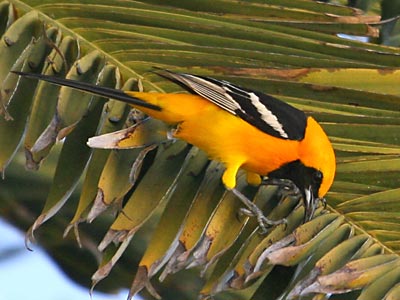
At the other end of the spectrum, I love the featurelessness of the south Texas brush country, an admittedly perverse passion. In March, the mesquite bloom neon green. At least as many things will sting, bite, or poison you as won’t. As our friend and mentor Hugh Fitzsimons of Thunder Heart Bison says, there are two seasons in south Texas: January and summer. At the rare watering holes, there are birds of remarkable beauty: green jays and hooded orioles and American widgeons. Once in April, on my way back from Piedras Negras and Eagle Pass, I drove through a migration of yellow sulphur butterflies that extended for dozens of miles. When I got back to Austin, probably a dozen people pointed out the grotesque beauty of my Suburban’s grille, which had become an extravagant collage of dead butterflies.

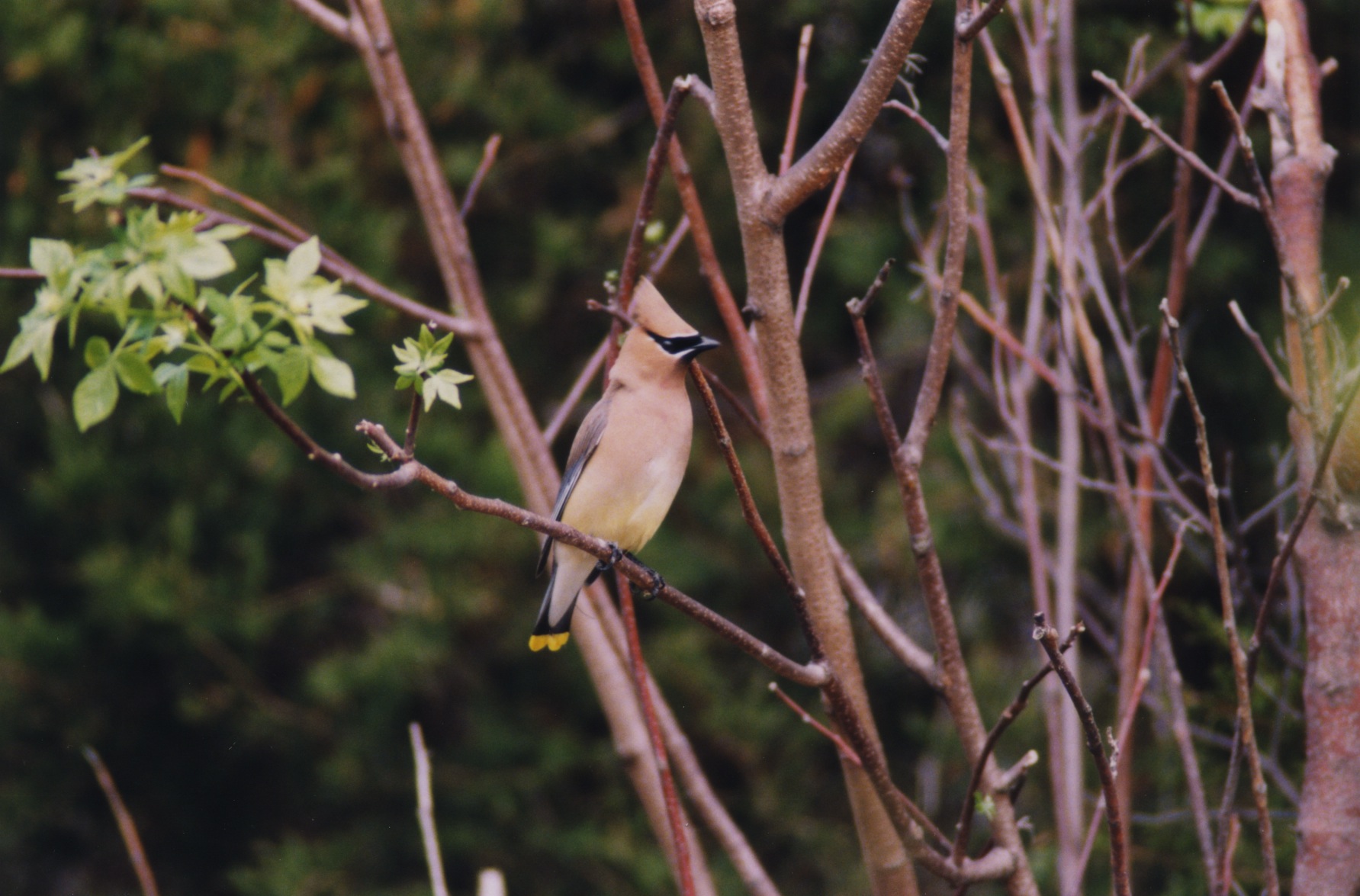
I’m leaving a lot of verses out of my Texas love song, but the last verse here has to be the one about the Hill Country. Loving the Colorado Rockies as much as I love any landscape, I’ve been trained to seek out views, to climb and pant and strain and exult upon reaching the summit. Well, the Hill Country upends that paradigm. Once you make it to the top of the hill—at least at Madroño—the landscape sinks into an unexpected anonymity. The personality of the Hill Country is in its draws and canyons, the intimate interstitial places where oaks and pecans crowd together, and great slabs of limestone create undulating walls and pools, and ferns and cedar sage grow with the demure confidence of cloistered beauty. In February, the draws ring with the slurred chatter of hundreds of intoxicated robins and waxwings. The draws also snarl with the movements of feral hogs, coyotes, and mountain lions, and vibrate with the possibility of rattlesnakes on sunny shelves, the clatter of unseen hooves in caves and cedar brakes, and the songs of maddeningly invisible birds that suddenly move, shine, and disappear again before they can be named. The draws protect and expose, invite and terrify. You want stories? You’ll find them here.

So, son, I’ll be happy to spend time in California, especially in August, even if the locals make fun of how I talk and where I’m from. But I’ll always want to come home.
—Heather


What we're reading
Heather: Belden C. Lane, The Solace of Fierce Landscapes: Exploring Desert and Mountain Spirituality
Martin: Ian L. McHarg, Design with Nature

Friday, June 4, 2010

Listapalooza: top ten Texas movies


Yup, another one of those crazy lists. This time we thought we’d offer our ten favorite movies about (or set in, or somehow related to) Texas. Pass the popcorn, and turn off that damn cell phone!

Dancer, Texas Pop. 81
Giant
The Last Picture Show
Lone Star
Lonesome Dove (yes, we know it was originally a TV miniseries, but give us a break!)
No Country for Old Men
The Searchers
Tender Mercies
Terms of Endearment
The Three Burials of Melquiades Estrada

Bonus movie trivia: The iconic silent Western star Tom Mix, who claimed in his autobiography that he was born and raised on a ranch on the Rio Grande, was actually a native of Pennsylvania who never lived in Texas, though governor James Allred named him an honorary Texas Ranger in 1935.
—Martin


What we’re reading
Heather: Anne Fadiman, The Spirit Catches You and You Fall Down: A Hmong Child, Her American Doctors, and the Collision of Two Cultures
Martin: David Grann, The Lost City of Z: A Tale of Deadly Obsession in the Amazon

Friday, May 28, 2010

Still more on violence: there will be blood


The other day, I stopped my car to chat with neighbors (a frequent occurrence in our chatty neighborhood). We quickly got to the topic of the Deepwater Horizon oil spill and its spreading devastation. D. told me that he’d heard an interview on National Public Radio with a worker at an oil and gas pipe factory in Youngstown, Ohio, after President Obama had spoken there to promote his economic policies. This worker was notably unimpressed with the president’s moratorium on offshore drilling. (According to the transcript on the NPR website, the worker, Larry Collins, actually said, “I’d like for [President Obama] to say it’s a go and let’s start drilling. The more rigs we have out there drilling, the more demand for our product.”)

To D., I snorted something snarky about Mr. Collins’s self-centeredness and shortsightedness and then realized in the midst of sneering that I had left my car running while we were chatting. Once I got home, I turned off lights that had been left on all day, presumably so our dogs and cats wouldn’t need to use their reading glasses. I remembered my father doing the same thing during the energy crisis of the 1970s, usually while asking, “Do you think your daddy owns the electric company?”

I recount this unremarkable scenario as part of my ongoing musings about violence and our usually invisible participation in and promulgation of it. In light of Martin’s last post, this seems like a precious way to continue the conversation about our individual and collective violence footprints, but after turning off the ignition and the lights, I realized that Mr. Collins and I had more in common than I had initially acknowledged. Am I prepared to examine my energy consumption—from the mechanical pencils in my desk drawer, to the food I eat, to the trash I throw away, to the investments I make—and change my expectations and habits? Am I Just Saying No to habits that keep drilling an attractive option to companies like British Petroleum? Well, no, not really. I keep hoping someone will invent something that will painlessly neutralize my energy cravings, sort of like those diet pills advertised in women’s magazines. But as Bill McKibben points out in an article in the latest issue of The Christian Century, we are addicted to cheap oil: “You think maybe, just maybe, that the needle BP stuck into the bottom of the sea flows straight into our veins?”

To me, one of the most appealing facets of the American character is our buoyant sense of optimism. Our hopefulness attracts hopeful people of all other nationalities, like Saul Griffith, featured in The New Yorker’s May 17 “Innovators Issue.” Born and raised in Sydney, Australia, he came to the United States in 1998 as a doctoral student at MIT, initially to work on electronic ink – the idea which eventually became the Kindle. The author of the New Yorker article, David Owen, describes Griffith thusly: “His hair, which is reddish brown, is usually an omnidirectional mess, and he often looks as though he had dressed from the bottom of the laundry pile.” I love that “omnidirectional,” which apparently describes Griffith’s brain as well as his hair: in 2004, he won the $30,000 prize awarded to the MIT student who shows great promise as an innovator, and in 2007 he received a MacArthur Foundation “genius grant.” Since then, among other things, he has been thinking about and working on energy efficiency.

My favorite anecdote in the article describes Griffith, who now lives in San Francisco, riding to his lab on the prototype of an electricity-assisted tricycle he had designed. The tricycle included an enclosure for carrying cargo, and on the rainy morning in question the cargo was his infant son Huxley. The rain caused a short circuit in the tricycle’s wiring, resulting in a small fire under Huxley’s seat, which Griffith extinguished after hauling the baby off the trike. Writes Owen, “Huxley had reacted placidly to the crisis, as though, at eight months, he was already accustomed to life as the child of an inventor.” Genetic buoyancy and hopefulness at work here, clearly.

But the article charts Griffith’s growing disenchantment with technology as a means of avoiding the ecological disasters lying ahead. The things that he and his colleagues produce, while ingenious, often aren’t addressing the actual problems, because the problems aren’t fundamentally technological in nature. Griffith believed, for example, that waste from discarded cellphones could be reduced by the production of hand-cranked cellphones, using technology developed in the 1920s. But the problem of discarded cellphones isn’t technological, he realized, it’s cultural; people discard their cellphones because they want the latest model, not because their old phones stop working.

Griffith also notes that the nations with the lowest energy needs and highest standards of living, like Portugal, built their infrastructures long ago, when energy was much more costly than it is today. Houses built before the advent of cheap coal and oil were (and remain) energy efficient because they had to be; they are small, with small windows and thick walls. So here’s the kicker: “Such low-tech ideas are crucial to forming viable environmental strategies, Griffith believes, because implementing more complicated technologies... would consume natural resources and generate greenhouse gasses at unsustainable rates.” Griffith currently lives in what he describes as a “thermodynamic nightmare” of a house in San Francisco’s Mission District. “If I were building a house from scratch,” he says, “I could totally design a thermodynamically amazing, almost zero-energy house—but a huge amount of energy would go into building it, just in the materials, and right now most of that energy would come from burning fossil fuels.” In other words, in trying to use technological innovation to solve the problems of our increasing demand for energy, we’re more often than not acting like Wile E. Coyote, busily sawing off the branch of the tree we’re sitting on.

Assuming that Griffith has a broader perspective on the issues of energy use than I do, I am coming to lose some of my American optimism. I’m thinking that if, like Mr. Collins in Youngstown, I as an individual and we as a nation continue to take a short-sighted, self-centered view of our energy needs, I and we will, in effect, be demanding that BP and its cohorts keep taking the kinds of risks for which the Gulf of Mexico and the countless beings in, around, and over it are now paying in blood. What do we consider acceptable losses? What will make us change before we kill what is most precious to us, including our sense of hope?

I’ll try to write something cheerier next time, I promise.
—Heather


What we’re reading
Heather: Anne Fadiman, The Spirit Catches You and You Fall Down: A Hmong Child, Her American Doctors, and the Collision of Two Cultures
Martin: Terry Teachout, Pops: A Life of Louis Armstrong

Friday, May 21, 2010

More on violence: a death in West Austin


Last Thursday got off to a grisly start in our West Austin neighborhood, bringing a stark reminder of the violence inherent in the way we humans live on the land. We usually attempt, more or less successfully, to keep this violence implicit—behind the walls of slaughterhouses, say, or with the cleanup crews who scrape the roadkill off our highways—but every once in a while it bursts forth in explicit, unimaginable horror, demanding to be acknowledged, as in the aftermath of oil spills. Or, on a much smaller scale, on our street last Thursday.

It was about 6:45 a.m. and Chula the Goggle-Eyed Ricochet Hound and I had just set out on our usual two-mile morning perambulation. As we turned the corner to climb the first big hill I saw S. and A., two of our neighbors, standing in A.’s front yard. The light was still tenebrous, and my eyes were still filled with morning blear, so I asked them, stupidly, if everything was okay.

In response, A. gestured at the spiked black steel fence that encloses his back yard and said, “Deer caught on the fence.” I looked again, and sure enough there was a young buck hanging from the top of the fence by one back leg, kicking occasionally in an attempt to get free. Since Chula was getting increasingly agitated, I pulled her away and continued up the hill.

When we returned, some time later, A., S., and the buck were gone. I allowed myself to hope that all had turned out well, but then I heard the unmistakable pop of a gunshot—an unusual sound in our part of Austin—and then another a few seconds later. When we got to the bottom of the hill, I saw a small group of men gathered around something by the curb.

I put Chula back inside and went to investigate. The object by the curb was the buck, his mangled hindquarters covered by a tarp, his eyes rolling around in his head, which thrashed and clattered against the pavement in his death agony. An astonishing amount of blood rolled down the gutter toward the storm drain.

A. filled me in on what had happened in my absence: while S. had gone to fetch a pistol to dispatch the creature, the buck had worked his way loose from the fence, but not before hopelessly mangling both his back legs in his frantic efforts to free himself. He somehow dragged himself across one street and two front yards (including ours) before they caught up with him again. S. fired once and missed, then fired again from point-blank range; unfortunately, as they discovered later, the second shot merely went through the buck’s cheeks, causing him to get up and haul himself across the street, where he finally collapsed in the gutter.

Unwilling to fire any more shots, S. and A. asked C., the neighbor in front of whose house the buck had collapsed, if he had a hunting knife. C. went back inside and got what A. later described as “the world’s dullest hunting knife.” S. hacked at the buck with the knife until he finally slit his throat, but, as A. said, “waiting for the buck to bleed to death became too much, so S. was able to sever its windpipe, which quickly—and thankfully—brought the deer’s life to an end.”

It was at this point that I wandered up. I’d been standing there only a few moments, trying to take in what I was witnessing, when A. looked over my shoulder and said, “Heather doesn’t need to see this.” I turned around and saw her walking toward our little group, and headed back to intercept her. As we walked back up our driveway, I noticed several spots of bright red blood, signs of the buck’s last agonizing procession toward its death. There were more bloodstains on our front walkway, and indeed all across our front yard.

Later, as I hosed some of those stains off, I thought about the other deer which had gotten hung up on A.’s fence last year, another beautiful young buck who managed to gut himself on one of the spikes and hung there, head down, slowly dying. It had been difficult not to think of Jesus hanging on the cross while looking at the helpless creature.

A. and his family had been out of town on vacation, and no one knows how long that buck had been hanging there before someone found him. None of the neighbors who were there that day had a gun—we keep all our family firearms out at Madroño—and eventually we called our local veterinarian, who finally came and administered a lethal injection. We carefully lifted the dead buck off the fence, and a man from the city parks department took the body away.

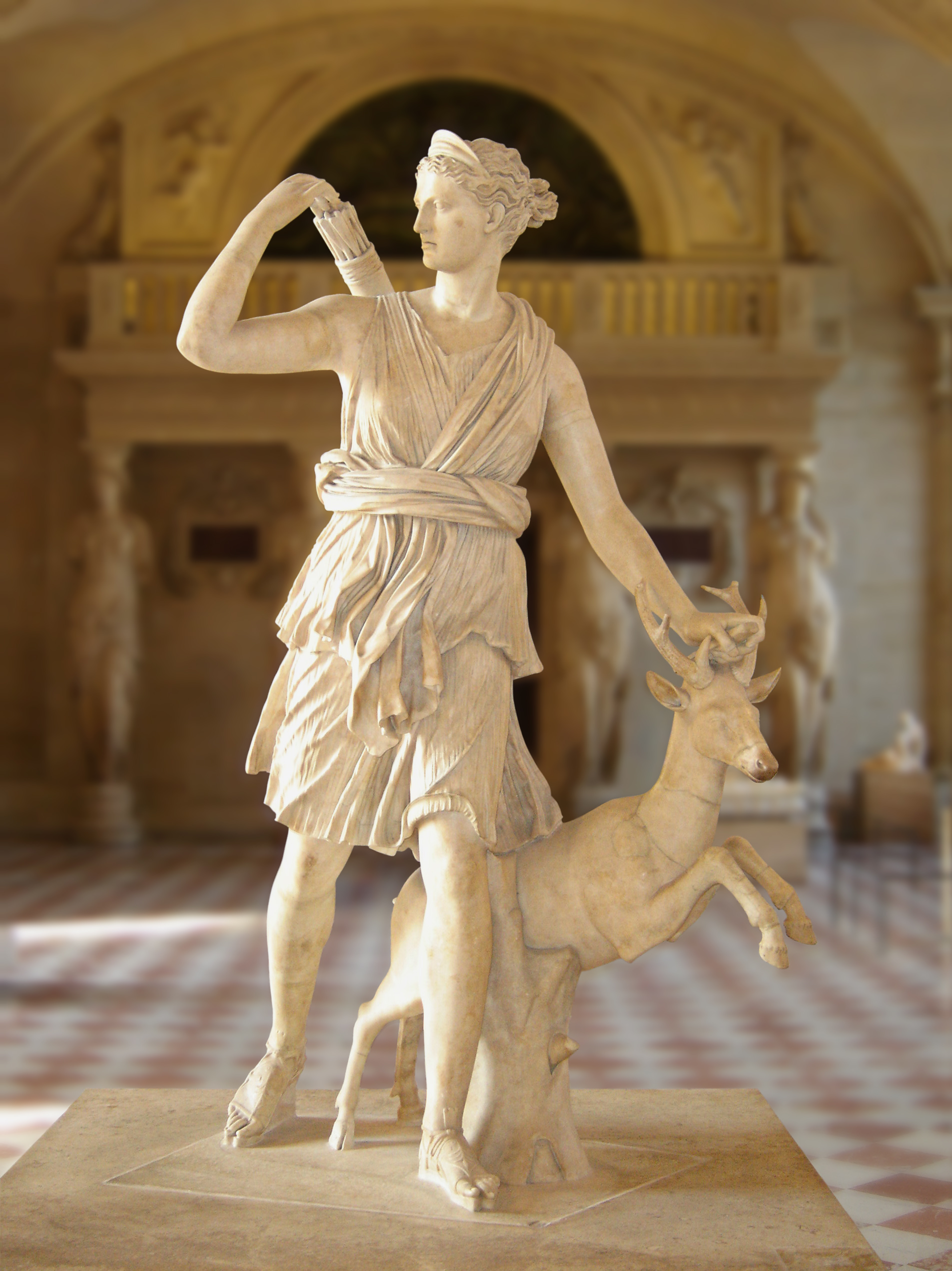
Deer have been living in close proximity to us—and sustaining us—for centuries. They are associated with Artemis/Diana in Greek and Roman mythology, and four stags feed on the world tree in Norse mythology. St. Hubertus, the patron saint of hunters, supposedly saw a crucifix on the head of a stag he’d been pursuing, and St. Giles (depicted above), the Greek hermit, lived with a doe as his only companion. The indigenous Huichol people of Mexico make offerings to the Deer of the Maize and the Deer of the Peyote, and in Shinto, deer are considered messengers to the gods. In Austin, many of us are accustomed to virtually tame deer foraging in our gardens. But the deer that died on A.’s fence, like the countless dead squirrels, raccoons, possums, and deer we see on our roads, remind us of the violence inherent when urban, automotive humanity impinges on wild (or even semi-wild) nature, or vice versa.

It’s silly to think that without us these animals’ lives would be free from suffering, pain, and terror; they all have numerous natural predators and parasites, after all, and those predators and parasites don’t go out of their way to kill humanely. (Sometimes I think it ironic that humane derives from the Middle English word for human, but the fact is we do have a choice in how we kill the animals we use.) And Madroño Ranch is, after all, in the business of selling bison meat, one of the requirements of which is first killing the bison, and we do derive income from hunting leases during deer season. But there’s something about the useless and prolonged horror of the way these deer died that hits me very hard. They weren’t shot for their meat; instead, mutilated by a symbol of human territoriality, they died slow, agonizing, gruesome deaths—victims, in effect, of our notions of private property. Where’s the redemption in that?
—Martin


What we’re reading
Heather: Michael E. McCullough, Beyond Revenge: The Evolution of the Forgiveness Instinct
Martin: Glen David Gold, Sunnyside

Friday, May 14, 2010

Madroño’s mythical bison


We spent last weekend at Madroño with Shawn and Susanne Harrington of Asterisk Group, who are designing a visual identity for the ranch suitable for use on business cards, website, food labels, letterhead, gimme caps, T-shirts, coffee mugs, bumper stickers, etc.

Since so much of what we hope to make Madroño stand for is based on a very specific sense of the place and its unique qualities, we wanted to give Shawn and Susanne (and their son Oliver) a tour of the ranch. They especially wanted to get a first-hand look at the buffies, thinking that they’d be an ideal image for the ranch, but unfortunately, as far as the Harrington family is concerned, the Madroño bison remains a mythical beast, more rumor than reality.

It was a gray and drizzly Sunday morning when Robert Selement, our trusty ranch manager, came by and picked us up in his big ol’ pickup. Robert may love showing the place off even more than we do, and Shawn and Susanne oohed and aahed in all the right places, even though the misty weather meant that we had to imagine the normally breathtaking views from up top.


The high point of the tour, of course, was to be a close-up view of the bison, complete with newborn calf (or perhaps calves, as several of the cows seemed to be on the verge of dropping babies). So imagine our chagrin when, after driving all over the ranch for two hours, we failed to get even a single glimpse of them.

You might think it would be hard to lose a herd of thirty or so critters, each weighing in at a thousand pounds or more, even on a place as big as Madroño, but, as Robert said with some asperity, “We’ve got buffalo poop, buffalo hair [where they’d rubbed up against convenient tree branches], and buffalo tracks, but no buffalo.”

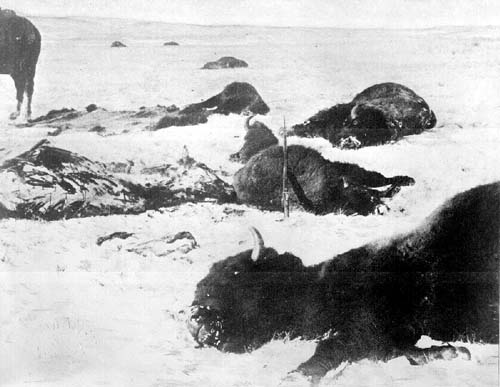
Bison are interesting animals. With a dearth of natural predators, they once roamed the North American prairies in untold millions, and were vital sources of food and other necessities for the Plains Indians. Then the railroads started building across the continent, and the real slaughter began. One of the notable things about bison is that they don’t run away when they hear a gunshot or see one of their fellows fall. Instead, they tend to wander over and nose the corpse of their fallen comrade, in a manner that can seem uncomfortably close to mourning.

This, of course, is one of the reasons they were almost eradicated by nineteenth-century buffalo hunters, but it most assuredly does not mean that they are in any way tame. In fact, they retain a distinct whiff of wildness, even on a ranch; a sublime atavism shines from their dark eyes. When we were in New York last month, we met a rancher from Pennsylvania at the Union Square Greenmarket who told us, astonishingly, that he invites school kids on field trips to wade into the midst of his herds and pat his bison. Just the thought of that made all the hair on our heads stand straight up. (It was quite a sight.)

As if their immense size and somewhat, er, unpredictable temperament weren’t sufficient encouragement to treat bison with a healthy respect, they’re also astonishingly fast and agile. They can jump into the bed of a pickup (or so we’re told; fortunately, we haven’t yet seen that firsthand), or across a cattle guard, or over a four-foot fence (when, that is, they don’t elect simply to go through it). They can work up a substantial head of steam—up to thirty-five miles an hour, in fact, which is faster than even Robert’s trusty pickup can go on Madroño’s steep and rocky roads—and they can move as fast backward as they do forward, which is why they’re sometimes used to train cutting horses. And, as we learned last weekend, they have apparently evolved the ability to turn invisible when they want to.

Shawn and Susanne were pretty good sports about it, and Oliver just wanted to play with an old ammeter that was rattling around in the back of the truck. (It’s hard to predict these things with any certainty, but Oliver at age five seems bound for a career as an electrical engineer.) But I know Robert was concerned; the fence that can keep bison in when they want to go out has yet to be invented, and we feared that they might have decided to pay a social call on the neighbors. Again.

This is always an awkward situation, not least because you can’t really compel bison to do something they don’t want to do—like, for instance, return to your property. Fortunately Robert has conditioned them to respond to the rattling of a bag of feed cubes, and can usually tempt them back from wherever they’ve strayed with the promise of treats. But having several tons of ornery meat invade the place next door is not exactly the way to foster neighborly feelings. (In March the foreman of a West Texas ranch shot fifty-one bison that had gotten loose on his property from the place next door. The fact that the place next door was a hunting ranch, and the bison would otherwise have ended up as little more than targets in a shooting gallery for rich Texans, didn’t make the story any less shocking.)

Fortunately, our neighbors have thus far responded with patience and good cheer, even when the bison cornered a herd of their terrified cattle—it must have looked a little like a scene from one of those old Westerns in which a gang of outlaws menaces some frontier town.

By the time we had to leave, late Sunday afternoon, Robert still hadn’t tracked them down. We lamely told Shawn and Susanne that we hoped they’d come back another time to see the buffies (who finally turned up above the trout ponds, safe and sound and on our side of the fence; I’m quite sure that if bison could snicker, they were snickering at us). I mean, they couldn’t possibly pull that disappearing act twice in a row, could they?

Well, could they?
—Martin